News

Why Does Filler Compatibility Matter When Choosing Modified PTFE Sheets?

2026-10-13 0 Leave me a message

Choosing a PTFE sheet for an industrial application involves more than checking its chemical resistance or maximum operating temperature. The filler system can influence creep resistance, dimensional stability, wear behavior, compressive performance, thermal expansion, and the material's response to the chemicals it contacts. Two PTFE compounds that appear similar in a product catalogue may behave differently under the same operating conditions because their fillers, filler concentrations, manufacturing processes, and application requirements are not identical. Understanding these differences helps purchasing teams avoid unsuitable specifications, unnecessary replacement costs, and performance problems after installation.


For engineers, maintenance managers, and industrial buyers, filler compatibility is a practical selection criterion rather than a minor material detail. At Ningbo Taifno PTFE Plastic Products Co., Ltd., material selection should begin with the actual operating environment, including the process medium, temperature, pressure, movement, surface contact, and expected service life. This guide explains how to evaluate Modified PTFE Sheets, compare candidate filler systems, verify supplier specifications, and prepare a purchasing checklist that supports a technically sound decision. The objective is to help buyers request the right evidence before placing an order instead of relying on a generic material description.

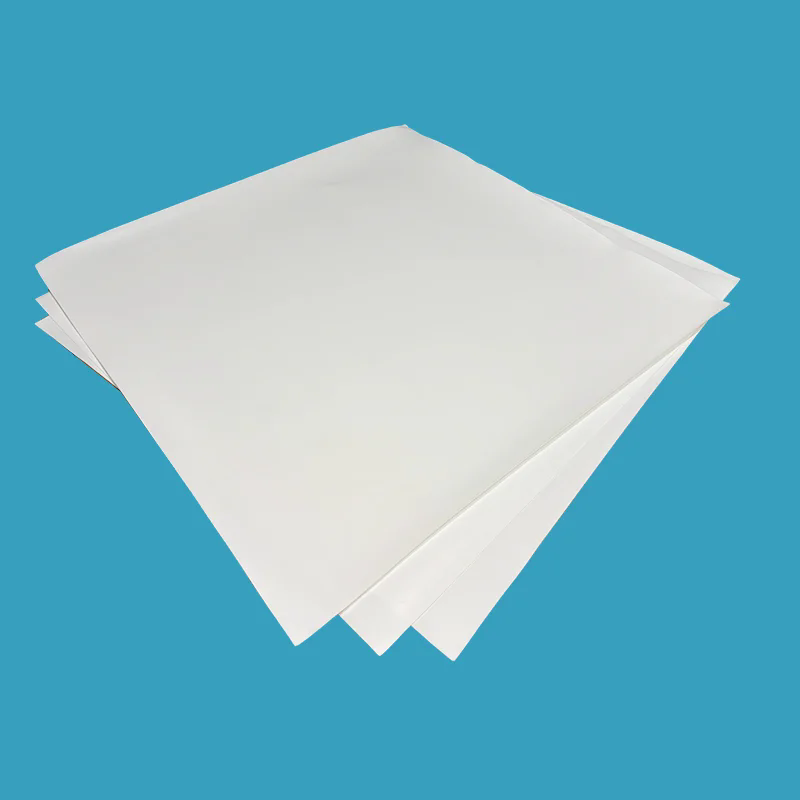
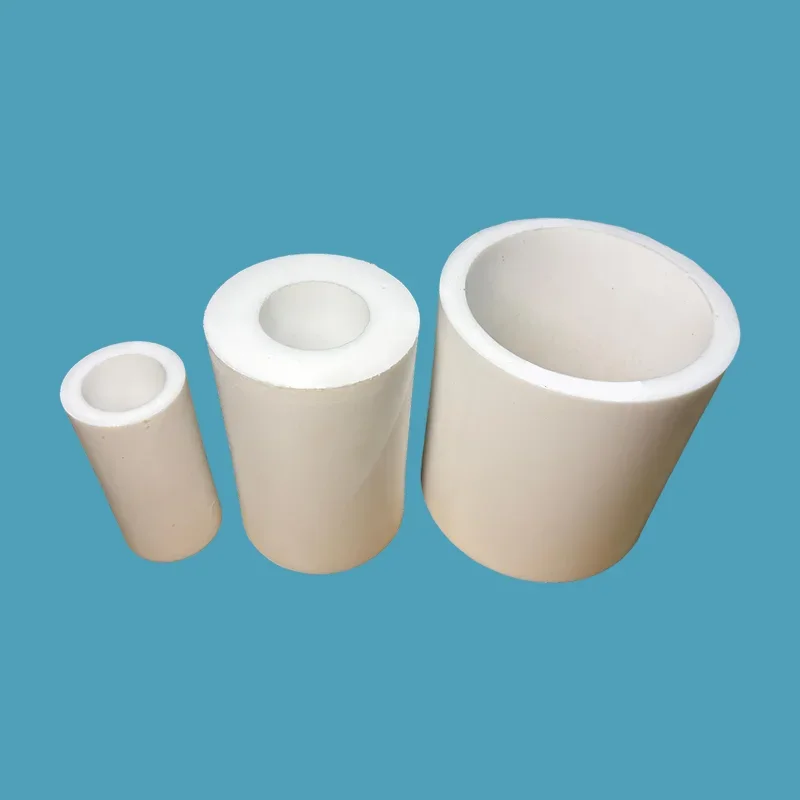
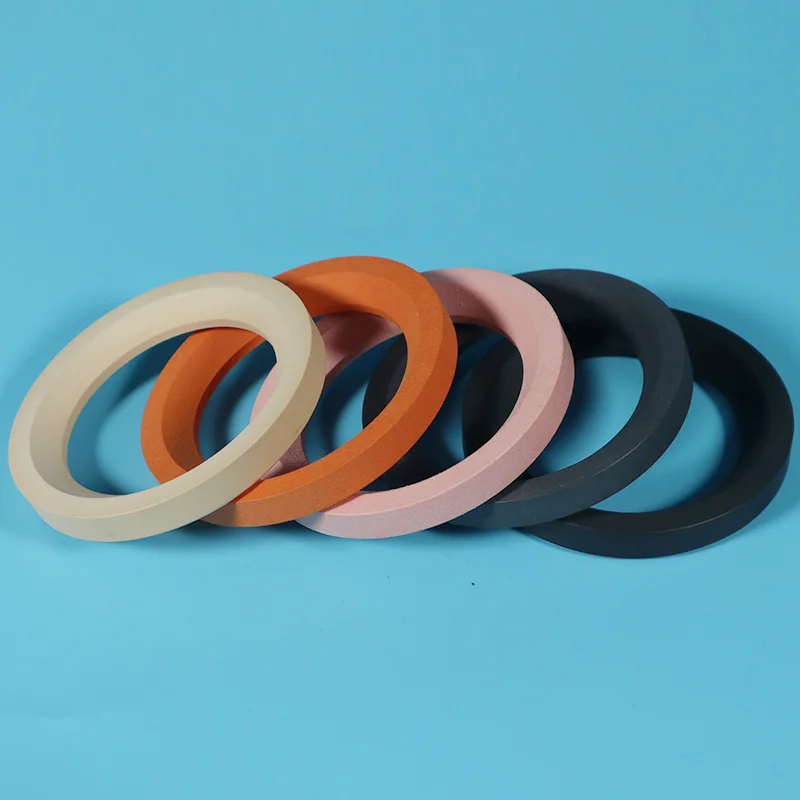
Glass-Fiber-Filled PTFE Sheet


Table of Contents

1. Why Does Filler Compatibility Influence PTFE Performance?

2. What Filler Types Should Buyers Compare?

3. How Should Buyers Evaluate Product Parameters?

4. How Can Buyers Verify Material Suitability Before Ordering?

5. Conclusion and Purchasing Recommendations

6. Frequently Asked Questions


Why Does Filler Compatibility Influence PTFE Performance?

Filler compatibility matters because a filled polymer is a material system in which the base resin and added constituents work together. PTFE is valued for its broad chemical resistance, low friction, non-stick characteristics, and ability to operate in many demanding environments. However, unfilled PTFE can exhibit significant creep under sustained compressive loading, and its mechanical behavior may not meet every application requirement. Fillers are introduced to modify selected properties, but the result depends on the specific formulation and operating conditions.

At Ningbo Taifno PTFE Plastic Products Co., Ltd., the purchasing discussion should therefore distinguish between the general characteristics of PTFE and the verified performance of an individual compound. Our selection process should consider how the filler interacts with the process medium, the surrounding equipment, and the loads acting on the sheet. A formulation that improves wear resistance in one environment may introduce different considerations in another, particularly where chemical exposure, electrical requirements, or contamination restrictions are involved.

How Does the Filler Interact with the PTFE Matrix?

PTFE provides the continuous polymer matrix, while dispersed filler particles can alter its response to pressure, friction, heat, and dimensional changes. The extent of that influence depends on filler chemistry, particle size, particle distribution, concentration, bonding at the interface, and the quality of the manufacturing process. These factors affect whether a material maintains consistent behavior throughout its service life.

Buyers should evaluate the following mechanisms when comparing candidate materials.

  • Load-bearing behavior: Certain filler systems can reduce deformation under sustained compression, although the improvement must be established using relevant test data.
  • Wear resistance: Selected fillers may improve resistance to sliding wear, but performance depends on the counterface, contact pressure, speed, lubrication, and abrasive particles.
  • Dimensional stability: Fillers can modify thermal expansion and deformation, helping some components retain their dimensions more consistently across operating cycles.
  • Chemical exposure: The filler itself may respond differently from PTFE when exposed to aggressive chemicals, elevated temperatures, or prolonged immersion.
  • Electrical behavior: Conductive or electrically insulating requirements can influence which filler formulations are appropriate.
  • Surface and sealing performance: Filler characteristics may affect surface finish, conformity, friction, and the ability of a component to maintain its required contact conditions.

Why Can a Chemically Resistant Sheet Still Fail in Service?

Chemical resistance is only one part of material suitability. A sheet may tolerate the process medium yet deform excessively under a sustained load. A sliding component may resist chemical attack but wear too quickly against a rough mating surface. A gasket may remain chemically stable while losing contact pressure because of creep, incorrect thickness, excessive bolt loading, or repeated thermal cycling.

Consider a chemical processing line that operates continuously at an elevated temperature. The initial material selection may focus on resistance to the process liquid. However, if the sheet is used as a gasket, the purchasing specification must also address the required sealing stress, flange condition, bolt arrangement, pressure fluctuations, and long-term compression behavior. If the component is used as a wear surface, sliding conditions and the presence of solid particles become equally important.

The lesson is straightforward: a material property should be connected to a real failure mode. Rather than asking only whether a sheet is chemically resistant, buyers should determine which combination of chemical exposure, mechanical stress, temperature, and operating duration could cause unacceptable performance.

Which Compatibility Questions Should Be Answered First?

Before comparing quotations, our technical review should establish a clear application profile. This avoids selecting a filler merely because it is commonly used in the industry or because a supplier describes it as high performance.

  1. What chemicals, concentrations, cleaning agents, and process residues will contact the material?
  2. What are the normal, minimum, maximum, and abnormal operating temperatures?
  3. Will the sheet experience static compression, sliding friction, impact, abrasion, or cyclic loading?
  4. Is electrical conductivity, electrical insulation, or control of contamination important?
  5. What dimensional tolerances, surface conditions, and service-life expectations apply?
  6. Which standards, test methods, certificates, or application-specific approvals must the supplier provide?

These questions turn filler compatibility into a measurable purchasing requirement. They also help distinguish between a supplier that simply offers several material grades and one that can explain why a particular grade may be suitable for the intended service. The final decision should be based on documented properties and application-specific evaluation, not on filler names alone.


What Filler Types Should Buyers Compare?

Different fillers are used to modify PTFE for different purposes. Glass fiber, carbon-based materials, graphite, bronze, and other specialty additives may be incorporated into specific formulations, depending on the intended application. Their effects are not interchangeable. Even when two products share the same filler category, differences in formulation and processing can produce different mechanical, thermal, and tribological results.

For procurement teams working with Taifno, the important question is not which filler is universally best. It is which documented formulation best balances chemical compatibility, mechanical performance, operating conditions, and cost for the intended application. Our evaluation should start with the failure mode that needs to be controlled and then identify the properties required to address it.

How Do Common PTFE Filler Systems Differ?

Filler category Potential performance contribution Important limitations to assess Typical evaluation priorities
Glass fiber Can improve resistance to deformation and wear in selected formulations. May affect counterface wear, surface characteristics, and compatibility with certain chemical environments. Compression behavior, chemical exposure, sliding contact, and temperature.
Carbon or carbon fiber May improve wear resistance, stiffness, or load-related performance, depending on the formulation. Electrical behavior, chemical compatibility, fiber characteristics, and mating-surface effects require verification. Wear testing, compressive performance, electrical requirements, and process medium.
Graphite Can contribute to friction and wear performance in selected sliding applications. Results depend on the complete compound and operating conditions; electrical properties may also change. Friction, counterface material, speed, load, temperature, and lubrication.
Bronze or other metal fillers May improve selected mechanical and thermal performance characteristics. Metal fillers may be unsuitable for some corrosive environments or applications with strict contamination requirements. Process chemistry, corrosion exposure, conductivity, density, and mechanical loads.
Specialty or blended fillers Can be formulated to target a combination of properties. Performance cannot be inferred from a general filler label or from the properties of one ingredient. Exact formulation, application-specific testing, batch consistency, and technical documentation.

This comparison is intended as an initial screening tool, not a substitute for a material specification. The listed effects are possible formulation-level contributions rather than guaranteed properties of every product in a category.

Why Is Glass Fiber Not Automatically the Right Choice?

Glass-filled PTFE is often considered when improved resistance to deformation or wear is required. However, the suitability of a glass-filled grade depends on the operating environment. Buyers should review chemical concentration, temperature, exposure duration, mechanical loading, and contact with the opposing surface. In certain sliding applications, the filler may affect the wear of the mating component, so the performance of the complete contact pair matters.

For a static component exposed to a compatible chemical medium, the main concern may be dimensional stability under load. For a moving component, friction and wear may become more important. These applications should not automatically receive the same material recommendation, even when both require a PTFE-based product.

When Should Carbon-Based Fillers Be Considered?

Carbon-based fillers may be relevant where the application requires improved wear behavior or selected mechanical characteristics. Nevertheless, buyers should distinguish between carbon powder, carbon fiber, graphite, and proprietary blends. Their physical forms and effects are different, and a broad label such as carbon-filled PTFE does not fully describe a compound.

Electrical requirements also deserve attention. Some carbon-containing formulations may have electrical properties that differ substantially from unfilled PTFE. Where electrical insulation, static control, or conductive behavior is a design requirement, the buyer should request measured data for the actual grade rather than infer performance from the filler name.

What Makes Metal-Filled PTFE a Special Case?

Metal-filled formulations may be considered for certain mechanical or thermal requirements, but the presence of a metal introduces additional compatibility questions. The process medium may be corrosive toward the filler, and the intended component may be subject to purity, contamination, or electrical restrictions. The effect of the filler must therefore be evaluated alongside the chemical resistance of the PTFE matrix.

Where the process involves aggressive chemicals, high-purity media, or strict cleanliness requirements, the buyer should obtain a clear statement of material composition and any relevant compatibility data. If the supplier cannot establish that the complete formulation is suitable, an alternative compound or a representative service-condition test may be necessary.

How Should Buyers Compare Blended and Specialty Formulations?

Blended formulations can be useful when a single filler does not deliver the required balance of properties. However, a blend introduces more variables, including the proportions of its constituents and their distribution throughout the polymer matrix. Buyers should not assume that combining two fillers automatically combines all their benefits without trade-offs.

Our technical assessment should therefore compare actual grade-specific data rather than generic claims. Request the exact material designation, available composition information, relevant mechanical and thermal test results, and any documented limitations. If two suppliers use different internal grade names, a direct comparison is only meaningful when the test methods, sample conditions, and property definitions are sufficiently aligned.

The most suitable filler system is the one that meets the documented requirements with an acceptable level of risk. A lower-priced grade may be reasonable for a low-stress application, while a more specialized formulation may be justified where unplanned maintenance, process interruption, or component failure carries a high cost.


How Should Buyers Evaluate Product Parameters?

Product parameters turn a general material preference into a purchase specification that can be checked before shipment. A catalogue description may identify the polymer family and filler category, but industrial procurement usually requires more detail. Buyers need to know whether the supplied material matches the required thickness, dimensions, tolerances, operating environment, and mechanical demands.

When reviewing Modified PTFE Sheets, Ningbo Taifno PTFE Plastic Products Co., Ltd. should be asked to provide the available grade-specific technical data and identify any parameters that require confirmation. Our purchasing team should avoid filling gaps in a data sheet with assumed values from another manufacturer's product, even when both products appear to belong to the same general category.

Which Product Parameters Should Appear in a Technical Data Sheet?

Parameter What the buyer needs to confirm Why it matters
Base polymer Confirmation that the material is PTFE-based and identification of the applicable grade. Establishes the material family and provides a basis for reviewing chemical and thermal suitability.
Filler type Glass fiber, carbon-based filler, graphite, metal filler, specialty blend, or another specified system. Helps identify the performance characteristics and compatibility issues requiring evaluation.
Filler concentration Declared percentage by weight or volume, where available, with the basis clearly stated. Different concentrations may change mechanical, thermal, electrical, and wear behavior.
Thickness Available nominal thicknesses and permitted thickness tolerances. Affects component fit, machining allowance, sealing geometry, and installation accuracy.
Sheet dimensions Available length, width, format, and dimensional tolerances. Determines material utilization, cutting plans, and compatibility with the finished component.
Density Grade-specific measured or declared density and the applicable test method. Supports material identification, weight estimation, and batch comparison.
Tensile properties Relevant tensile strength and elongation values, including test conditions. Helps assess the material's behavior during handling, machining, and service where tensile loads occur.
Compression behavior Compressive properties, deformation data, or creep information relevant to the application. Important for sustained loading, gasket applications, and dimensional stability.
Thermal performance Applicable service-temperature limits, test conditions, and any restrictions for continuous or intermittent operation. Helps assess temperature-related deformation and the effects of thermal cycling.
Chemical compatibility Evidence relevant to the actual chemical, concentration, temperature, and exposure duration. Prevents selection based solely on the general chemical resistance of PTFE.
Friction and wear Relevant test results, test conditions, counterface details, and limitations. Supports evaluation of moving or sliding components.
Electrical properties Volume resistivity, surface resistivity, or other electrical data where required. Necessary when insulation, conductivity, or static control affects the application.
Quality and traceability Batch identification, inspection records, certificate availability, and agreed acceptance criteria. Supports incoming inspection, repeat orders, and investigation of material variation.

The table identifies the information buyers should request. It does not represent a verified specification sheet for a particular commercial grade. Exact values, test methods, and availability must be confirmed with the supplier.

How Should Thickness and Dimensional Tolerances Be Specified?

Thickness is one of the most visible purchasing parameters, but nominal thickness alone is not enough. A component may require a specific tolerance because it fits into a machined recess, forms part of a sealing assembly, or must meet a precise finished dimension after machining. Buyers should distinguish between the supplied sheet's dimensions and the tolerances required for the finished part.

Before requesting a quotation, document the following:

  • Required nominal thickness and acceptable tolerance.
  • Required sheet length and width, including any minimum usable dimensions.
  • Whether the material will be used as supplied or machined into finished components.
  • Surface condition and flatness requirements, where relevant.
  • Whether dimensional inspection records are required for each batch.
  • Whether the supplier should allow additional material for machining or cutting losses.

These details improve quotation accuracy and reduce the risk of receiving material that technically matches a nominal dimension but cannot meet the finished-part requirement. They also make it easier to compare suppliers on the same basis.

How Can Buyers Interpret Mechanical and Thermal Data Correctly?

Mechanical and thermal properties must be interpreted in relation to the test method and service conditions. A tensile strength value, for example, does not directly predict long-term sealing performance. Likewise, a short-duration compression test may not represent the deformation of a component held under load for months at elevated temperature.

When reviewing a data sheet, check whether each reported value includes the test standard, test temperature, specimen preparation, and relevant conditioning details. Ask whether the figure is a typical value, a guaranteed minimum, a maximum limit, or an acceptance criterion. These terms have different implications for purchasing and quality control.

For applications involving sustained compression, long-term creep and stress relaxation may be more relevant than a single short-term strength measurement. For sliding applications, the coefficient of friction should be reviewed together with wear rate, load, speed, counterface material, and environmental conditions. No single number can fully characterize the behavior of a filled PTFE compound.

What Quality Documents Should Be Requested Before Purchase?

Documentation requirements depend on the criticality of the application. For routine industrial use, a grade identification and dimensional inspection record may be sufficient. For demanding chemical, pressure-related, or regulated applications, more detailed evidence may be necessary.

  • A technical data sheet identifying the exact grade.
  • A certificate of conformity or equivalent document, where available and required.
  • Batch or lot traceability information.
  • Inspection results covering agreed critical dimensions and properties.
  • Applicable chemical compatibility information or supporting test data.
  • Relevant compliance statements for the intended application, if required.

Buyers should confirm that the documents apply to the material actually being quoted. A certificate for a related grade or a generic PTFE product does not establish that a specific filled formulation meets the same requirements.


How Can Buyers Verify Material Suitability Before Ordering?

A technically appropriate material can still become a poor purchasing decision if its specification is vague, its documentation is incomplete, or the supplier cannot maintain consistent quality. Material verification should therefore include both application engineering and supplier evaluation. The aim is to establish that the proposed grade fits the service conditions, can be manufactured to the required dimensions, and can be supplied with the agreed quality evidence.

For industrial procurement, Ningbo Taifno PTFE Plastic Products Co., Ltd. should be evaluated against a written set of requirements rather than a general request for a high-performance sheet. Our purchasing specification should state the intended application, critical operating conditions, required material characteristics, dimensional limits, and acceptance documents. This creates a common reference for the buyer, supplier, quality team, and end user.

What Information Should Buyers Send When Requesting a Quotation?

A useful request for quotation gives the supplier enough information to assess suitability and price the material accurately. Sending only a product name and quantity may produce a fast quotation, but it can leave important technical questions unanswered.

Include the following information whenever it is available:

  1. Application description: Explain whether the sheet will be used for a gasket, wear component, lining, machined part, or another purpose.
  2. Process environment: Identify the chemicals, concentrations, temperature range, cleaning agents, and expected exposure duration.
  3. Mechanical conditions: State the working pressure where relevant, compressive loads, sliding movement, vibration, and potential abrasion.
  4. Dimensions: Specify thickness, length, width, tolerances, and any machining allowance.
  5. Material requirements: Identify the required PTFE grade or the performance characteristics the selected grade must meet.
  6. Quality documents: List the required certificates, inspection reports, traceability information, and applicable standards.
  7. Commercial details: State the required quantity, delivery destination, requested lead time, packaging requirements, and repeat-order expectations.

If the buyer does not know which filler system is appropriate, the quotation request should describe the operating conditions and ask the supplier to identify suitable candidate grades. The supplier should explain the basis of the recommendation and identify any limitations that require testing or engineering approval.

How Should Suppliers Be Compared Beyond Unit Price?

The lowest quoted price does not always represent the lowest total cost. Differences in material composition, tolerances, quality documentation, usable sheet dimensions, delivery reliability, and batch consistency can change the actual value of an offer.

Evaluation criterion Questions to ask Purchasing significance
Technical suitability Does the proposed grade address the actual chemical, thermal, and mechanical conditions? Reduces the risk of premature failure and unsuitable material selection.
Specification clarity Are filler type, dimensions, tolerances, and critical properties clearly defined? Reduces ambiguity between the quotation and the delivered material.
Evidence and traceability Can the supplier provide the agreed data sheets, inspection records, and batch identification? Supports quality control and future investigations.
Manufacturing consistency How are critical properties and dimensions controlled across production batches? Helps maintain consistency in repeat orders.
Delivery and packaging Can the supplier meet the required schedule and protect the sheets during transportation? Reduces delays and damage-related costs.
Total cost What are the material, machining, scrap, replacement, and downtime implications? Provides a more realistic comparison than unit price alone.

A useful comparison should distinguish between mandatory requirements and desirable features. Mandatory requirements include the material properties and tolerances necessary for safe and reliable service. Desirable features may include shorter lead times, alternative sheet sizes, or additional documentation. A supplier should not receive a higher technical rating merely for providing more data if that data does not address the actual application.

When Is Application Testing Necessary?

Testing should be considered when the operating environment is aggressive, the component is safety-critical, the material is exposed to an unusual chemical combination, or the consequences of failure are substantial. It may also be appropriate when two candidate grades have similar data sheets but different filler systems, or when the supplier cannot provide enough evidence to resolve a critical compatibility question.

Testing should represent the service conditions as closely as practical. Depending on the application, this may involve chemical immersion, dimensional measurements before and after exposure, compression testing, creep evaluation, friction and wear testing, or examination of the mating surface. Test duration, temperature, concentration, load, and acceptance criteria should be agreed in advance.

For example, a component exposed to a cleaning chemical only during periodic maintenance may need a different evaluation from a component continuously immersed in the same chemical. Similarly, a wear component operating at low speed under a heavy load may behave differently from one operating at high speed under a lighter load. A test that ignores these distinctions may produce results that do not reliably predict service performance.

How Can Buyers Reduce Risks During Repeat Orders?

Once a suitable grade has been approved, the buyer should preserve the material specification and the basis of approval. This is particularly important when replacement components must fit existing equipment or when several departments purchase the same material.

  • Record the approved material designation and the supplier's corresponding grade code.
  • Retain the original technical data sheet and the documents used to approve the material.
  • Define which properties and dimensions must remain consistent across orders.
  • Request advance notification of relevant changes to composition, manufacturing process, or product designation.
  • Inspect incoming material against the agreed acceptance criteria rather than relying only on packaging labels.
  • Document service history, wear patterns, deformation, and any field failures.

Our supplier evaluation should also consider how technical questions are handled after delivery. Clear communication about material identification, available testing, and specification changes is valuable when an application evolves or when an alternative grade must be considered.

How Should Buyers Calculate the Total Cost of Ownership?

The purchase price is only one component of material cost. A more useful evaluation includes material utilization, machining expense, installation labor, replacement frequency, maintenance access, and the financial effect of unplanned downtime. The relative importance of each factor depends on the application.

For a low-load component that is easy to replace, a standard grade may be economically reasonable if it meets the required specifications. For a critical component inside a difficult-to-access assembly, a more carefully validated formulation may be preferable if it can reduce the risk of frequent maintenance. However, a higher-priced material should not automatically be assumed to deliver a longer service life. That benefit needs supporting evidence from relevant testing, documented service history, or a justified engineering assessment.

A sound purchasing decision balances performance, reliability, supply consistency, and cost. Buyers should select the least costly option that demonstrably meets all mandatory application requirements, rather than the cheapest option with an incomplete specification.


Conclusion: How Can You Make a More Reliable PTFE Purchasing Decision?

Filler compatibility is an essential part of selecting a PTFE material because it influences how the complete compound behaves under chemical exposure, mechanical loading, temperature changes, and friction. Glass fiber, carbon-based fillers, graphite, metal fillers, and specialty blends offer different potential advantages, but no filler is suitable for every operating environment. The correct decision depends on the actual service conditions and the performance requirements of the finished component.

Before placing an order, define the operating environment, request a grade-specific data sheet, verify dimensional tolerances, review the relevant mechanical and chemical evidence, and confirm the documentation needed for incoming inspection. When critical uncertainties remain, use an application-specific test or obtain a qualified engineering assessment before approving the material.

Ningbo Taifno PTFE Plastic Products Co., Ltd. can be included in your supplier evaluation when comparing material options for industrial applications. Our purchasing recommendation is to provide the process medium, temperature range, mechanical conditions, required dimensions, and expected application before finalizing a grade. For buyers sourcing Modified PTFE Sheets, this approach creates a clearer technical basis for quotation, reduces avoidable specification gaps, and supports more informed decisions about quality and total ownership cost. Contact our team to discuss your sheet requirements, request available technical documentation, and determine which material options merit further evaluation for your application.


Frequently Asked Questions

Why Does Filler Compatibility Matter When Choosing Modified PTFE Sheets?

Filler compatibility matters because the filler can change the mechanical, thermal, electrical, and wear characteristics of the PTFE compound, while also introducing additional chemical compatibility considerations. Buyers should assess the process medium, concentration, temperature, loading conditions, and required service life before selecting a grade. The most suitable material is the one supported by relevant technical data for the intended application.

Which PTFE Filler Is Best for Chemical Resistance?

There is no universally best filler for chemical resistance because suitability depends on the complete formulation and the actual chemical environment. The PTFE matrix may resist many chemicals, but a filler can introduce additional limitations under certain combinations of concentration, temperature, and exposure duration. Buyers should request grade-specific compatibility information and consider testing when the consequences of material failure are significant.

How Can Buyers Confirm the Quality of Filled PTFE Sheets?

Buyers should verify the material designation, filler specification where available, sheet dimensions, tolerances, relevant mechanical properties, and applicable quality documents. They should also confirm whether reported values are typical figures or guaranteed acceptance limits and whether the data applies to the exact grade being purchased. Batch traceability and incoming inspection against an agreed specification provide additional controls.

Can Filled PTFE Sheets Be Used for High-Temperature Industrial Applications?

Some filled PTFE formulations are suitable for demanding thermal environments, but the permitted operating range must be confirmed for the specific grade and application. Continuous exposure, short-term temperature peaks, thermal cycling, chemical contact, and sustained mechanical loading can affect performance differently. Buyers should review the supplier's stated limits and supporting test conditions rather than rely on a generic temperature figure for PTFE.

What Information Should Be Included in a Request for a PTFE Sheet Quotation?

A quotation request should include the intended application, process chemicals and concentrations, operating temperature, mechanical loads, required filler or performance characteristics, sheet thickness and dimensions, dimensional tolerances, order quantity, and delivery requirements. Buyers should also identify required inspection records, certificates, and compliance documents. If the appropriate filler is uncertain, describe the service conditions and request a documented technical recommendation before approving the material.

Related News
Leave me a message
X
We use cookies to offer you a better browsing experience, analyze site traffic and personalize content. By using this site, you agree to our use of cookies. Privacy Policy
RejectAccept