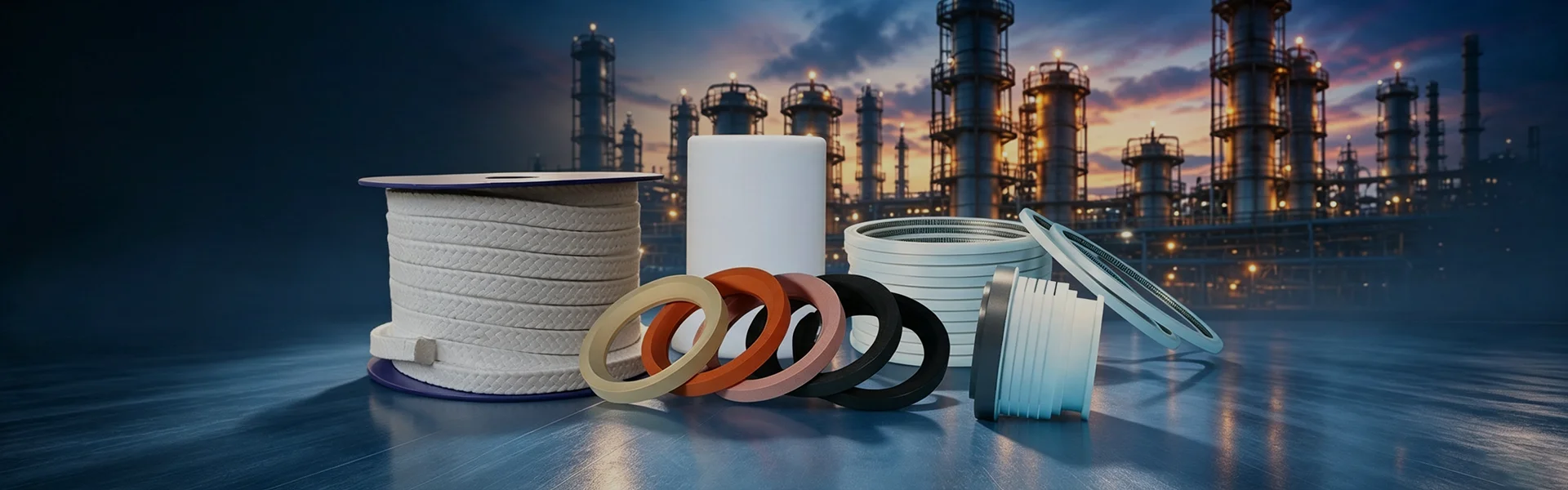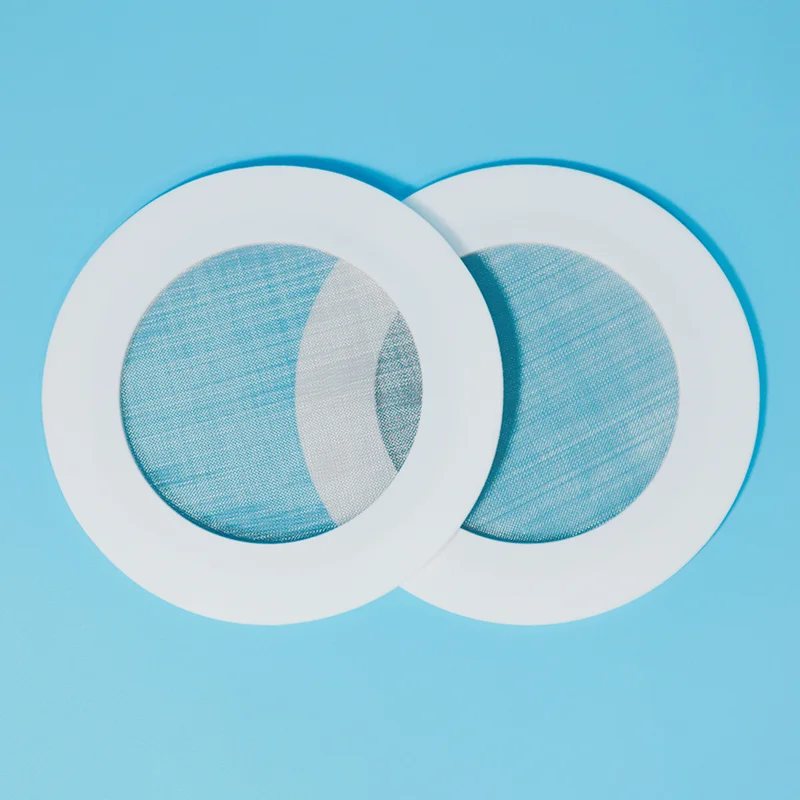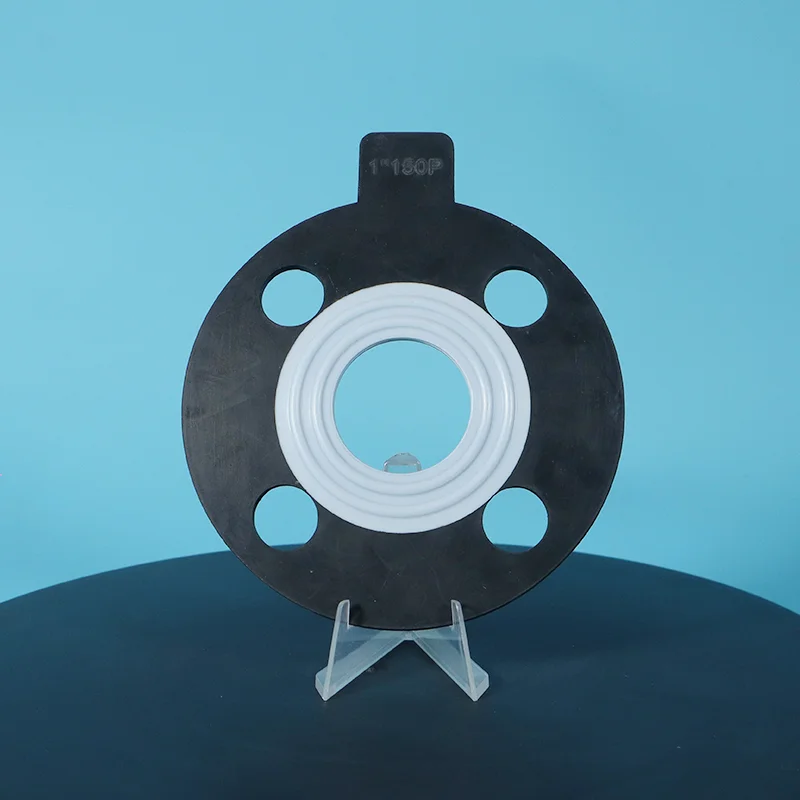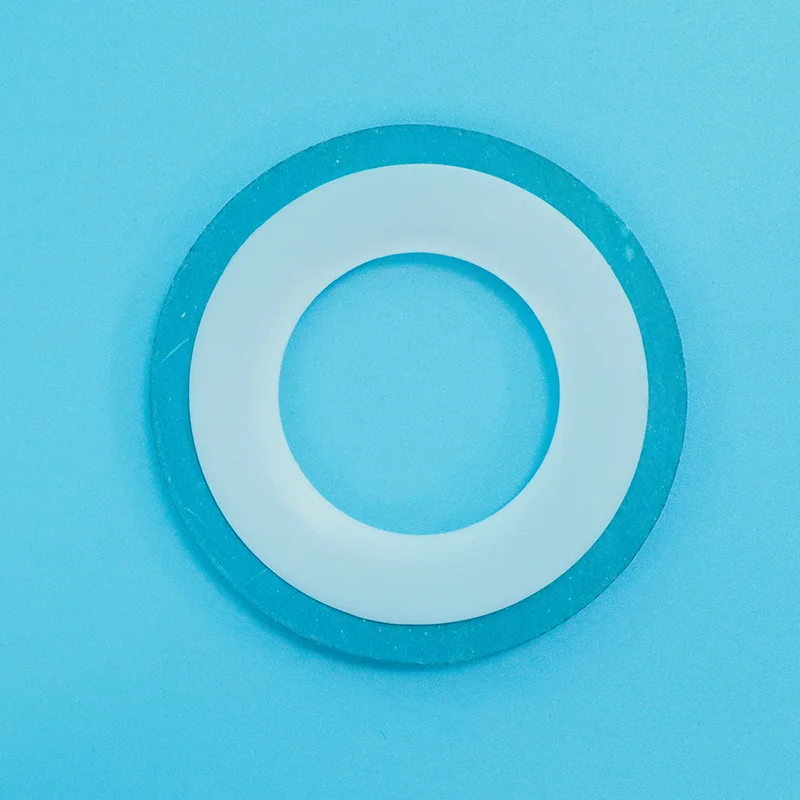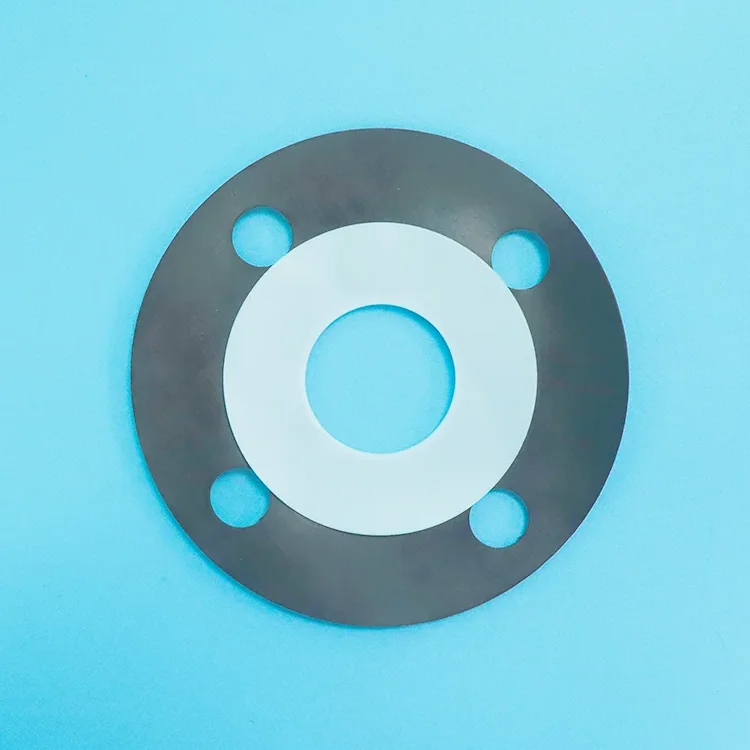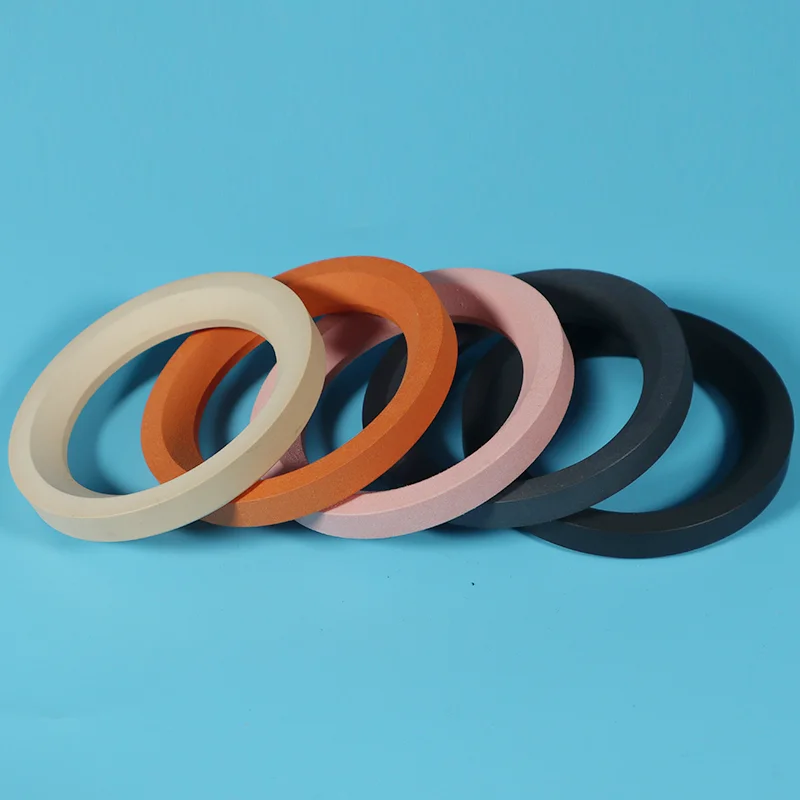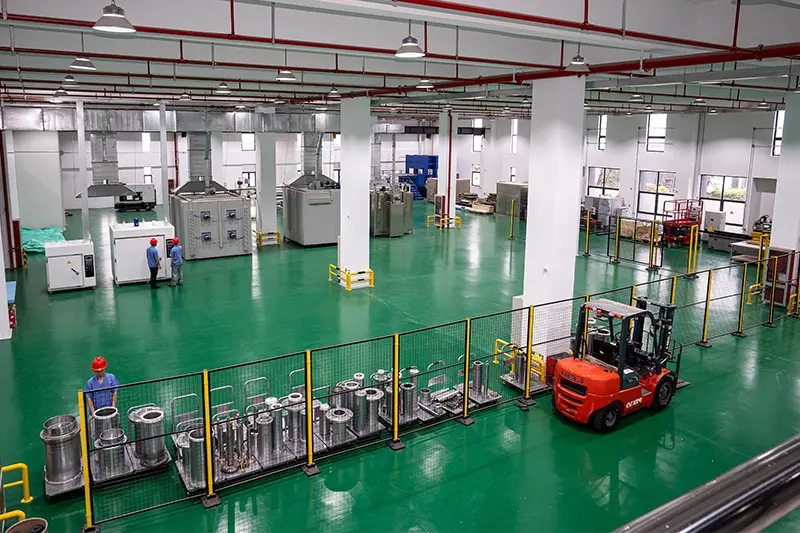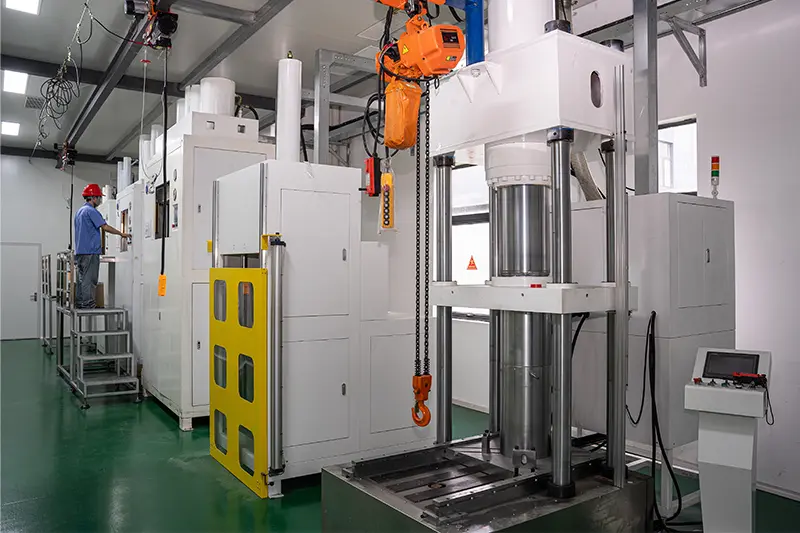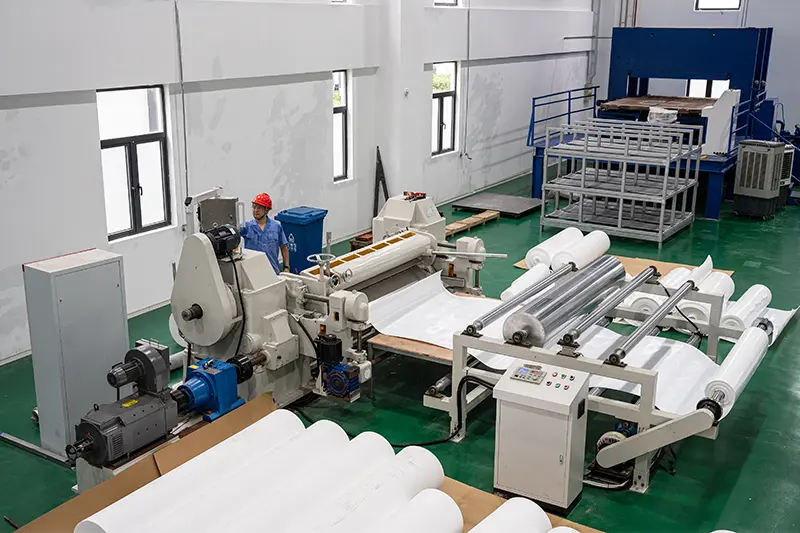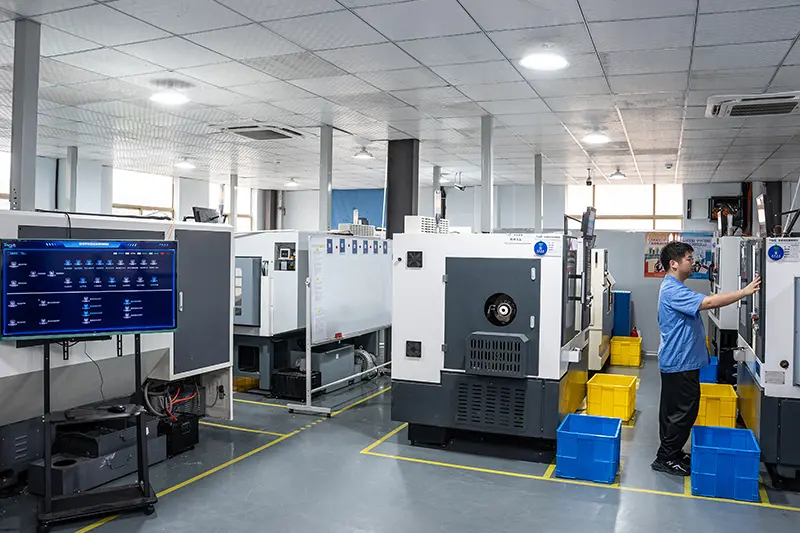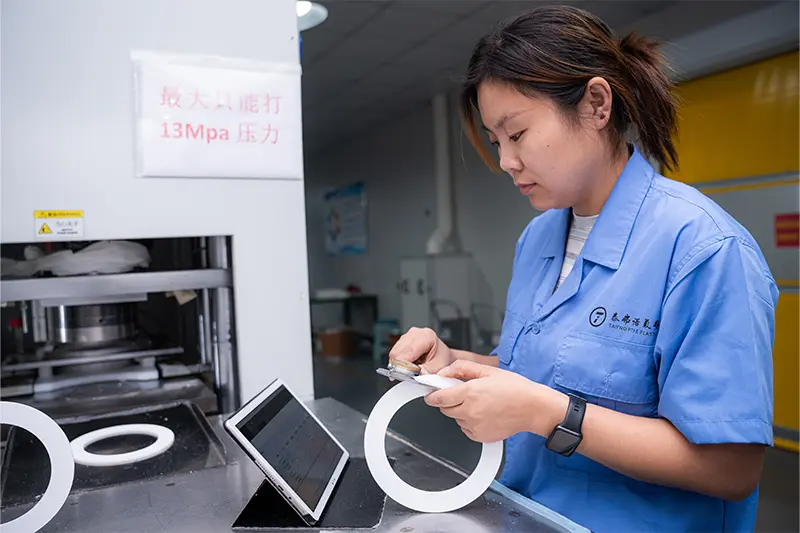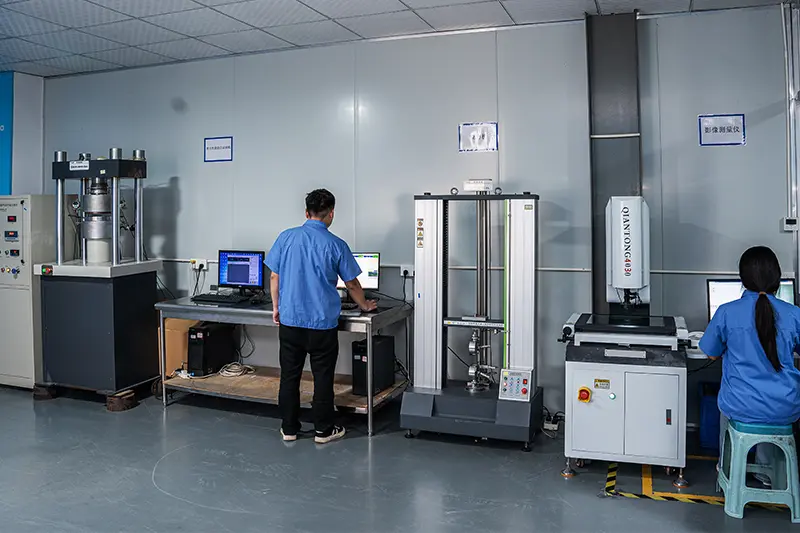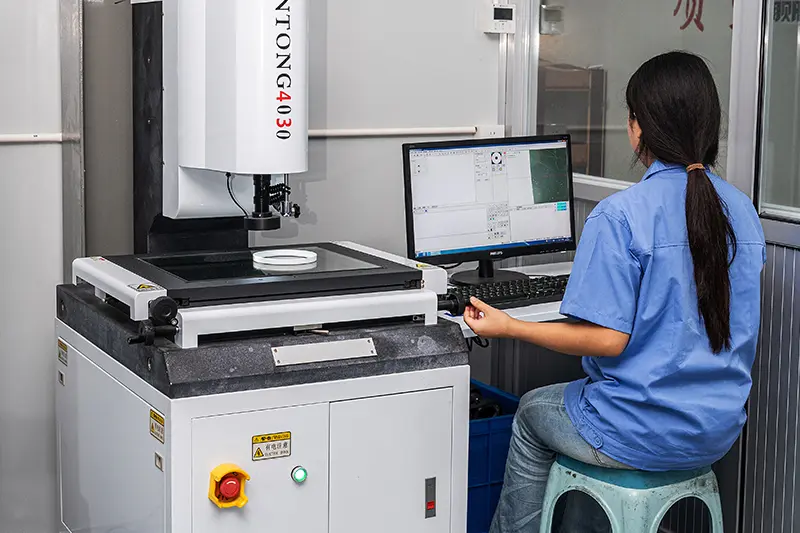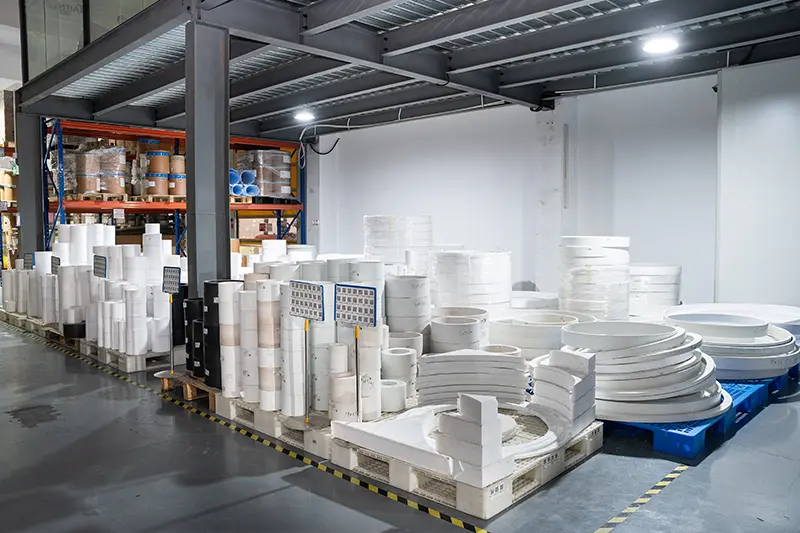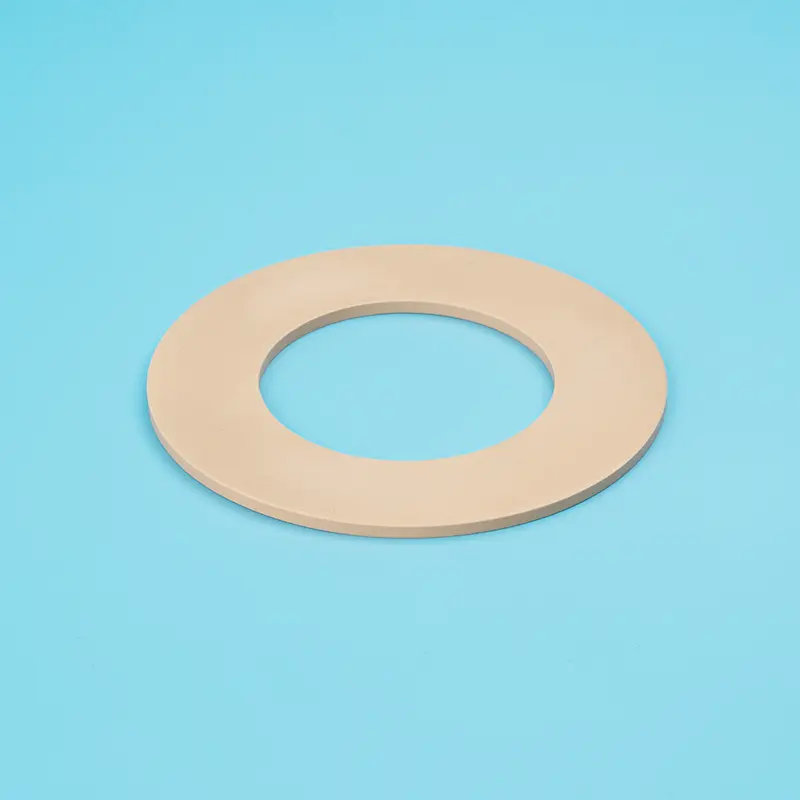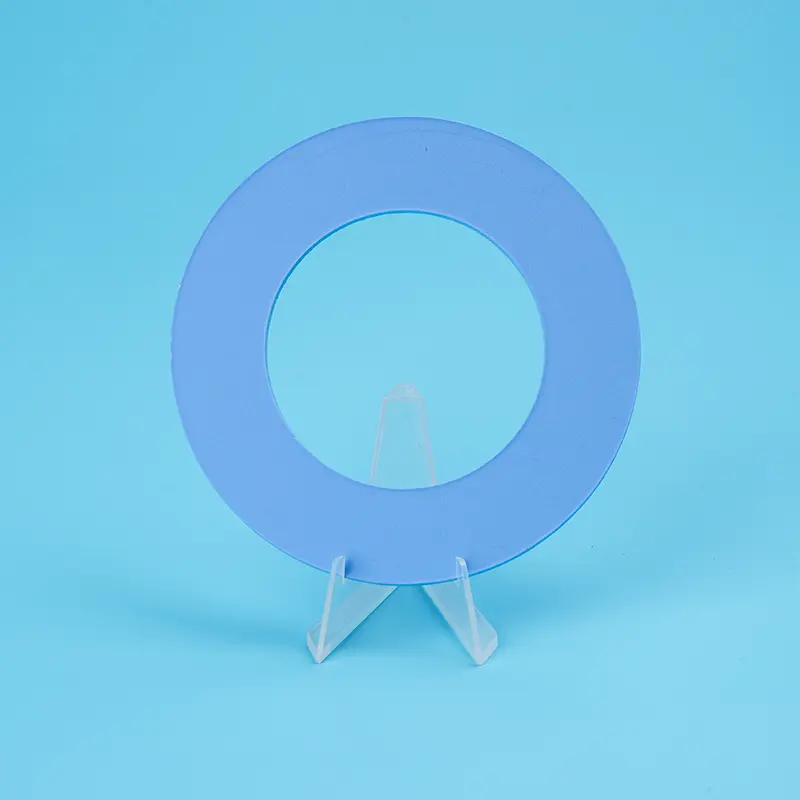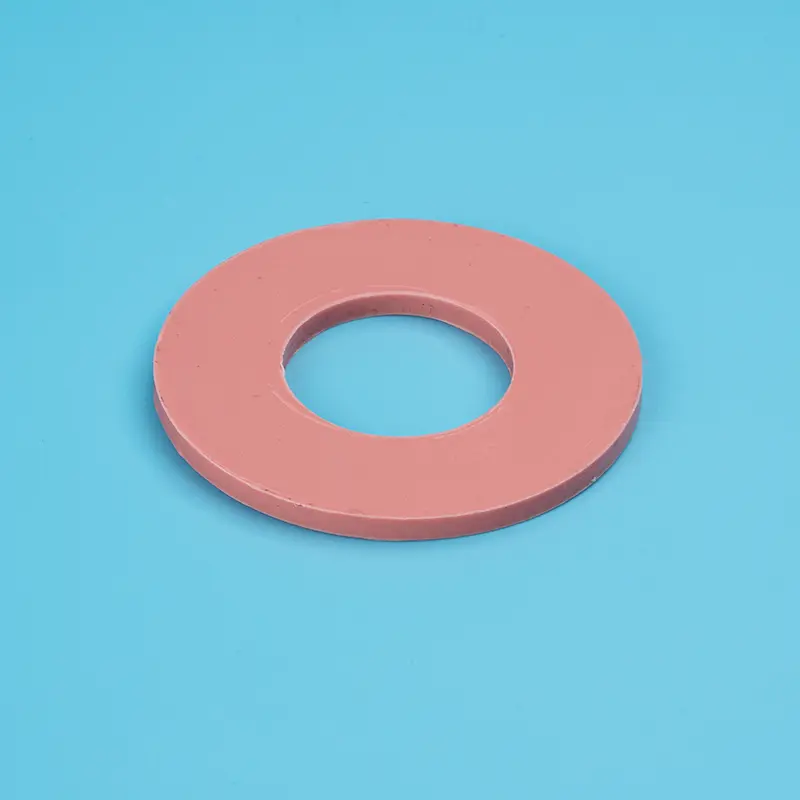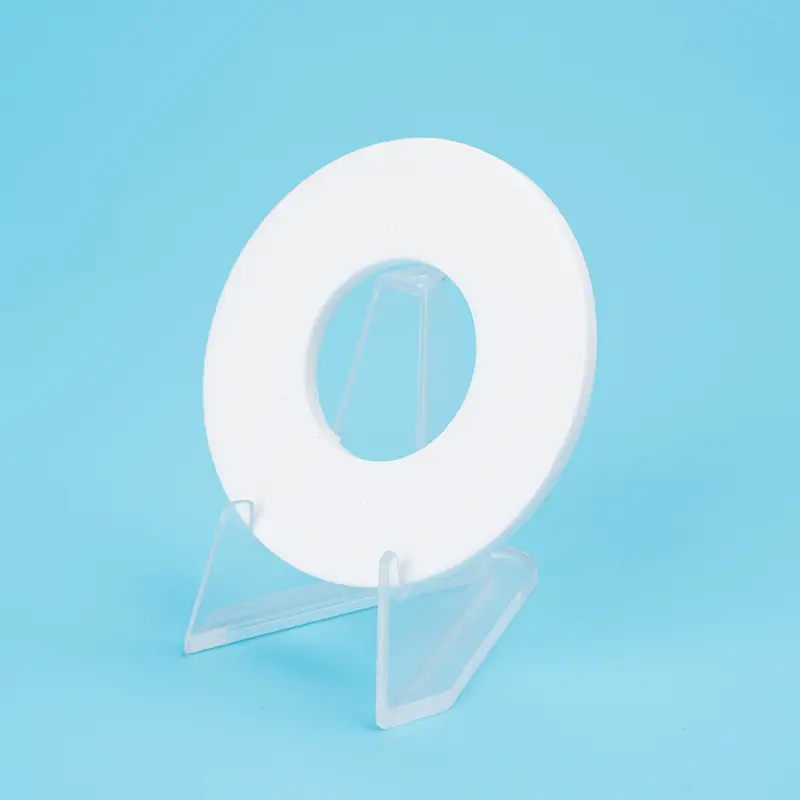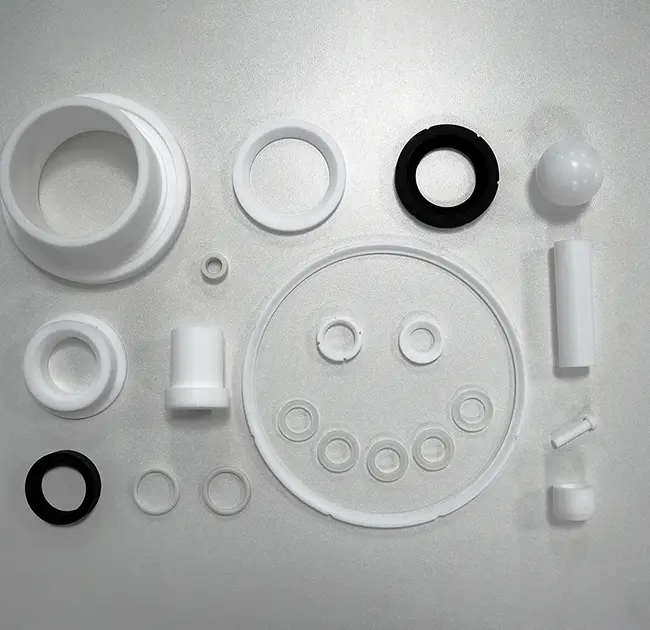
Taifno is a professional PTFE manufacturer. To address situations where pure PTFE being relatively soft, may fall short of requirements for higher mechanical strength and wear resistance, we offer glass-fiber-filled PTFE gaskets.
Incorporating 15%–25% glass fiber enhances the material's rigidity, wear resistance, and creep resistance; the material typically appears off-white or light gray. Compared to pure PTFE, this material offers superior mechanical strength, better dimensional stability, and a lower coefficient of thermal expansion, making it suitable for applications such as gaskets, valve seats, pump components, and dynamic seals.

A glass-fiber-filled PTFE gasket is a modified PTFE material reinforced with 15-25% glass fibers. The glass fibers provide structural reinforcement that significantly improves the material's mechanical properties while retaining PTFE's excellent chemical resistance and low friction characteristics.
Key benefits of glass fiber reinforcement:
Improved stiffness and rigidity — higher load capacity than virgin PTFE
Enhanced wear resistance — survives abrasive conditions where virgin PTFE fails
Better creep resistance — maintains bolt torque longer, reduced cold flow
Lower coefficient of thermal expansion — improved dimensional stability under temperature changes
Excellent chemical resistance — pH 0-14, resistant to most acids, alkalis, and solvents
FDA-compliant grades available — suitable for food and pharmaceutical applications
Limitations to be aware of:
Not compatible with hydrofluoric acid (HF) or strong alkali — glass fibers react with these chemicals
Harder surface — can score soft shafts or mating surfaces; consider glass microsphere PTFE for fragile flanges
Reduced flexibility compared to virgin PTFE
|
Problem |
How Glass-Fiber PTFE Solves It |
The Cost of Choosing Wrong |
|
Virgin PTFE creeps and leaks under load |
Glass fibers reinforce the structure, maintains bolt torque, resists cold flow |
Frequent re-torquing, gasket replacement every 6-12 months |
|
Abrasive media wears out PTFE fast |
Glass fibers increase wear resistance, lasts longer in abrasive service |
Premature gasket failure, production interruptions |
|
Virgin PTFE expands too much with heat |
Lower thermal expansion, better dimensional stability under temperature changes |
Leakage during temperature cycling |
|
Virgin PTFE lacks mechanical strength |
Higher tensile strength (≥25 MPa), stiffness, and load capacity |
Gasket extrusion, deformation under pressure |
|
Feature |
Glass Fiber PTFE |
Virgin PTFE |
Carbon Fiber PTFE |
Graphite PTFE |
|
Tensile Strength |
≥25 MPa — highest |
Lower |
Higher |
≥11 MPa |
|
Wear Resistance |
★★★★★ excellent |
★★☆☆☆ |
★★★★★ |
★★★★☆ |
|
Creep Resistance |
★★★★☆ improved |
★★☆☆☆ |
★★★★★ |
★★★★☆ |
|
Thermal Conductivity |
★★★☆☆ |
★★☆☆☆ |
★★★★★ |
★★★★★ |
|
Flange Protection |
★★☆☆☆ can scratch |
★★★☆☆ |
★★☆☆☆ |
★★★☆☆ |
|
Chemical Compatibility |
pH 0-14, NOT for HF/alkali |
pH 0-14 |
pH 0-14, not for oxidizers |
|
FDA Compliant |
✅ Yes |
✅ Yes |
❌ No |
✅ Yes |
|
Best For |
Abrasive media, high pressure, valve seats |
Clean chemicals, smooth flanges |
High speed, high load, heat |
Low friction, bearings |
|
If Your Service Is... |
Choose... |
Why |
|
Abrasive media, slurries, high wear |
Glass Fiber PTFE |
Highest wear resistance |
|
High pressure, high load |
Glass Fiber PTFE |
Highest mechanical strength |
|
Valve seats, pump components |
Glass Fiber PTFE |
Strength + chemical resistance |
|
Bearings, bushings, sliding applications |
Graphite-Filled PTFE |
Lowest friction + thermal conductivity |
|
High speed, high temperature, high load |
Carbon Fiber PTFE |
Best strength + thermal conductivity |
|
Strong oxidizers (nitric acid, chlorine) |
Virgin PTFE |
Graphite/carbon oxidize — virgin required |
|
Clean chemicals, food/pharma, low cost |
Virgin PTFE |
Universal chemical resistance, lowest cost |
|
Industry |
Application |
Why Glass Fiber |
|
Chemical Processing |
Pump housings, valve seats, gaskets — acids, solvents, corrosive media |
Chemical resistance + mechanical strength |
|
Oil & Gas |
Valve seats, pipeline seals — high pressure, hydrocarbons |
High load capacity, wear resistance |
|
Food & Beverage |
Processing equipment, FDA-compliant seals |
FDA-approved grades available |
|
Pharmaceutical |
Sterile equipment, API manufacturing |
FDA-compliant, non-contaminating |
|
Semiconductor |
Chemical distribution, pure water production |
Pure material, chemical resistance |
|
General Industrial |
Bearings, slide runners, filter housings |
Wear resistance, low friction |


|
Parameter |
Value |
Notes |
|
Temperature Range |
-180°C to +200°C |
Continuous service |
|
Density |
2.10-2.30 g/cm³ |
— |
|
Tensile Strength |
≥25 MPa |
— |
|
Elongation |
≥200% |
— |
|
Hardness |
M65 |
— |
|
Melting Point |
327°C |
— |
|
Color |
Off-white, light gray, light blue, or white |
— |
|
Material |
PTFE + glass fiber filler (15-25%) |
— |
|
FDA Compliant |
Yes (select grades) |
— |
|
Glass Content |
Best For |
Source |
|
Glass 15% |
Moderate improvement while maintaining flexibility |
|
|
Glass 20% |
Balanced performance for general applications |
|
|
Glass 25% |
Maximum strength, wear resistance, dimensional stability |
|
|
Size (mm) |
Thickness Range (mm) |
|
1000 × 1000 |
4 — 50 |
|
1200 × 1200 |
0.5 — 70 |
|
1500 × 1500 |
0.5 — 20 |
|
2000 × 2000 |
0.5 — 20 |
100% Virgin PTFE Resin — no regrind, no recycled material
Premium Glass Fiber Reinforcement — uniform dispersion for consistent properties
FDA-Compliant Grade Available — meets FDA requirements for food and pharmaceutical applications
Full Traceability — material certificates on request
Multiple Glass Content Options — 15%, 20%, 25% available
Multiple Colors — off-white, white, light gray, light blue
Lead Time — standard sizes in stock (24-48 hours); custom sizes 7-10 days


Industry: Paper Manufacturing
Application: Steam Condensate System
Operating Conditions: 180°C / 1.6 MPa / 2 thermal cycles per day
A paper mill in Guangdong faced frequent sealing failures in its steam condensate pipeline system. The original pure PTFE gaskets were exposed to repeated high-temperature thermal cycling, causing creep deformation and reduced sealing performance.
As a result, gasket replacement was required approximately once every month, increasing maintenance workload and affecting equipment reliability.
|
Item |
Problem |
|
Working Environment |
High temperature steam condensate system |
|
Temperature & Pressure |
180°C / 1.6 MPa |
|
Operating Condition |
Two thermal cycles every day |
|
Original Material |
Pure PTFE gasket |
|
Main Issue |
Creep deformation and short service life |
|
Replacement Frequency |
Once per month |
The plant replaced the original pure PTFE gaskets with glass-filled PTFE gaskets made from reinforced PTFE sheets.
By adding glass fiber reinforcement, the gasket material achieved:
● Higher compressive strength
● Improved resistance to creep deformation
● Better dimensional stability under heat cycling
● Longer sealing performance under pressure fluctuations
The upgraded PTFE solution was better suited for continuous operation in high-temperature and repeated thermal cycling environments.
|
Performance Indicator |
Before |
After |
|
Gasket Material |
Pure PTFE Gasket |
Glass-Filled PTFE Gasket |
|
Operating Temperature |
180°C |
180°C |
|
Working Pressure |
1.6 MPa |
1.6 MPa |
|
Thermal Cycling |
2 times/day |
2 times/day |
|
Service Life |
Approx. 1 month |
14 months |
|
Maintenance Frequency |
Frequent replacement |
Significantly reduced |
● 14× longer service life compared with traditional pure PTFE gaskets
● Reduced gasket replacement frequency and maintenance costs
● Improved sealing reliability under thermal cycling conditions
● Increased equipment uptime for continuous production
A: A glass-fiber-filled PTFE gasket is PTFE reinforced with 15-25% glass fibers. It offers significantly improved mechanical strength (tensile ≥25 MPa), wear resistance, and creep resistance compared to virgin PTFE, while maintaining excellent chemical resistance (pH 0-14).
Virgin PTFE is softer and deforms under load, glass fiber PTFE holds its shape longer, making it the preferred choice for valve seats, pump components, and dynamic sealing applications.
However, glass fiber PTFE is not compatible with hydrofluoric acid (HF) or strong alkali, use virgin PTFE or carbon-filled PTFE for these services. Available in FDA-compliant grades.
A: Glass-Fiber-Filled PTFE Gasket is available in 15%, 20%, and 25% glass fiber content. 15% glass fiber offers moderate improvement while maintaining more flexibility. 25% glass fiber provides maximum strength, wear resistance, and dimensional stability, the most common grade for demanding applications.
Quick rule:
General applications → 15-20% glass.
High wear, high load, high pressure → 25% glass.
Custom content available on request. The 25% grade offers the best mechanical performance and is the industry standard for heavy-duty services.
A: Temperature: -180°C to +200°C continuous service.
Chemical: pH 0-14, NOT compatible with hydrofluoric acid (HF) or strong alkali, glass fibers react with these chemicals.
Mechanical: Harder than virgin PTFE, may score soft shafts or fragile flanges.
Three most common mistakes:
Using in HF service — glass dissolves — use virgin PTFE instead
Over-tightening — glass fiber PTFE is stronger but still requires controlled torque; over-tightening damages the gasket
Expecting same flexibility as virgin PTFE — glass fiber reduces flexibility (elongation ≥200% vs 250-350% for virgin PTFE); design accordingly
Contact us with your temperature, pressure, and media, we recommend the right PTFE grade within 24 hours.
Address
No.1028, Qiersan Street, Andong Town, Cixi City, Zhejiang Province, China
Tel