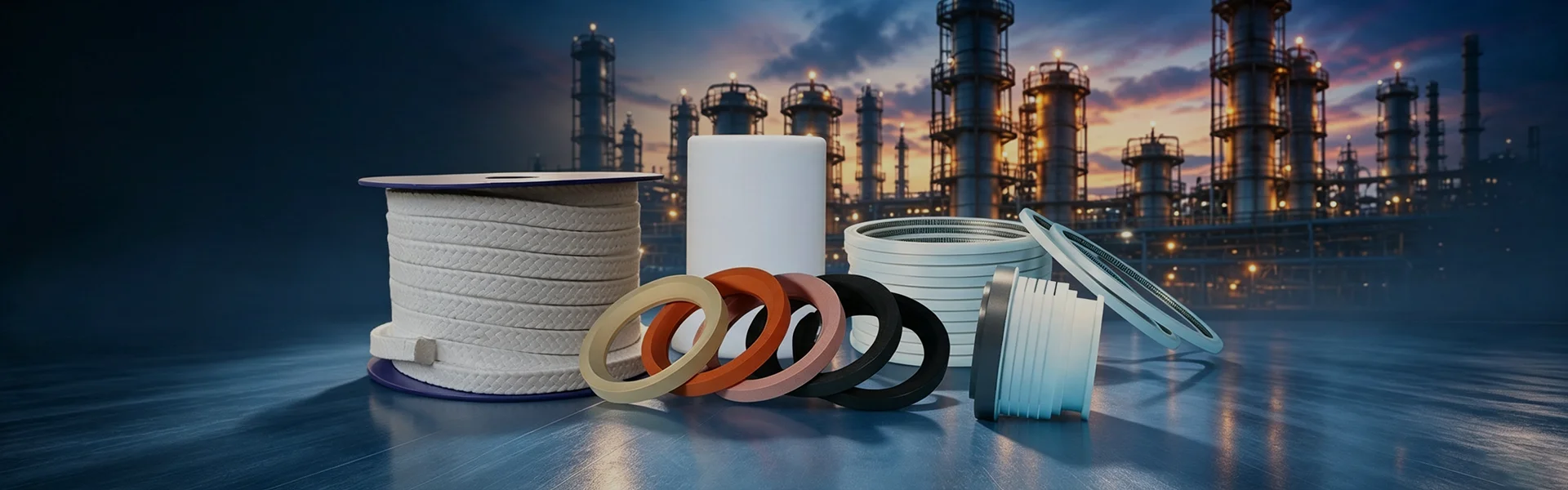
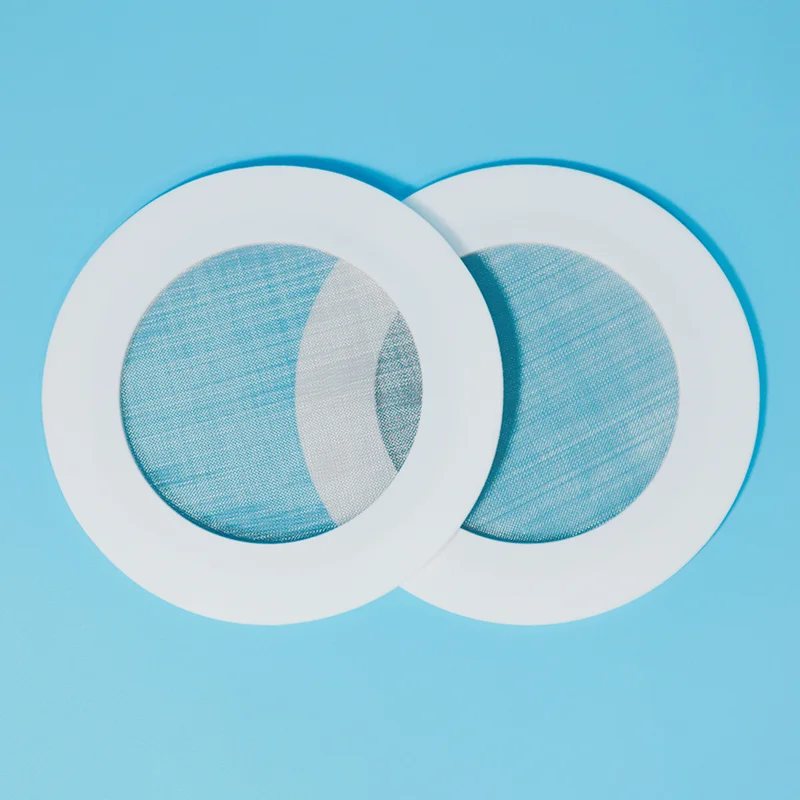
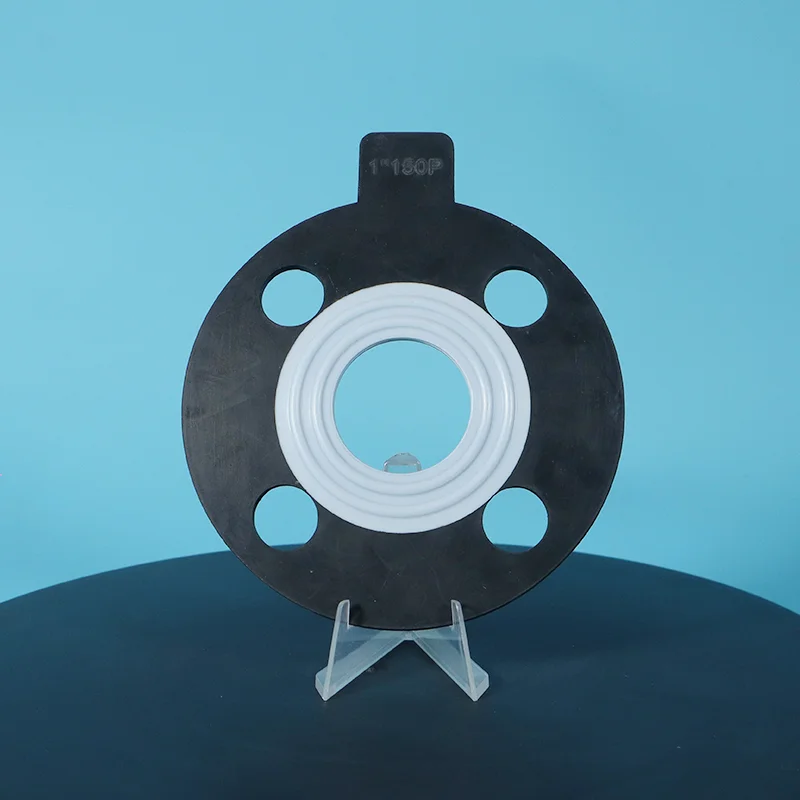
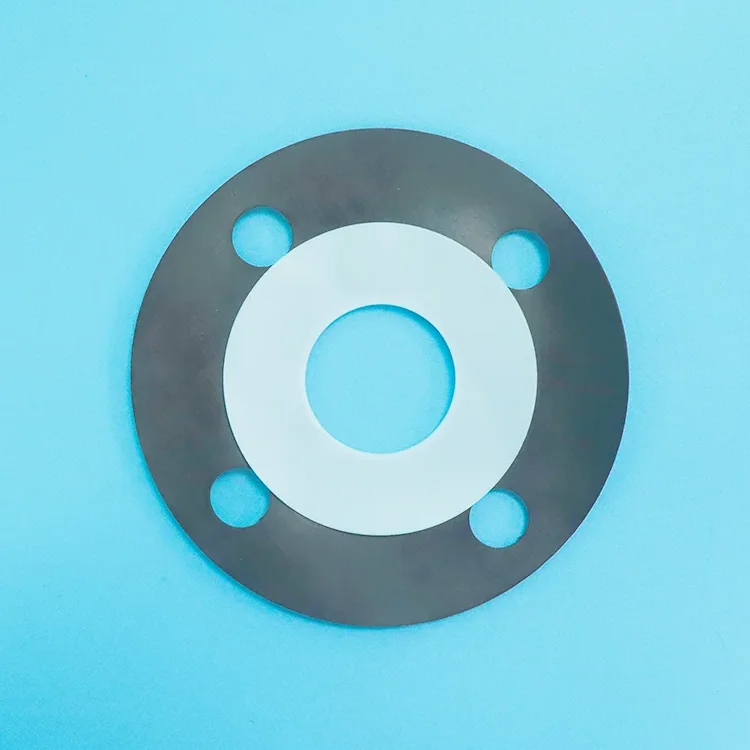
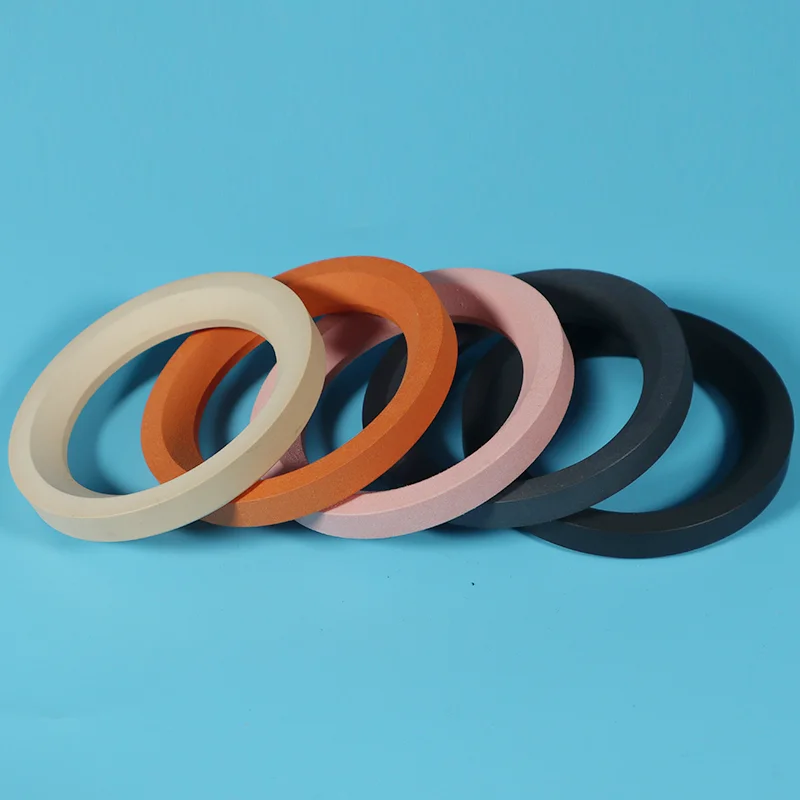
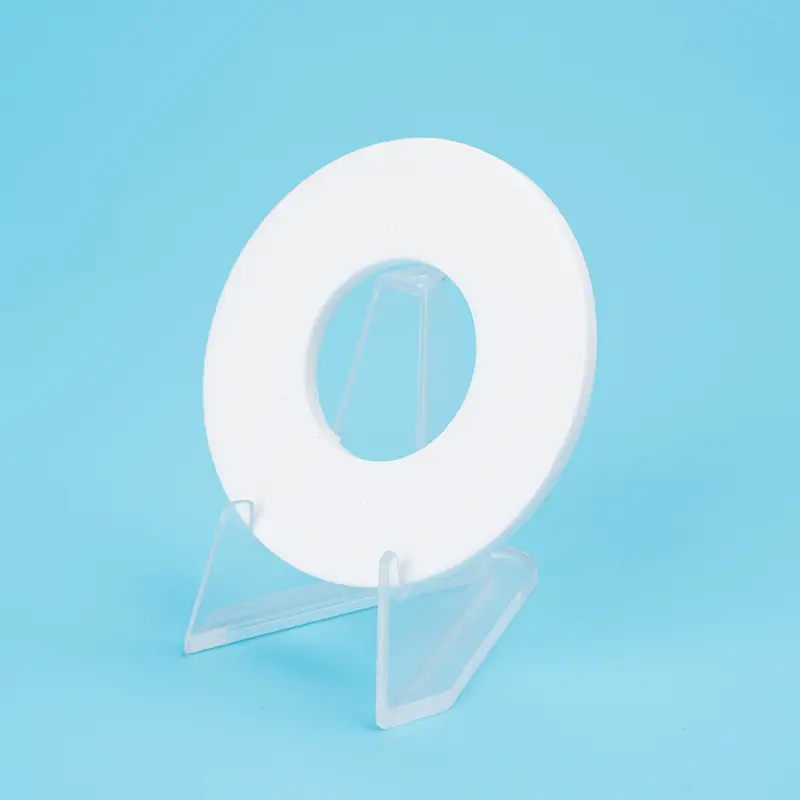
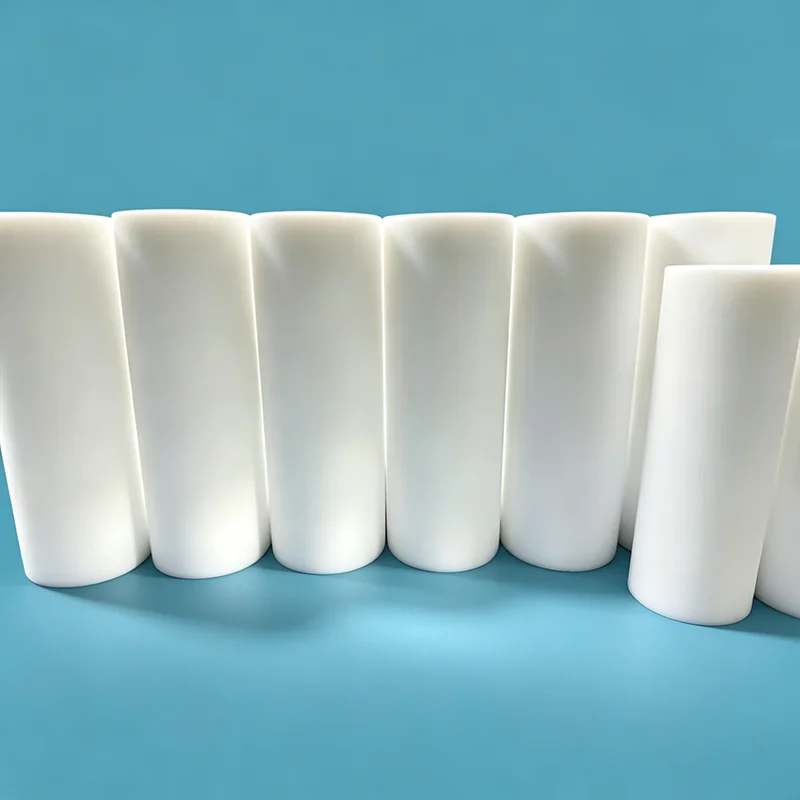
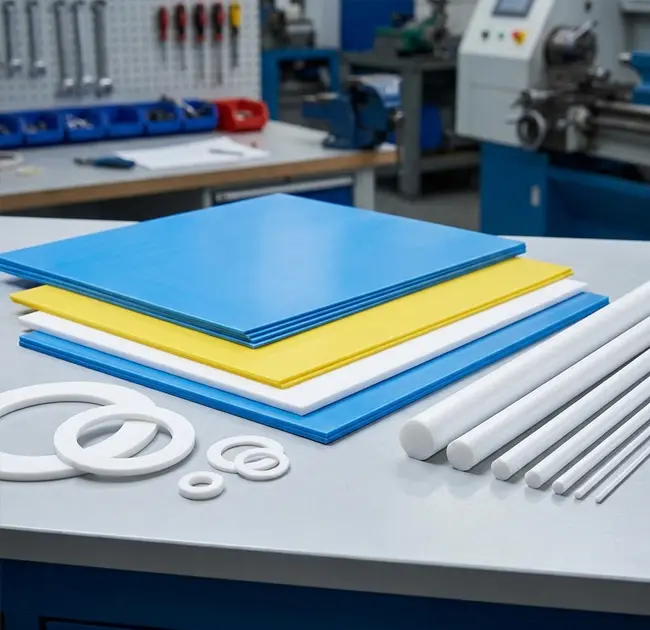
If you are looking for a reliable manufacturer and supplier of PTFE gaskets, Taifno offers OEM customization solutions that meet CE and FDA standards. The products create a tight seal between flanged connections, preventing fluid or gas leakage in piping systems and equipment.
What Are PTFE Gaskets?
PTFE gaskets are sealing components manufactured from PTFE resin through compression molding or skiving, then precision cutting or stamping into gasket shapes.
The problem they solve: Rubber gaskets swell in chemicals. Metal gaskets corrode. Graphite gaskets oxidize. PTFE offers universal chemical resistance (pH 0-14), wide temperature range (-200°C to +260°C), and the lowest coefficient of friction of any solid material — making PTFE gaskets the preferred sealing solution for chemical, pharmaceutical, food, and semiconductor industries.
The cost of choosing wrong: A rubber gasket in acid service fails in weeks, causing leaks, downtime, product loss, and safety risks. A metal gasket in corrosive service costs more and requires higher torque. A graphite gasket in oxidizing service degrades. PTFE gaskets eliminate these risks — one material for almost every chemical service.
Classification by Material
Virgin PTFE Gasket
|
Parameter
|
Description
|
|
Material
|
100% pure PTFE, no fillers, no regrind
|
|
Temperature
|
-180°C to +200°C
|
|
Density
|
2.10-2.30 g/cm³
|
|
Key Features
|
Universal chemical resistance (pH 0-14), lowest friction, FDA compliant
|
|
Best For
|
Clean chemicals, food & beverage, pharmaceutical, acids, solvents, high-purity applications
|
|
Service Life in Chemical Service
|
2-3 years
|
|
Limitation
|
Soft — poor creep resistance, deforms under sustained load
|
|
Color
|
White
|
Glass-Filled PTFE Gasket
|
Parameter
|
Description
|
|
Fillers
|
15-25% glass fiber
|
|
Temperature
|
-180°C to +200°C
|
|
Tensile Strength
|
≥25 MPa
|
|
Key Features
|
3-5x longer life in abrasive service, increased mechanical strength, improved wear resistance
|
|
Best For
|
Abrasive media, slurries, high pressure, valve seats, high load
|
|
Limitation
|
Not for hydrofluoric acid (HF) or strong alkali
|
|
Color
|
Off-white, light gray
|
Silica-Filled PTFE Gasket
|
Parameter
|
Description
|
|
Fillers
|
Silicon dioxide (SiO₂)
|
|
Temperature
|
-180°C to +200°C
|
|
Key Features
|
Excellent creep resistance, high mechanical strength, good bolt torque retention, lower permeation
|
|
Best For
|
Strong acids (except HF), solvents, hydrocarbons, chlorine service, chemical processing
|
|
Limitation
|
Not compatible with HF or strong alkali
|
|
Color
|
Fawn, orange
|
Barium Sulfate-Filled PTFE Gasket
|
Parameter
|
Description
|
|
Fillers
|
Barium sulfate (BaSO₄)
|
|
Temperature
|
-180°C to +200°C
|
|
Density
|
2.9-3.0 g/cm³ — highest among filled grades
|
|
Key Features
|
Highest density, excellent creep resistance, superior caustic resistance, high mechanical strength
|
|
Best For
|
Strong caustics (NaOH, KOH), chlorine service, hydrofluoric acid (HF), aggressive chemicals
|
|
Limitation
|
Not for molten alkali metals or fluorine gas
|
|
Color
|
White, brown
|
Glass Microsphere-Filled PTFE Gasket
|
Parameter
|
Description
|
|
Fillers
|
Hollow glass microspheres
|
|
Temperature
|
-180°C to +200°C
|
|
Recovery
|
≥32% (up to 55.8% in some grades)
|
|
Key Features
|
Low density, excellent compressibility and conformability, protects fragile flanges, low torque sealing
|
|
Best For
|
Glass-lined flanges, fragile flanges, low torque sealing, caustics, strong acids
|
|
Limitation
|
Not compatible with HF
|
|
Color
|
Blue, white
|
Expanded PTFE (ePTFE) Gasket
|
Parameter
|
Description
|
|
Material
|
100% expanded PTFE with micro-porous structure
|
|
Temperature
|
-196°C to +200°C
|
|
Compressibility
|
~38%
|
|
Recovery
|
~14%
|
|
Key Features
|
Excellent conformability to rough surfaces, no cold flow, low torque sealing, FDA compliant
|
|
Best For
|
Damaged or irregular flanges, glass-lined flanges, low torque applications, food/pharma
|
|
Limitation
|
Lower pressure rating than filled grades
|
|
Color
|
White
|
Gasket Construction Types
|
Type
|
Construction
|
Best For
|
Pressure
|
|
V-Type (Slit)
|
PTFE jacket slit from outer edge to inner bore, soft filler inserted
|
Low pressure, general chemical, DN15-DN500
|
Up to 4.0 MPa
|
|
L-Type (Machined)
|
Square cross-section, machined, no slit
|
Medium-high pressure, critical service
|
Up to 5.0 MPa
|
|
U-Type (Folding)
|
PTFE tape folded and heat-sealed, large diameter
|
Large diameter flanges (DN350+), high reliability
|
Highest
|
Filler Options: Flexible graphite, compressed asbestos-free (CAF) fiber, rubber (EPDM, Viton), glass fiber
Comparison and Selection Guide
PTFE Gaskets Grade Comparison
|
Feature
|
Virgin PTFE
|
Glass-Filled
|
Silica-Filled
|
Barium Sulfate
|
ePTFE
|
|
Chemical Resistance
|
★★★★★
pH 0-14
|
★★★★☆
not for HF/alkali
|
★★★★☆
not for HF/alkali
|
★★★★☆
not for molten metals
|
★★★★★
pH 0-14
|
|
Creep Resistance
|
★★☆☆☆
|
★★★★☆
|
★★★★★
|
★★★★★
|
★★★★☆
|
|
Wear Resistance
|
★★☆☆☆
|
★★★★★
|
★★★★☆
|
★★★★☆
|
★★★☆☆
|
|
Conformability
|
★★☆☆☆
|
★★☆☆☆
|
★★★☆☆
|
★★★☆☆
|
★★★★★
|
|
FDA Compliant
|
✅ Yes
|
❌ No
|
❌ No
|
✅ Yes
|
✅ Yes
|
|
Cost (Initial)
|
$
|
$$
|
$$
|
$$$
|
$$$
|
|
Service Life in Demanding Service
|
6-12 months
|
3-5 years
|
3-5 years
|
3-5 years
|
2-3 years
|
|
Best For
|
Purity, clean chemicals
|
Abrasives, high pressure
|
Acids, solvents, chlorine
|
Caustics, HF
|
Damaged flanges, low torque
|
Quick Selection Guide
|
If Your Service Is...
|
Choose...
|
Why
|
ROI
|
|
Clean chemicals, food/pharma, FDA compliance
|
Virgin PTFE
|
Universal chemical resistance, FDA compliant
|
Lowest cost for clean service
|
|
Abrasive media, slurries, high pressure
|
Glass-Filled PTFE
|
3-5x longer life in abrasives
|
Fewer replacements
|
|
Strong acids, solvents, chlorine, cryogenic
|
Silica-Filled PTFE
|
Excellent creep resistance + chemical compatibility
|
Longer seal life, fewer re-torquing
|
|
Strong caustics, HF service, high load
|
Barium Sulfate-Filled PTFE
|
Highest density, best caustic and HF resistance
|
Superior chemical resistance
|
|
Damaged flanges, glass-lined flanges, low torque
|
ePTFE
|
Conforms to irregularities, protects fragile flanges
|
Protects expensive equipment
|
|
Low pressure, cost-conscious, uneven flanges
|
PTFE Envelope Gasket
|
Economical, good chemical resistance
|
30-50% less than solid PTFE
|
Product Applications
|
Industry
|
Application
|
Recommended Grade
|
|
Chemical Processing
|
Pipe flanges, pumps, valves, reactors — acids, solvents, caustics, chlorine
|
Virgin, Silica-filled, Barium Sulfate-filled
|
|
Pharmaceutical
|
Sterile processing, API manufacturing, bioreactors — FDA compliance
|
Virgin PTFE (FDA grade)
|
|
Food & Beverage
|
Sanitary connections, filling equipment — FDA compliance
|
FDA-grade Virgin or ePTFE
|
|
Petrochemical
|
Pipeline flanges, valve connections — hydrocarbons, H₂S
|
Silica-filled, Glass-filled
|
|
Glass-lined Equipment
|
Glass-lined reactors, vessels — fragile flanges
|
ePTFE, Glass Microsphere-filled
|
|
Semiconductor
|
High-purity chemical distribution
|
Virgin PTFE (high-purity)
|
|
Pulp & Paper
|
Digestor flanges, stock pumps
|
Glass-filled
|
Key Benefits
1. Universal Chemical Resistance
PTFE resists almost all chemicals across pH 0-14, acids, alkalis, solvents, hydrocarbons, chlorine, and more.
2. Wide Temperature Range
Continuous service from -180°C to +200°C, one material for cryogenic to high-temperature service.
3. Low Friction
Coefficient of friction as low as 0.05-0.20, self-lubricating, reduces wear on flanges.
4. FDA-Compliant Grades
Virgin PTFE and select grades meet FDA 21 CFR 177.1550 requirements for food and pharmaceutical applications.
5. Non-Stick Surface
The surface prevents media adhesion and buildup, easy cleaning, reduces contamination risk.
6. Long Service Life
Properly selected PTFE gaskets provide reliable sealing for years, reducing maintenance frequency and downtime.
FAQ
Q: Virgin PTFE and filled PTFE gasket, which one should I choose?
A: Virgin PTFE offers universal chemical resistance (pH 0-14), lowest friction, and FDA compliance, best for clean chemicals, food/pharma, and high-purity applications.
Filled PTFE (glass, silica, barium sulfate, carbon) adds mechanical strength, creep resistance, and wear resistance, best for high pressure, abrasive media, and demanding services.
Virgin PTFE may cost less upfront, but if it fails every 6 months, one filled PTFE gasket that lasts 3-5 years saves you 6-10 replacements + downtime + labor.
Quick rule:
Clean service, FDA → Virgin.
Abrasives, high pressure, demanding → Filled.
Q: PTFE envelope gasket and solid PTFE gasket, when should I use each?
A: Solid PTFE gasket is a one-piece pure or filled PTFE gasket, best for high-pressure service, maximum chemical purity, and applications requiring no filler.
PTFE envelope gasket consists of a PTFE jacket encapsulating a compressible filler core, best for low-to-medium pressure service, glass-lined flanges, uneven flanges, and applications requiring conformability.
Quick rule:
High pressure, chemical purity → Solid PTFE.
Low-medium pressure, conformability, resilience → Envelope gasket.
Cost: Envelope gaskets cost 30-50% less than solid PTFE of the same size.
Q: What are the limits and what are the most common mistakes?
A: Temperature: -180°C to +200°C.
Pressure: Solid up to 10.0 MPa, Envelope up to 2.5-5.0 MPa.
Chemical: pH 0-14, not compatible with molten alkali metals or elemental fluorine.
Chemical limits vary by filler:
Glass-filled/silica-filled: not for HF or strong alkali
Barium sulfate-filled: not for molten alkali metals.
Three common mistakes:
(1) Using the wrong grade for your media: verify chemical compatibility before selection.
(2) Over-tightening: PTFE is soft; excessive compression causes cold flow and leakage. Use a torque wrench.
(3) Using envelope gaskets above recommended pressure: above 2.5 MPa, the envelope may deform or fail. Use solid PTFE for high pressure.