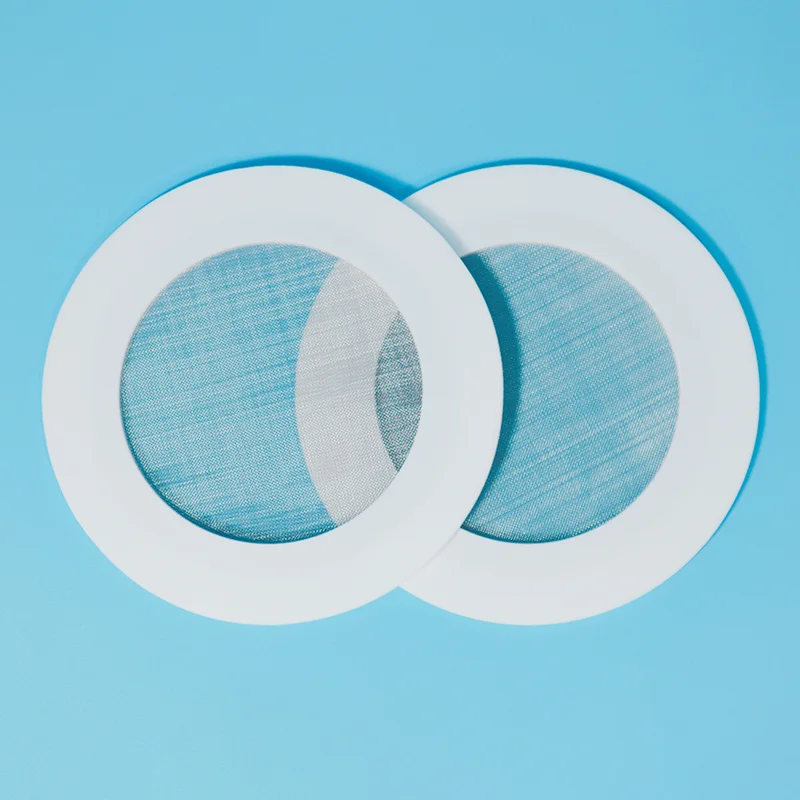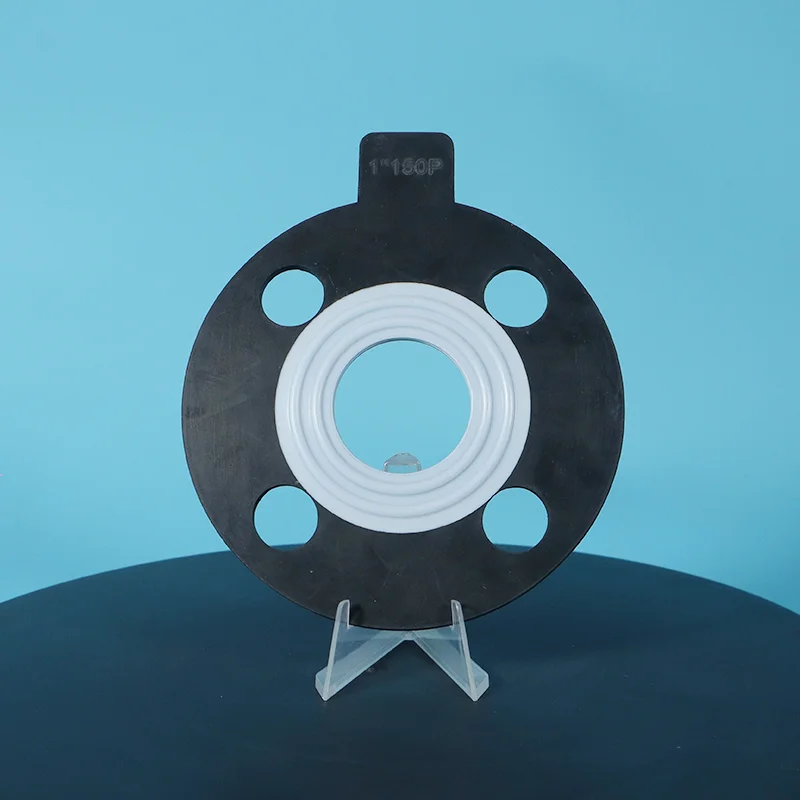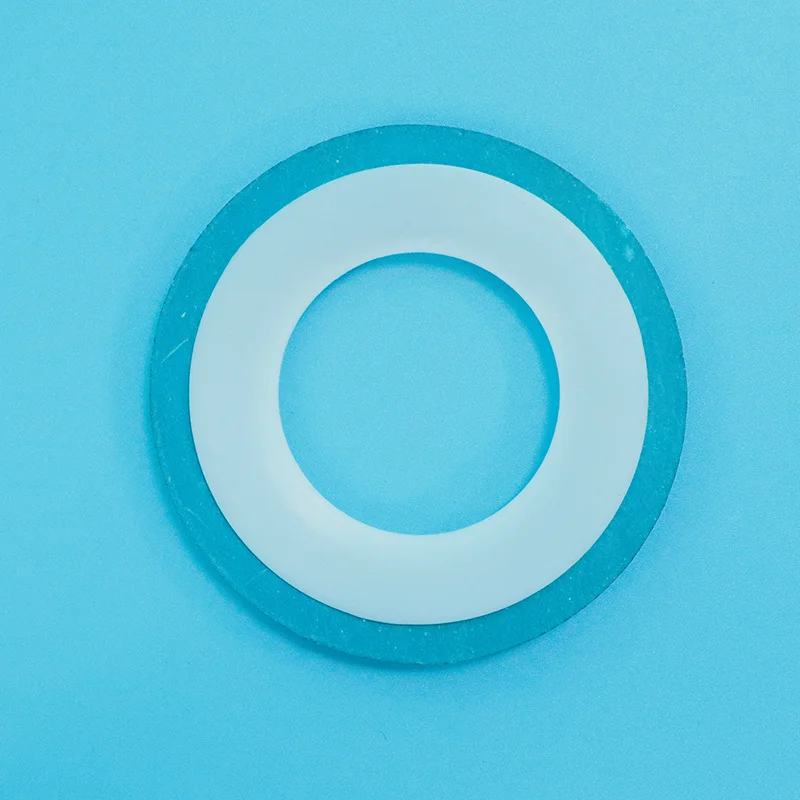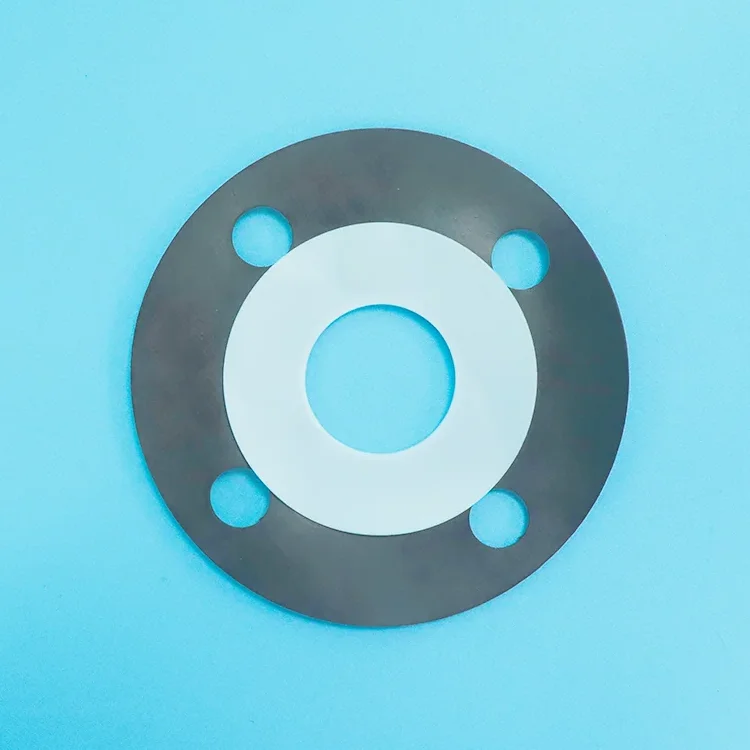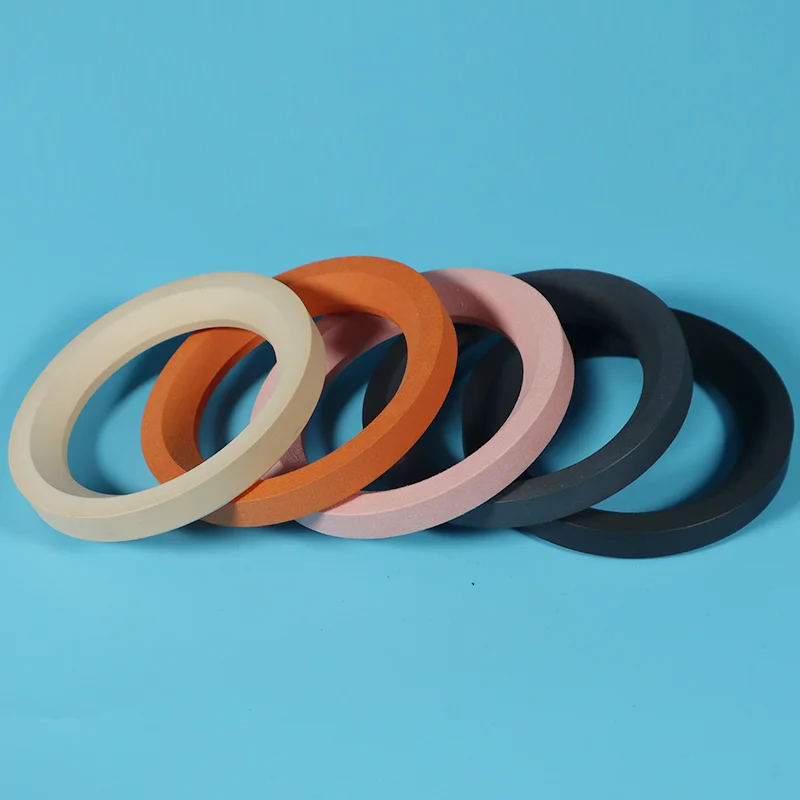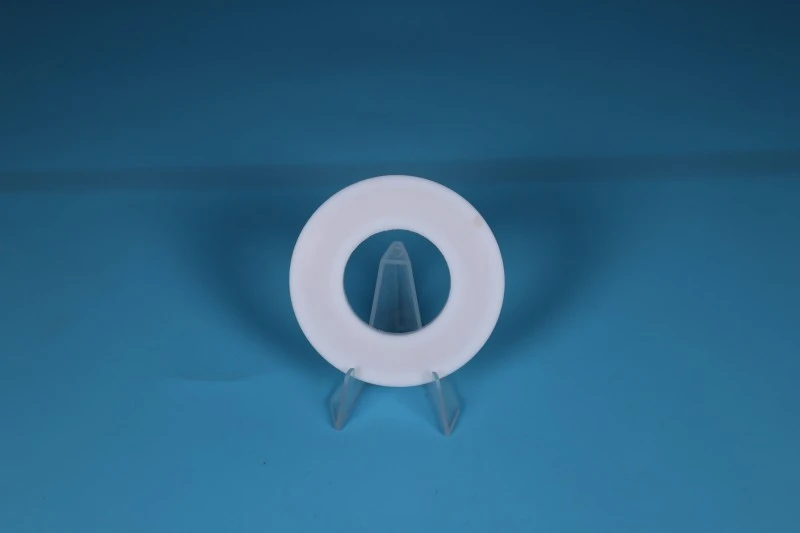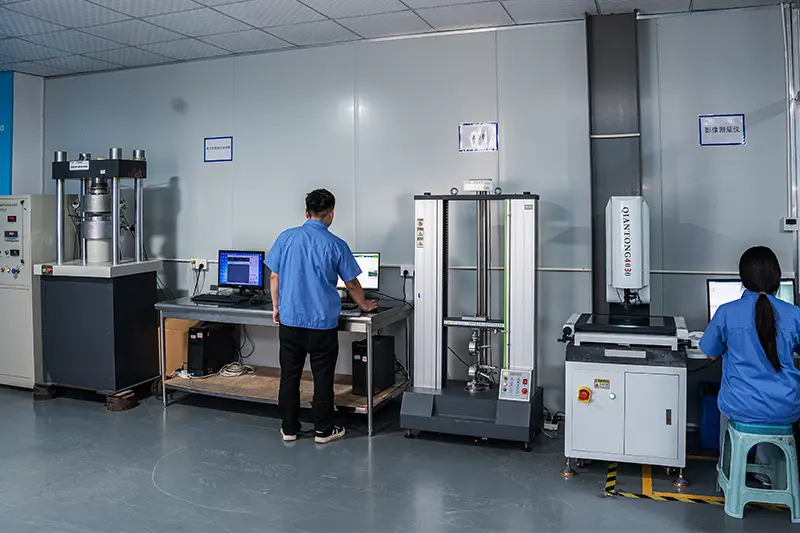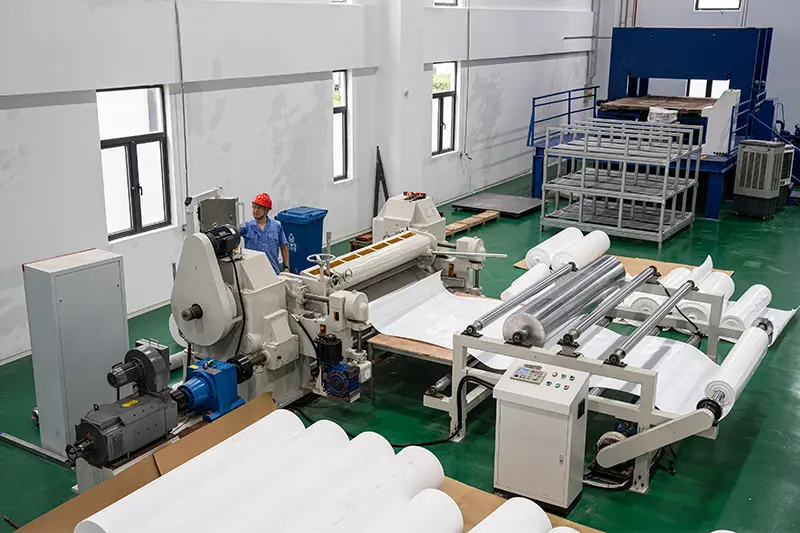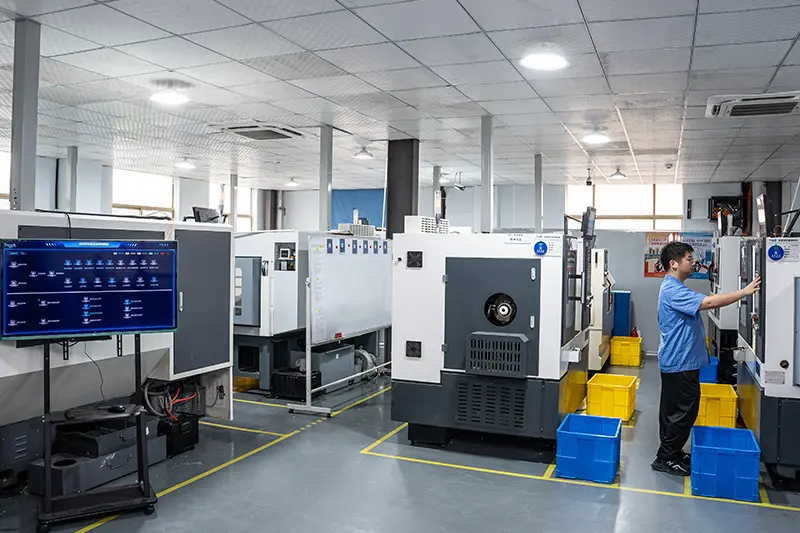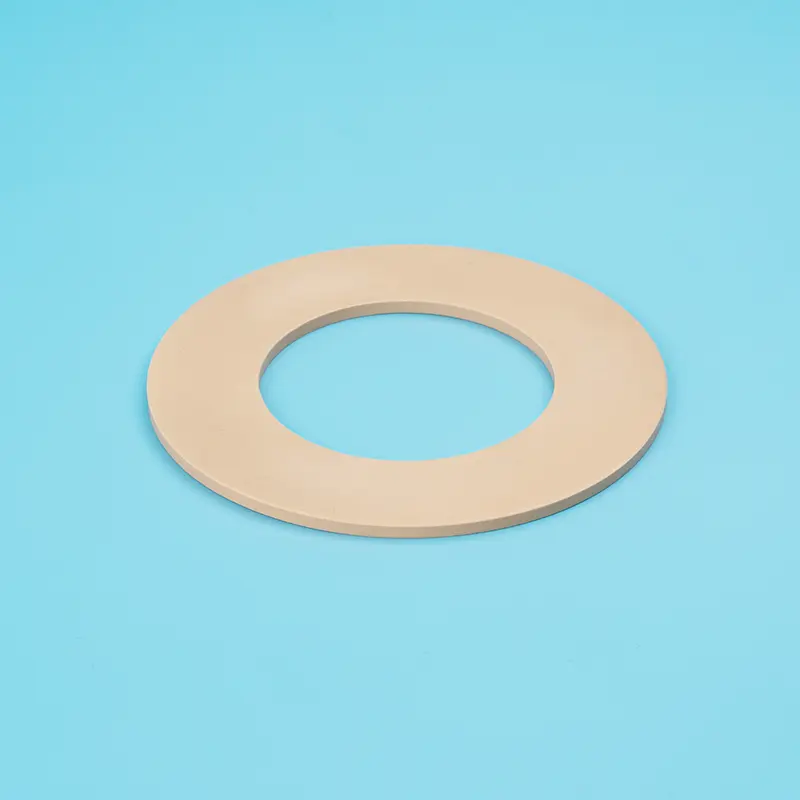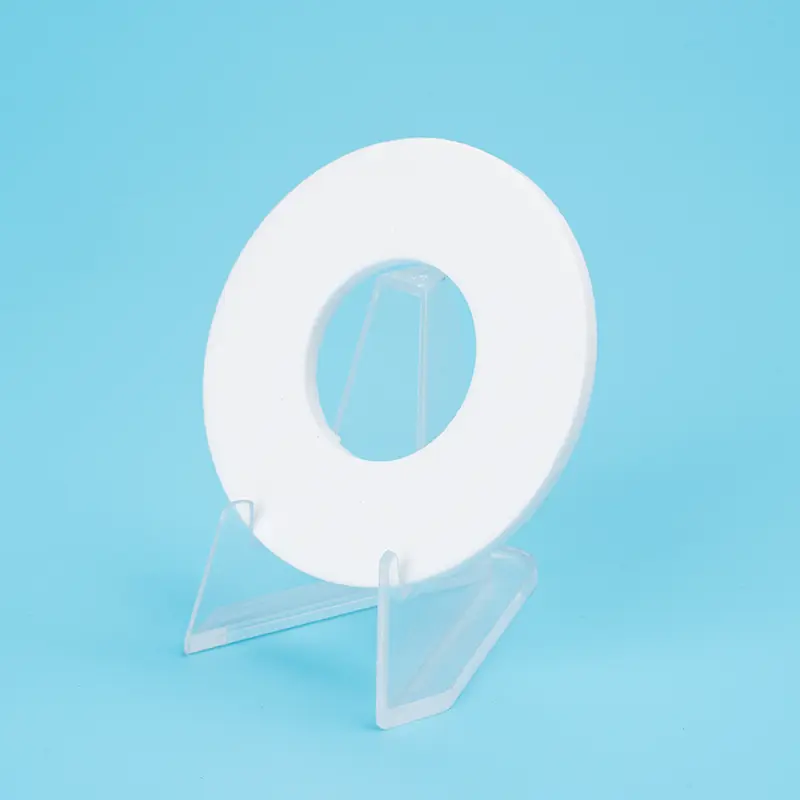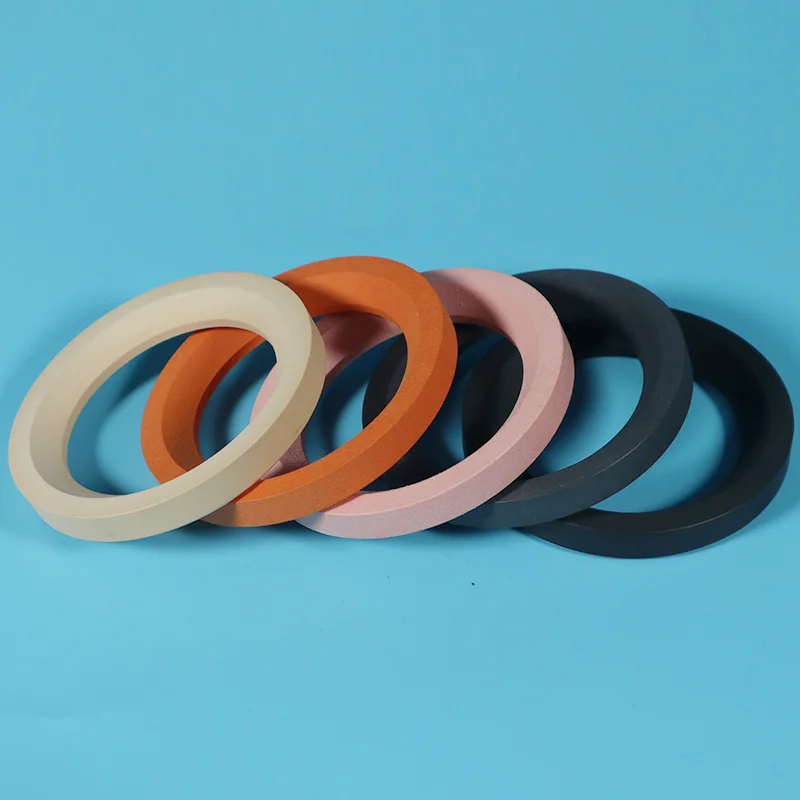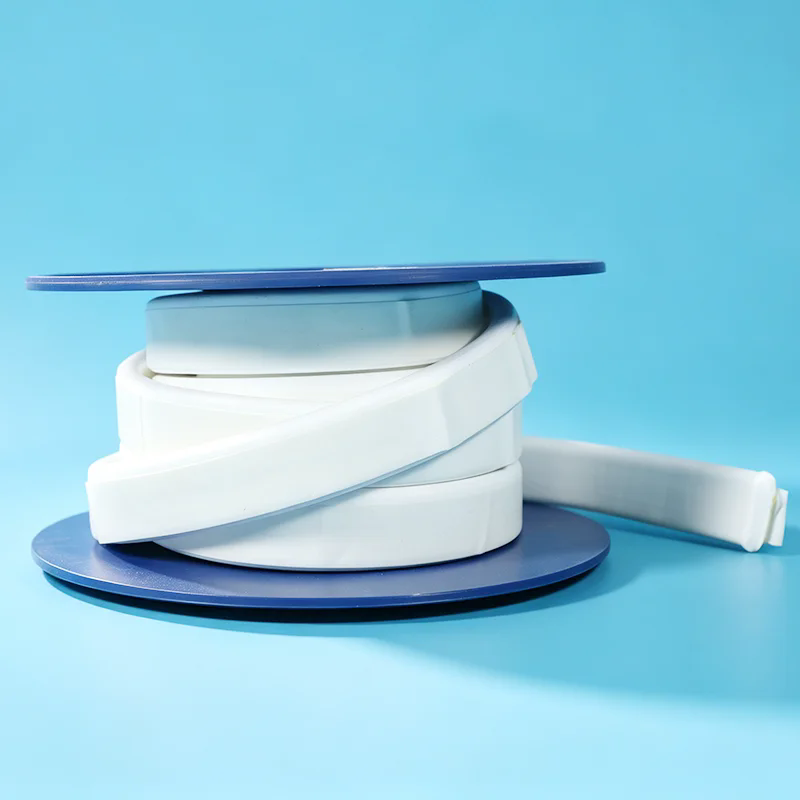
Taifno 316 Perforated Sheet Reinforced PTFE Gasket combines excellent chemical resistance with enhanced mechanical strength. Its metal reinforcement improves creep resistance, blowout resistance, and dimensional stability, helping extend seal life under demanding operating conditions. Taifno offers customized PTFE gasket sizes and specifications for industrial sealing applications requiring reliable performance and durability.
316L stainless steel perforated sheet reinforced PTFE gasket — combines PTFE's chemical resistance with metal's mechanical strength. Excellent creep resistance, blowout resistance, and extended seal life.
What Is a 316 Perforated Sheet Reinforced PTFE Gasket?
A 316 perforated sheet reinforced PTFE gasket is a composite gasket made by high-temperature pressing and sintering a 316L stainless steel perforated sheet as the reinforcing skeleton with PTFE. The metal skeleton is completely encapsulated by PTFE — overcoming PTFE's cold flow and insufficient recovery while retaining its chemical resistance.
Product Form
Description
Sheets
Custom sizes and thicknesses available
Cut Gaskets
Custom cut to any flange size
Ring Gaskets
Pre-formed ring gaskets, metal ring fully encapsulated in PTFE
Is Your Flange Leaking? Are You Facing These Problems?
Problem
Consequence
How 316 Perforated Gasket Solves It
Virgin PTFE gaskets creeping under high pressure, requiring frequent re-torquing
Production downtime, high maintenance costs
316 perforated metal skeleton retards creep, longer bolt torque retention
PTFE gaskets blowing out under pressure surges
Safety incidents, production interruption
Metal skeleton provides blowout resistance
Glass-lined flanges need low torque sealing but PTFE lacks recovery
Seal failure
Perforated sheet reinforcement provides excellent recovery, maintains seal at low torque
Food/pharma industries need metal-detectable seals
Product contamination risk
Contains 316L SS — detectable by metal detectors / X-ray
Longer bolt torque retention, fewer re-torquing cycles, significantly extended seal life
Blowout Resistance
Metal skeleton provides structural strength, prevents gasket extrusion under high pressure
Suitable for high-pressure applications, higher safety
Excellent Recovery
Compensates for PTFE's insufficient recovery
Maintains sealing force under thermal cycling
Chemical Resistance
PTFE fully encapsulates metal, metal not exposed to media
Suitable for aggressive corrosive media, metal will not corrode
Temperature Resistance
-212°C to +260°C (up to 288°C for some grades)
Suitable for cryogenic to high-temperature service
Metal Detectable
Contains 316L SS, detectable by metal detectors / X-ray
Prevents seal fragment contamination in food/pharma industries
Hygienic Compliance
FDA, USP Class VI, 3-A Sanitary compliant
Suitable for food, pharmaceutical, and biotech hygienic applications
Key Structural Features
The core structural features of 316 perforated sheet reinforced PTFE gaskets are:
Complete Encapsulation: The 316L perforated sheet is fully encapsulated in PTFE — metal edges are not exposed, ensuring corrosive media never contact the metal skeleton.
Mechanical Bonding: During high-temperature sintering, PTFE and the 316L perforated sheet form a strong mechanical bond — no adhesives or binders required.
Perforation Design: Perforations in the sheet allow PTFE to penetrate through the metal layer during sintering, creating a "rivet-like" locking structure that enhances interlayer bonding strength.
Technical Specifications
Parameter
Value
Material
PTFE + 316L Stainless Steel Perforated Sheet
Metal Content
~50% (typical)
Min Temperature
-212°C
Max Temperature (Continuous)
260°C (up to 288°C for some grades)
Max Pressure
Depends on gasket design and flange conditions
pH Range
0-14
Certifications
FDA 21 CFR 177.1550, USP Class VI, 3-A Sanitary
Comparison with Other Modified PTFE Gaskets
Comparison
316 Perforated PTFE
Glass-Filled PTFE
Carbon-Filled PTFE
Creep Resistance
★★★★★
Best (metal skeleton)
★★★★☆
Good
★★★★★
Excellent
Blowout Resistance
★★★★★
Best
★★★☆☆
Moderate
★★★★☆
Good
Chemical Resistance
★★★★★
(PTFE encapsulates metal)
★★★★☆
(not for HF/strong alkali)
★★★★★
Excellent
Metal Detectable
Yes
No
No
Recovery
★★★★★
Best
★★★☆☆
Moderate
★★★★☆
Good
Best For
Food, Pharma, Hygienic Applications
General Chemical
High Speed, Dry Running
Quick Decision:
Need creep resistance + blowout resistance + metal detectable + hygienic certification → Choose 316 Perforated PTFE Gasket
General chemical, high wear → Choose Glass-Filled PTFE
High speed, dry running → Choose Carbon-Filled PTFE
Applications
Industry
Typical Application
Key Requirement
Food & Beverage
Sanitary piping seals, SIP sterilization, WFI systems
FDA compliant + Metal detectable + Steam resistant
Pharmaceutical
Sterile equipment seals, bioreactors
USP Class VI + Metal detectable
Chemical & Petrochemical
Glass-lined flanges, strong corrosive media piping
PTFE encapsulates metal + Chemical resistance
High-Temperature Steam
Steam line flange seals
High temperature (-212°C to +288°C)
Hot Oil Lines
Hot oil system seals
High temperature + Creep resistance
Frequently Asked Questions
Q: What is a "316 perforated sheet reinforced PTFE gasket"? How is it different from virgin PTFE gaskets?
A: A "316 perforated sheet reinforced PTFE gasket" is a composite gasket with a 316L stainless steel perforated sheet embedded in PTFE as a reinforcing skeleton. Compared to virgin PTFE gaskets, it offers superior creep resistance (overcoming PTFE's cold flow), better recovery, and blowout resistance, while PTFE fully encapsulates the metal, retaining PTFE's chemical resistance. Some grades also offer metal detectability for food and pharmaceutical applications.
Q: Are 316 perforated PTFE gaskets suitable for glass-lined flanges?
A: Yes. Glass-lined flanges have uneven surfaces and are brittle — requiring high compressibility (>25%) and low-torque sealing gaskets. 316 perforated PTFE gaskets provide better structural integrity while maintaining PTFE's softness, thanks to the perforated sheet reinforcement. The key requirement is that PTFE fully encapsulates the metal, ensuring metal edges are not exposed and corrosive media never contact the metal skeleton.
Q: Does the 316 perforated PTFE gasket have FDA, USP Class VI certifications?
A: Yes. For example, Tuf-Steel® series 316/PTFE composite gaskets (50% PTFE + 50% 316L SS) meet FDA 21 CFR 177.1550, USP Class VI, and 3-A Sanitary Standards — suitable for hygienic applications in food, beverage, pharmaceutical, and biotech industries. Please specify the certified grade when ordering.
Q: What are the temperature and pressure limits for 316 perforated PTFE gaskets?
A: Temperature: Continuous -212°C to +260°C (up to 288°C for some grades). Pressure: Depends on gasket design and flange conditions — the 316 perforated sheet reinforcement provides significantly better blowout resistance and creep resistance than virgin PTFE gaskets. Chemical: pH 0-14. For application-specific data, please provide your media, temperature, and pressure.
We use cookies to offer you a better browsing experience, analyze site traffic and personalize content. By using this site, you agree to our use of cookies. Privacy Policy