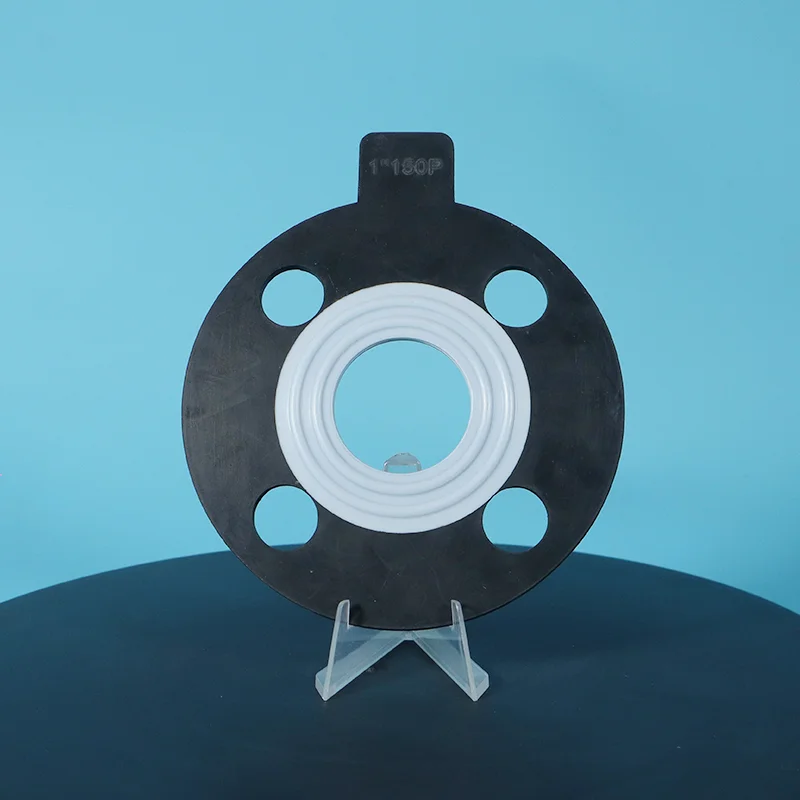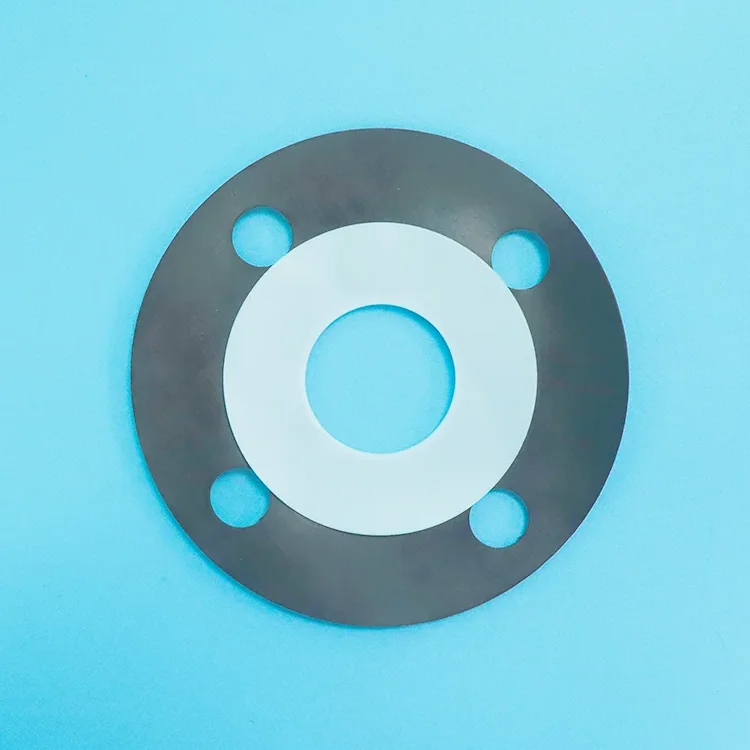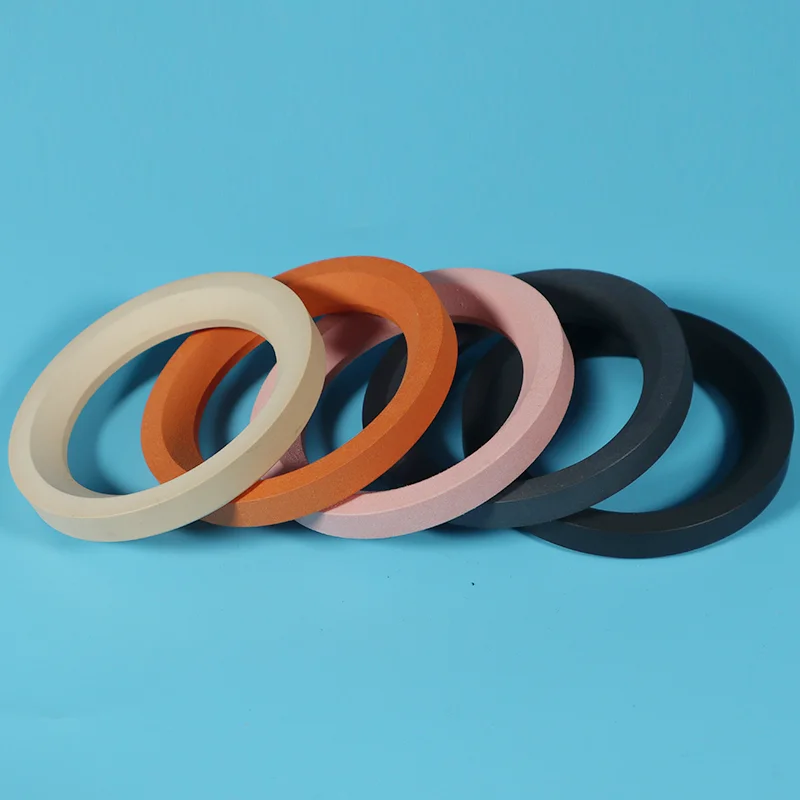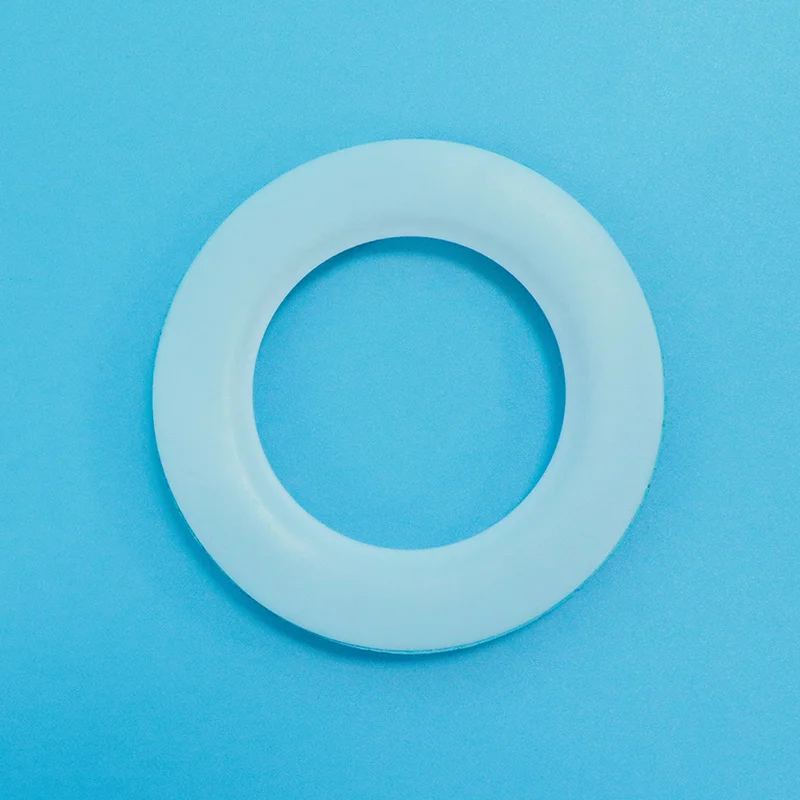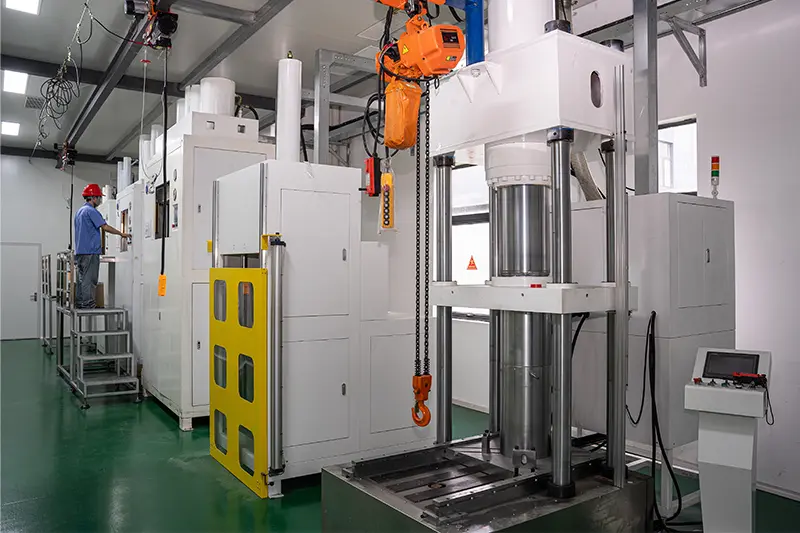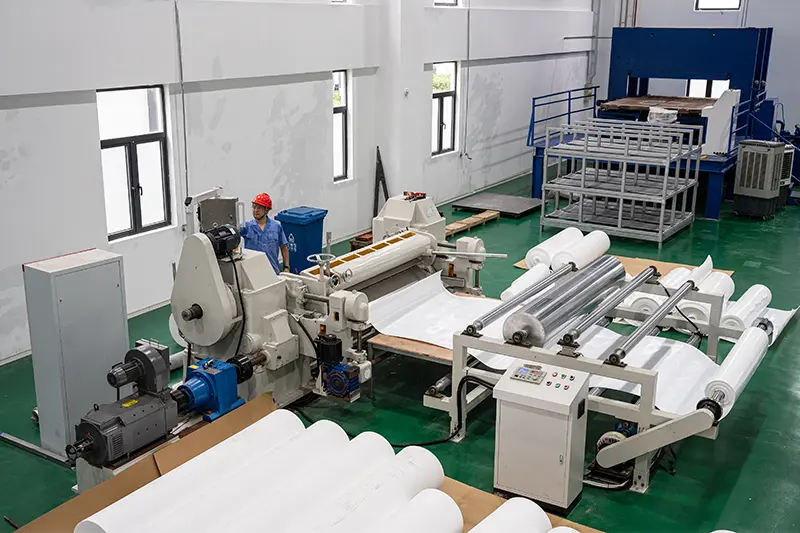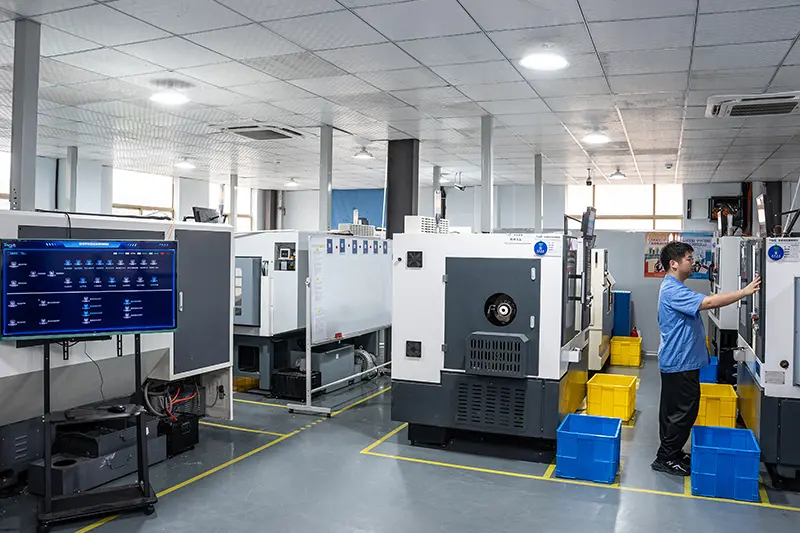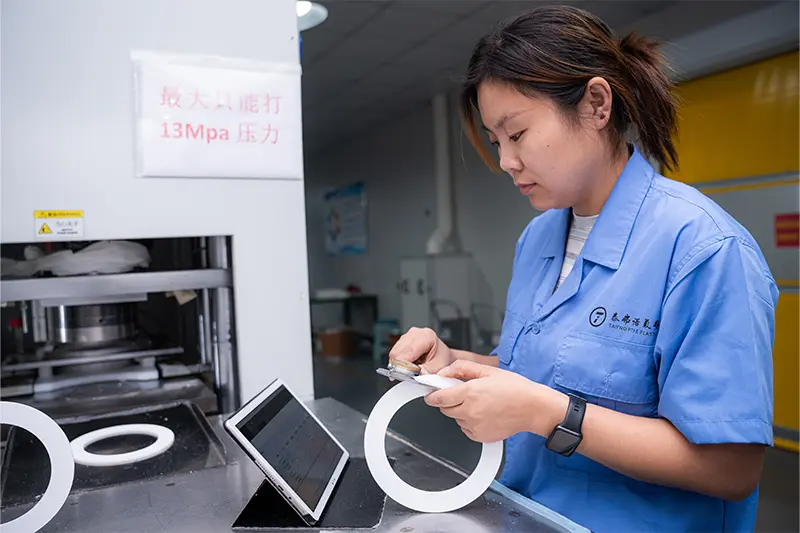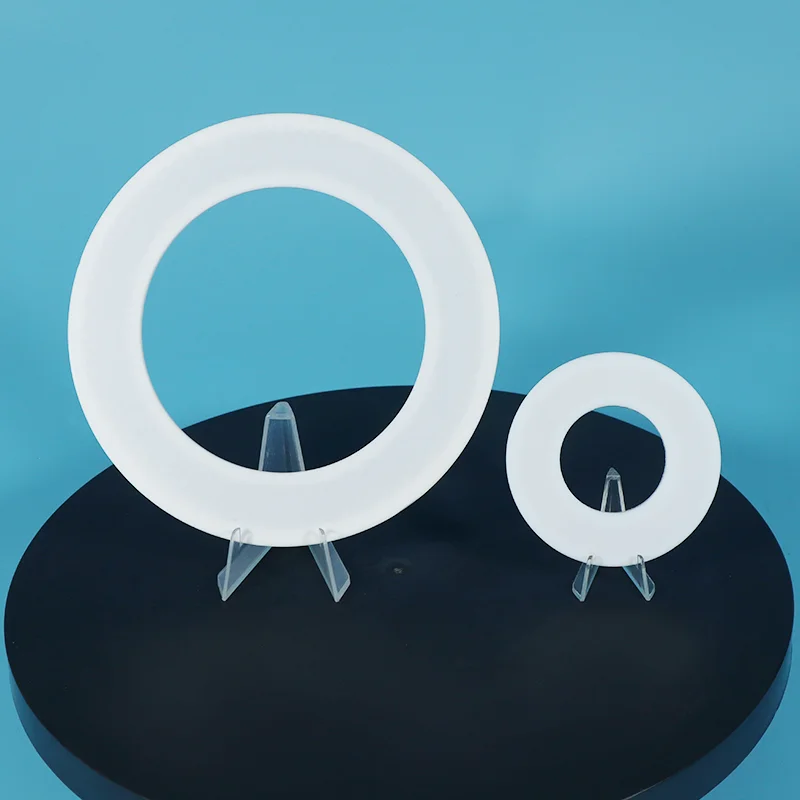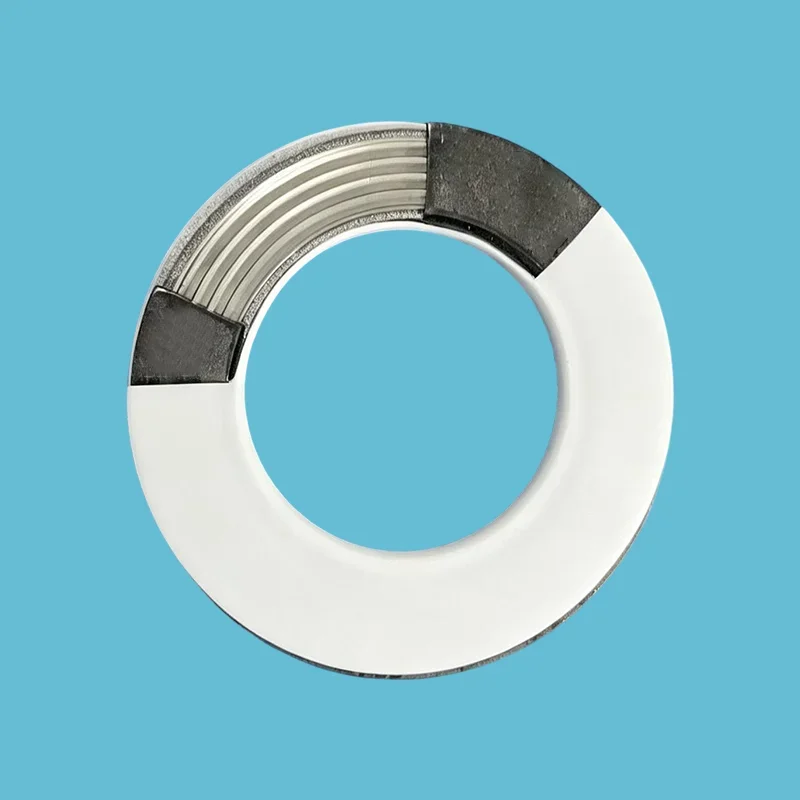
Taifno is a manufacturer and supplier of Type A PTFE Envelope Gasket, it is a cost-effective alternative to solid PTFE, combining the outer jacket’s broad chemical resistance (pH 0–14, against acids, alkalis, and solvents) with a flexible filler core that enhances compressibility and recovery. This design lowers material costs while maintaining reliable sealing performance in low-to-medium pressure chemical service.
If you are looking for high quality Type A PTFE Envelope Gasket, you can choose Taifno as your supplier and long-term partner. This product has a soft filler core wrapped in a PTFE jacket with a slit cut from the outer edge to the inner bore. Available in sizes up to DN500. Gasket factor m=2.5, minimum seating stress y=20 MPa.
What Is Type A PTFE Envelope Gasket?
A Type A PTFE envelope gasket consists of a PTFE outer jacket with a soft filler core inside. The PTFE jacket is slit from the outer edge inward to the inner bore, allowing the filler core to be inserted.
Structure:
PTFE Jacket: Made from PTFE sheet or tubing (typically 0.8-1.0mm thick), slit from the outer edge to approximately 1.5-2mm from the inner bore
Filler Core: Non-metallic material such as asbestos-free rubber sheet, compressed fiber, or graphite composite sheet
Type A Construction: The slit design makes insertion of the filler core simple — reducing manufacturing complexity and cost
Key characteristics:
PTFE jacket: Provides universal chemical resistance (pH 0-14), non-stick surface, and protects the filler core from chemical attack
Filler core: Provides compressibility, resilience, and the ability to conform to flange irregularities
Economical: Lower manufacturing cost than Type B or C — cost-effective for general chemical service
Comparison and Selection Guide
Type A vs Type B vs Type C vs Solid PTFE
Feature
Type A (Slit)
Type B (Machined)
Type C (Corrugated Metal)
Solid PTFE
Construction
Slit from outer edge
Machined square cross-section
Corrugated metal insert
One-piece solid PTFE
Filler
Soft non-metallic
Soft non-metallic
Metal (304/316 SS)
None
Pressure Limit
Up to 4.0 MPa
Higher
Highest
Higher
Chemical Resistance
★★★★☆
★★★★★
★★★★☆
★★★★★
Cost
$ — most economical
$$
$$$
$$$
Best For
Low pressure, general chemical service
Medium-high pressure, critical service
High pressure, thermal cycling
Maximum chemical resistance
Key Advantage
Cost-effective
Better sealing integrity
Blowout resistance, spring-back
Ultimate chemical purity
Quick Selection Guide
If Your Application Is...
Choose...
Why
Low-pressure corrosive service, general chemicals, cost-conscious
Custom Sizes — available in standard flange sizes and custom dimensions
Lead Time — standard sizes in stock (24-48 hours); custom sizes 5-10 days
FAQ
Q: When should I use Type A PTFE envelope gasket?
A: A Type A PTFE envelope gasket consists of a PTFE jacket with a slit cut from the outer edge to the inner bore, with a soft filler core inserted inside. The PTFE jacket provides universal chemical resistance (pH 0-14), while the filler core provides compressibility and resilience.
Use Type A when: You need chemical resistance for low-to-medium pressure corrosive service (up to 4.0 MPa) and cost is a consideration.
When NOT to use Type A: High-pressure or critical services where sealing integrity is paramount, consider Type B or C.
Cost comparison: Type A costs 30-50% less than solid PTFE gaskets of the same size, making it the preferred choice for general chemical service.
Q: Type A vs Type B vs Type C, which one should I choose?
A: Type A (slit) is the most economical, best for low-pressure general chemical service.
Type B (machined) offers better sealing integrity with a full PTFE envelope and no slit, best for medium-high pressure critical service.
Type C (corrugated metal) provides the highest pressure rating and blowout resistance, best for high pressure and thermal cycling.
Quick rule:
Up to 4.0 MPa, general chemicals → Type A.
Higher pressure, critical service → Type B.
High pressure, thermal cycling, blowout risk → Type C.
Size note: Type A recommended up to DN500; for larger diameters, Type C is preferred.
Q: What are the limitations of Type A envelope gaskets and what are the most common mistakes?
A: Temperature: Up to +200°C.
Pressure: Up to 4.0 MPa (40 bar).
Chemical: pH 0-14 universal resistance, NOT compatible with molten alkali metals or elemental fluorine at high temperatures.
Three common mistakes:
(1) Using Type A in high-pressure service: above 4.0 MPa, the gasket may deform or fail; use Type B or C.
(2) Over-tightening: excessive compression can damage the PTFE jacket at the slit, exposing the filler core to chemical attack.
(3) Using in applications with media that permeate PTFE: some chemicals (nitric acid, chlorine, ethylene oxide) can permeate through PTFE over time and attack the filler core. For these services, replace gaskets regularly or use solid PTFE gaskets.
Hot Tags: Type A PTFE Envelope Gasket, PTFE Envelope Gasket Manufacturer, PTFE Envelope Gasket Supplier
We use cookies to offer you a better browsing experience, analyze site traffic and personalize content. By using this site, you agree to our use of cookies.Privacy Policy