Send Inquiry
English
News

In Which Industries Are PTFE Products Used?

2026-08-05 0 Leave me a message

PTFE products are widely used across various industrial sectors, ranging from corrosion-resistant seals in chemical processing equipment and high-purity PTFE components in semiconductor machinery to dynamic seals in pumps, valves, and industrial machinery.

However, requirements for PTFE products vary by industry. When selecting products, it is essential to consider factors such as operating temperature, pressure, media, type of motion, cleanliness standards, and dimensional accuracy to choose the appropriate PTFE material and product design.


1. Chemical Industry

The chemical industry is one of the most typical application areas for PTFE products.

Chemical production processes often involve exposure to acids, alkalis, organic solvents, and other corrosive chemical media. While ordinary metals or certain plastics may suffer from corrosion, swelling, or performance degradation, PTFE offers exceptional chemical stability, making it widely used for sealing and media isolation in chemical equipment.


2. Oil and Gas Industry

Oil, gas, and related processing equipment are often subjected to sustained pressure, temperature fluctuations, and complex media.

PTFE seals and gaskets are used in pumps, valves, flanges, and other connection points to ensure equipment integrity.

In dynamic applications, standard virgin PTFE may require modification with fillers to enhance wear resistance, mechanical strength, and dimensional stability. Materials such as carbon-filled or glass-filled PTFE can be selected based on specific operating conditions.


3. Pharmaceutical Industry

Pharmaceutical equipment demands high standards regarding material cleanliness, chemical compatibility, and stability.

Due to its chemical inertness, PTFE—when using the appropriate grade and meeting compliance requirements—is suitable for sealing, isolation, and fluid-handling components in pharmaceutical production equipment.

For applications involving drug manufacturing or direct product contact, material grades must be selected based on specific regulations and equipment requirements. Compliance documentation (such as FDA or USP Class VI certification) must be verified; one cannot simply assume that all PTFE products automatically meet food or pharmaceutical regulations.


4. Food Processing Industry

Food processing equipment requires materials that ensure safety, withstand chemical cleaning agents, and maintain operational stability.

With its low-friction, corrosion-resistant, and temperature-resistant properties, PTFE is suitable for use in sealing, guiding, and conveying components within food processing machinery. For parts in direct contact with food, it is crucial to verify that the materials comply with relevant food-contact regulations, such as FDA 21 CFR 177.1550.


5. Semiconductor Industry

Semiconductor manufacturing demands extremely high standards for material cleanliness, chemical compatibility, and dimensional stability.

In wet cleaning processes, chemical delivery systems, vacuum systems, and related equipment, PTFE and other high-performance fluoroplastics are used to manufacture seals, piping, and specialized machined components.

This industry places particular emphasis on material purity, particle control, surface quality, and batch-to-batch consistency.


6. Valve and Pump Manufacturing Industry

Valves and pumps represent a major application area for PTFE sealing products.

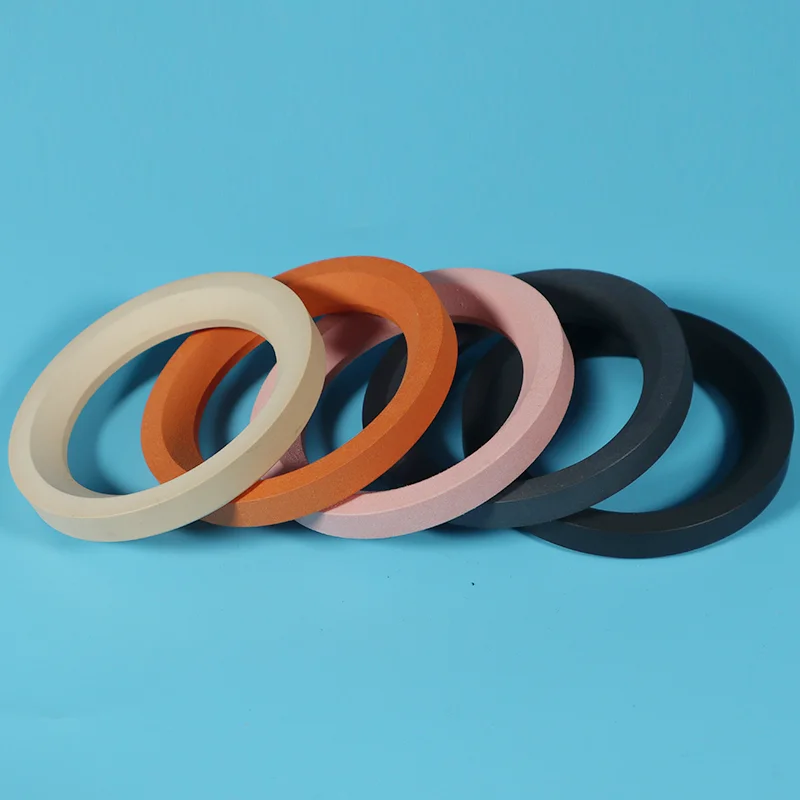
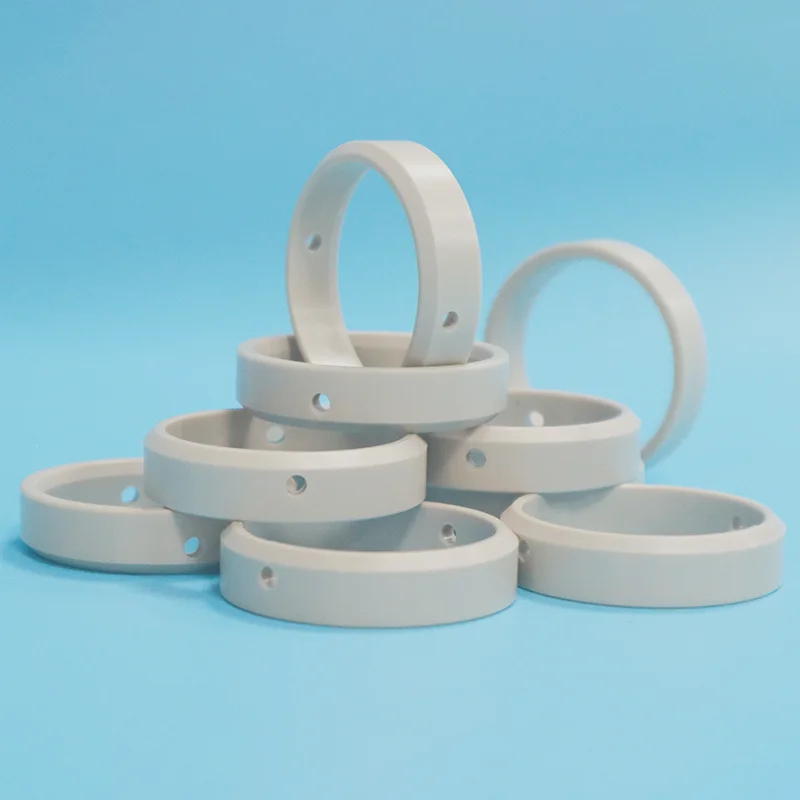
In valves, PTFE is processed into components such as valve seats, sealing rings, and packing; in pump systems, it is used for shaft seals, O-rings, wear-resistant components, and other specialized parts.


7. Mechanical Engineering Industry

Industrial machinery incorporates numerous sliding, rotating, reciprocating, and positioning mechanisms.

Thanks to its low-friction properties, PTFE is suitable for manufacturing a wide range of mechanical components.

For high-load and high-wear applications, modified PTFE or filled PTFE should be considered instead of virgin PTFE.


8. Electrical and Electronics Industry

PTFE possesses excellent dielectric and electrical insulation properties, making it suitable for use in electrical and electronic equipment.

In high-temperature or corrosive environments, PTFE provides reliable insulation and isolation for various electrical components.

For applications with strict electrical performance requirements, specific parameters such as dielectric strength and volume resistivity must be verified.


9. Energy Industry

Energy equipment must withstand conditions such as high temperatures, high pressures, corrosive media, and continuous long-term operation.

PTFE products are utilized in various types of energy equipment; material formulation and structural design are particularly critical for high-temperature, high-pressure, or dynamic operating conditions. Through filler modification, properties such as wear resistance, resistance to cold flow, and mechanical strength can be optimized.


10. Environmental Protection Equipment Industry

Equipment used for wastewater treatment, waste gas treatment, and chemical waste processing often involves long-term exposure to corrosive media. For environmental protection equipment, the value of PTFE lies primarily in its corrosion resistance and long-term stability, which help reduce maintenance frequency caused by seal material failure.


11. Automotive and Industrial Vehicle Equipment

PTFE sealing materials are also utilized in various fluid control systems, powertrains, and auxiliary equipment for automobiles and industrial vehicles.

Specific applications require material validation based on factors such as operating temperature, pressure, the medium involved, and dynamic movement conditions.


12. Aerospace and High-Performance Equipment

High-performance sectors, such as aerospace, impose stringent requirements regarding material reliability, weight, temperature resistance, chemical resistance, and dimensional stability.

PTFE and its modified variants can be used for components such as seals, insulators, guides, and bearing-related parts. However, given the aerospace industry's rigorous standards for material certification and product consistency, actual procurement requires validation against specific standards, certifications, and application requirements.

Related News
Leave me a message
X
We use cookies to offer you a better browsing experience, analyze site traffic and personalize content. By using this site, you agree to our use of cookies.Privacy Policy
RejectAccept