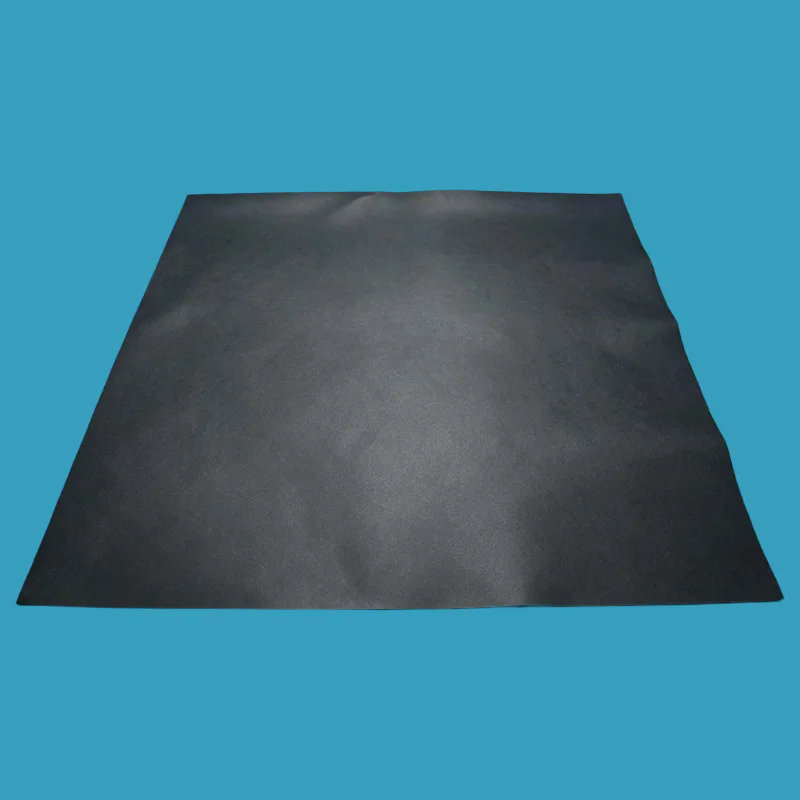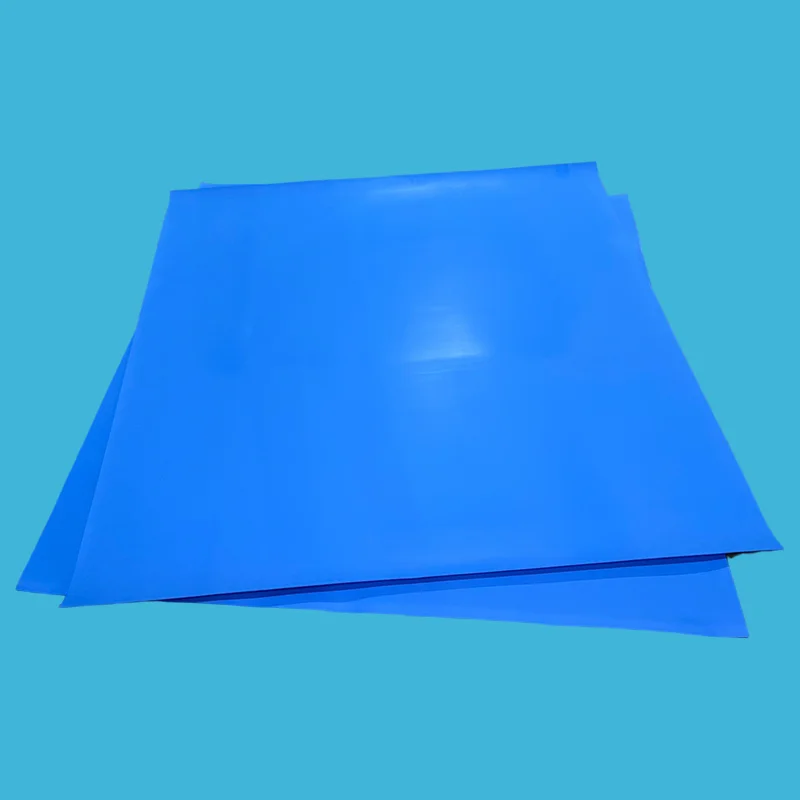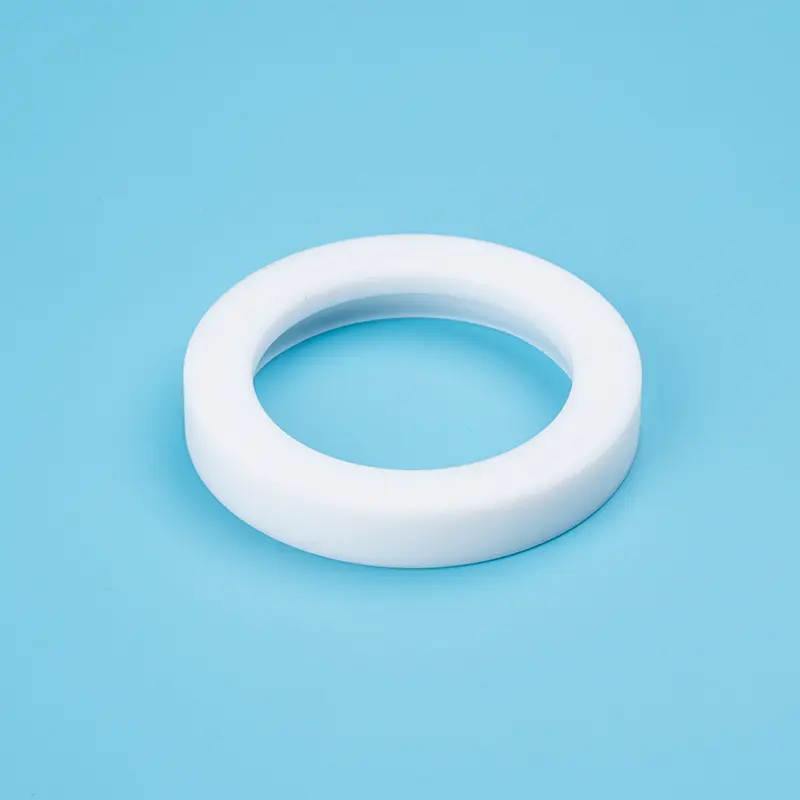
A maintenance engineer at a chemical plant replaces a set of modified PTFE sheets on a heat exchanger every eight months. A comparable plant, running similar equipment and the same process chemistry, replaces its sheets every three years. The difference is not the supplier and not the sheet thickness. It is the combination of formulation, filler content, installation practice, and the actual thermal and chemical profile that the sheets experience in service. Modified PTFE Sheets are often treated as a commodity defined by a single thickness and a generic material designation. In reality, their service life is determined by a set of interrelated factors that must be matched to the application during the procurement process.
This guide is written for buyers and maintenance engineers who need to understand what determines the service life of Modified PTFE Sheets and how to specify the right material for their application. We will examine the factors that affect longevity, including the base resin and filler system, the operating temperature and thermal cycling, the chemical exposure, the mechanical load and installation conditions, and the storage and handling practices. We will also provide a specification checklist and detailed product parameters from our factory at Ningbo Taifno PTFE Plastic Products Co., Ltd. Whether you are sourcing sheets for gaskets, linings, bearings, or electrical insulation, this guide will help you select a product that delivers the longest possible service life in your specific conditions.
Modified PTFE Sheets differ from standard PTFE in their molecular structure. Standard PTFE has a linear polymer chain, which gives it excellent chemical resistance and low friction but also makes it susceptible to creep under load and to permeation by certain chemicals. Modified PTFE, by contrast, incorporates a small percentage of a comonomer—typically perfluoropropyl vinyl ether (PPVE)—into the polymer chain. This modification disrupts the crystallinity of the material, reducing creep and improving weldability, while maintaining the chemical resistance that PTFE is known for. The degree of modification and the molecular weight of the base resin both affect the service life of the finished sheet. A higher molecular weight resin produces a sheet with greater resistance to stress cracking and wear. A carefully controlled comonomer content produces a sheet with lower creep and better dimensional stability. The table below compares standard PTFE and modified PTFE in terms of properties that affect service life.
| Property | Standard PTFE | Modified PTFE | Effect on Service Life |
| Crystallinity | High | Reduced | Lower creep, better dimensional stability |
| Weldability | Poor | Good | Enables seamless linings, reduces leak paths |
| Creep Resistance | Moderate | Good | Maintains compression under load |
| Permeation Resistance | Moderate | Improved | Reduces chemical attack from behind the sheet |
| Chemical Resistance | Excellent | Excellent | Maintains resistance to aggressive media |
At Taifno, our factory uses high-molecular-weight modified PTFE resin with a controlled comonomer content. We verify the molecular weight and the comonomer ratio of every batch before it enters production. This ensures that our Modified PTFE Sheets have the consistent structure needed for long service life in demanding applications. Our engineering team can help you select the right formulation for your specific chemical and thermal conditions.
The filler system is often the single most important factor in determining the service life of Modified PTFE Sheets. Unfilled PTFE has excellent chemical resistance and low friction, but it has relatively low wear resistance and high creep under load. For applications that involve sliding contact, high compressive loads, or thermal cycling, a filled grade is usually required. The most common fillers are glass fiber, carbon fiber, graphite, bronze, and molybdenum disulfide. Each filler improves specific properties while potentially compromising others. Glass fiber improves wear resistance and compressive strength but can be attacked by certain chemicals, particularly hydrofluoric acid and strong alkalis. Carbon fiber improves wear resistance, thermal conductivity, and creep resistance but reduces electrical insulation. Graphite improves friction and wear but can increase porosity. Bronze improves thermal conductivity and compressive strength but is not suitable for chemical applications. The table below summarizes the effects of common fillers on Modified PTFE Sheet service life.
| Filler | Wear Resistance | Creep Resistance | Chemical Resistance | Typical Application |
| Glass Fiber | Excellent | Good | Good (not for HF or strong alkali) | Gaskets, bearings, seals |
| Carbon Fiber | Excellent | Excellent | Excellent | Bearings, wear rings, compressor parts |
| Graphite | Good | Good | Excellent | Seals, bearings, low-friction applications |
| Bronze | Excellent | Excellent | Poor (not for chemical service) | High-load bearings, wear plates |
| Molybdenum Disulfide | Good | Moderate | Excellent | Low-friction seals, sliding applications |
At our factory, we produce Modified PTFE Sheets with a range of filler systems to suit different applications. We work with our customers to select the filler that provides the best balance of wear resistance, creep resistance, and chemical compatibility for their specific service conditions. Our technical team can provide material compatibility data and wear test results to support the selection process.
Temperature is a critical factor in the service life of Modified PTFE Sheets. PTFE has a continuous service temperature of approximately 260°C, but the practical service life at elevated temperatures is limited by two mechanisms: thermal degradation of the polymer and accelerated creep under load. At temperatures above 200°C, the polymer chains begin to degrade slowly, releasing trace amounts of hydrogen fluoride and other decomposition products. This degradation is accelerated by the presence of oxygen and by repeated thermal cycling. Thermal cycling is particularly damaging because it causes the sheet to expand and contract, which can lead to fatigue cracking and loss of compression in gasket applications. The table below summarizes the effect of temperature on the expected service life of Modified PTFE Sheets.
| Continuous Temperature | Expected Service Life | Degradation Mechanism |
| Up to 150°C | Excellent (10+ years) | Minimal thermal degradation |
| 150°C - 200°C | Good (5-10 years) | Slow thermal aging, moderate creep |
| 200°C - 230°C | Moderate (2-5 years) | Accelerated thermal aging, increased creep |
| 230°C - 260°C | Limited (1-2 years) | Significant thermal degradation, high creep |
| Above 260°C | Not recommended | Rapid degradation, potential decomposition |
At Taifno, our factory tests our Modified PTFE Sheets for thermal aging at elevated temperatures. We provide our customers with service life estimates based on the actual operating temperature and the thermal cycling profile. For applications that involve frequent thermal cycling, we recommend a filled grade with improved creep resistance to maintain compression over time.
Modified PTFE Sheets are resistant to the vast majority of industrial chemicals, but there are specific conditions that can shorten service life. The most important are exposure to molten alkali metals, elemental fluorine, and certain fluorinating agents, which attack PTFE at the molecular level. These are well-known exceptions. Less obvious are the effects of chemical permeation. Even when the sheet is not chemically attacked, certain chemicals can permeate through the PTFE and attack the substrate behind it, or accumulate within the sheet and cause blistering or delamination. This is particularly relevant in lined equipment, where the sheet is bonded to a metal substrate. The table below summarizes the chemical exposure conditions that can shorten the service life of Modified PTFE Sheets.
| Chemical Condition | Effect on Service Life | Mitigation |
| Molten Alkali Metals | Rapid chemical attack | Avoid PTFE; use alternative material |
| Elemental Fluorine | Rapid chemical attack | Avoid PTFE; use alternative material |
| High-Permeation Chemicals | Permeation through sheet, substrate attack | Use thicker sheet or barrier layer |
| Chemicals with Surfactants | Wetting of surface, reduced chemical resistance | Test compatibility before use |
| High-Temperature Chemical Exposure | Accelerated permeation and degradation | Reduce temperature or use thicker sheet |
At our factory, we provide chemical compatibility data for our Modified PTFE Sheets across a wide range of industrial chemicals. We also offer permeation testing for specific chemicals and operating conditions. Our technical team can help you determine whether a standard sheet or a thicker sheet is required for your application.
Installation and mechanical load are often overlooked as factors in the service life of Modified PTFE Sheets. A sheet that is installed incorrectly or subjected to excessive mechanical load will fail prematurely, regardless of its material quality. The most common installation errors are over-torquing of bolts (which crushes the sheet and reduces its recovery), under-torquing (which allows leakage and chemical attack at the sealing interface), and improper surface preparation (which prevents the sheet from seating correctly). Mechanical load factors include compressive stress, sliding wear, and the presence of abrasive particles. The table below summarizes the installation and load factors that affect service life.
| Factor | Effect on Service Life | Corrective Action |
| Over-Torquing | Crushing, loss of recovery, creep | Follow torque specification |
| Under-Torquing | Leakage, chemical attack at interface | Follow torque specification |
| Poor Surface Preparation | Improper seating, leak paths | Clean and inspect mating surfaces |
| Excessive Compressive Load | Creep, loss of thickness | Select filled grade with higher creep resistance |
| Abrasive Particles | Accelerated wear | Filter process fluid, use wear-resistant grade |
| Sliding Contact | Wear, friction heating | Use filled grade with low friction |
At Taifno, we provide installation guidelines for our Modified PTFE Sheets, including torque specifications and surface preparation requirements. We also offer technical support to help our customers select the right grade for their mechanical load conditions. Our goal is to ensure that the sheet performs as designed for its full service life.
The service life of a Modified PTFE Sheet begins before it is installed. Improper storage and handling can introduce defects that shorten its life in service. The most important storage factors are temperature, humidity, UV exposure, and mechanical stress. PTFE sheets should be stored in a cool, dry, clean area, away from direct sunlight and sources of ozone. They should be stored flat or on edge, not bent or folded, to prevent permanent deformation. They should be protected from dust and debris, which can become embedded in the surface and cause wear or contamination. The table below summarizes the storage and handling practices that preserve sheet performance.
| Practice | Reason | Recommended Condition |
| Store Flat or on Edge | Prevents bending and permanent deformation | Flat pallet or vertical rack |
| Control Temperature | Prevents thermal stress and dimensional change | 15°C - 30°C |
| Control Humidity | Prevents condensation and contamination | < 60% RH |
| Avoid UV Exposure | Prevents surface degradation | Indoor storage, away from windows |
| Protect from Dust | Prevents embedded particles and wear | Covered storage |
| Avoid Contact with Oils | Prevents swelling and contamination | Clean, dry storage area |
At our factory, we package our Modified PTFE Sheets in protective film and ship them in rigid containers to prevent damage during transit. We also provide storage guidelines to our customers to ensure that the sheets remain in optimal condition until they are installed.
Evaluating a supplier of Modified PTFE Sheets requires a focus on material formulation, filler consistency, quality control, testing capability, and technical support. The supplier must have the capability to produce sheets with consistent molecular weight, comonomer content, and filler dispersion. They must have a quality control system that verifies these properties on every batch. They must have testing capability for thermal aging, chemical resistance, and mechanical properties. And they must provide technical support to help buyers select the right grade for their application. The table below summarizes these evaluation criteria.
| Evaluation Criterion | What to Look For | Why It Matters |
| Material Formulation | Controlled comonomer content, high molecular weight | Ensures creep resistance and weldability |
| Filler Consistency | Uniform dispersion, verified filler content | Ensures consistent wear and mechanical properties |
| Quality Control | ISO 9001, batch testing, traceability | Ensures consistent product quality |
| Testing Capability | Thermal aging, chemical resistance, wear testing | Verifies service life claims |
| Technical Support | Material selection, application engineering | Helps select the right grade |
At Taifno, our factory has been producing Modified PTFE Sheets for over a decade. We control the formulation and filler dispersion in-house, and we test every batch for the properties that affect service life. We are ISO 9001 certified, and we maintain detailed records of all inspections. Our technical team is available to assist with material selection and application engineering. We invite you to evaluate us against these criteria and to consider us as your partner for Modified PTFE Sheets.
The following table provides the key product parameters for our Modified PTFE Sheets. These sheets are designed for gaskets, linings, bearings, seals, and electrical insulation in demanding industrial applications. Our factory can also produce custom sheets to meet specific requirements.
| Parameter | Specification Range | Notes |
| Thickness | 0.5 mm - 50 mm | Custom thicknesses available |
| Sheet Size | 500 x 500 mm to 2000 x 2000 mm | Custom sizes available |
| Base Resin | Modified PTFE (PPVE comonomer) | High molecular weight |
| Filler Options | Glass Fiber, Carbon Fiber, Graphite, Bronze, MoS2 | Selected for application |
| Filler Content | 5% - 40% by weight | Depends on filler type |
| Density | 2.14 - 2.30 g/cm³ | Depends on filler |
| Tensile Strength | 20 - 35 MPa | Depends on formulation |
| Elongation at Break | 200% - 400% | Depends on formulation |
| Continuous Service Temperature | -200°C to +260°C | Depends on application |
| Dielectric Strength | 20 - 30 kV/mm | Unfilled grades |
| MOQ | 100 kg | Negotiable for large orders |
| Lead Time | 2 - 4 weeks | Depends on quantity and customization |
At our factory, we manufacture our Modified PTFE Sheets to meet these specifications and more. We can customize the thickness, sheet size, filler type, and filler content to suit your specific requirements. Our quality control system includes inspection of raw materials, in-process inspection, and final inspection before shipment. Our goal is to provide our customers with high-quality Modified PTFE Sheets that deliver long service life and reliable performance.
Question 1: How long do modified PTFE sheets typically last in service?
Answer: The service life of a Modified PTFE Sheet depends on the operating conditions. In benign conditions—temperatures below 150°C, mild chemicals, and low mechanical load—a sheet can last 10 years or more. In more demanding conditions—temperatures of 200°C to 260°C, aggressive chemicals, and high compressive loads—the service life may be 1 to 5 years. Our factory can provide a service life estimate based on your specific operating temperature, chemical exposure, and mechanical load.
Question 2: What is the difference between standard PTFE and modified PTFE sheets?
Answer: Modified PTFE incorporates a small amount of comonomer (typically PPVE) into the polymer chain, which reduces crystallinity and improves creep resistance and weldability compared with standard PTFE. This makes modified PTFE sheets better suited to applications that involve high compressive loads, thermal cycling, or welded linings. The chemical resistance remains excellent in both materials.
Question 3: Which filler is best for high-wear applications?
Answer: For high-wear applications, carbon fiber and glass fiber fillers provide the best wear resistance. Carbon fiber also improves thermal conductivity and creep resistance, making it suitable for bearings and wear rings. Glass fiber is more economical and is widely used in gaskets and seals. The choice depends on the specific application, the chemical environment, and the mechanical load. Our technical team can help you select the right filler.
Question 4: Can modified PTFE sheets be used in food processing applications?
Answer: Yes, modified PTFE sheets can be used in food processing applications, provided that the grade is compliant with the relevant food contact regulations. Unfilled and some filled grades are available in FDA-compliant and EU 10/2011-compliant formulations. Our factory can provide the necessary compliance documentation for food contact applications.
Question 5: How do I store modified PTFE sheets before installation?
Answer: Modified PTFE Sheets should be stored flat or on edge in a cool, dry, clean area, away from direct sunlight and sources of ozone. The storage temperature should be between 15°C and 30°C, and the relative humidity should be below 60%. The sheets should be protected from dust and debris, and they should not be bent or folded. Our factory provides storage guidelines with every shipment.
The service life of Modified PTFE Sheets is determined by a combination of formulation, filler selection, temperature, chemical exposure, installation, and storage. By understanding these factors and specifying the right material for the application, buyers can achieve longer service life, lower maintenance costs, and more reliable performance. At Ningbo Taifno PTFE Plastic Products Co., Ltd., our factory has the expertise and the capability to produce Modified PTFE Sheets that meet the most demanding requirements. We control the formulation and filler dispersion in-house, and we test every batch for the properties that affect service life. Our technical team is available to assist with material selection and application engineering.
Whether you are sourcing sheets for gaskets, linings, bearings, seals, or electrical insulation, we invite you to contact us to discuss your requirements. We can provide samples, technical data, and customized solutions. Our commitment to quality and customer satisfaction has made us a trusted partner for businesses around the world.
Contact Ningbo Taifno PTFE Plastic Products Co., Ltd. today to discuss your Modified PTFE Sheet requirements and discover how our products can deliver long service life in your application.
-