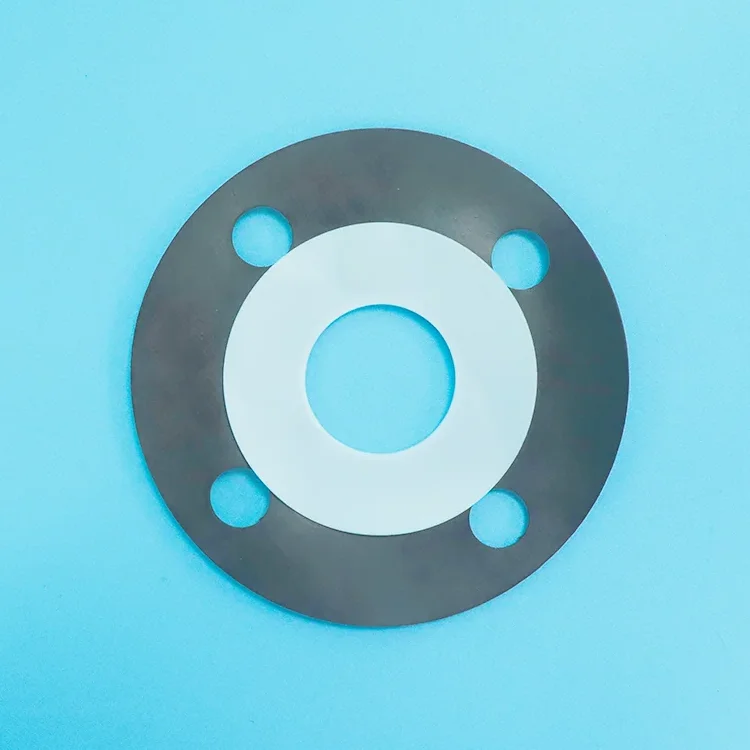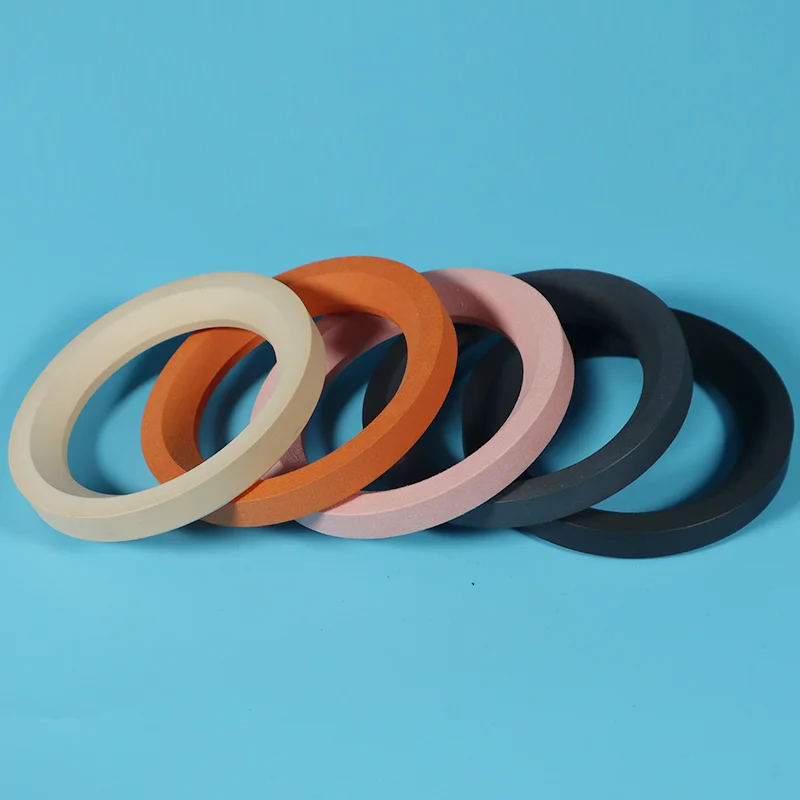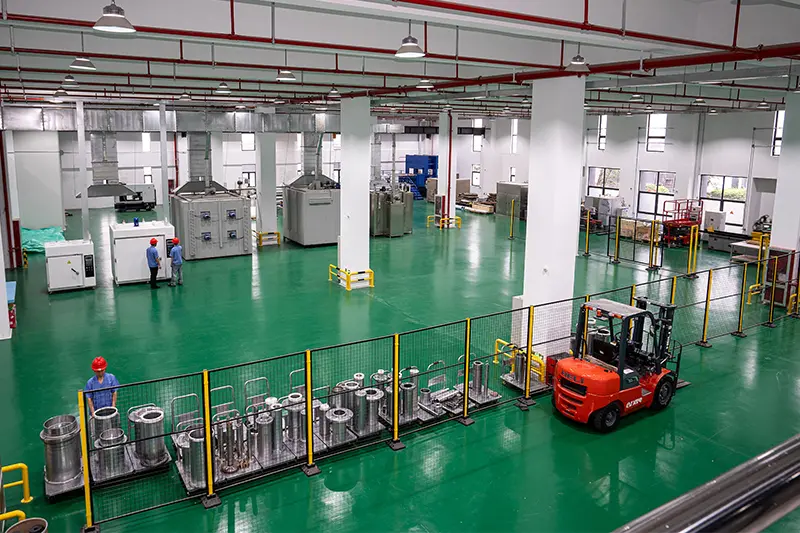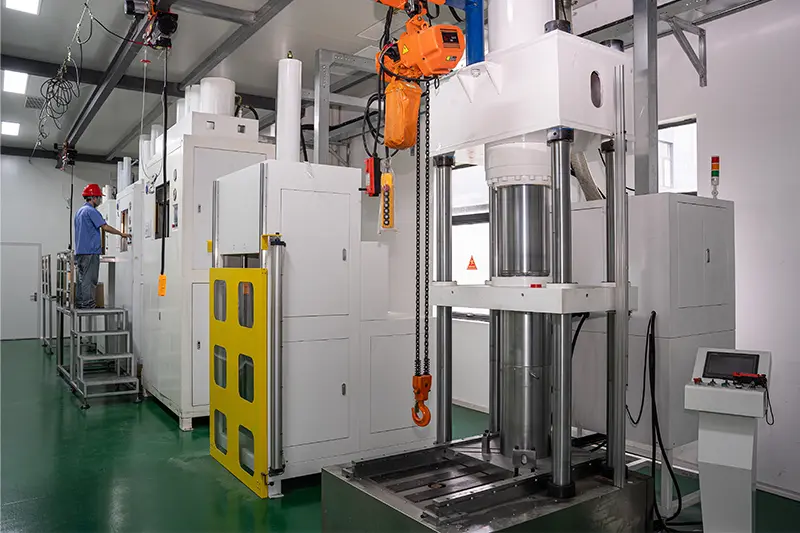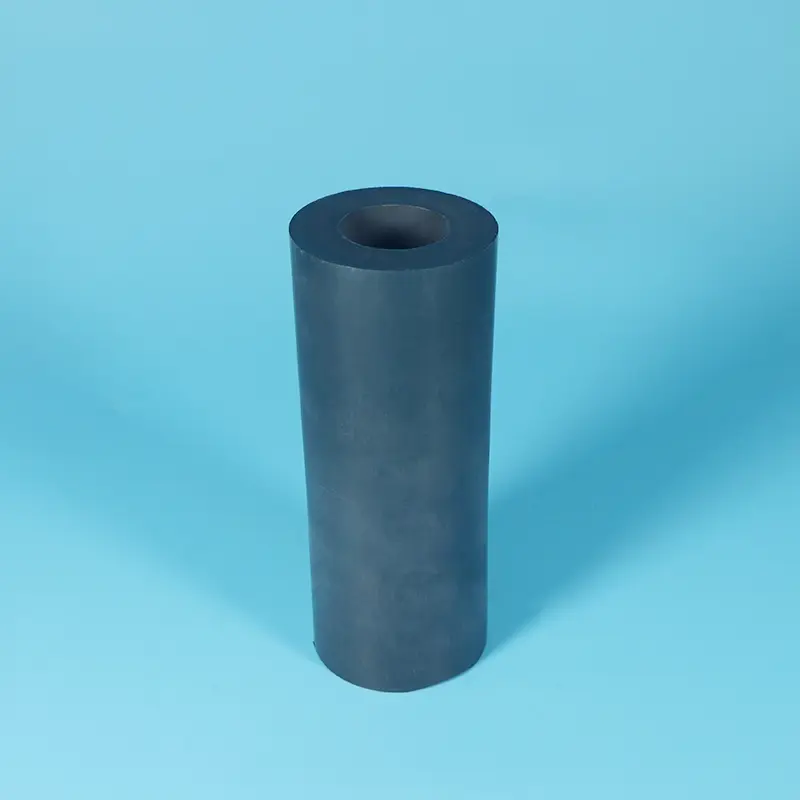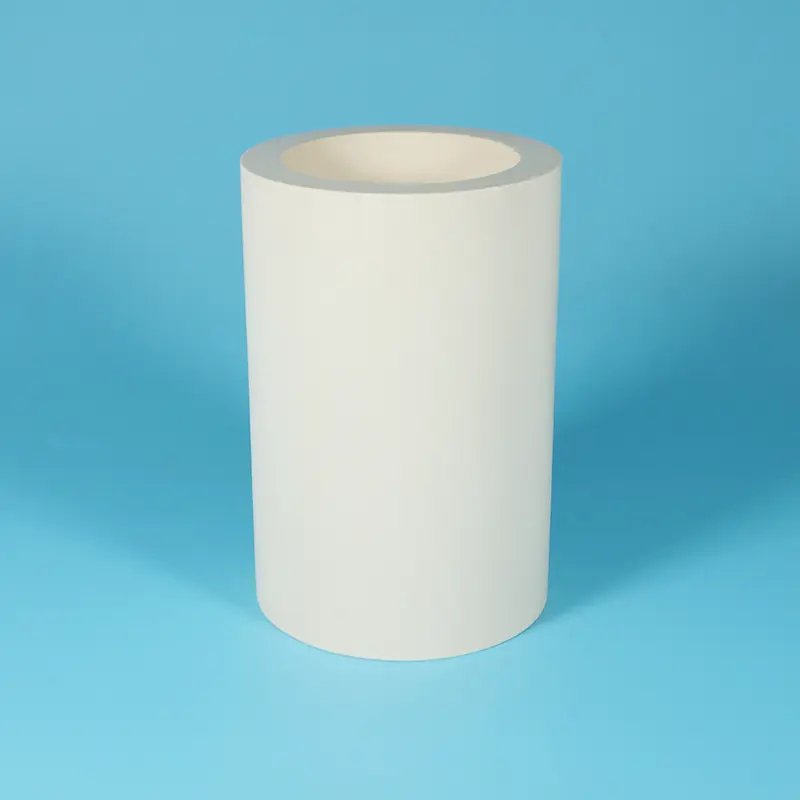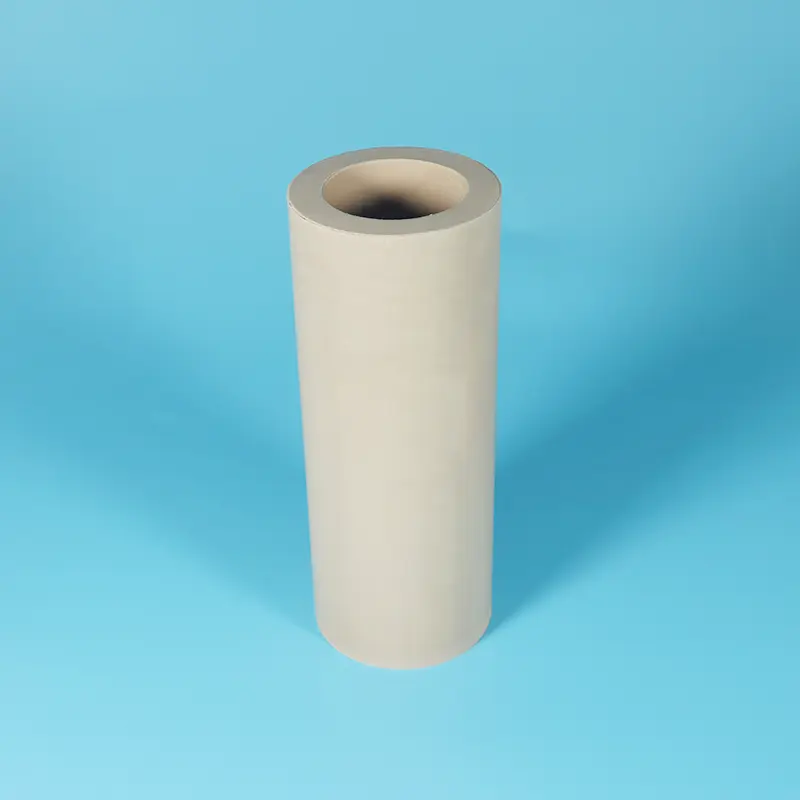
Looking for a high-quality carbon fiber-filled PTFE tube supplier? Choose Taifno with confidence. This product is PTFE compounded with 15-35% carbon fiber reinforcement. Carbon fiber provides exceptional tensile strength, thermal conductivity to dissipate frictional heat, and electrical conductivity to prevent static buildup, all while maintaining PTFE's universal chemical resistance and low friction.
Specification: Temperature range -180°C to +200°C, tensile strength up to 40 MPa, thermal conductivity 3-5x higher than virgin PTFE, volume resistivity as low as 10⁴-10⁶ Ω·cm (conductive), deformation under load ≤8%.
Glass fiber for strength alone. Carbon fiber for strength + thermal conductivity + static dissipation. Choose by application, not by cost. Request a quote in 24 hours, send your size, specification, and application.

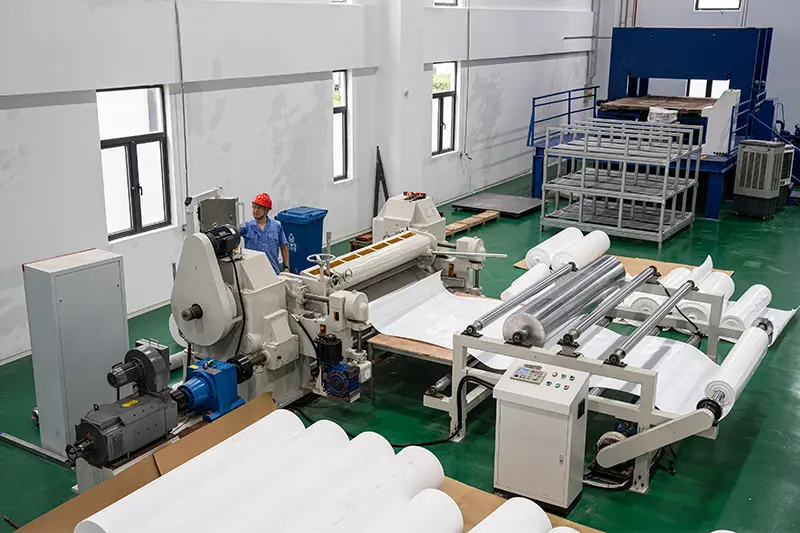
Carbon fiber-filled PTFE tube is manufactured by adding 15-35% carbon fiber filler to PTFE resin through compounding, then extruding or molding into tube form.
Carbon fibers provide a reinforcing network that dramatically improves mechanical properties while making the material thermally and electrically conductive.
|
Process |
Best For |
Key Feature |
|
Extruded Tube |
Smaller diameters, uniform wall thickness, long lengths |
Consistent dimensions, cost-effective for standard sizes |
|
Molded Tube |
Large diameters, custom sizes, thick walls |
Available in 15-35% carbon fiber content |
|
Content |
Best For |
Key Benefit |
|
15% Carbon Fiber |
General purpose, moderate conductivity |
Balanced strength and performance |
|
25% Carbon Fiber |
High speed, heat dissipation, wear resistance |
Optimal thermal conductivity + wear resistance |
|
35% Carbon Fiber |
Maximum strength, conductivity, and heat dissipation |
Highest mechanical and thermal performance |
|
Property |
Value |
Test Method |
|
Temperature Range |
-180°C to +200°C |
ASTM D3418 |
|
Density |
1.95-2.10 g/cm³ |
ASTM D792 |
|
Tensile Strength |
25-40 MPa |
ASTM D638 |
|
Elongation at Break |
70-120% |
ASTM D638 |
|
Compressive Strength |
≥35 MPa |
ASTM D695 |
|
Thermal Conductivity |
3-5x higher than virgin PTFE |
— |
|
Volume Resistivity |
10⁴-10⁶ Ω·cm (conductive) |
ASTM D257 |
|
Deformation Under Load |
≤8% |
ASTM D621 |
|
Hardness |
Shore D 62-67 |
ASTM D2240 |
|
Color |
Black |
— |
|
Characteristic |
Benefit |
|
High Mechanical Strength |
Tensile strength up to 40 MPa, handles high loads |
|
Excellent Thermal Conductivity |
3-5x higher than virgin PTFE, dissipates frictional heat |
|
Electrical Conductivity |
Volume resistivity 10⁴-10⁶ Ω·cm, prevents static buildup |
|
Anti-Static / Static Dissipative |
Safely dissipates static charge in sensitive environments |
|
Reduced Creep |
Deformation under load ≤8%, maintains dimensional stability |
|
Wear Resistance |
Carbon fibers provide a protective, low-friction surface |
|
Universal Chemical Resistance |
Retains PTFE's pH 0-14 chemical resistance |
In many industrial applications, PTFE components are used in environments where static electricity can cause serious problems:
|
Industry |
Static Risk |
Consequence |
|
Semiconductor |
Electrostatic discharge (ESD) damages microchips |
Product yield loss, equipment damage |
|
Chemical Processing |
Static sparks ignite flammable vapors |
Fire, explosion, safety incidents |
|
Pharmaceutical |
Static attracts particles, contaminates product |
Batch rejection, regulatory failures |
|
Powder Handling |
Static causes powder clumping, flow issues |
Production downtime, inconsistent quality |
|
Electronics |
Static discharge damages sensitive components |
Equipment failure, warranty claims |
|
Printing / Film |
Static causes poor film layering |
Quality defects, material waste |
Virgin PTFE is a perfect electrical insulator (volume resistivity >10¹⁸ Ω·cm), it cannot dissipate static charge.
Carbon fiber-filled PTFE reduces resistivity to 10⁴-10⁶ Ω·cm, providing a safe path for static electricity to flow to ground.
What this means for you: If you are currently using virgin PTFE tubes in applications where static discharge is a concern, carbon fiber filled PTFE eliminates the static risk while maintaining chemical resistance and low friction.
Carbon fiber reinforcement provides tensile strength up to 40 MPa, significantly higher than virgin PTFE. Handles higher loads, pressures, and mechanical stress without deformation.
Carbon fiber network efficiently dissipates frictional heat, 3-5x better than virgin PTFE. Prevents heat buildup that can cause seal damage, shaft scoring, or premature failure in high-speed dynamic applications.
Volume resistivity of 10⁴-10⁶ Ω·cm makes the tube conductive. Prevents electrostatic discharge (ESD) that can damage sensitive electronics, ignite flammable materials, or attract contamination in cleanroom environments.
Safely dissipates static charge to ground. Meets static control requirements in semiconductor, chemical, and pharmaceutical manufacturing. Reduces product contamination from static-attracted particles.
Deformation under load ≤8%, maintains dimensional stability over time. Carbon fiber reinforcement prevents the cold flow deformation that causes virgin PTFE components to fail under sustained load.
Carbon fibers create a low-friction, wear-resistant surface that extends component life in sliding and dynamic applications. Outperforms virgin PTFE and graphite-filled PTFE in abrasive conditions.
Retains PTFE's pH 0-14 chemical resistance, compatible with most acids, alkalis, solvents, and aggressive media.
⚠️ Not compatible with strong oxidizers (carbon can oxidize).
|
Industry |
Application |
Why Carbon Fiber |
|
Semiconductor |
ESD-safe chemical transfer, wafer handling components |
Static dissipation, chemical resistance, high purity |
|
Chemical Processing |
High-speed pumps, valves, agitator shafts |
Heat dissipation, chemical resistance, strength |
|
Automotive |
Fuel system components, bearing sleeves |
Static dissipation, low friction, wear resistance |
|
Aerospace |
Fuel line components, structural seals |
Strength, thermal conductivity, weight reduction |
|
Electronics |
Anti-static tubing, cable protection |
Static dissipation, insulation with conductivity |
|
Mining & Heavy Equipment |
Wear-resistant liners, guide tubes, conveyor components |
Abrasion resistance, impact strength |
|
Cleanroom Environments |
Anti-static fluid handling components |
Static control, no particle contamination |
ESD-safe chemical transfer lines in semiconductor fabrication
Bearing sleeves and bushings for high-speed rotating equipment
Anti-static fluid handling components for cleanrooms
Guide tubes and wear-resistant liners for abrasive media
Compressor piston rings and rider rings
Static-dissipative seals for flammable fluid handling
Heat dissipation components in high-speed machinery


|
Feature |
Virgin PTFE |
Glass-Filled |
Graphite-Filled |
Carbon Fiber-Filled |
|
Tensile Strength |
~20 MPa |
≥25 MPa |
25-45 MPa |
25-40 MPa |
|
Thermal Conductivity |
★★☆☆☆ |
★★★☆☆ |
★★★★☆ |
★★★★★ |
|
Electrical Conductivity |
Insulating |
Insulating |
Conductive |
Conductive |
|
Static Dissipation |
❌ No |
❌ No |
✅ Yes |
✅ Yes |
|
Wear Resistance |
★★☆☆☆ |
★★★★★ |
★★★★☆ |
★★★★★ |
|
Creep Resistance |
★★☆☆☆ |
★★★★☆ |
★★★★☆ |
★★★★★ |
|
Heat Dissipation |
Poor |
Moderate |
Good |
Excellent |
|
Color |
White |
Off-white/Gray |
Black |
Black |
|
Best For |
Static sealing, clean chemicals |
Abrasive media, high load |
Dynamic sealing, heat dissipation |
High speed, high load, static-sensitive, heat dissipation |
|
If Your Application Is... |
Choose... |
Why |
|
High speed rotating equipment, heat buildup |
Carbon Fiber |
Thermal conductivity 3-5x higher |
|
ESD-sensitive environments (semiconductor) |
Carbon Fiber |
Static dissipative (10⁴-10⁶ Ω·cm) |
|
Dry running, no lubrication |
Carbon Fiber |
Self-lubricating + thermal conductivity |
|
Abrasive media, high wear |
Glass Fiber |
Highest wear resistance |
|
Chemical service requiring static control |
Carbon Fiber |
Chemical resistance + static dissipation |
|
Low cost, general service |
Virgin PTFE |
Lowest cost, universal chemical resistance |
100% Virgin PTFE Resin: no regrind, no recycled material. Consistent quality, batch after batch
Premium Carbon Fiber: High-quality carbon fibers from certified suppliers
Uniform Filler Dispersion: Advanced compounding ensures consistent properties throughout
Precision Manufacturing: Extruded and molded processes for consistent dimensions
Full Traceability: Material certificates available on request
Custom Sizes: Custom diameters, lengths, and carbon fiber content available
Lead Time: Standard sizes in stock (24-48 hours); custom sizes 5-15 days


A: Both offer improved mechanical strength, but carbon fiber has two critical advantages over glass fiber:
(1) Thermal conductivity: carbon fiber dissipates frictional heat 3-5x better than glass fiber, preventing heat buildup in high-speed applications.
(2) Electrical conductivity: carbon fiber provides static dissipation (10⁴-10⁶ Ω·cm), preventing ESD damage in sensitive environments. Glass fiber remains an electrical insulator.
Choose carbon fiber for: High speed, heat dissipation, static-sensitive applications.
Choose glass fiber for: Abrasive media, high wear, general chemical service where static is not a concern.
The same chemical resistance applies to both (pH 0-14), but carbon fiber is black and more expensive.
A: Yes. Carbon fiber-filled PTFE tubes have a volume resistivity of 10⁴-10⁶ Ω·cm, which falls within the static dissipative range (typically 10⁴-10¹¹ Ω·cm).
This provides a safe path for static charge to drain to ground, making them suitable for ESD-sensitive environments like semiconductor manufacturing, cleanrooms, and flammable fluid handling. Virgin PTFE is an insulator (>10¹⁸ Ω·cm) and cannot dissipate static charge.
A: Temperature: Continuous -180°C to +200°C.
Pressure: Carbon fiber filled tubes handle higher pressures than virgin PTFE due to improved mechanical strength, up to 8.0 MPa depending on tube design and wall thickness.
Chemical: pH 0-14, resists most acids, alkalis, and solvents.
⚠️ NOT compatible with strong oxidizers at high temperatures (carbon can oxidize), e.g., nitric acid, chlorine.
For specific data based on your application conditions, please provide your temperature, pressure, and media type.
Address
No.1028, Qiersan Street, Andong Town, Cixi City, Zhejiang Province, China
Tel