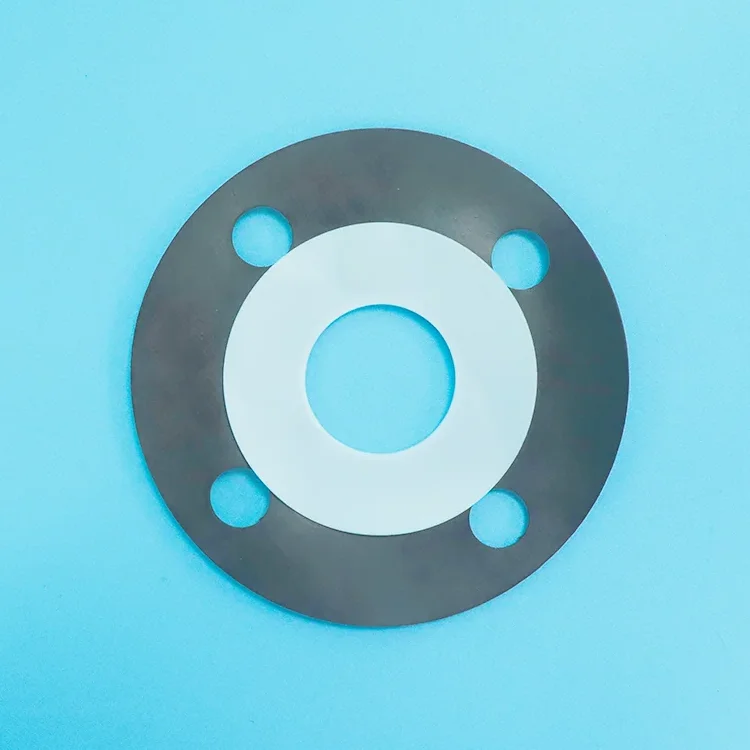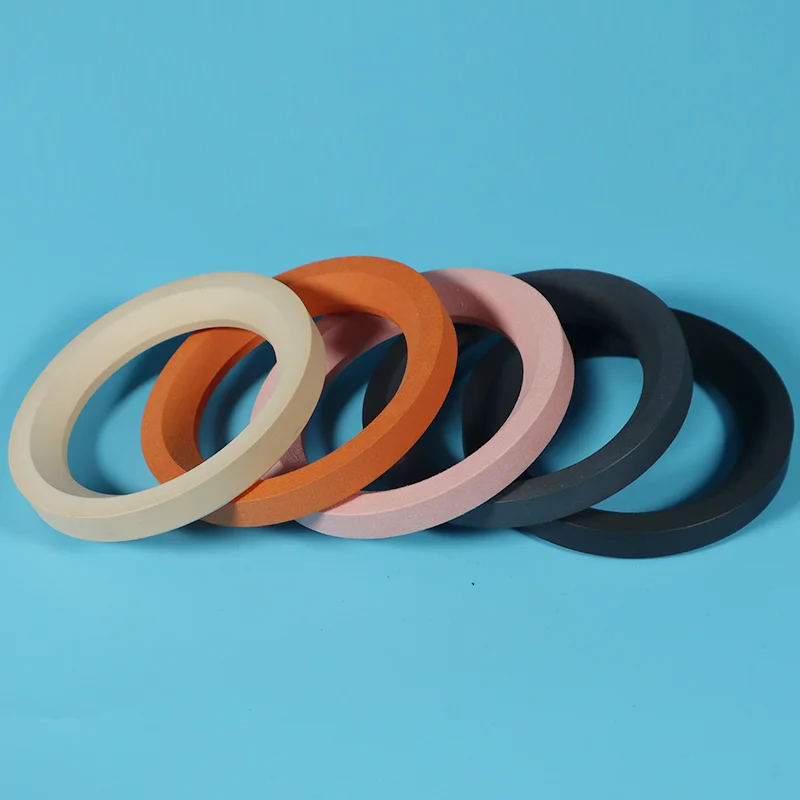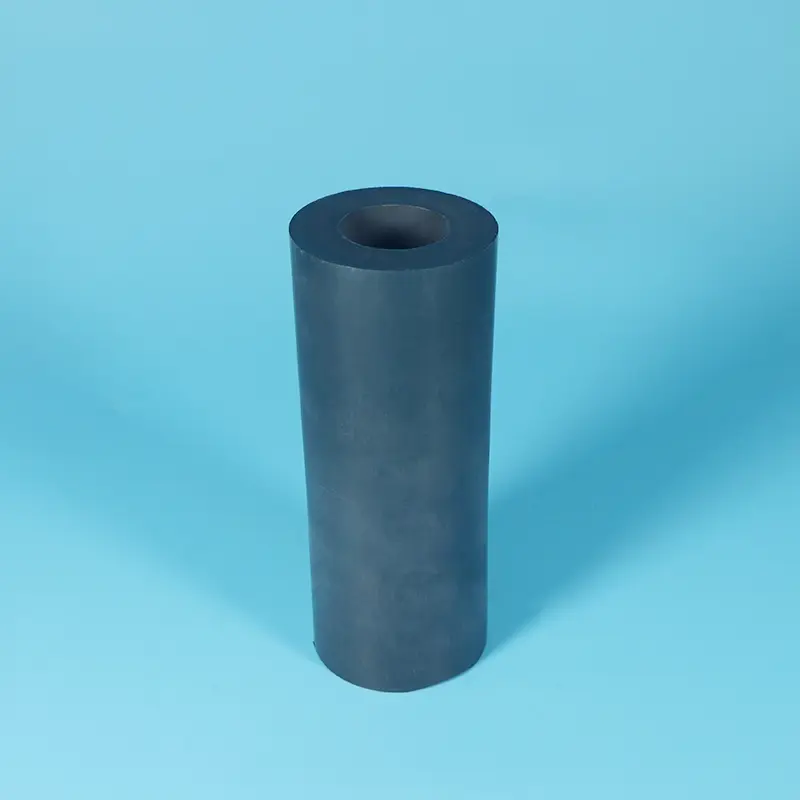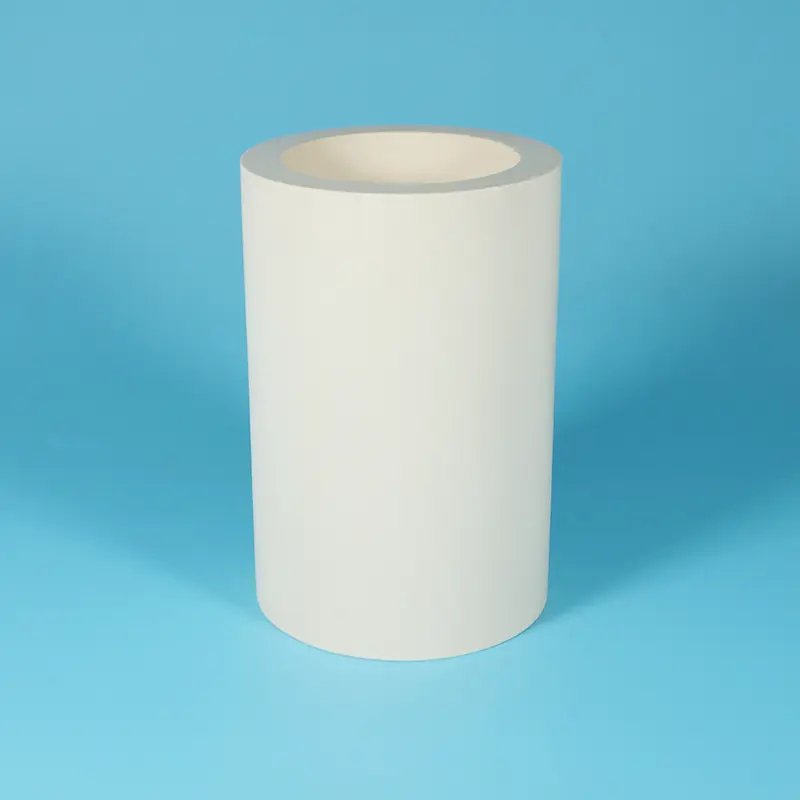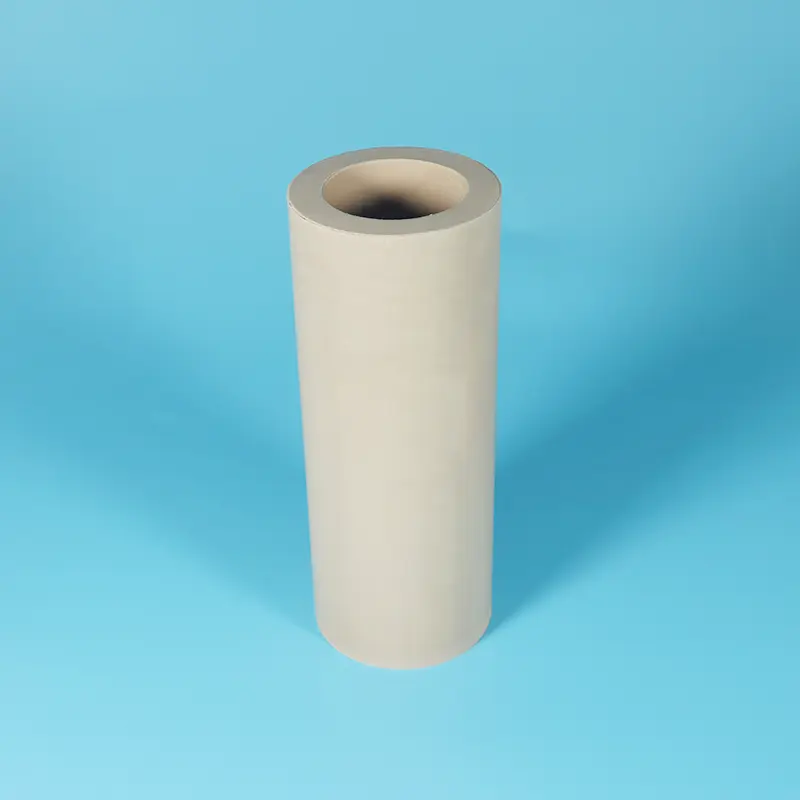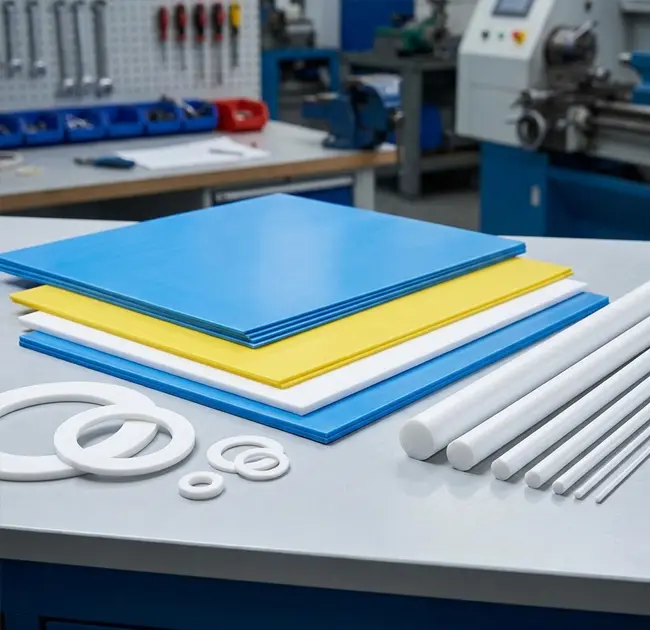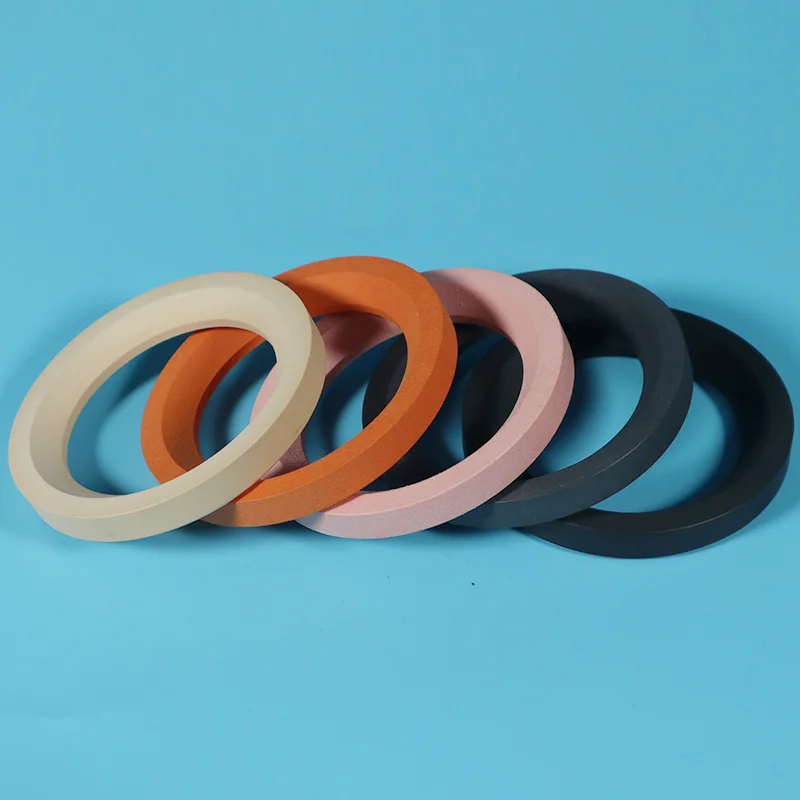
A brass-filled PTFE tube is PTFE compounded with brass powder filler. The addition of brass dramatically improves compressive strength, wear resistance, thermal conductivity, and dimensional stability while preserving PTFE's inherent chemical resistance and low friction characteristics.
This creates a material that can withstand heavy loads, dissipate frictional heat effectively, and provide long service life in sliding applications.
Specification: Density 3.5-3.8 g/cm³ (depending on brass content), tensile strength ≥14.5 MPa, hardness Shore D 60-66, continuous service temperature -200°C to +260°C. Brass content typically ranges from 40% to 60% depending on grade and application requirements.
Virgin PTFE → Chemical resistance + low friction, but poor wear and load capacity
Brass-Filled PTFE → Mechanical strength + wear resistance + heat dissipation + chemical resistance
Selection rule: High load, high wear, or high-speed sliding applications requiring chemical resistance → Brass-Filled PTFE Tube

Brass powder (typically 40-60% by weight) provides the following critical enhancements to PTFE:
Brass particles create a hard, wear-resistant surface that significantly outlasts virgin PTFE in sliding and abrasive applications
Reduces wear rates by up to several hundred times compared to unfilled PTFE
Ideal for bearings, bushings, piston rings, and other sliding components
Brass filler provides excellent compressive strength, supporting heavy mechanical loads without deformation
Dramatically reduces creep and cold flow under sustained pressure
Enables PTFE to be used in high-pressure applications where virgin PTFE would fail
Brass powder dissipates frictional heat effectively, preventing heat buildup that can cause seal damage or premature failure
Critical for high-speed and high-load applications where heat generation is significant
Extends component life by maintaining lower operating temperatures
Brass filler minimizes creep relaxation and cold flow, maintaining dimensional tolerances over time
Ensures consistent clearance and sealing performance in dynamic applications
Reduces maintenance frequency and extends service intervals
Shore D hardness 60-66, significantly harder than virgin PTFE (Shore D 50-55)
Improves resistance to deformation under load
Provides better resistance to particulate abrasion and surface damage
Unlike bronze, brass offers better electrical conductivity
Suitable for applications requiring static charge dissipation or grounding
Can be used in certain electrical and electronic applications where PTFE's insulating properties are not required
The brass filler creates a composite structure where the PTFE matrix provides chemical resistance and low friction, while the brass particles provide mechanical strength, wear resistance, and thermal management.
This synergy results in a material that delivers performance unmatched by either component alone.
|
Grade |
Brass Content |
Key Characteristics |
Best For |
|
Standard Grade |
40% Brass |
Good balance of mechanical properties and cost |
General heavy-duty applications |
|
Heavy-Duty Grade |
55% Brass |
Maximum wear resistance and thermal conductivity |
Extreme load, high-speed, heat-critical applications |
|
High-Strength Grade |
60% Brass |
Maximum compressive strength and load capacity |
Ultra-heavy loads, high-pressure bearings |
|
Parameter |
Value |
Test Method |
|
Composition |
40-60% Brass Powder + PTFE |
— |
|
Density |
3.5-3.8 g/cm³ (depending on brass content) |
ASTM D792 |
|
Tensile Strength |
≥14.5 MPa |
ASTM D4745 |
|
Elongation at Break |
90-140% |
ASTM D4745 |
|
Hardness |
Shore D 60-66 |
ASTM D2240 |
|
Continuous Service Temperature |
-200°C to +260°C |
— |
|
Color |
Golden-yellow / Brass-colored |
— |
|
Deformation Under Load (13.7 MPa, 24h) |
Low (significantly reduced vs virgin PTFE) |
ASTM D621 |
|
Wear Resistance |
Excellent (among the highest filled grades) |
— |
|
Thermal Conductivity |
Excellent — brass effectively dissipates heat |
— |
|
Coefficient of Friction |
0.12-0.20 (dynamic, dry against steel) |
ASTM D1894 |
|
Electrical Conductivity |
Moderate — suitable for anti-static applications |
— |
|
Standard |
Description |
|
SAE AMS3678 |
Bronze-filled PTFE specification (similar grades apply for brass-filled equivalents) |
|
ASTM D4745 |
Standard specification for filled PTFE molding and extrusion materials |
|
Form |
Diameter Range |
Key Feature |
|
Extruded Tube |
10-200mm OD |
Uniform dimensions, cost-effective for standard sizes |
|
Molded Tube |
25-600mm+ OD |
Large diameters, thick walls for heavy-duty applications |
|
Rods |
6-500mm+ OD |
Solid stock for custom machined components |
|
Sheets / Plates |
Custom sizes |
Flat stock for gaskets, seals, and wear surfaces |
|
Custom Shapes |
As required |
Injection molded or machined to customer specifications |


Brass-filled PTFE offers among the highest wear resistance of all PTFE compounds. The brass particles create a hard, durable surface that significantly extends component life in heavy-duty applications.
In abrasive conditions, it outperforms glass-filled and graphite-filled PTFE grades.
With 40-60% brass content, the material provides exceptional compressive strength and load capacity. It supports high mechanical loads without deformation, ideal for bearings, piston rings, and heavy machinery components operating under high pressure.
Brass powder provides superior thermal conductivity, dissipating frictional heat from sliding surfaces. This prevents heat buildup that can cause seal damage, shaft scoring, or premature failure, critical for high-speed and high-load applications.
Brass filler significantly improves dimensional stability by reducing creep relaxation and cold flow under sustained load. Maintains clearance and performance over time, reducing maintenance frequency and extending service life.
While brass filler limits chemical resistance compared to virgin PTFE, the material still offers good resistance to oils, hydrocarbons, mild chemicals, water, steam, and non-corrosive industrial fluids.
Brass-filled PTFE offers similar mechanical performance to bronze-filled PTFE at a generally lower cost, making it an attractive option for budget-conscious applications without compromising on wear resistance and load capacity.
|
Feature |
Virgin PTFE |
Glass-Filled |
Carbon-Filled |
Graphite-Filled |
Brass-Filled |
|
Density (g/cm³) |
2.15-2.20 |
2.1-2.3 |
1.95-2.10 |
2.1-2.3 |
3.5-3.8 |
|
Wear Resistance |
★★☆☆☆ |
★★★★☆ |
★★★★★ |
★★★★☆ |
★★★★★ |
|
Thermal Conductivity |
★★☆☆☆ |
★★★☆☆ |
★★★★★ |
★★★★☆ |
★★★★★ |
|
Compressive Strength |
★★☆☆☆ |
★★★★★ |
★★★★☆ |
★★★☆☆ |
★★★★★ |
|
Load Capacity |
★★☆☆☆ |
★★★★☆ |
★★★★☆ |
★★★☆☆ |
★★★★★ |
|
Chemical Resistance |
★★★★★ |
★★★★☆ |
★★★★☆ |
★★★★☆ |
★★★☆☆ |
|
Creep Resistance |
★★☆☆☆ |
★★★★☆ |
★★★★☆ |
★★★☆☆ |
★★★★★ |
|
Electrical Conductivity |
☆☆☆☆☆ |
☆☆☆☆☆ |
★★★★★ |
★★★☆☆ |
★★★☆☆ |
|
Cost |
$ |
$$ |
$$$ |
$$ |
$$ |
|
Best For |
Clean chemicals, general service |
Abrasive media, high load |
High speed, heat dissipation |
Dynamic seals, lubrication |
Heavy load, wear, heat dissipation, cost-effective |
|
If Your Application Is... |
Choose... |
Why |
|
Heavy load + high speed + extreme wear |
Brass-Filled |
Excellent wear resistance + thermal conductivity + lower cost than bronze |
|
High-load bearings, piston rings |
Brass-Filled |
Load capacity + reduced extrusion tendency |
|
Hydraulic cylinders, heavy machinery |
Brass-Filled |
Proven performance in demanding applications |
|
Heat dissipation critical |
Brass-Filled |
Brass provides excellent thermal conductivity |
|
Chemical resistance required + moderate load |
Glass-Filled or Virgin |
Brass-filled has reduced chemical resistance |
|
Budget-conscious heavy-duty applications |
Brass-Filled |
Similar performance to bronze at lower cost |
|
Light load, general service |
Virgin PTFE |
Lower cost, universal chemical resistance |
|
Anti-static / grounding applications |
Brass-Filled |
Moderate electrical conductivity |
|
Industry |
Application |
Why Brass-Filled |
|
Hydraulic Equipment |
Hydraulic cylinder bushings, wear rings, bearings |
High load capacity, extrusion resistance, low friction |
|
Heavy Machinery |
Piston rings, guide rings, slide bearings |
Excellent wear resistance, heat dissipation, load capacity |
|
Industrial Compressors |
Rider rings, piston rings |
Load capacity + low friction + wear resistance |
|
Automotive |
Heavy-duty bearings, suspension components |
Wear resistance + thermal management + cost-effectiveness |
|
Marine |
Propeller shaft bearings, deck machinery |
High load + corrosion-resistant + seawater tolerance |
|
High-Temperature Service |
Bearings and seals in heat-generating equipment |
Brass effectively dissipates frictional heat |
|
Oil & Gas |
Valve seats, bushings, wear rings |
High load capacity + chemical resistance to hydrocarbons |
|
Electronics / Anti-Static |
Conductive components, static dissipative parts |
Moderate electrical conductivity + mechanical strength |
|
Power Generation |
Turbine bearings, pump bushings |
High temperature + wear resistance + thermal conductivity |
⚠️ Brass-filled PTFE has reduced chemical resistance compared to virgin PTFE. The brass (copper-zinc alloy) filler is susceptible to attack by certain chemicals.
|
Limitation |
Explanation |
Alternative |
|
Not for acids |
Brass reacts with acids — dezincification and corrosion occur |
Use glass-filled, carbon-filled, or virgin PTFE |
|
Not for strong alkalis |
Brass corrodes in highly alkaline environments |
Use virgin PTFE or glass-filled |
|
Not for corrosive chemical service |
Brass filler limits overall chemical compatibility |
Use virgin PTFE or ePTFE |
Brass-filled PTFE is best used in applications where chemical resistance is NOT the primary requirement, mechanical performance, wear resistance, and heat dissipation are the priorities.
Compatible media include:
Oils and lubricants
Hydrocarbons and fuels
Mild chemicals (dilute solutions, non-oxidizing)
Water (including seawater)
Steam (under appropriate conditions)
Non-corrosive industrial fluids
Hydraulic fluids
Strong mineral acids (sulfuric, nitric, hydrochloric, hydrofluoric) — causes dezincification of brass
Strong alkalis (sodium hydroxide, potassium hydroxide at high concentrations)
Oxidizing agents
Corrosive chemical process streams
100% Virgin PTFE Resin: no regrind, no recycled material
Premium Brass Powder: high-quality copper-zinc alloy powder with consistent particle size
Uniform Filler Dispersion: consistent properties throughout the material
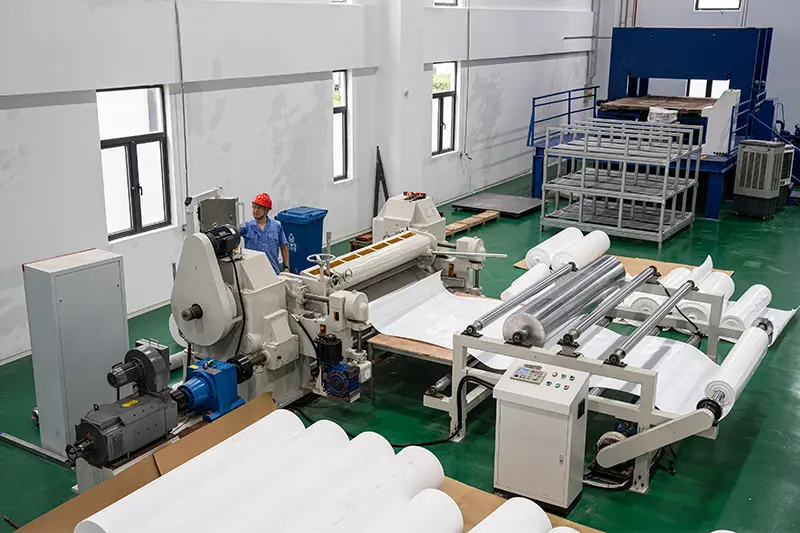
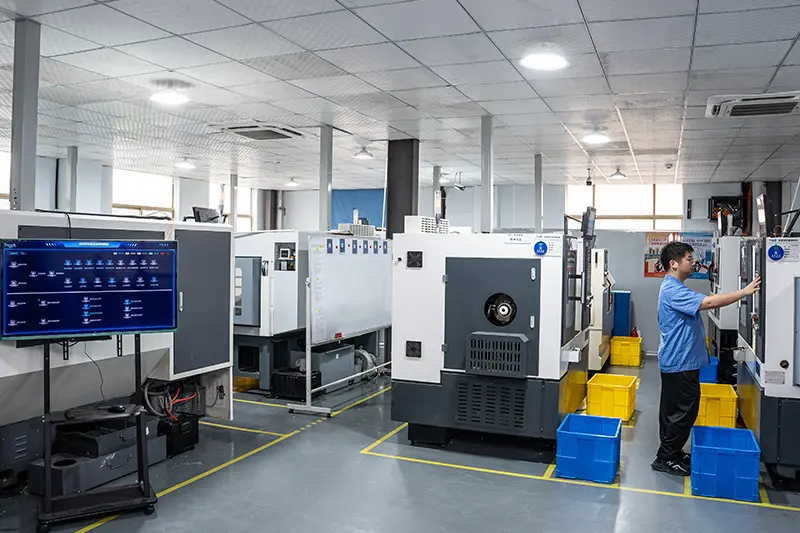
Precision Manufacturing: extruded and molded processes for consistent dimensions and surface finish
Full Traceability: material certificates available on request
Custom Sizes: custom diameters, lengths, and brass content ratios available
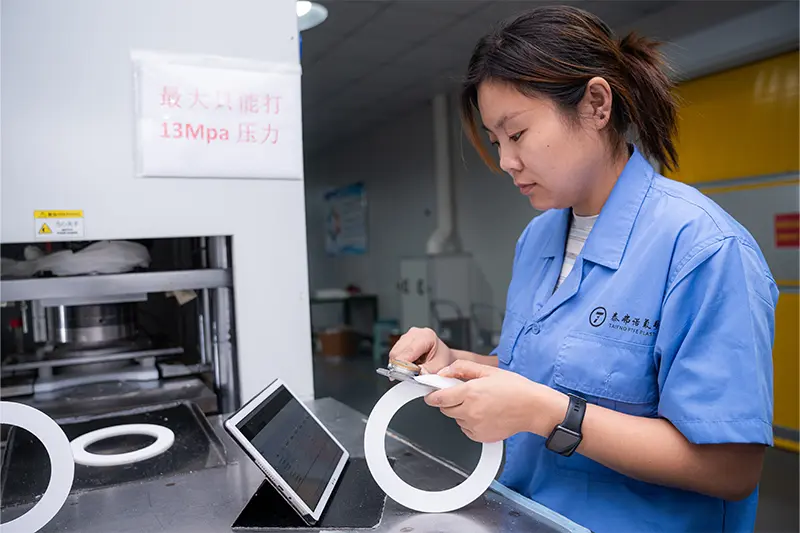
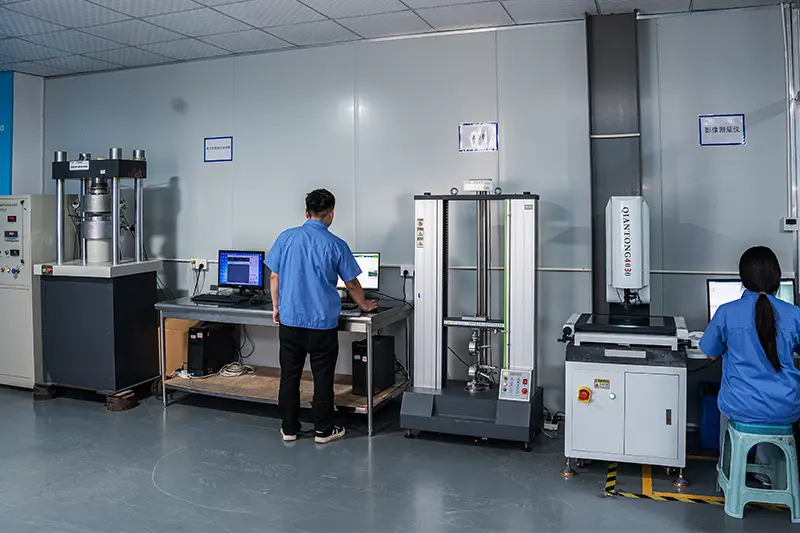
Quality Testing: each batch tested for density, hardness, tensile strength, and dimensional accuracy
Lead Time: standard sizes in stock (24-48 hours); custom sizes 5-15 days


A: Both offer excellent mechanical performance, but there are important differences:
|
Comparison |
Brass-Filled |
Bronze-Filled |
|
Wear Resistance |
★★★★★ |
★★★★★ (Slightly better) |
|
Thermal Conductivity |
★★★★★ |
★★★★★ |
|
Cost |
$$ (Lower) |
$$$ (Higher) |
|
Electrical Conductivity |
★★★☆☆ (Better) |
★★☆☆☆ |
|
Chemical Resistance |
★★★☆☆ |
★★★☆☆ |
Choose Brass-Filled when: You need excellent wear resistance and thermal conductivity at a lower cost. Good for general heavy-duty applications where cost is a factor.
Choose Bronze-Filled when: You need the absolute maximum wear resistance and are willing to pay a premium. Often specified for aerospace (SAE AMS3678) and extreme applications.
Quick Rule: Extreme performance + higher budget → Bronze. Excellent performance + cost-effective → Brass.
A: The choice depends on your application requirements:
|
Aspect |
40% Brass-Filled |
60% Brass-Filled |
|
Brass Content |
40% |
60% |
|
Density |
~3.5 g/cm³ |
~3.8 g/cm³ |
|
Compressive Strength |
Good |
Excellent |
|
Wear Resistance |
Good |
Excellent |
|
Thermal Conductivity |
Good |
Excellent |
|
Tensile Strength |
Higher (~16 MPa) |
Lower (~14 MPa) |
|
Cost |
Lower |
Higher |
Choose 40% Brass for a balance of properties and flexibility. Choose 60% Brass for maximum load capacity, wear resistance, and heat dissipation in extreme heavy-load applications.
A: Brass-filled PTFE has a continuous service temperature range of -200°C to +260°C, the same as virgin PTFE. The brass filler improves heat dissipation (removing heat from sliding interfaces) but does NOT increase the maximum temperature limit, that is determined by the PTFE matrix.
For applications exceeding 260°C, consider PPL Filled PTFE (up to 300°C).
A:
Chemical: ❌ Not suitable for acids or strong alkalis, brass corrodes (dezincification). Use glass-filled or virgin PTFE for chemical service.
Temperature: Continuous -200°C to +260°C, not for >260°C continuous operation.
Friction: Higher friction coefficient than virgin PTFE (0.12-0.20 vs 0.04-0.10), MoS₂ addition can help.
Electrical: Brass is moderately conductive, not for high-voltage insulation applications, but suitable for anti-static uses.
Color: Brass filler gives the material a golden-yellow appearance, may be a consideration for cosmetic requirements.
Ideal for: High-load, high-wear mechanical applications with non-corrosive media (oils, hydrocarbons, water, mild chemicals), where cost-effectiveness is important.
Avoid: Corrosive chemicals (acids/alkalis), continuous temperatures above 260°C, high-voltage electrical insulation.
Address
No.1028, Qiersan Street, Andong Town, Cixi City, Zhejiang Province, China
Tel