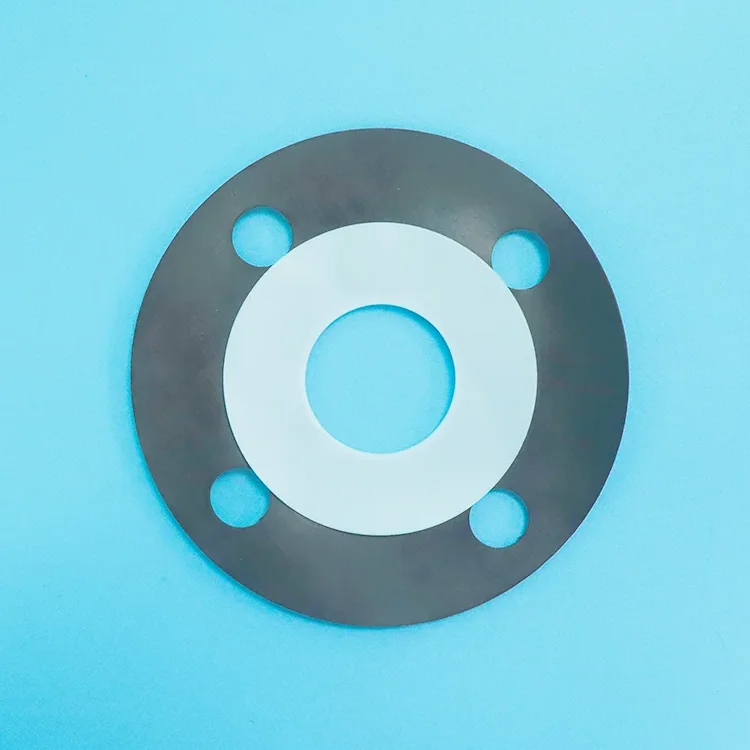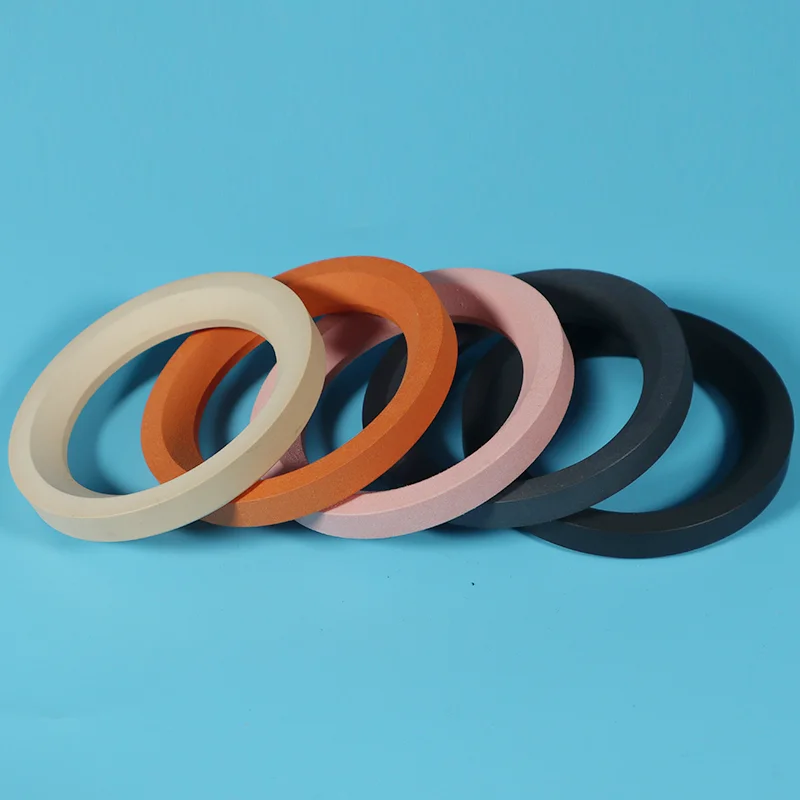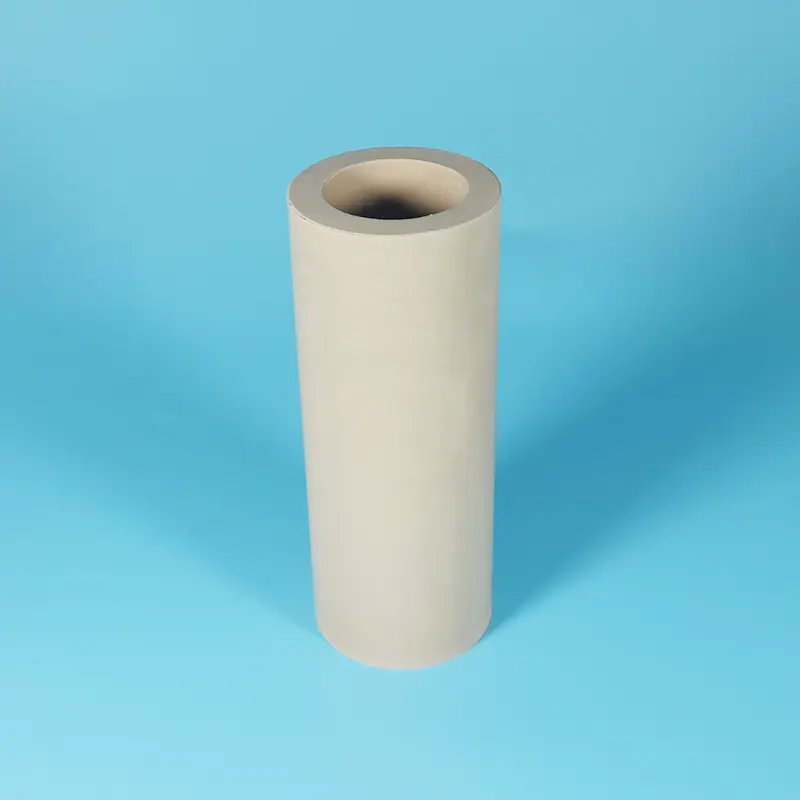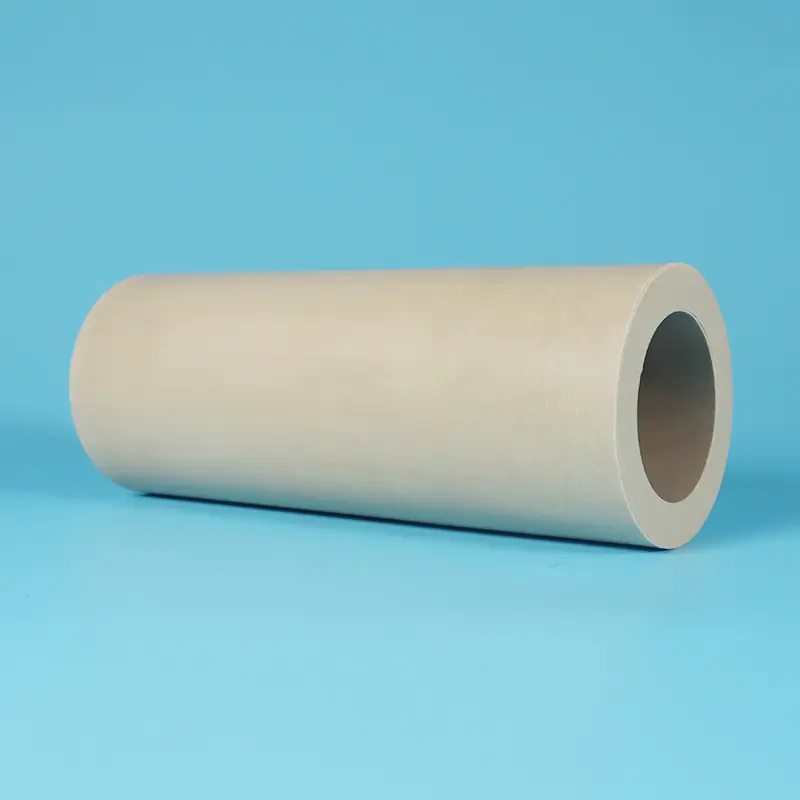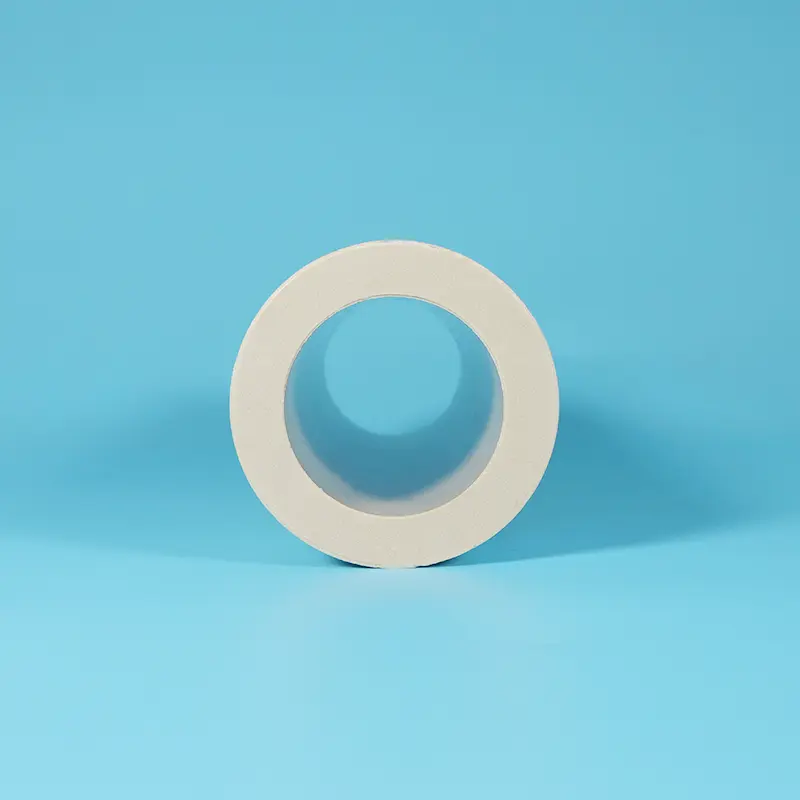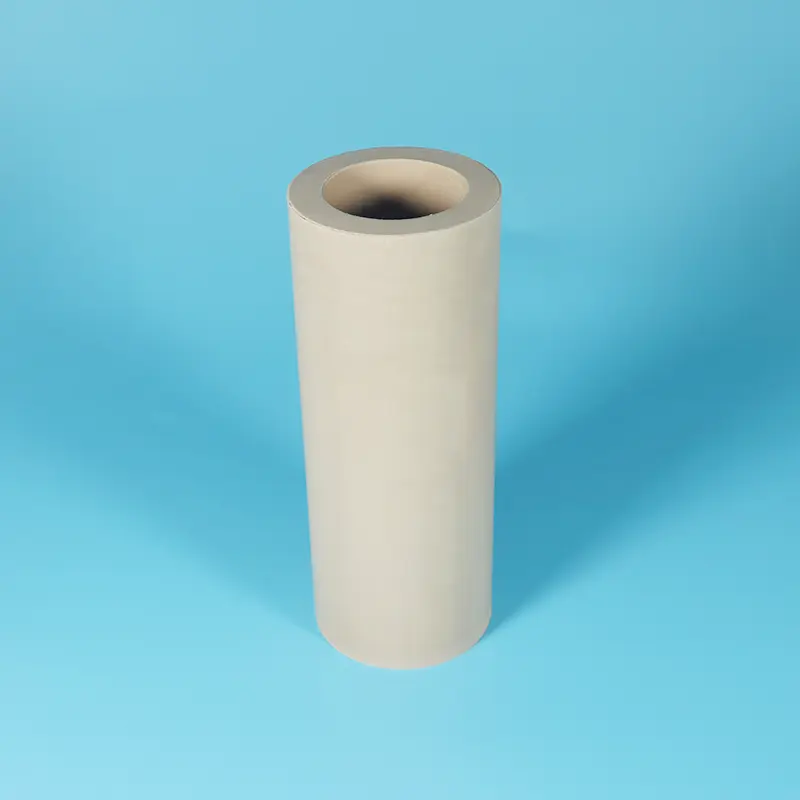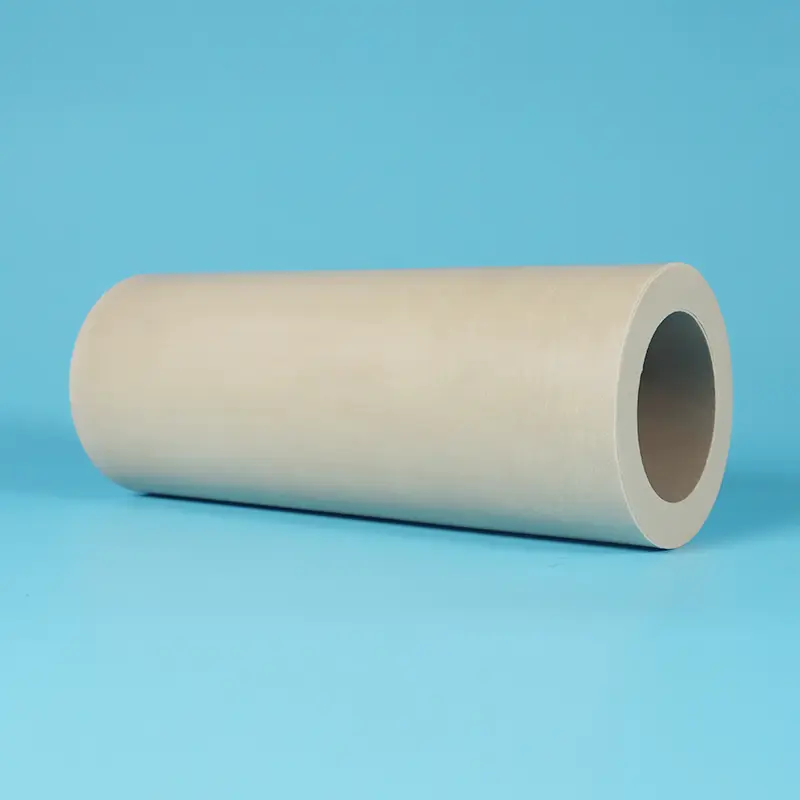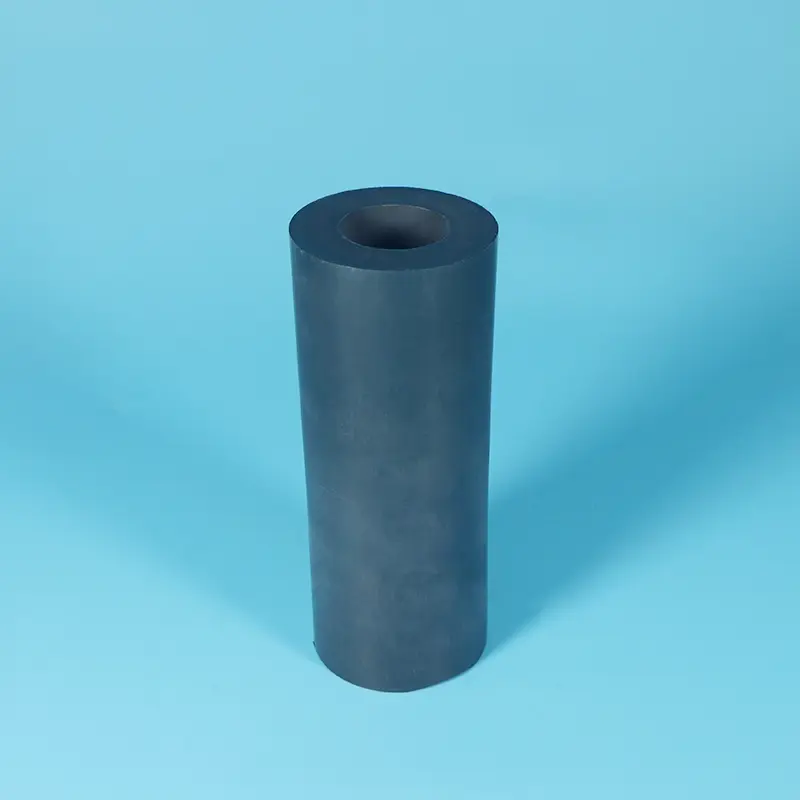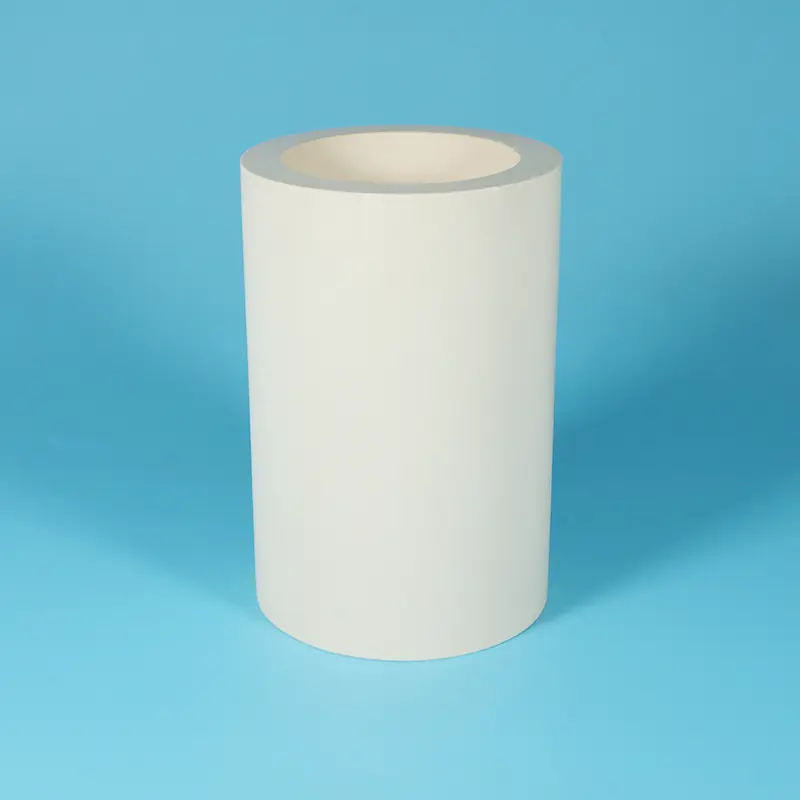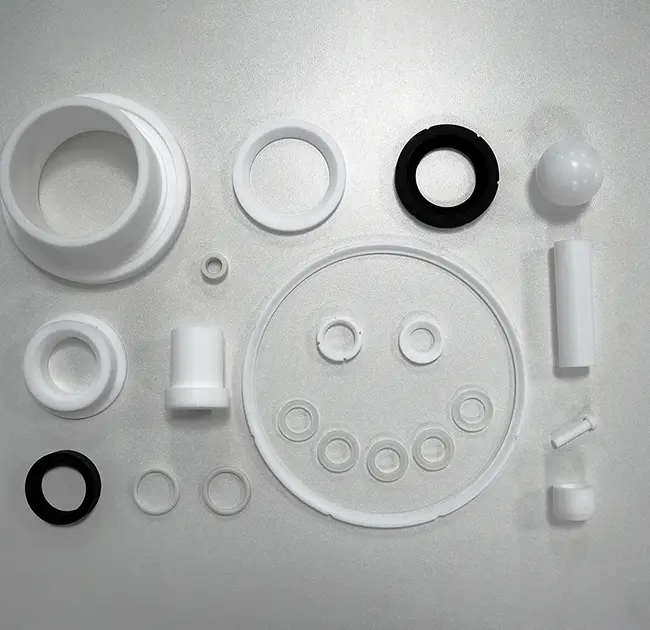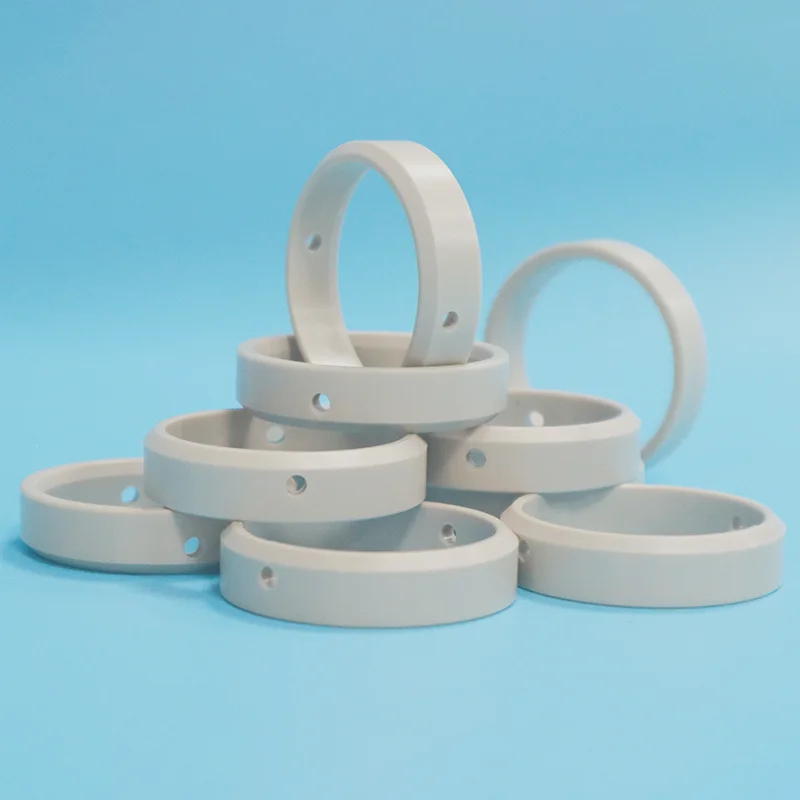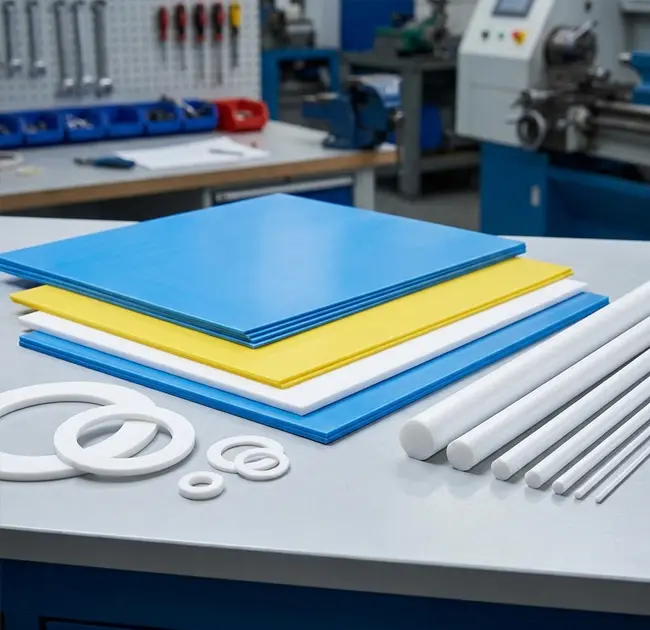
POB-filled PTFE tube is a composite of PTFE and POB (poly-p-hydroxybenzoate/polyphenylene ester) powder. This high-performance specialty engineering plastic offers excellent thermal stability, heat capacity, self-lubricating properties, electrical insulation, and wear resistance.
POB-filled PTFE composites retain the heat resistance, self-lubricating properties, insulation, and solvent resistance of both constituent materials while achieving complementary performance; they overcome the drawbacks of PTFE, such as poor wear resistance, susceptibility to creep, and low thermal conductivity, as well as the brittleness of POB.
Specifications: Density 2.0–2.3 g/cm³; Tensile strength 13.5–15 MPa; Hardness (Shore D) 71; Continuous service temperature -180°C to +260°C; Heat deflection temperature >288°C; Color: Light yellow.
Key Comparison:
Metal-filled PTFE → High wear resistance + high load-bearing capacity, but can damage mating surfaces.
POB-filled PTFE → High wear resistance + non-damaging to mating surfaces + high-temperature resistance + self-lubricating.
Selection Recommendation: Sliding components + soft metal mating surfaces + requirements for high wear and temperature resistance → Choose POB-filled PTFE tubing.

POB is one of the best-performing high-performance specialty engineering plastics in terms of thermal stability, heat capacity, self-lubrication, electrical insulation, and wear resistance.
When molded alone, the material is brittle and generally has no practical value, but its reinforcing effect when filled into PTFE is remarkable.
The wear resistance of POB filled PTFE is significantly improved compared to virgin PTFE. Studies show that at 20% POB content by weight, the wear scar width, wear volume, and wear rate of the composite are reduced by 78.1%, 98.8%, and 98.6% respectively compared to virgin PTFE. More importantly, POB filled PTFE does not damage mating surfaces – while maintaining rigidity, high wear resistance, and high temperature resistance, it causes no wear even on soft metals such as lead and aluminum alloys.
Virgin PTFE is prone to creep (cold flow) under sustained load. POB filling significantly improves creep resistance – compression rate is reduced by 58.93% and recovery rate increased by 24.72% compared to virgin PTFE (at 20% POB content). Creep resistance under pressure is 4 times higher than virgin PTFE.
POB itself has a heat deflection temperature greater than 288°C and can be used long-term at 250°C. After filling into PTFE, the continuous service temperature reaches -180°C to +260°C, with heat deflection temperature exceeding 288°C.
POB-filled PTFE has a coefficient of friction of approximately 0.19, with self-lubrication provided by the PTFE matrix – suitable for oil-free or minimal-oil applications.
Resists most chemicals including acids, alkalis, oils, and organic solvents. Combined with the chemical inertness of the PTFE matrix, overall chemical compatibility is excellent.
Both POB and PTFE are electrical insulating materials – suitable for electrical and electronic applications.
Studies show that the overall performance of POB filled PTFE is closely related to the filling ratio:
Hardness is proportional to POB content
Tensile strength and elongation at break are inversely proportional to POB content
Volume wear rate decreases with increasing POB content
20% POB modified PTFE offers the optimal overall performance with excellent stability – performance shows minimal change after immersion in aviation hydraulic oil
|
Grade |
POB Content |
Key Characteristics |
Best For |
|
Standard Grade |
20% POB |
Optimal overall performance – balance of wear resistance and mechanical properties |
General sliding components, bearings, seals |
|
High-Wear Grade |
20-30% POB |
Higher wear resistance with moderate reduction in tensile strength |
High-wear applications |
|
Synergistic Filled Grade |
POB + h-BN/PI |
Synergistic reinforcement with optimized thermomechanical properties |
Ultra-high temperature, special applications |
Note: POB can also be combined with graphite, polyimide (PI), hexagonal boron nitride (h-BN), and other synergistic fillers to further optimize specific properties.
|
Parameter |
Value |
Test Method |
|
Composition |
POB Filled + PTFE |
— |
|
Density |
2.0-2.3 g/cm³ |
ASTM D792 |
|
Tensile Strength |
13.5-15 MPa |
ASTM D4745 |
|
Elongation at Break |
≥150-280% |
ASTM D4745 |
|
Hardness |
Shore D 71 |
ASTM D2240 |
|
Continuous Service Temperature |
-180°C to +260°C |
— |
|
Heat Deflection Temperature |
>288°C |
— |
|
Color |
Light yellow |
— |
|
Wear Resistance |
Excellent, wear rate reduced by 98.6% vs virgin PTFE |
— |
|
Coefficient of Friction |
~0.19 |
ASTM D1894 |
|
Chemical Resistance |
Resists most chemicals: acids, alkalis, oils, organic solvents |
— |
|
Electrical Insulation |
Non-conductive |
— |
|
Form |
Diameter Range |
Key Feature |
|
Extruded Tube |
20-200mm OD |
Uniform dimensions, cost-effective for standard sizes |
|
Molded Tube |
20-680mm+ OD |
Large diameters, thick walls for large-size components |
|
Rods |
6-500mm+ OD |
Solid stock for custom machined components |
|
Sheets / Plates |
Custom sizes |
Flat stock for gaskets, seals, and slides |
|
Custom Shapes |
As required |
Injection molded or machined to customer specifications |


POB-filled PTFE maintains high rigidity and wear resistance without damaging mating surfaces. Unlike metal-filled PTFE, POB is an organic polymer filler that is relatively soft and very friendly to mating components such as shafts and bearing housings. It causes no wear even on soft metals such as lead and aluminum alloys. This is the core advantage that distinguishes POB-filled PTFE from metal-filled PTFE.
The wear resistance of POB-filled PTFE is dramatically improved compared to virgin PTFE. Studies show that at 20% POB content, wear rate and wear volume are reduced by over 98%. Wear resistance is improved by approximately 1000 times.
Under sustained load, POB-filled PTFE shows compression rate reduced by 58.93% and recovery rate increased by 24.72% compared to virgin PTFE. Creep resistance under pressure is 4 times higher than virgin PTFE, significantly reducing deformation and leakage of seals and bearings during long-term service.
Heat deflection temperature greater than 288°C, usable long-term at 250°C with continuous service temperature range of -180°C to +260°C. Suitable for bearings and seals in high-temperature applications.
Coefficient of friction of approximately 0.19, provided by the PTFE matrix, suitable for oil-free or minimal-oil applications.
Resists most chemicals including acids, alkalis, oils, and organic solvents, suitable for chemical, petroleum, and other corrosive media environments.
Both POB and PTFE are excellent electrical insulating materials, suitable for electronic and electrical applications.
|
Feature |
Virgin PTFE |
Brass Filled |
Stainless Steel Filled |
Carbon Filled |
POB Filled |
|
Density (g/cm³) |
2.15-2.20 |
3.5-3.8 |
3.8-4.2 |
1.95-2.10 |
2.0-2.3 |
|
Wear Resistance |
★★☆☆☆ |
★★★★★ |
★★★★★ |
★★★★★ |
★★★★★ |
|
Wear Rate Reduction (vs PTFE) |
— |
>99% |
>99% |
>99% |
98.6% |
|
Damages Mating Surfaces |
No |
Yes |
Yes |
Yes |
No |
|
Creep Resistance |
★★☆☆☆ |
★★★★★ |
★★★★★ |
★★★★☆ |
★★★★★ |
|
Heat Resistance (HDT) |
260°C |
260°C |
260°C |
260°C |
>288°C |
|
Chemical Resistance |
★★★★★ |
★★★☆☆ |
★★★★★ |
★★★★☆ |
★★★★★ |
|
Self-Lubrication |
★★★★★ |
★★★★☆ |
★★★★☆ |
★★★☆☆ |
★★★★★ |
|
Electrical Insulation |
★★★★★ |
☆☆☆☆☆ |
★★☆☆☆ |
★★★☆☆ |
★★★★★ |
|
Safe with Soft Metals |
★★★★★ |
★☆☆☆☆ |
★☆☆☆☆ |
★★☆☆☆ |
★★★★★ |
|
Cost |
$ |
$$ |
$$$$ |
$$$ |
$$$ |
|
Best For |
General chemicals |
Non-corrosive heavy loads |
Corrosive + heavy loads |
High speed + heat dissipation |
Soft metal mating surfaces + wear + temperature resistance |
|
If Your Application Is... |
Choose... |
Why |
|
Mating surface is soft metal (lead, aluminum alloys, etc.) |
POB Filled |
The only high-wear PTFE that does not damage soft metals |
|
Bearings, bushings, liners |
POB Filled |
Does not damage shafts + self-lubrication + wear resistance + creep resistance |
|
Piston rings, seals |
POB Filled |
High temperature resistance + wear resistance + creep resistance + does not damage cylinders |
|
High temperature applications (>260°C short-term) |
POB Filled |
Heat deflection temperature >288°C |
|
Electrical insulation + wear resistance |
POB Filled |
Dual advantages of insulation + wear resistance |
|
Non-corrosive + heavy loads + mating surface damage acceptable |
Brass/Bronze Filled |
Higher load capacity, potentially lower cost |
|
High speed + heat dissipation + non-soft metal mating surfaces |
Carbon Filled |
Better thermal conductivity |
|
Industry |
Application |
Why POB |
|
Mechanical Manufacturing |
Oil-free bearings, bushings, liners |
Does not damage shafts + self-lubrication + wear resistance + creep resistance |
|
Compressors / Engines |
Piston rings, guide rings |
High temperature resistance + wear resistance + does not damage cylinders |
|
Hydraulic / Pneumatic |
Seals, guide rings, wear rings |
Creep resistance + low friction + oil resistance |
|
Electronics / Electrical |
Insulating seals, slides |
Electrical insulation + wear resistance + temperature resistance |
|
Chemical / Petroleum |
Pump and valve seals, gaskets, bushings |
Chemical resistance + wear resistance + temperature resistance |
|
Bridge / Hydraulic Engineering |
Bridge bearing pads, sluice bearings |
Self-lubrication + water resistance + does not damage mating surfaces |
|
Marine Engineering |
Submersible motor bearings, subsea pipeline liners |
Water resistance + corrosion resistance + self-lubrication |
|
Aerospace |
Aviation hydraulic system seals, bearings |
Aviation hydraulic oil resistance + excellent stability |
✅ POB filled PTFE offers excellent chemical compatibility.
|
Media Type |
Compatibility |
Notes |
|
Acids |
✅ Excellent |
Resists most acids |
|
Alkalis |
✅ Excellent |
Resists most alkalis |
|
Oils / Hydrocarbons |
✅ Excellent |
Excellent oil resistance |
|
Organic Solvents |
✅ Excellent |
Resists most organic solvents |
|
Water / Steam |
✅ Excellent |
Good water resistance |
|
Aviation Hydraulic Oil |
✅ Excellent |
Minimal property change after 110°C immersion |
Suitable Media: POB-filled PTFE is compatible with most chemicals – acids, alkalis, oils, organic solvents, water, steam, and more.
Note: The chemical resistance of POB filled PTFE is primarily provided by the PTFE matrix, offering excellent overall chemical resistance. Please consult our technical team for detailed evaluation of specific conditions.
100% Virgin PTFE Resin: no regrind, no recycled material
High-Quality POB Powder: high-performance polyphenyl ester reinforcer
Uniform Filler Dispersion: consistent properties throughout the material
Precision Manufacturing: extruded and molded processes for consistent dimensions and surface finish
Full Traceability: material certificates available on request
Custom Formulations: POB ratio and synergistic filler combinations can be tailored to specific applications
Quality Testing: each batch tested for density, hardness, tensile strength, and dimensional accuracy
Lead Time: standard sizes in stock (24-48 hours); custom sizes and formulations 5-15 days


A: The core difference is whether the mating surface is damaged.
|
Comparison |
Metal Filled (Brass/Stainless Steel) |
POB Filled |
|
Damages Mating Surfaces |
Yes, metal filler scratches the mating shaft |
No, organic filler does not damage mating surfaces |
|
Soft Metal Compatibility |
❌ Damages aluminum, lead, and other soft metals |
✅ Safely compatible with soft metals |
|
Wear Resistance |
★★★★★ |
★★★★★ |
|
Load Capacity |
★★★★★ (Higher) |
★★★★☆ |
|
Thermal Conductivity |
★★★★★ |
★★★☆☆ |
|
Electrical Insulation |
❌ Conductive |
✅ Insulating |
Choose POB Filled for: Sliding components with soft metal mating surfaces (aluminum, lead, etc.), shafts requiring surface protection, applications requiring both electrical insulation and wear resistance. Bearings, bushings, and piston rings are typical applications.
Choose Metal Filled for: Mating surfaces with sufficient hardness (such as hardened steel), no electrical insulation requirements, and a need for ultimate thermal conductivity and load capacity.
Quick Rule: Soft metal mating surfaces / shaft surface protection needed → POB. Hard metal mating surfaces + no electrical insulation requirement → Metal filled.
A: The wear resistance of POB-filled PTFE is dramatically improved compared to virgin PTFE. Research data shows that at 20% POB content by weight:
Wear scar width reduced by 78.1%
Wear volume reduced by 98.8%
Wear rate reduced by 98.6%
In practical terms: POB-filled PTFE offers a wear life more than 50 times that of virgin PTFE. In industrial applications, the wear resistance of POB-filled PTFE is improved by approximately 1000 times compared to virgin PTFE.
A: POB-filled PTFE has a continuous service temperature of -180°C to +260°C, with a heat deflection temperature greater than 288°C.
Compared to virgin PTFE's 260°C upper limit, POB-filled PTFE offers better dimensional stability at elevated temperatures, the heat deflection temperature is nearly 30°C higher, suitable for short-term over-temperature conditions or applications with strict high-temperature dimensional stability requirements.
A: Thermal Conductivity: Lower than metal-filled PTFE, not suitable for ultra-high-speed applications where heat dissipation is the primary priority.
Load Capacity: Superior to virgin PTFE but slightly lower than metal-filled, evaluate metal-filled options for ultra-heavy load applications.
Cost: Higher than glass-filled and virgin PTFE, but compared to metal-filled (especially precious metals), and considering the overall benefits of not damaging mating surfaces, the total cost of ownership (TCO) is competitive.
Color: POB gives the material a light yellow appearance, confirm acceptability for applications with specific aesthetic requirements.
Ideal for: Sliding components where the mating surface needs protection, soft metal mating surfaces, and applications requiring a combination of wear resistance, temperature resistance, self-lubrication, and electrical insulation. Bearings, bushings, piston rings, and seals are typical applications.
Avoid for: Ultra-high-speed applications where heat dissipation is the priority (consider carbon filled) and applications where the mating surface is sufficiently hard and mating surface wear is not a concern but higher load capacity is required (consider metal filled).
Address
No.1028, Qiersan Street, Andong Town, Cixi City, Zhejiang Province, China
Tel