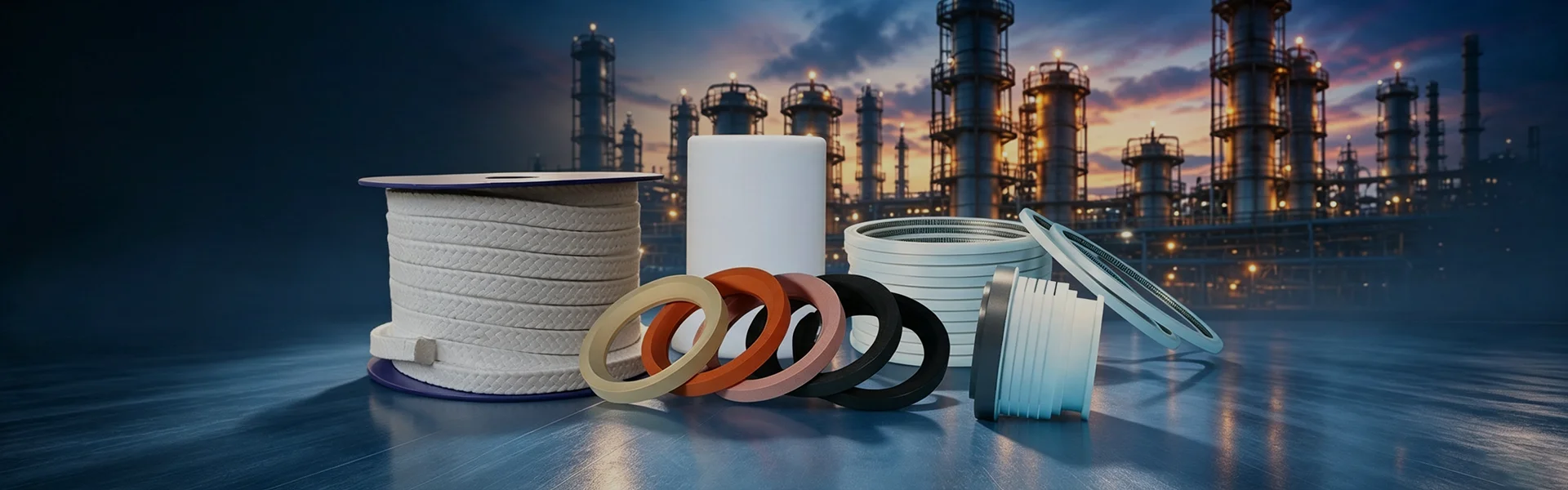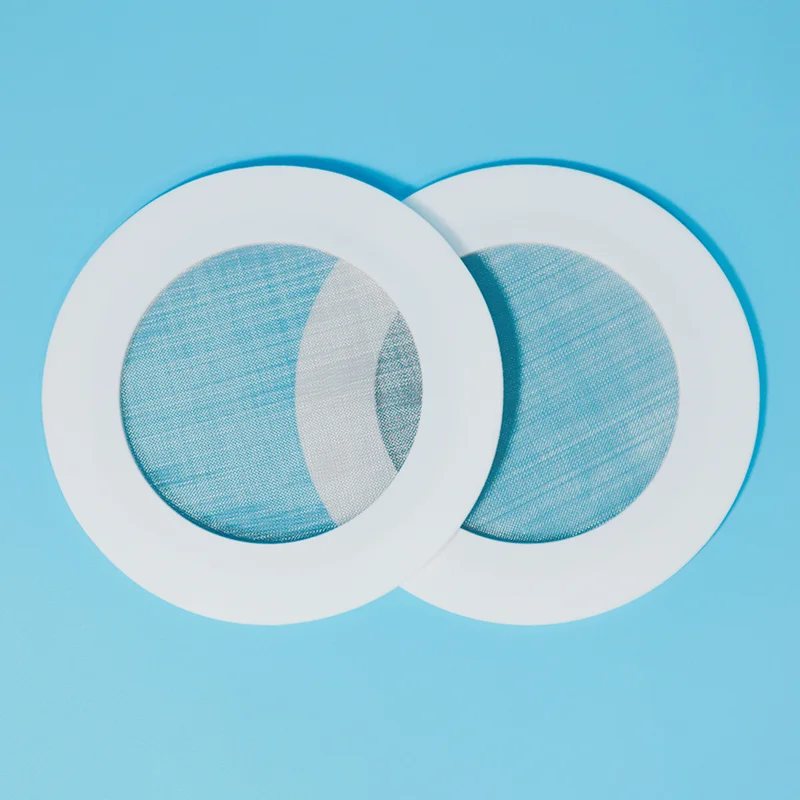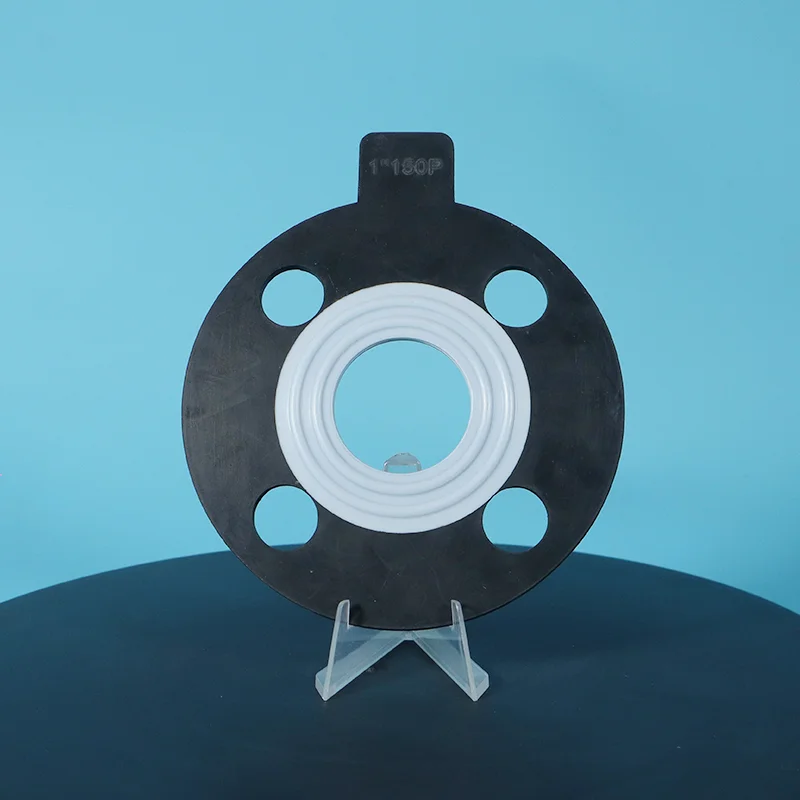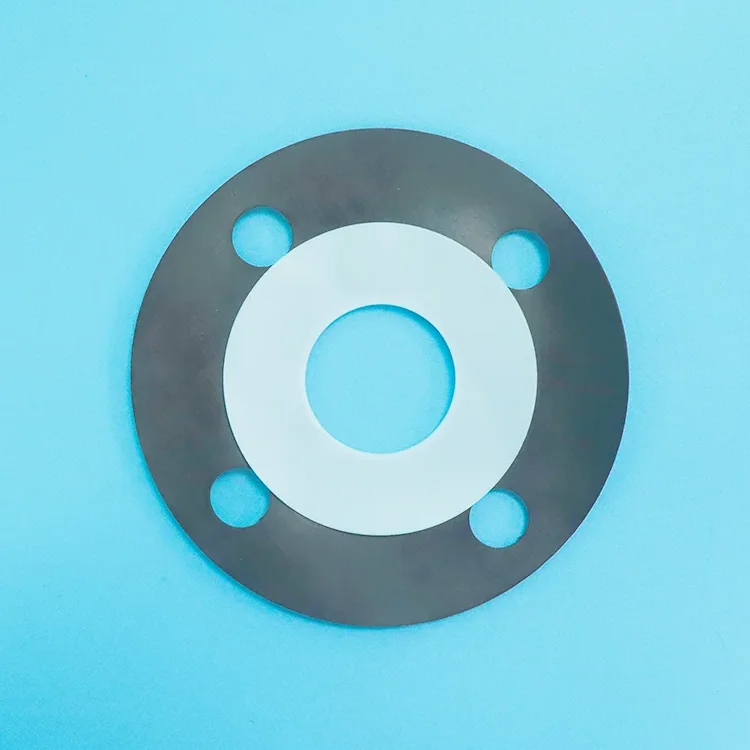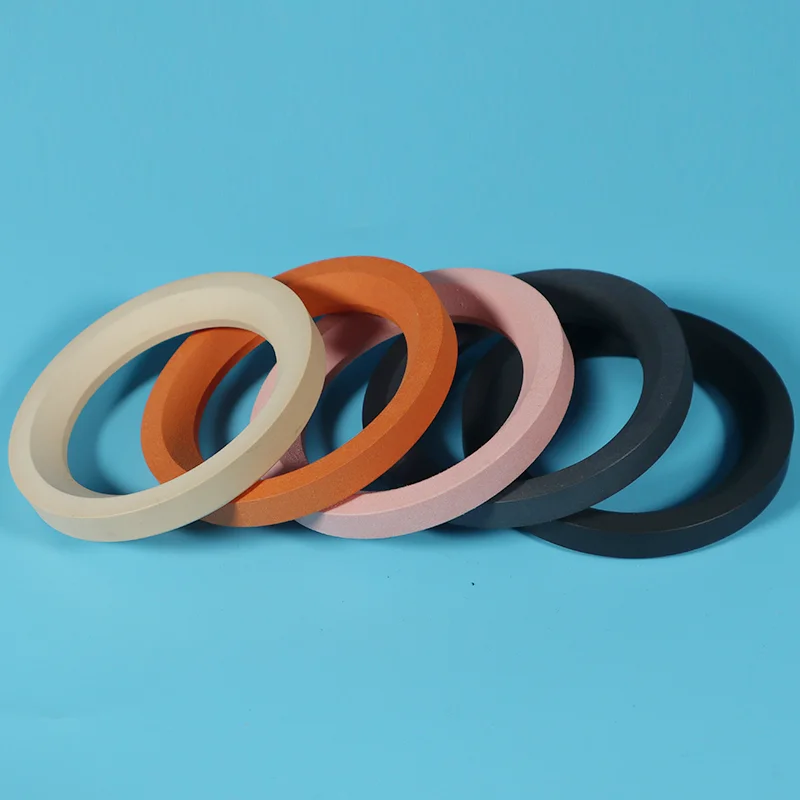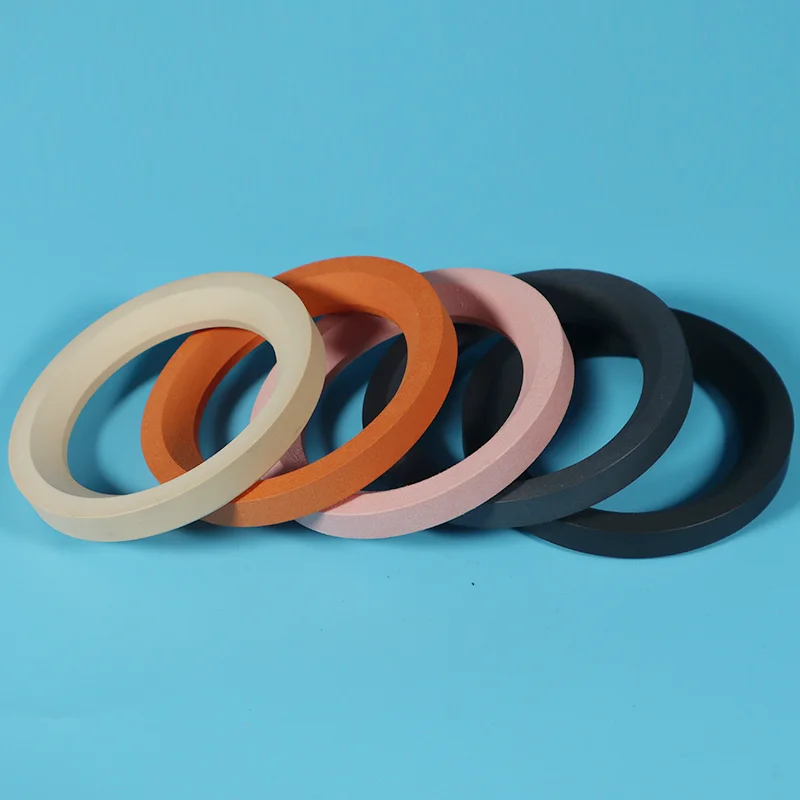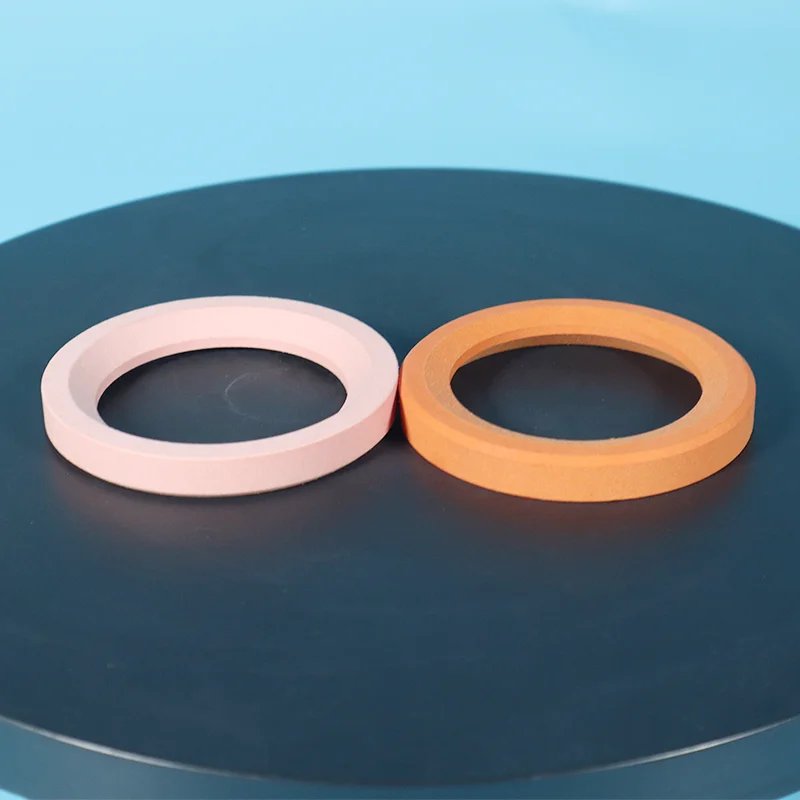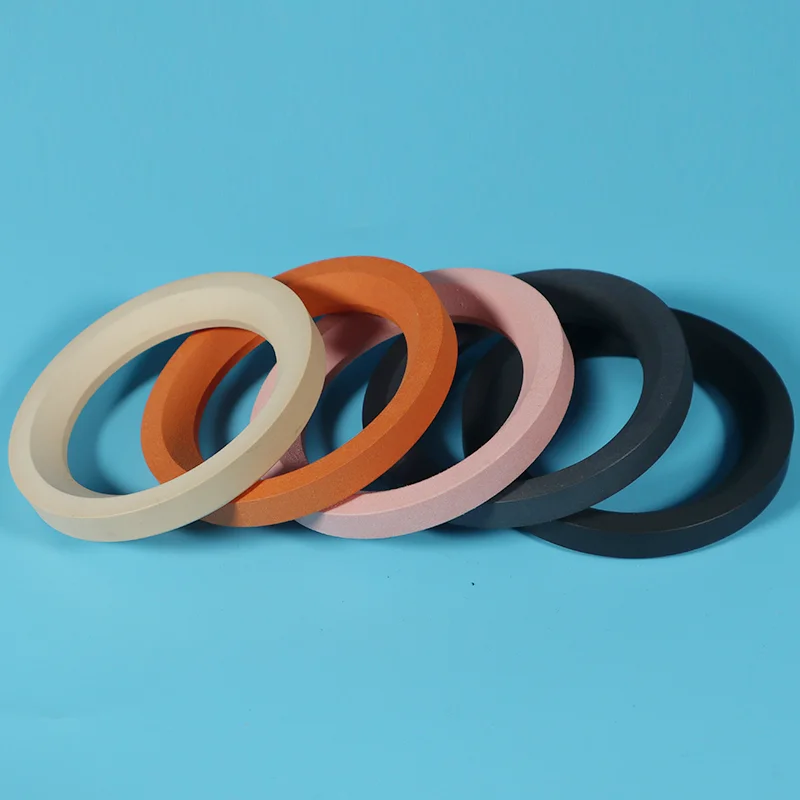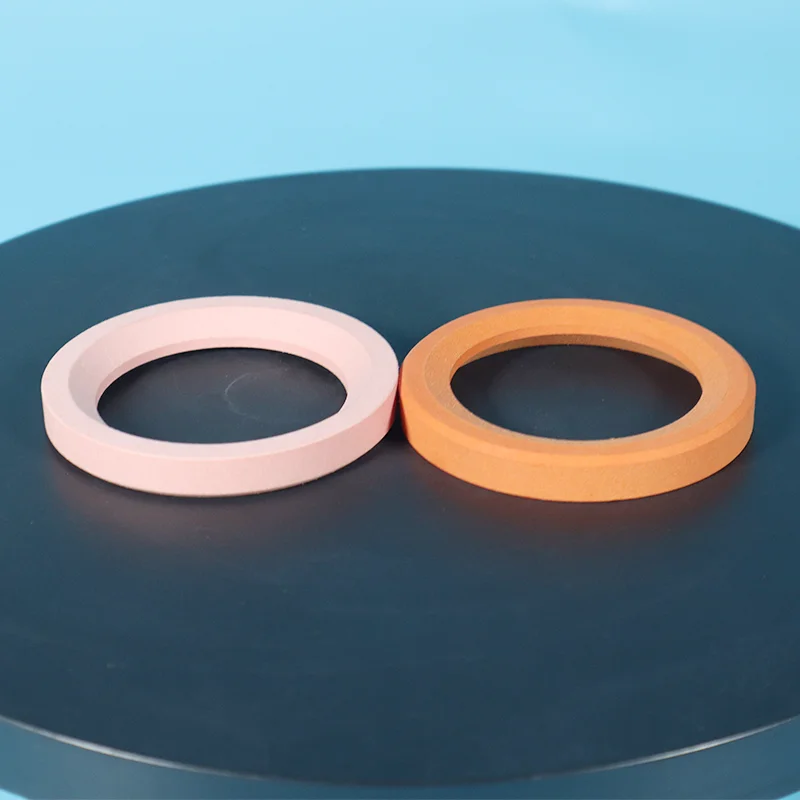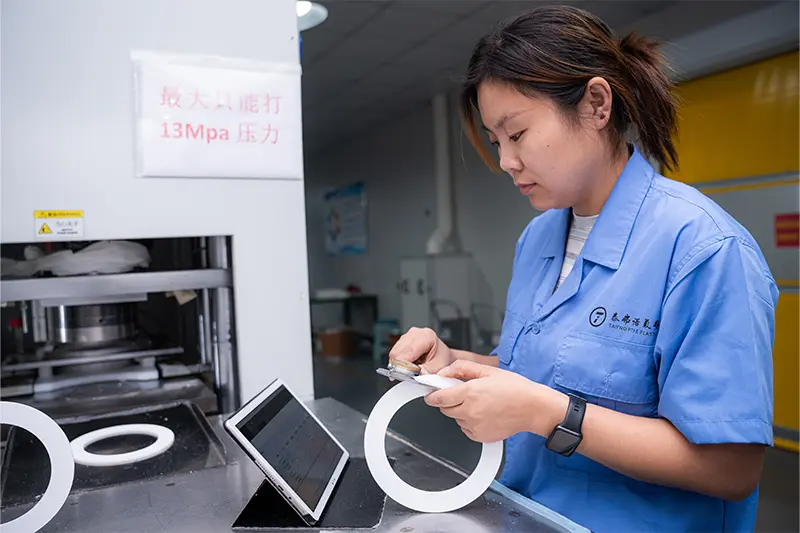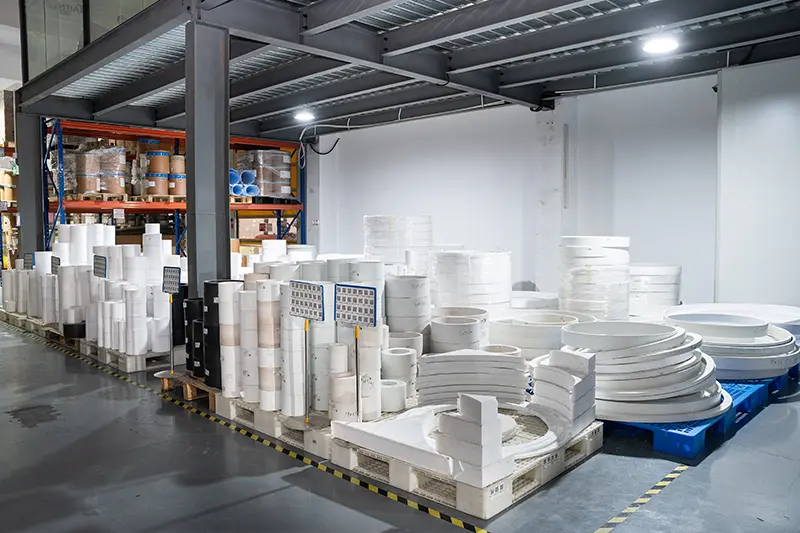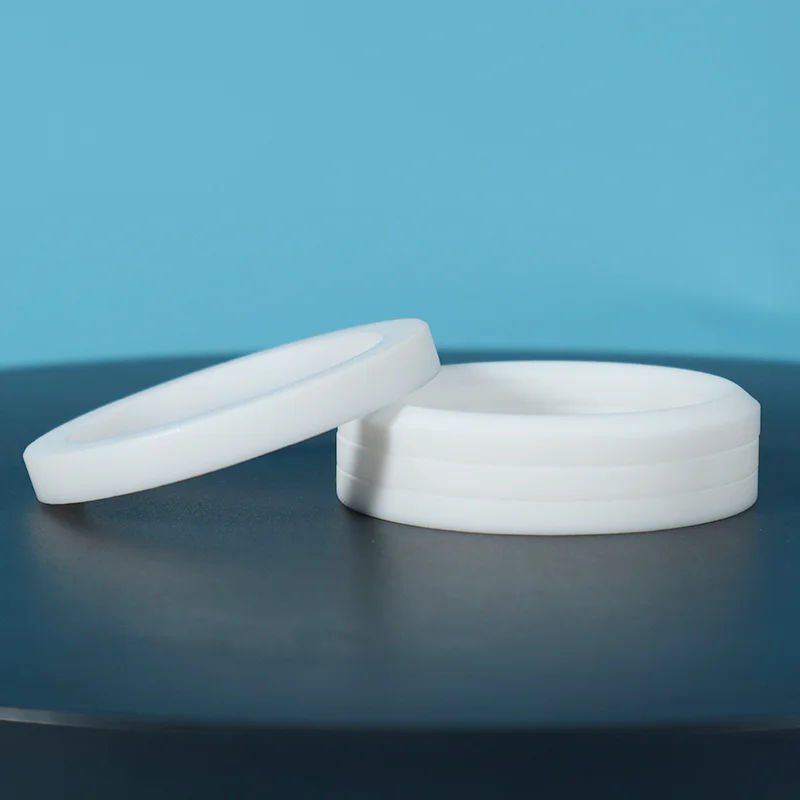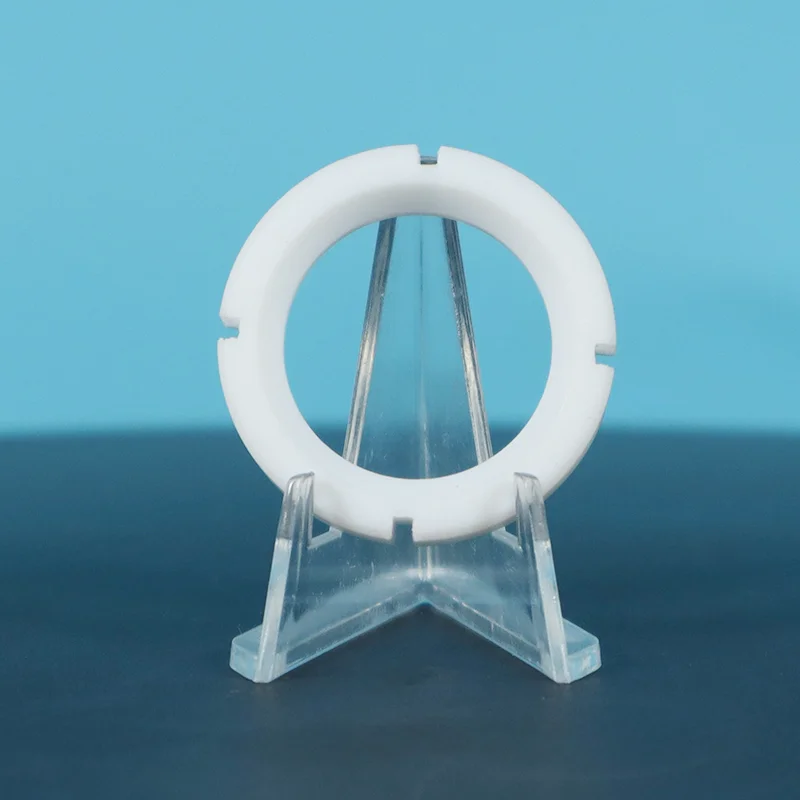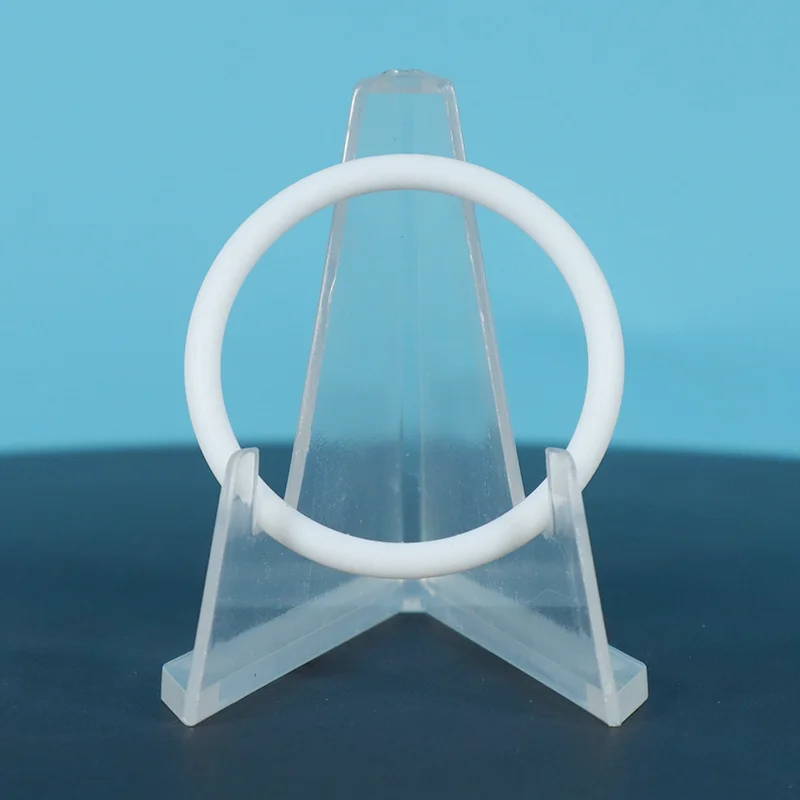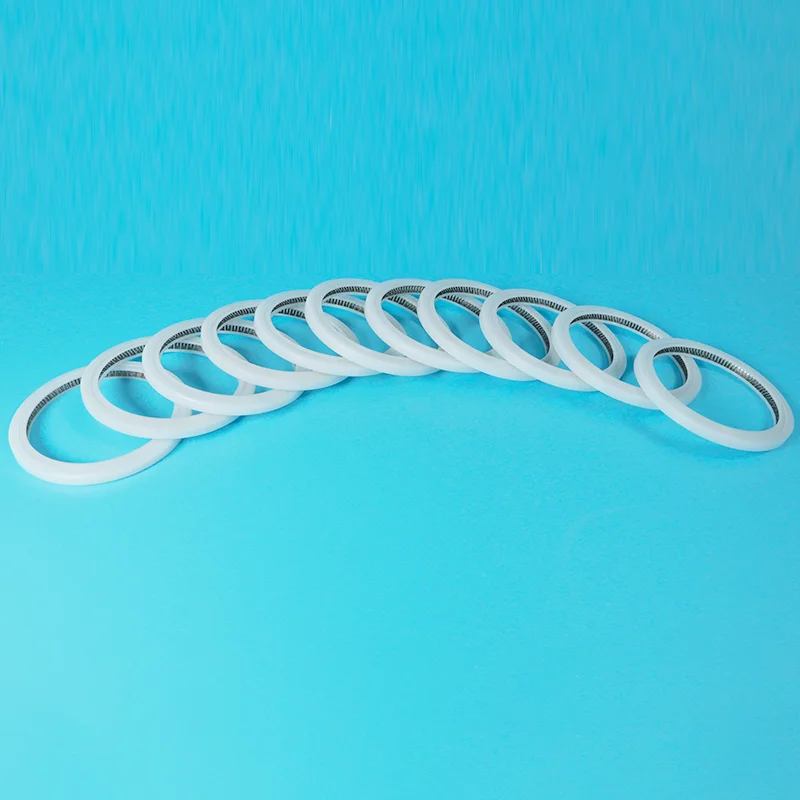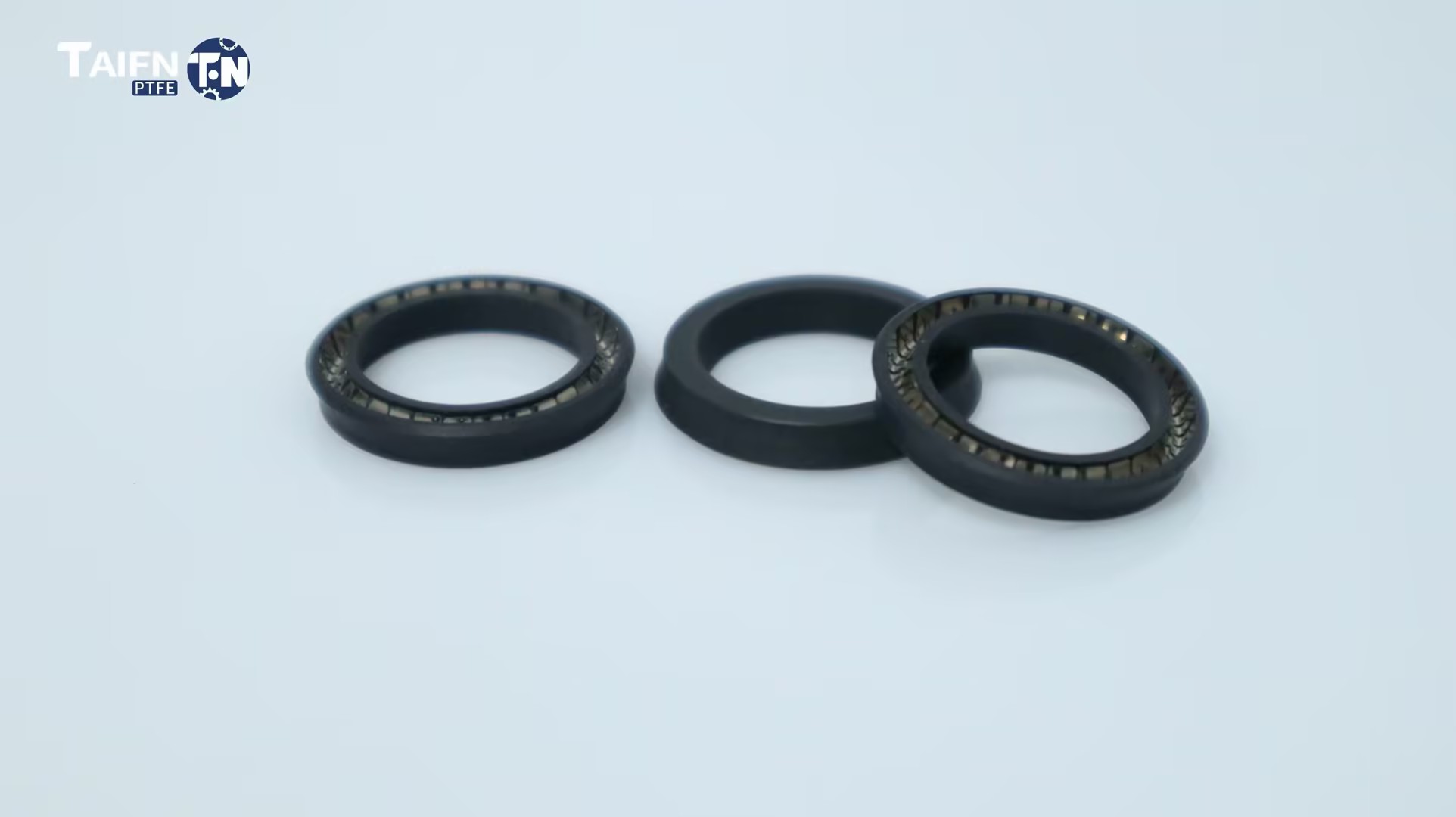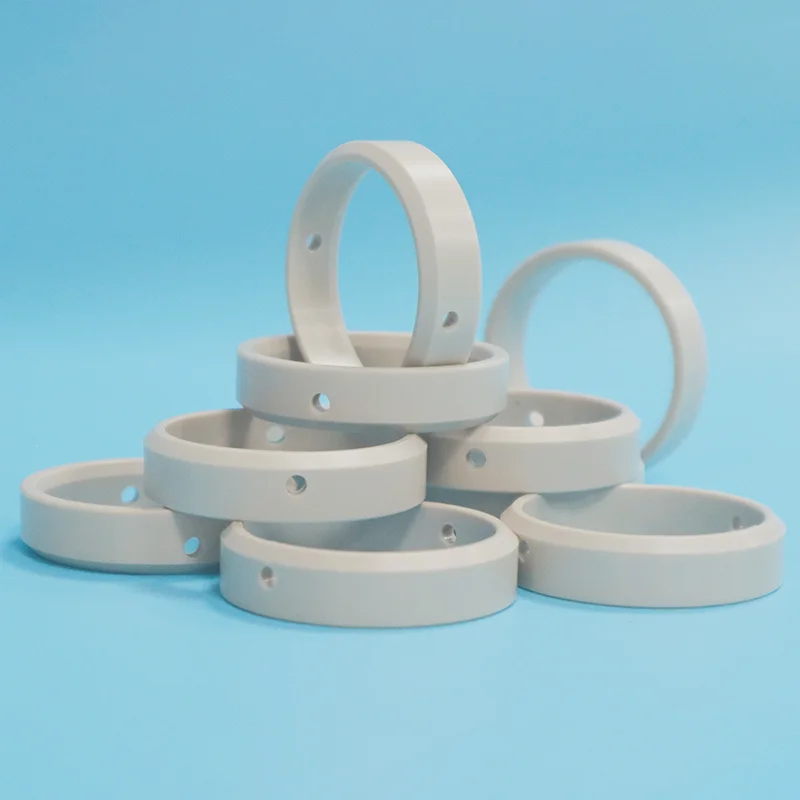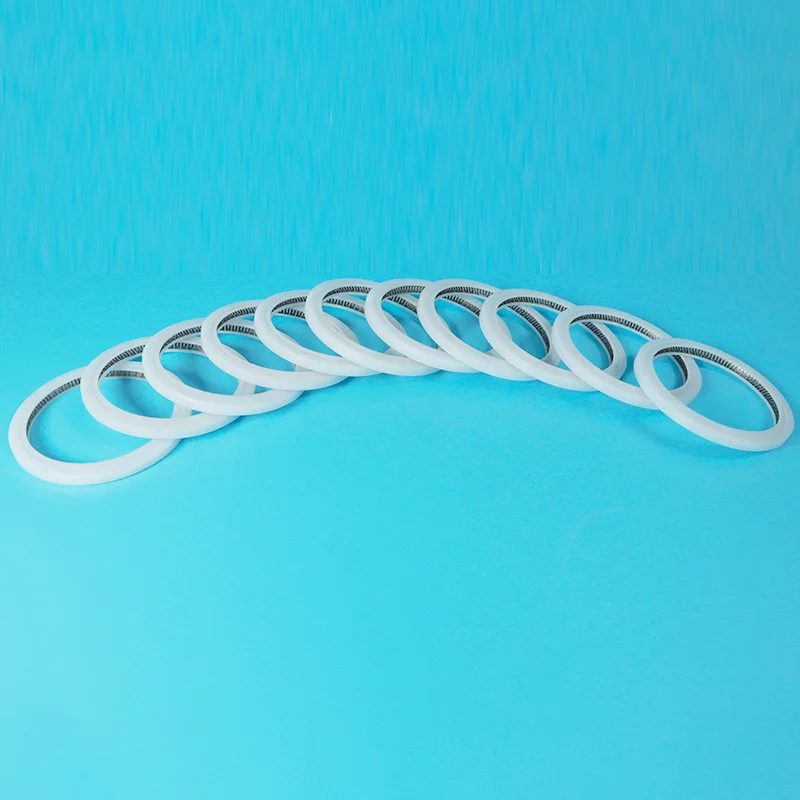
Filled Modified PTFE valve seats are precision-manufactured by incorporating glass fiber, carbon fiber, or advanced modified resins, thereby enhancing mechanical strength and dimensional stability without compromising chemical resistance.
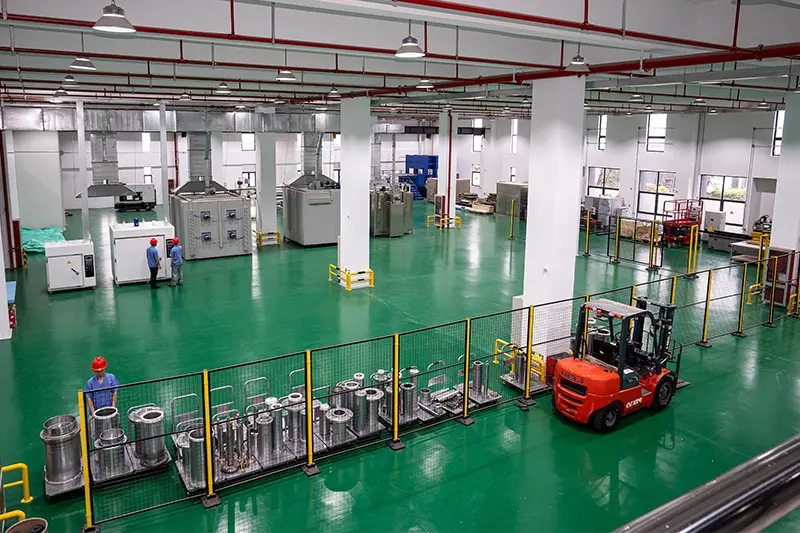
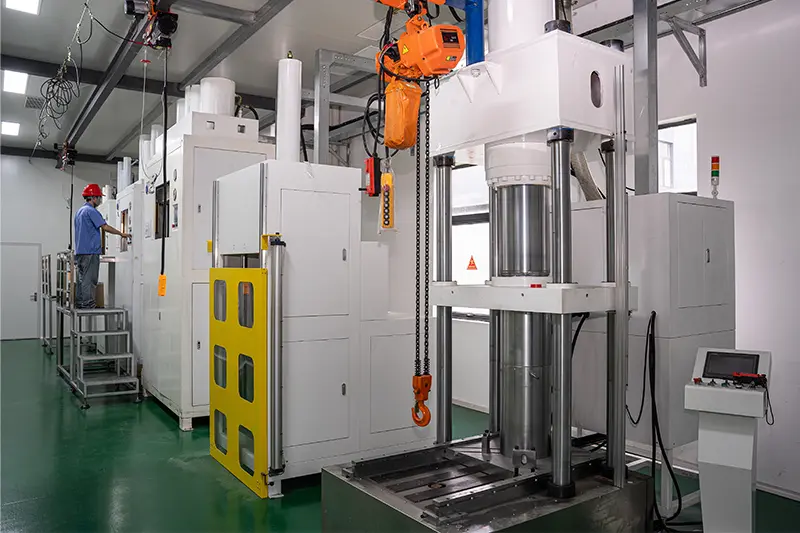
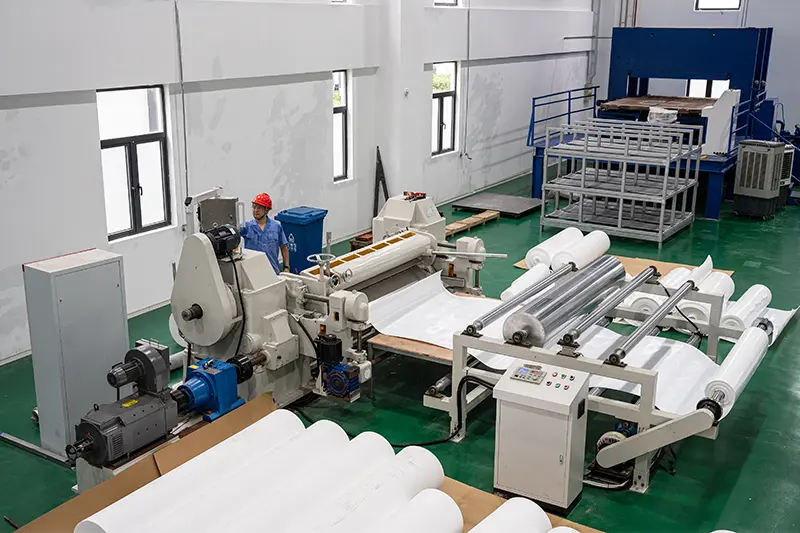
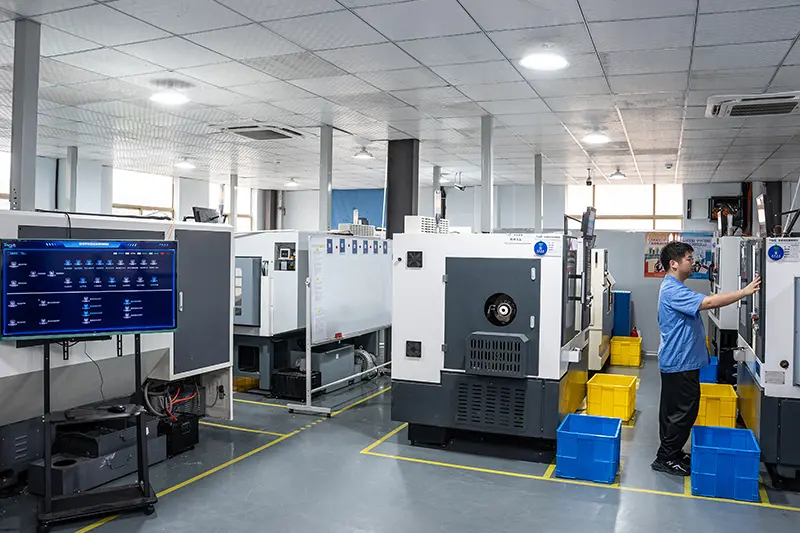
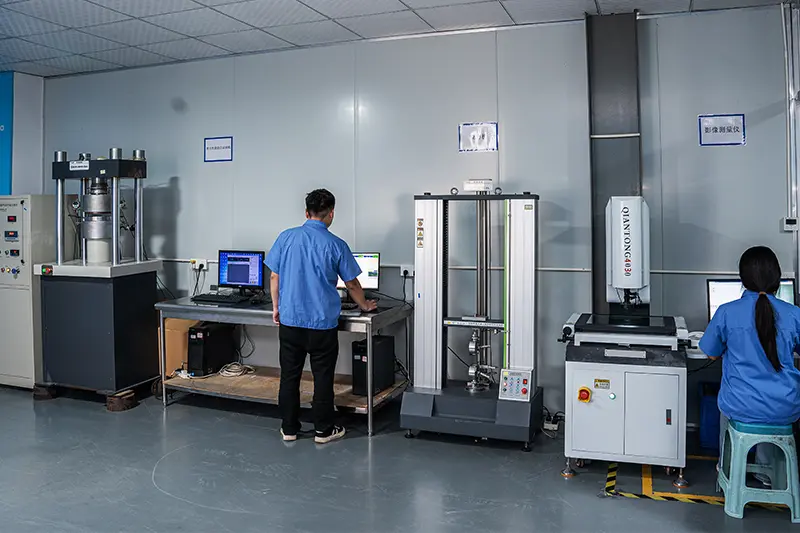
Taifno is a specialized manufacturer with in-house R&D and production capabilities. Our products comply with multiple international certifications, including CE and FDA standards, and are available in a variety of modified specifications, such as glass fiber-filled, carbon fiber-filled, molybdenum disulfide (MoS₂)-filled, and TFM™-modified grades.

|
Virgin PTFE Limitation |
Why It Happens |
How Modified PTFE Fixes It |
|
Deforms under load |
PTFE is soft — cold flow (creep) under sustained pressure |
Fillers increase stiffness and creep resistance — holds shape longer |
|
Wears quickly |
Soft material — abrasives cut the sealing surface |
Harder fillers (glass, carbon) improve wear resistance |
|
Permeation through the seal |
Virgin PTFE has micro-voids — chemicals seep through over time |
Modified resins (like TFM™) have denser structure — lower permeation rate |
|
Swelling and contraction |
Thermal expansion — imperfect seal in temperature cycling |
Better dimensional stability — maintains seal across temperature swings |
|
Limited pressure capability |
Soft — extrudes under high pressure (<70 bar) |
Handles up to 414 bar — suitable for high-pressure services |
1. Enhanced Creep Resistance
Standard PTFE deforms permanently under sustained load, leading to leakage and frequent replacement. Modified PTFE compounds, including TFM™ modified resins and glass/carbon-filled grades, resist deformation under load and maintain sealing force over extended service. The result is a valve seat that holds torque longer and seals tighter.
2. Superior Wear Resistance
Valve seats in abrasive media, slurries, sand, or crystallizing fluids, wear out quickly. Glass-filled PTFE offers increased compressive strength and rigidity, while carbon-filled grades provide low friction and heat dissipation. Wear resistance improvements can extend service life 3-5x longer than virgin PTFE.
3. Lower Permeation Rate
In critical chemical services, media can slowly permeate through virgin PTFE, attacking the valve body or escaping to atmosphere. Modified PTFE resins like TFM™ PTFE have a denser polymer structure, significantly reducing permeation and improving seal integrity.
|
Material |
Best For |
Cost (Initial) |
Service Life in Harsh Service |
Total Cost (3-Year) |
|
Virgin PTFE |
Clean chemicals, low pressure (<70 bar), FDA applications |
$ (1x) |
6-12 months |
$$$$ (3-6 replacements) |
|
Glass-Filled PTFE |
Abrasive media, high load, medium pressure |
$$ (1.5x) |
3-5 years |
$$ (1 replacement) |
|
Carbon-Filled PTFE |
High speed, heat dissipation, low friction |
$$ (1.6x) |
3-5 years |
$$ (1 replacement) |
|
TFM™ Modified PTFE |
Permeation-sensitive, thermal cycling, high pressure |
$$$ (2.5x) |
5+ years |
$ (zero replacements) |
Key insight: Virgin PTFE costs less upfront — but if you replace it every 6-12 months, the cumulative cost of parts + labor + downtime quickly exceeds the cost of a modified PTFE seat that lasts 3-5 years.
|
Property |
Virgin PTFE |
Glass-Filled |
Carbon-Filled |
TFM™ Modified |
|
Temperature Range |
-180°C to +200°C |
-180°C to +200°C |
-180°C to +200°C |
-180°C to +200°C |
|
Creep Resistance |
★★☆☆☆ |
★★★★☆ |
★★★☆☆ |
★★★★★ |
|
Wear Resistance |
★★☆☆☆ |
★★★★★ |
★★★★☆ |
★★★☆☆ |
|
Chemical Resistance |
★★★★★ |
★★★★☆ |
★★★★☆ |
★★★★★ |
|
Permeation Resistance |
★★☆☆☆ |
★★★☆☆ |
★★★☆☆ |
★★★★★ |
|
FDA Compliant |
✅ Yes |
❌ No |
❌ No |
✅ Yes |
|
Industry |
Application |
Recommended Grade |
|
Chemical Processing |
Ball valves, control valves handling acids, solvents, caustics |
Virgin PTFE or TFM™ modified |
|
Oil & Gas |
High-pressure ball valves, wellhead equipment, pipelines |
Glass-filled or carbon-filled PTFE |
|
Pulp & Paper |
Abrasive slurry valves, digester valves |
Glass-filled PTFE |
|
Food & Beverage |
Sanitary valves, filling equipment |
Virgin PTFE (FDA-approved) |
|
Pharmaceutical |
Sterile processing, API manufacturing |
Virgin PTFE or TFM™ modified (FDA/USP) |
|
Semiconductor |
High-purity chemical distribution |
High-purity Virgin PTFE |
|
Power Generation |
Steam systems, cooling water valves |
TFM™ modified or PCTFE |
|
Hydrogen Service |
Cryogenic liquid hydrogen, high-pressure gaseous hydrogen |
PCTFE (cryogenic), Virgin PTFE (low porosity) |
Floating and trunnion-mounted ball valves
Butterfly valves
Gate valves and globe valves
Plug valves
Control valves and throttling valves
Challenge: A chemical plant was replacing PTFE valve seats on control valves handling aggressive acid every 8-10 months due to creep deformation and leakage. Downtime for replacement cost $5,000 per valve per event.
Solution: Switched to TFM™ modified PTFE seats with enhanced creep resistance and dimensional stability.
Result: Seats lasted over 3 years, 4x longer than virgin PTFE. Eliminated 3 replacement events per valve.
Total savings: $15,000 per valve over 3 years, plus reduced labor and safety risks.
Challenge: A ball valve manufacturer's customer was using PTFE valve seats that did not provide sufficient resistance to deformation, wear, and permeation. The PTFE also had a tendency to swell and contract, making for an imperfect seal.
The manufacturer collaborated with material experts to change the valve seat material to TFM™ modified PTFE, which offered much greater deformation resistance and a lower permeation rate than standard PTFE.
The material also delivered a smoother surface finish, reducing friction and improving the ball-to-seat seal.
Result: The new seat offered better permeation resistance, improved dimensional stability, and enhanced structural integrity. The manufacturer now produces these valve seats in sizes from ¾ to 54 inches in diameter, with applications in chemical processing, ethanol, oil & gas, railroad, paper, and food industries.
Challenge: A mining operation was replacing valve seats every 4-6 weeks on slurry valves handling abrasive ore particles. The virgin PTFE seats were wearing out rapidly, causing frequent production interruptions.
Solution: Upgraded to glass-filled PTFE seats with enhanced wear resistance and strength.
Result: Seats lasted 8 months, 8x longer than virgin PTFE. Production uptime increased significantly. Maintenance intervals extended from weeks to months.
Note: Actual case results vary by application conditions. Contact us for application-specific recommendations.


|
Parameter |
Virgin PTFE |
Glass-Filled |
Carbon-Filled |
TFM™ Modified |
|
Temperature Range |
-180°C to +200°C |
-180°C to +200°C |
-180°C to +200°C |
-180°C to +200°C |
|
Maximum Pressure |
70 bar |
Class 800 |
Class 800 |
Class 800+ |
|
Chemical Resistance |
pH 0-14 |
Excellent (not HF/alkali) |
Excellent (not oxidizers) |
pH 0-14 |
|
FDA Compliant |
✅ Yes |
❌ No |
❌ No |
✅ Yes |
|
Color |
White |
Gray-white |
Black |
White |
|
Grade |
Best For |
Key Benefit |
Chemical Limitation |
|
Virgin PTFE |
Clean chemicals, FDA applications, low pressure |
Lowest friction, universal chemical resistance, lowest cost |
Deforms under load — not for high pressure/abrasives |
|
15-25% Glass-Filled |
Abrasive media, high load, slurries |
Increased strength, rigidity, wear resistance |
Not for hydrofluoric acid, strong alkali |
|
Carbon-Filled |
High speed, dry running, heat dissipation |
Excellent thermal conductivity, low friction |
Not for strong oxidizers |
|
TFM™ Modified PTFE |
Permeation-sensitive, critical chemical services |
Denser structure, better stress recovery, lower permeation |
Higher cost, requires specialized processing |
100% Virgin Resin Material — no regrind, no recycled material. Consistent quality, batch after batch.
Full Traceability — Every batch traceable from raw material to finished product. Material certificates available on request.
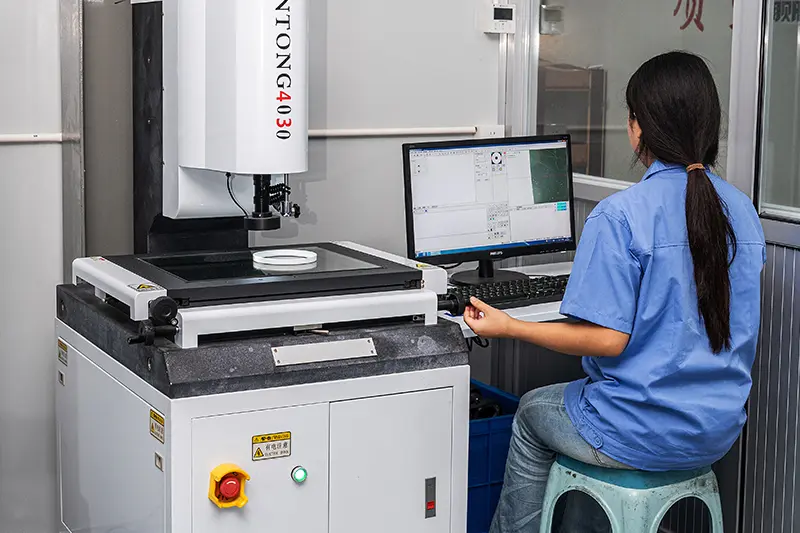
Precision Machining — Seats are precision-machined to tight tolerances (0.1mm accuracy available) using CNC lathes.
ISO Certified — Manufacturing processes certified under ISO quality management systems.
FDA-Compliant Grades Available — Virgin PTFE and select modified grades meet FDA 21 CFR 177.1550 requirements.
Custom Design Support — Engineering support to optimize seat geometry for your specific valve design.


A: Modified PTFE valve seats add fillers like glass fiber, carbon, or advanced resins to improve mechanical strength, creep resistance, and wear resistance while preserving PTFE's chemical resistance.
Upgrade when: Your current virgin PTFE seats are deforming under pressure, wearing out prematurely, or allowing media permeation. In these cases, modified PTFE can extend service life 3-5x, reducing downtime and total cost.
A: Three grades, three different applications:
Glass-filled: Abrasive media, slurries, high load, highest wear resistance and strength. Not for HF or strong alkali.
Carbon-filled: High speed, dry running, heat dissipation, best thermal conductivity and low friction. Not for strong oxidizers.
TFM™ modified: Permeation-sensitive, thermal cycling, critical chemical services, denser structure, better stress recovery. Higher cost, but longest service life.
Quick rule:
Need abrasion resistance? Glass-filled.
Need heat dissipation? Carbon-filled.
Need permeation control and long life? TFM™.
A: Temperature: -180°C to +200°C (grade dependent).
Pressure: up to 414 bar — varies by design and material.
Chemical limits:
Glass-filled: Not for HF or strong alkali — glass reacts
Carbon-filled: Not for strong oxidizers — carbon oxidizes
Virgin PTFE & TFM™: Not for molten alkali metals or fluorine gas
Most common mistake: Over-compression. Modified PTFE is harder than virgin PTFE and requires precise seating force. Too much compression damages the seat; too little causes leakage.
Address
No.1028, Qiersan Street, Andong Town, Cixi City, Zhejiang Province, China
Tel