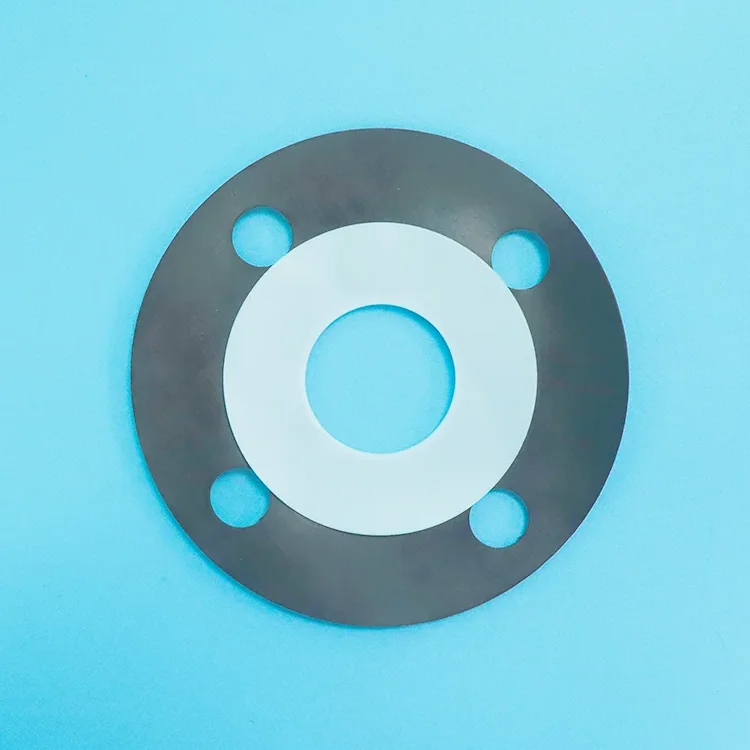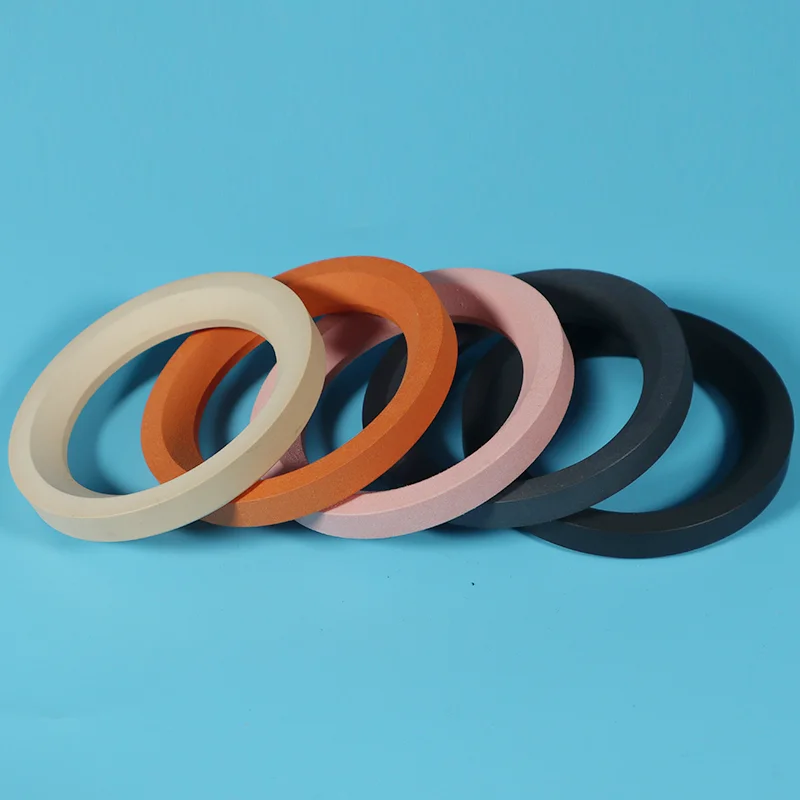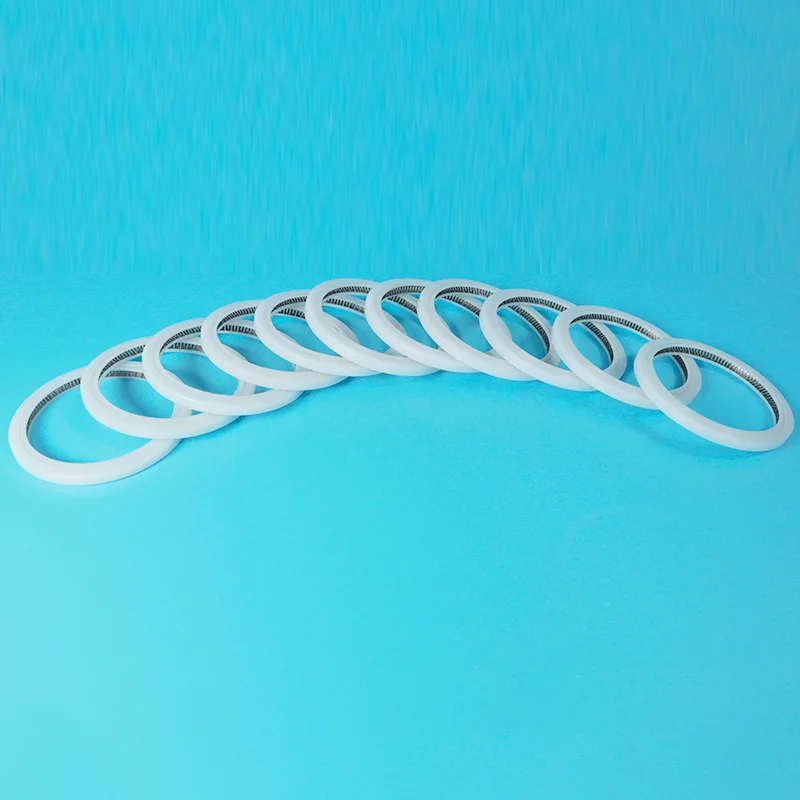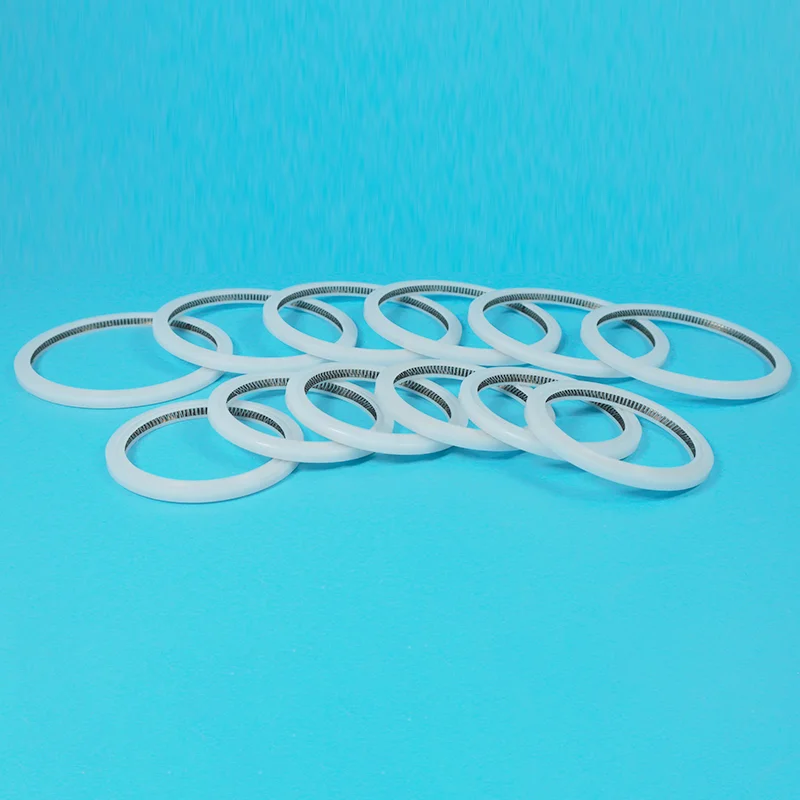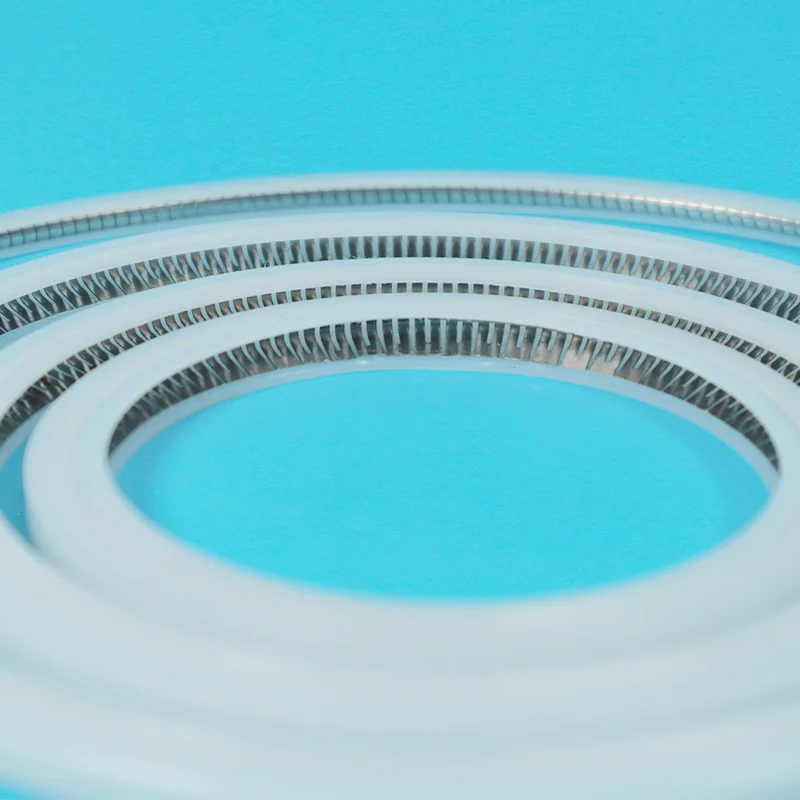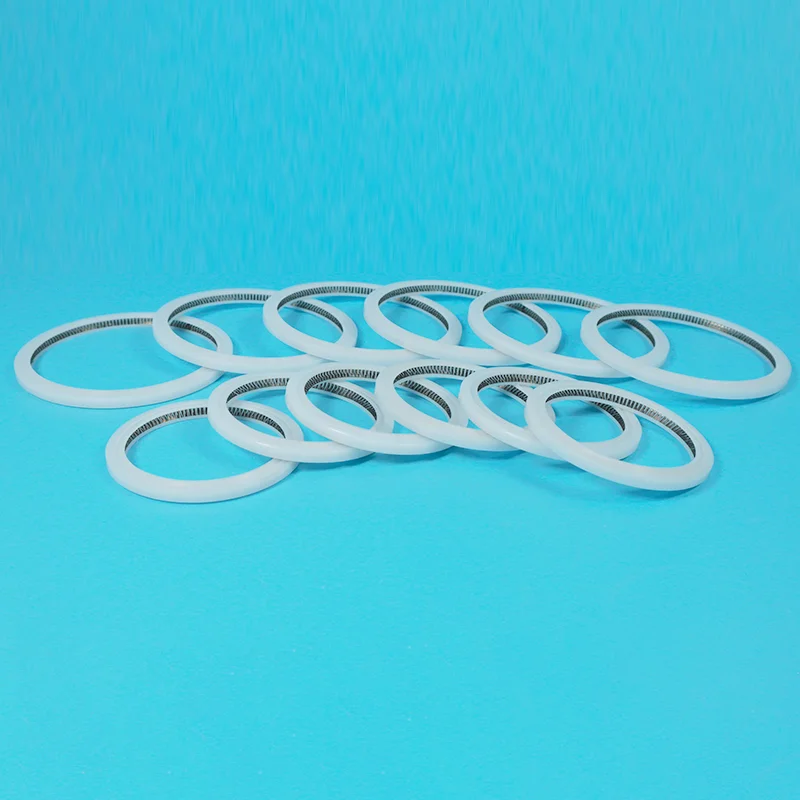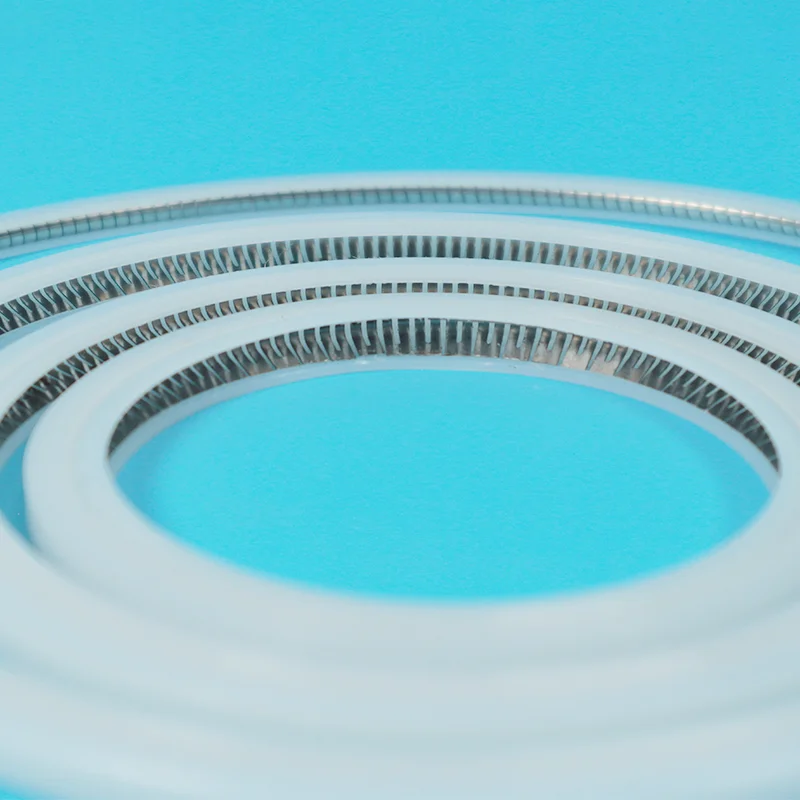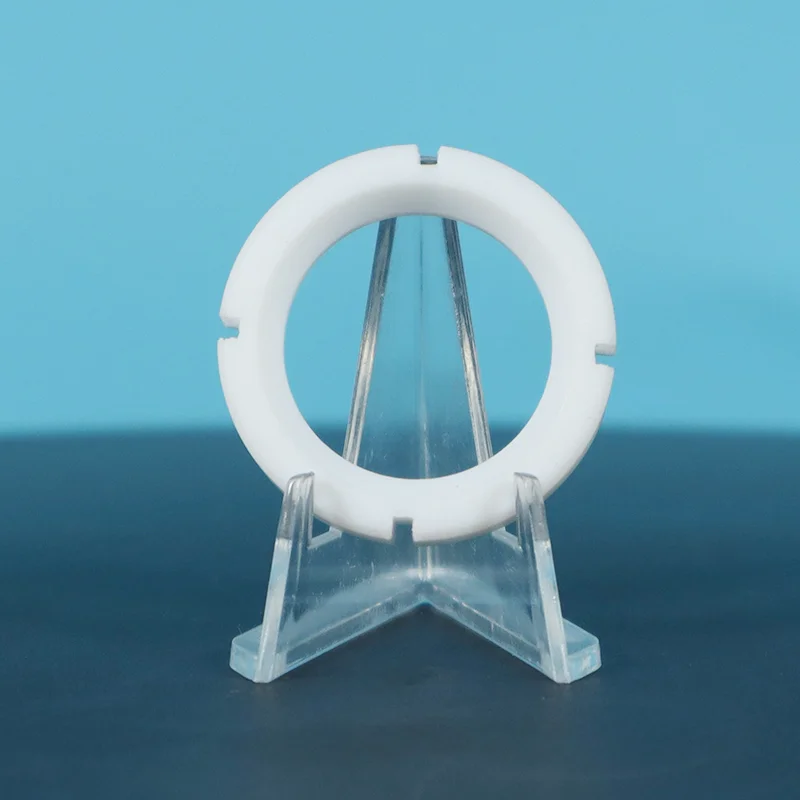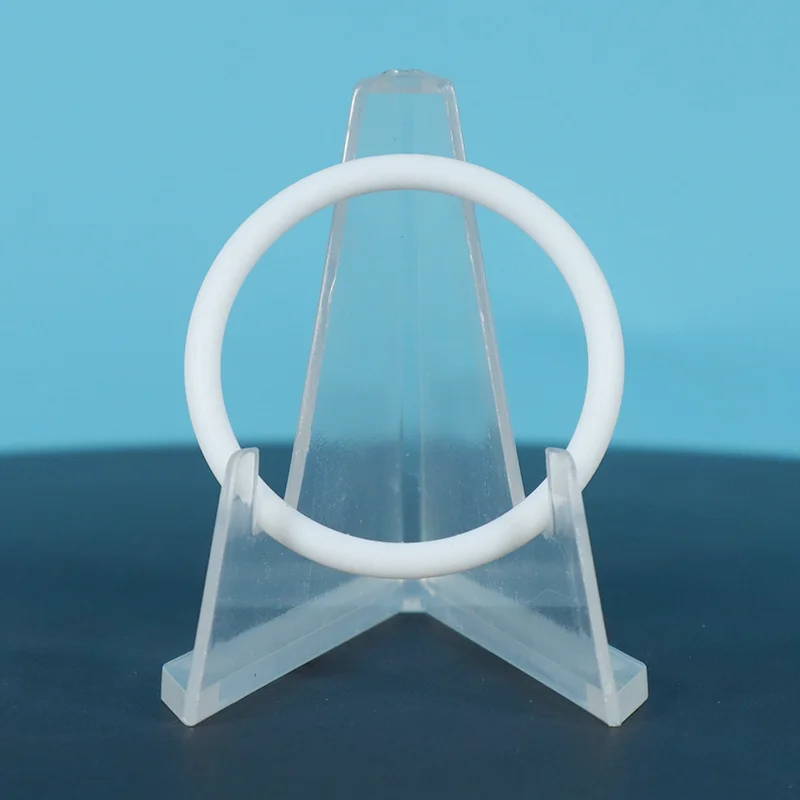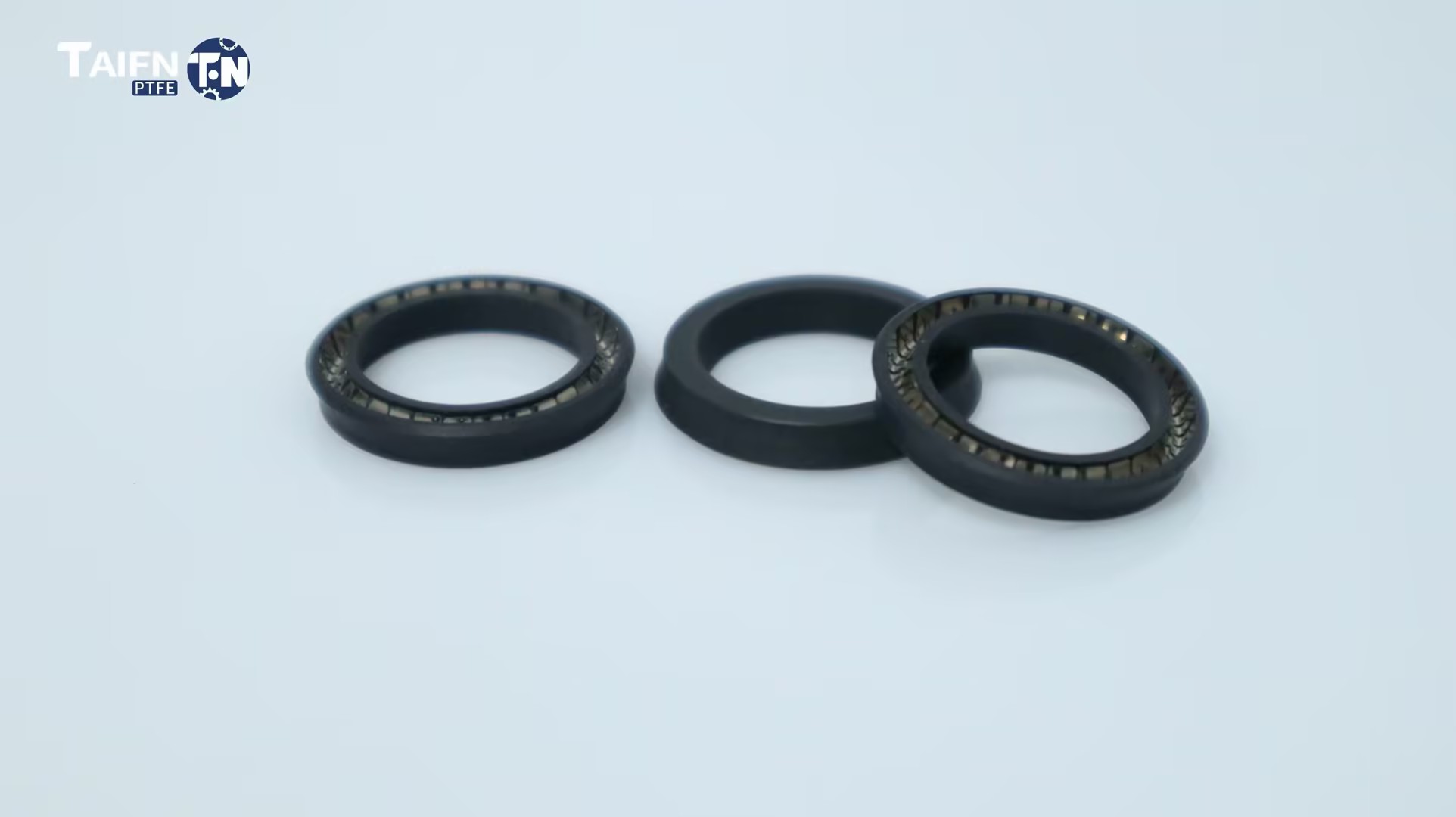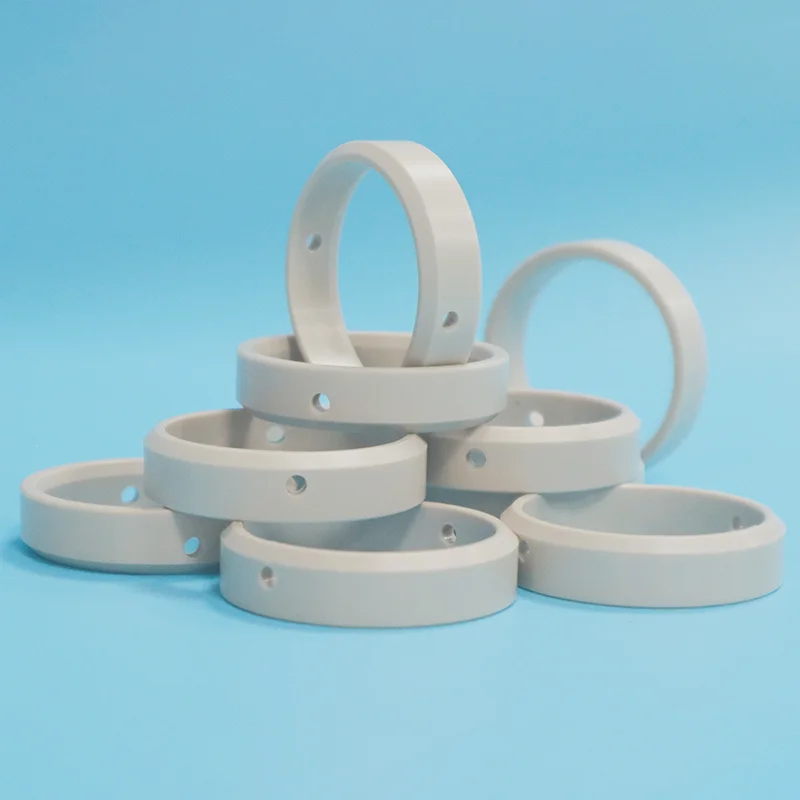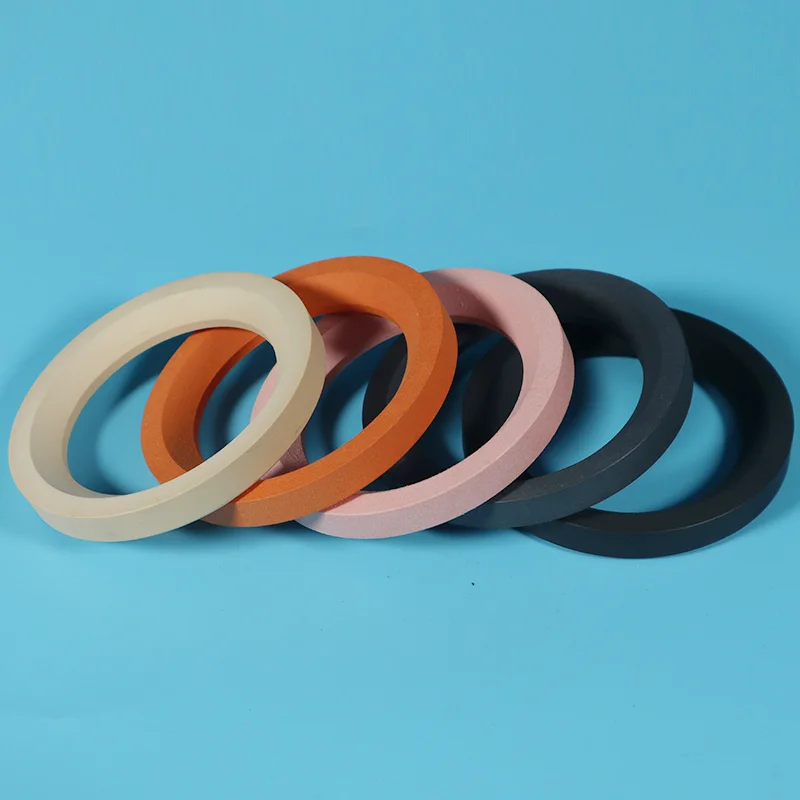
The internal spring of the V-type spring-energized seal provides initial sealing force under zero-pressure conditions; system pressure further enhances the sealing effect—the higher the pressure, the tighter the seal.
Operating temperature range: -180°C to +200°C; pressure up to 45 MPa (dynamic) / 60 MPa (static); reciprocating speed up to 15 m/s.

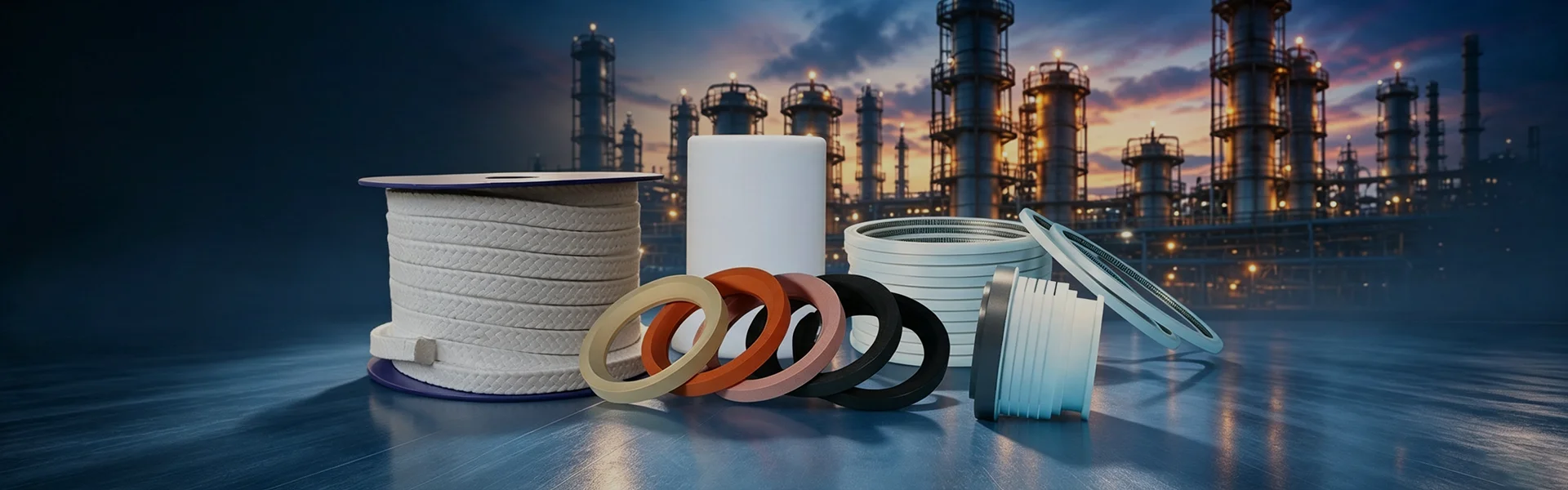
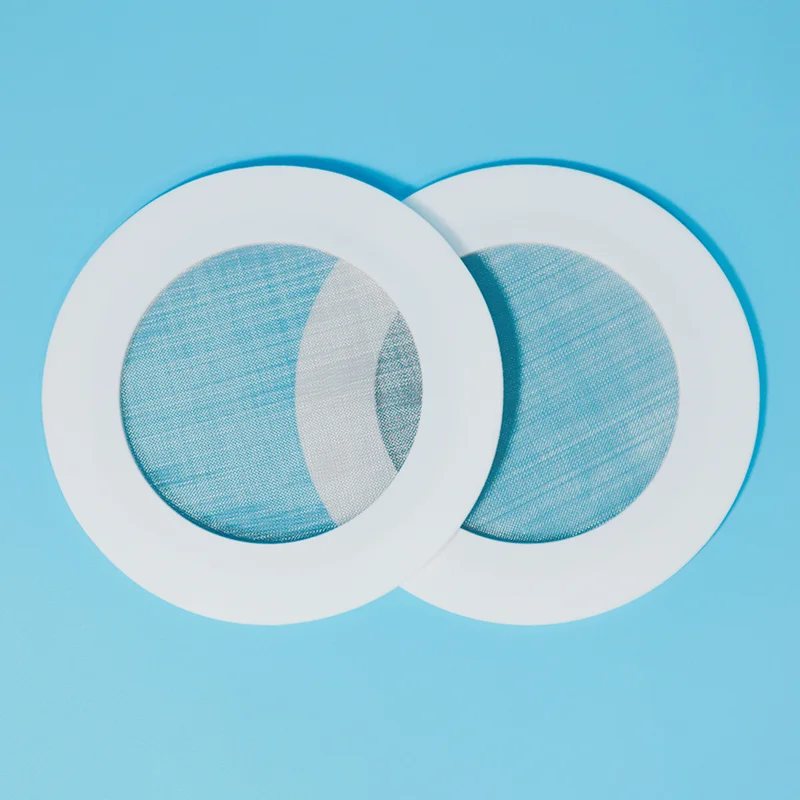
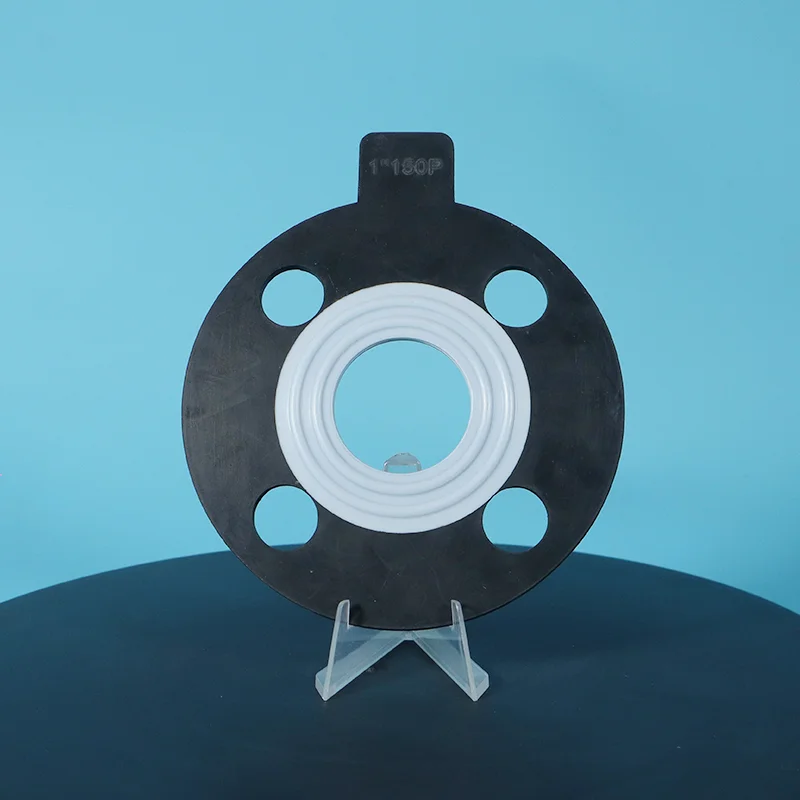
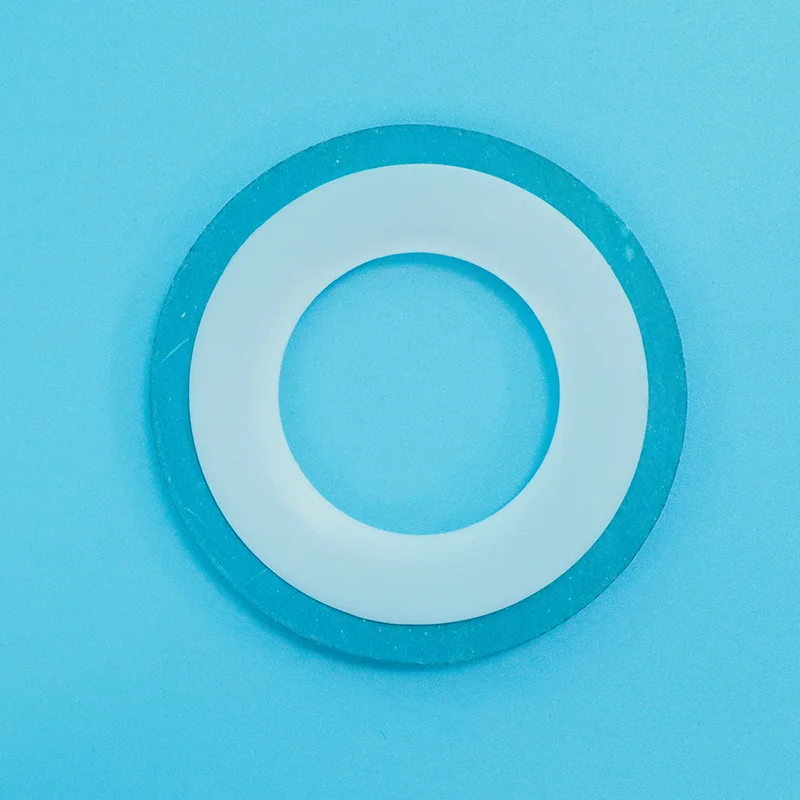
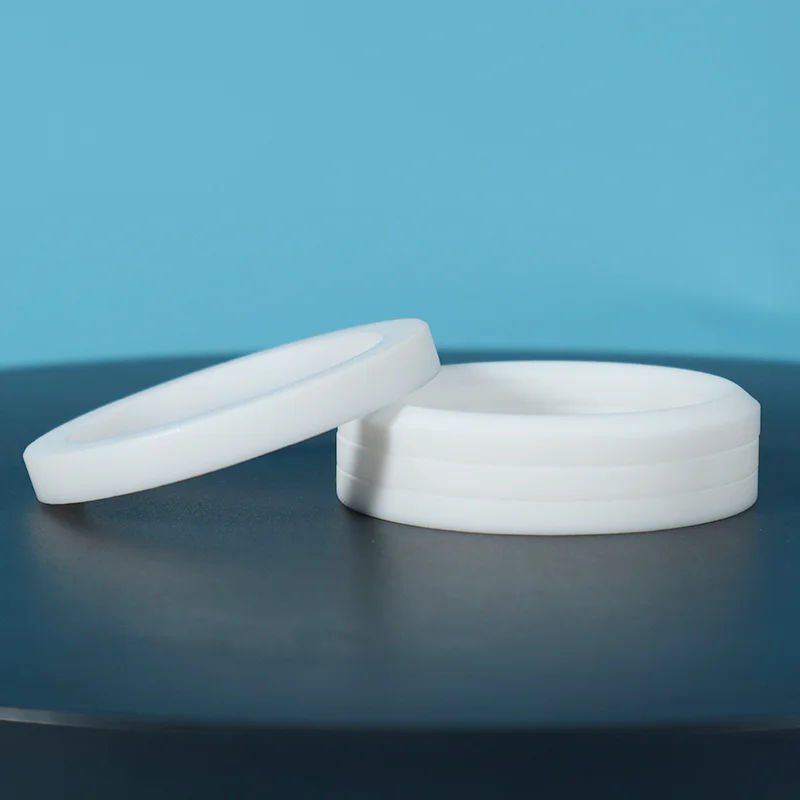
V-type spring-energized seal consists of a PTFE U-shaped jacket with a V-shaped stainless steel spring inside. The V-spring features a "cantilever" design that concentrates its load at the leading edge of the sealing lip, providing a reliable wiping action.
How it works:
Zero pressure: V-spring provides initial sealing force — seals even when system is not pressurized
Under pressure: System pressure enters U-cavity and pushes sealing lips harder against mating surface — pressure = tighter seal
Self-energizing: No external force needed to maintain seal integrity
|
Feature |
V-Type |
U-Type |
|
Sealing Direction |
Axial — flanges, covers, end faces |
Radial — piston rods, valve stems |
|
Spring Type |
V-shaped cantilever spring |
Helical or cantilever spring |
|
Best For |
Static sealing |
Dynamic sealing (reciprocating/rotary) |
|
Wiping Action |
Yes — reliable wiping of debris |
Moderate |
|
Problem |
How V-Type Solves It |
|
O-rings fail under pressure cycling |
Spring provides constant sealing force — unaffected by pressure fluctuations |
|
Rubber seals degrade in chemicals |
PTFE jacket is chemically inert — pH 0-14, universal resistance |
|
Seals leak at zero pressure |
Spring provides sealing force at zero pressure |
|
High friction — stick-slip |
PTFE has lowest friction — smooth motion, no stick-slip |
|
Temperature extremes degrade elastomers |
-180°C to +200°C — cryogenic to sterilization |
|
Feature |
V-Type |
O-Ring |
U-Type |
|
Zero Pressure Sealing |
✅ Yes — spring provides force |
❌ No |
✅ Yes |
|
Pressure |
Up to 60MPa (static) |
Moderate |
Up to 60MPa |
|
Temperature |
-180°C to +200°C |
-180°C to +150°C |
-180°C to +200°C |
|
Chemical Resistance |
★★★★★ |
★★☆☆☆ |
★★★★★ |
|
Friction |
★★★★★ lowest |
★★★★☆ |
★★★★★ |
|
Sealing Direction |
Axial |
Radial |
Radial |
|
Best For |
Flanges, covers, end faces |
General static sealing |
Piston rods, valve stems |
|
If Your Service Is... |
Choose... |
|
Flanges, covers, end faces — static sealing |
V-Type |
|
Piston rods, valve stems — reciprocating motion |
U-Type |
|
General purpose, low cost, clean media |
O-Ring |
|
Industry |
Application |
|
Chemical Processing |
Reactor covers, flanges, pump housings — acids, solvents, aggressive chemicals |
|
Pharmaceutical |
Sterile processing equipment, bioreactors, filling machines — FDA/USP compliance |
|
Semiconductor |
High-purity gas and chemical seals, vacuum systems — ultra-purity |
|
Aerospace |
Fuel systems, hydraulic systems — extreme temperature, high reliability |
|
Oil & Gas |
Valve seals, wellhead equipment — high pressure, H₂S, corrosive media |
|
Food & Beverage |
Sanitary connections, filling equipment — FDA compliance |
Challenge: A chemical plant was experiencing leakage from a reactor manway seal handling aggressive acids at 150°C. Standard PTFE gaskets were cold-flowing and leaking every 6-8 months. Maintenance required full shutdown and cleaning.
Solution: Installed V-type spring-energized seal with glass-filled PTFE jacket for improved wear resistance. V-spring provided constant sealing force compensating for thermal cycling and pressure fluctuations.
Result: Zero leakage for over 3 years. No maintenance required. Eliminated annual shutdown costs.
Challenge: A pharmaceutical filling machine required a seal for a rotary valve handling sterile product. Standard O-rings could not pass FDA extractables testing and required frequent replacement due to chemical attack from CIP/SIP cycles.
Solution: Supplied V-type spring-energized seal with virgin PTFE jacket and 316 stainless steel V-spring. FDA-compliant material. Full documentation provided.
Result: Passed FDA extractables testing. Seal survived repeated CIP/SIP sterilization cycles without degradation. No replacements needed in 18 months.
Note: Actual case results vary by application conditions. Contact us for application-specific recommendations.


|
Parameter |
Value |
|
Temperature Range |
-180°C to +200°C |
|
Pressure — Dynamic |
Up to 45MPa |
|
Pressure — Static |
Up to 60MPa |
|
Speed — Reciprocating |
Up to 15m/s |
|
Speed — Rotary |
Up to 1m/s |
|
Material |
PTFE jacket + Stainless Steel V-spring (304/316/301) |
|
Chemical Resistance |
pH 0-14 — virtually universal |
|
Sealing Type |
Axial sealing — static or low-speed rotary |
|
Grade |
Best For |
Key Benefit |
Chemical Limit |
|
Virgin PTFE |
Clean chemicals, FDA applications, general service |
Universal chemical resistance, lowest friction, FDA compliant |
Soft — lower wear resistance |
|
Glass-Filled PTFE |
Abrasive media, high wear, slurries |
Increased mechanical strength, wear resistance |
Not for HF or strong alkali |
|
Carbon-Filled PTFE |
Heat dissipation, anti-static, low friction |
Thermal conductivity, improved creep resistance |
Not for strong oxidizers |
|
MoS₂-Filled PTFE充 |
Sticky media, low torque, enhanced lubricity |
Reduced friction, improved wear resistance |
Not for oxidizing acids |
|
Spring Material |
Best For |
|
304 SS / 316 SS |
General chemical service, moderate temperatures |
|
316L SS |
Improved corrosion resistance — aggressive chemicals, salt water |
|
Elgiloy |
Excellent corrosion resistance — aerospace, chemical, critical services |
|
Hastelloy |
Extreme corrosion resistance — highly aggressive chemicals, acids |
|
Inconel |
High-temperature strength — extreme heat (+260°C+) |
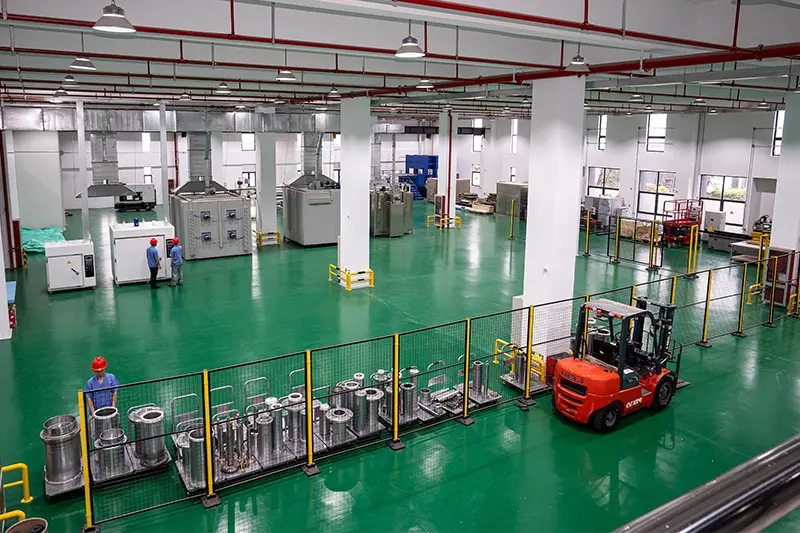
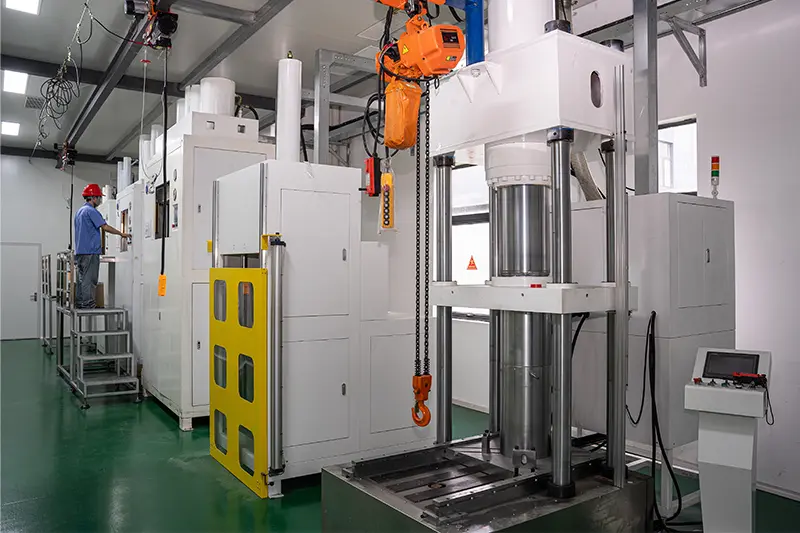
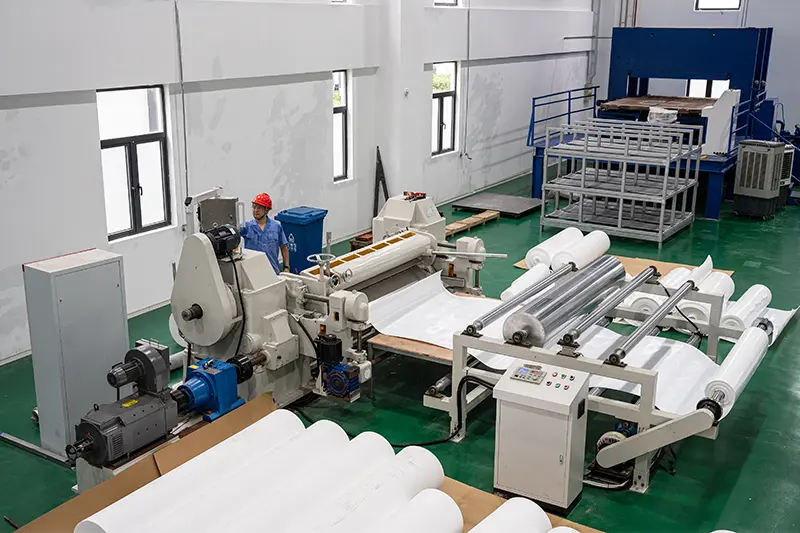
100% Virgin PTFE Resin — no regrind, no recycled material. Consistent quality, batch after batch.
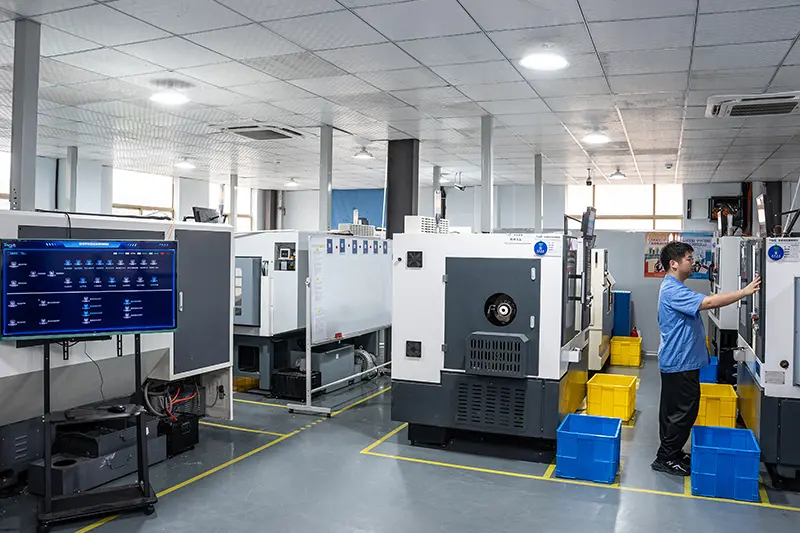
Precision Spring Manufacturing — Springs manufactured to exact specifications with CNC equipment.
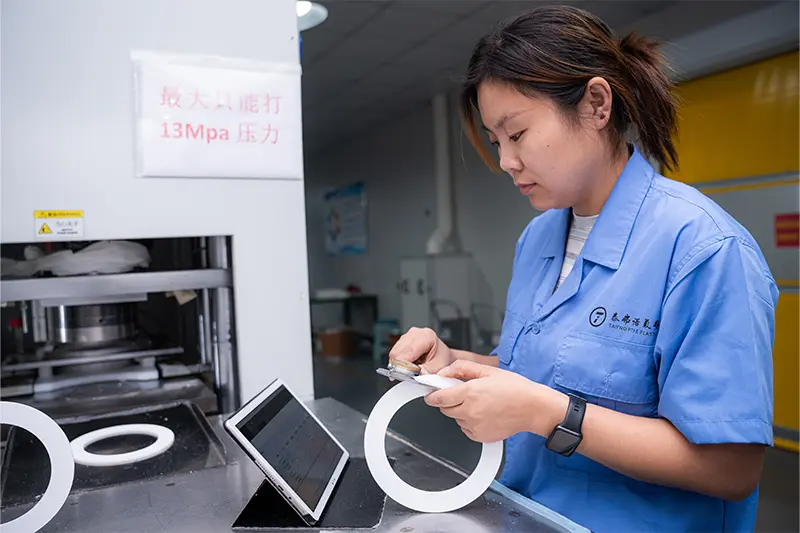
Full Traceability — Every batch traceable from raw material to finished seal. Material certificates on request.
ISO 9001 Certified — Manufacturing processes certified under ISO quality management systems.
FDA-Compliant Grades Available — Virgin PTFE meets FDA 21 CFR 177.1550 and BfR requirements.
Custom Spring Alloys Available — 301/304/316 SS standard; Elgiloy, Hastelloy, Inconel for extreme conditions.


A: A PTFE U-jacket seal with a V-shaped stainless steel spring inside. Seals from zero pressure (spring provides initial force) to high pressure (system pressure energizes the lips).
Use it when O-rings or rubber seals fail, in aggressive chemicals, extreme temperatures (-180°C to +200°C), high pressure (up to 60MPa), or critical applications where leakage is not acceptable.
V-type vs U-type: V-type for flanges, covers, end faces (axial sealing). U-type for piston rods, valve stems (radial sealing).
If you are sealing a flange or cover, choose V-type.
If sealing a moving rod, choose U-type.
A: Cost depends on diameter, material grade, spring alloy, and quantity. Standard sizes start at approximately X−X−Y. Custom sizes quoted per drawing.
Spring alloy impacts cost: 304 SS (standard, lowest cost) → 316 SS (improved corrosion) → Elgiloy/Hastelloy/Inconel (extreme corrosion/high temperature, higher cost).
Lead time:
Standard sizes: 5-7 days.
Custom sizes: 10-15 days.
Shipping: air 5-10 days, sea 15-30 days.
A: Temperature: -180°C to +200°C.
Pressure: up to 45MPa (dynamic) / 60MPa (static).
Speed: up to 15m/s (reciprocating), up to 1m/s (rotary).
Chemical limits:
PTFE jacket: not for molten alkali metals or elemental fluorine.
Glass-filled: not for HF or strong alkali.
Carbon-filled: not for strong oxidizers.
Three common mistakes:
(1) Damaging the lip during installation: inspect before installation.
(2) Over-tightening or improper groove design: PTFE requires specific groove dimensions; wrong design damages the seal.
(3) Installing backward: V-type seals are directional. The V-opening must face the pressure side.
We include installation specifications with every order. Follow them.
Address
No.1028, Qiersan Street, Andong Town, Cixi City, Zhejiang Province, China
Tel