Products
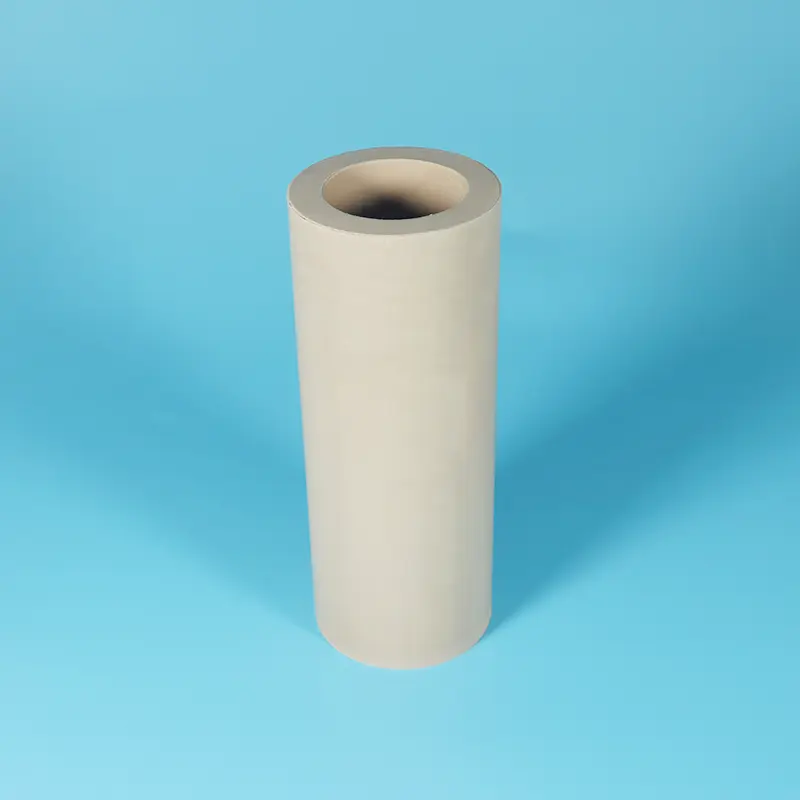
PPL-Filled PTFE Tube
  • PPL-Filled PTFE TubePPL-Filled PTFE Tube
  • PPL-Filled PTFE TubePPL-Filled PTFE Tube
  • PPL-Filled PTFE TubePPL-Filled PTFE Tube

PPL-Filled PTFE Tube

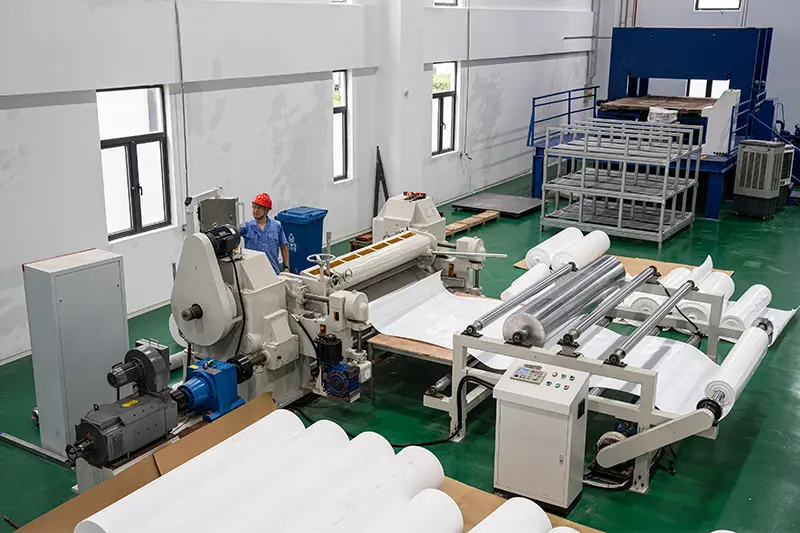
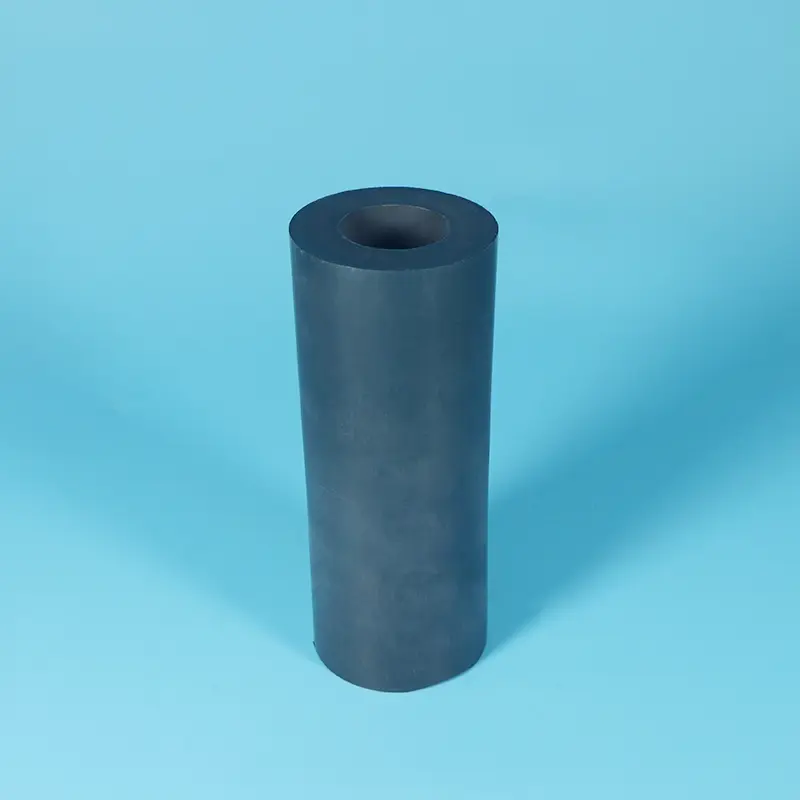
Taifno is a manufacturer and supplier of PPL-filled PTFE tubes. The product is PPL (Para-Polyphenylene) Reinforced Modification. PPL powder is filled into the PTFE matrix to significantly enhance high-temperature resistance, wear resistance, and creep resistance. Designed for high-temperature, highly corrosive, and oil-free lubrication applications, with a continuous service temperature up to 260°C.

When conventional materials cannot simultaneously meet the three demands of "high-temperature resistance + corrosion resistance + self-lubrication," Taifno recommends PPL-filled PTFE tubes for you.

PPL is a high‑performance polymer with decomposition temperature at 530°C and no melting point. While it shows minimal weight loss under lab prolonged heating at 450°C, the PPL‑filled PTFE composite delivers reliable continuous service up to 260°C for real‑world industrial applications.

By filling PPL into PTFE, the material fully inherits PTFE's excellent chemical resistance (against strong acids, strong alkalis, and organic solvents). It greatly improves wear resistance and creep resistance, with continuous service temperature up to 260°C and short‑term peak tolerance up to 300°C.

Specification: Density 2.0-2.2 g/cm³, tensile strength 15-20 MPa, hardness Shore D 60-69, continuous service temperature -200°C to +300°C (330°C peak), coefficient of friction 0.1-0.18, chemical resistance pH 0-14 (resists virtually all chemicals).

Quick selection rule:

Bronze+MoS₂ → Heavy load + wear resistance + heat dissipation, but does NOT resist acids/alkalis

PPL Filled → High temperature + corrosion resistance + self-lubrication, with superior chemical compatibility

Acids/alkalis + high temperature → PPL.

No corrosion + extreme wear → Bronze+MoS₂

PPL-Filled PTFE TubePPL-Filled PTFE Tube

Why PPL-Filled?

PPL (Para-Polyphenylene): High-Temperature Reinforcer and Self-Lubricant

PPL (para-polyphenylene) is a high-performance polymer consisting of linked benzene rings, offering unique performance advantages:

① Exceptional High-Temperature Resistance


PPL has a decomposition temperature of up to 530°C and no melting point.

PPL-filled PTFE raises the continuous service temperature from 260°C (unfilled PTFE) to 280°C, with short-term peak tolerance up to 300°C.


② Ultimate Chemical Corrosion Resistance

To date, no solvent has been found that can dissolve PPL

Resists strong acids (sulfuric acid, hydrofluoric acid), strong alkalis, pH range 0-14

Fully inherits PTFE's corrosion resistance while gaining higher temperature stability

③ Excellent Self-Lubricating Properties

Self-lubrication performance superior to MoS₂ and graphite

Coefficient of friction as low as 0.1-0.18, ideal for oil-free lubrication applications

④ Good Radiation Resistance

Under Co60 gamma irradiation, maintains performance up to 9×10⁶ Gy

Why Not Use Pure PPL Directly?

Pure PPL is hard and brittle, it is extremely difficult to process and shape alone, making it impractical for industrial applications.

In practice, PPL is used as a reinforcing filler within a PTFE matrix to create PPL/PTFE compounds that combine PTFE's processability with PPL's high-temperature strength and wear resistance.

The Combined Effect

PPL filled PTFE is specifically engineered for high-temperature + corrosive + oil-free lubrication applications. In chemical valve seals, compressor piston rings, reactor bushings, and similar applications, PPL filled PTFE components deliver 2-4 times the service life of virgin PTFE.

Technical Specifications

Parameter

Value

Test Method

Composition

PTFE + PPL Filler (ratio customizable)

—

Density

2.0-2.2 g/cm³

ASTM D792

Tensile Strength

15-28 MPa

ASTM D638 / GB1040

Elongation at Break

250-300%

ASTM D638

Hardness

Shore D 60-69

ASTM D2240

Continuous Service Temperature

-200℃ to +280℃, with short‑term peak tolerance up to 300℃

—

Coefficient of Friction

0.1-0.18

ASTM D1894

Color

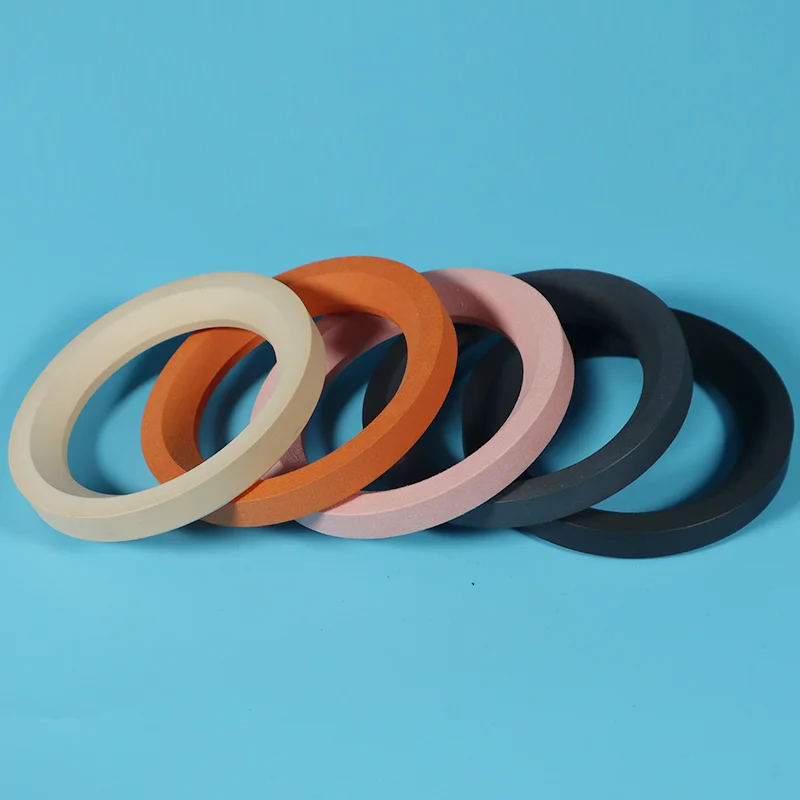
Dark brown / Deep brown / Black

—

Chemical Resistance

pH 0-14, resists virtually all chemicals

—

Radiation Resistance

≥9×10⁶ Gy (Co60)

—

Note: Above values are typical laboratory data. Actual performance may vary depending on filler ratio, processing method, and application conditions. Custom formulations available upon request.

Available Forms

Process

Diameter Range

Key Feature

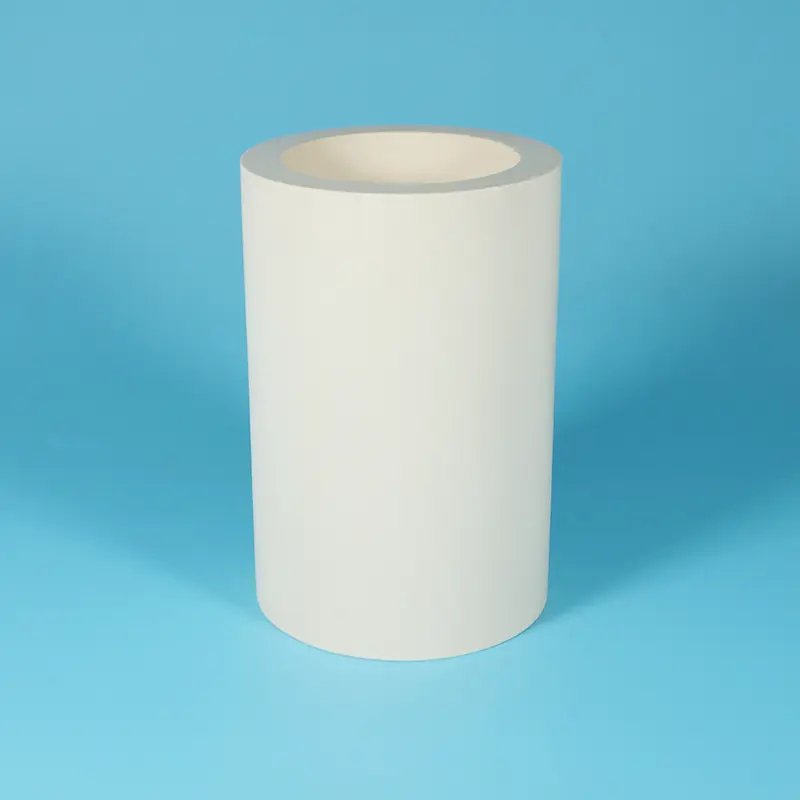
Extruded Tube

10-200mm OD

Uniform dimensions, cost-effective for standard sizes

Molded Tube

25-600mm+ OD

Large diameters, thick walls for large seals

Molded Rod

6-500mm+ OD

Solid stock for custom machined components

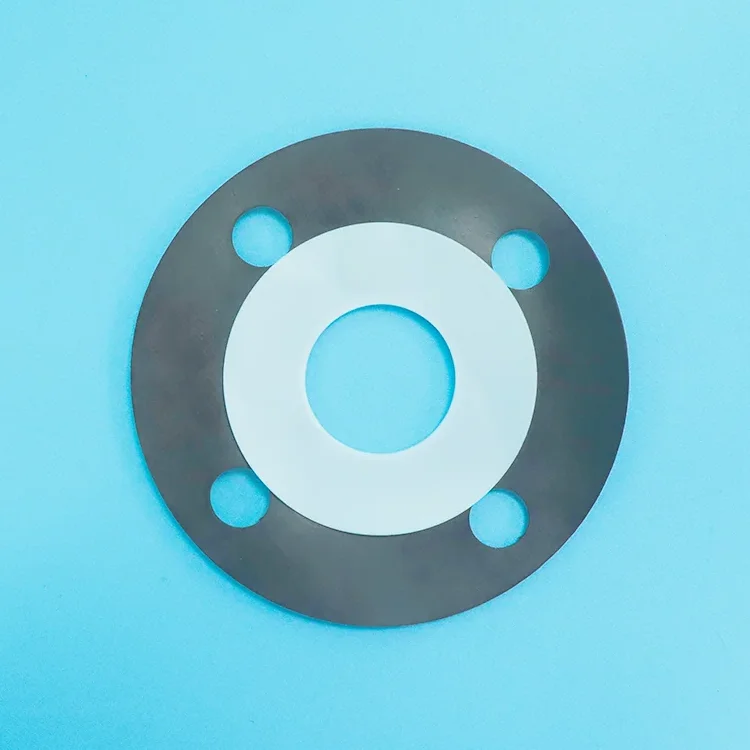
Molded Sheet / Gasket

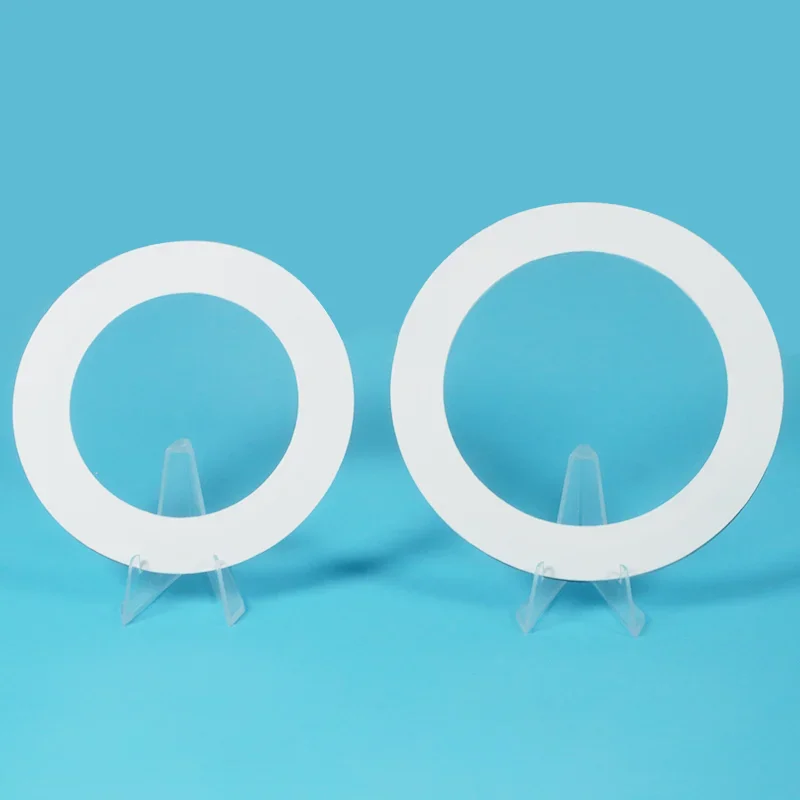
Custom sizes

Flat products for gaskets, valve discs

Why Choose PPL-Filled PTFE Tube?

1. Superior High-Temperature Performance

PPL filling raises PTFE's continuous service temperature from 260°C to 280°C, with short-term peak tolerance up to 300°C, far exceeding bronze+MoS₂ and glass-filled PTFE. Ideal for high-temperature steam, hot oil, and high-temperature chemical reactions.

2. Ultimate Chemical Corrosion Resistance

The PPL/PTFE compound fully inherits PTFE's corrosion-resistant DNA, resists strong acids (sulfuric, hydrofluoric, nitric), strong alkalis, and organic solvents across the full pH range 0-14. This is a critical advantage over bronze-filled PTFE, which corrodes in acidic and alkaline environments.

3. Excellent Self-Lubricating Properties

PPL's self-lubrication performance exceeds MoS₂ and graphite, with a coefficient of friction as low as 0.1-0.18. Ideal for oil-free lubrication or applications where lubricants are restricted (e.g., food-grade, cleanroom, chemical processes where oil contamination is prohibited).

4. Low Wear, Gentle on Mating Surfaces

PPL-filled PTFE offers excellent wear resistance while causing minimal wear to mating surfaces (valve stems, piston rods, shafts). In valve packing and piston ring applications, it extends both seal life and protects metal counter-surfaces.

5. Creep Resistance, Dimensional Stability

PPL filling significantly reduces the cold flow (creep) problem of virgin PTFE under high temperature and sustained load. Maintains long-term dimensional stability in high-temperature valve seals and compressor piston rings, reducing leakage and maintenance frequency.

6. Radiation Resistance

Withstands radiation doses up to 9×10⁶ Gy without performance degradation, suitable for nuclear, aerospace, and other specialized applications.

Product Comparison

Feature

Virgin PTFE

Glass-Filled

Bronze+MoS₂

PPL Filled

Density (g/cm³)

2.15-2.20

2.1-2.3

3.7-3.8

2.0-2.2

Continuous Service Temp

260°C

260°C

260°C

280°C 

Wear Resistance

★★☆☆☆

★★★★☆

★★★★★

★★★★☆

Thermal Conductivity

★★☆☆☆

★★★☆☆

★★★★★

★★★☆☆

Load Capacity

★★☆☆☆

★★★★☆

★★★★★

★★★★☆

Chemical Resistance

★★★★★

★★★★☆

★★☆☆☆

★★★★★

Self-Lubrication

★★★★★

★★★☆☆

★★★★☆

★★★★★

Creep Resistance

★★☆☆☆

★★★★☆

★★★★★

★★★★☆

Best For

General chemicals

Abrasive media, moderate load

Heavy load, wear, heat dissipation

High temp + corrosion + self-lube

Quick Selection Rules

High temperature (>260°C) + corrosive media → PPL Filled

High temperature (>260°C) + no corrosion + extreme wear → Bronze+MoS₂ (but bronze DOES NOT resist acids/alkalis)

Ambient temperature + strong corrosion + no lubrication requirement → Virgin PTFE

Ambient temperature + abrasion + moderate load → Glass-Filled

Applications

Industry

Application

Why PPL

Chemical / Petrochemical

Valve V-ring packings, stem seals, plug liners

High-temp resistance + acid/alkali resistance + self-lube, 2-3x PTFE service life

Compressors

Piston rings, guide rings, packing seals

Oil-free operation + high-temp resistance + low wear, protects cylinder mirror surfaces

Pharmaceutical / Food

Aseptic valve seals, bushings

Chemical wash resistance + oil-free + cleanroom compatible

Aerospace / Nuclear

Radiation-resistant seals, high-temp bearings

Radiation resistance + extreme temperature capability

Textile / Dyeing

High-temp guide roller bearings, seals

High-temp steam resistance + chemical resistance against dyes

Metallurgy

High-temp equipment seals, guide slides

280°C continuous operation + thermal radiation resistance

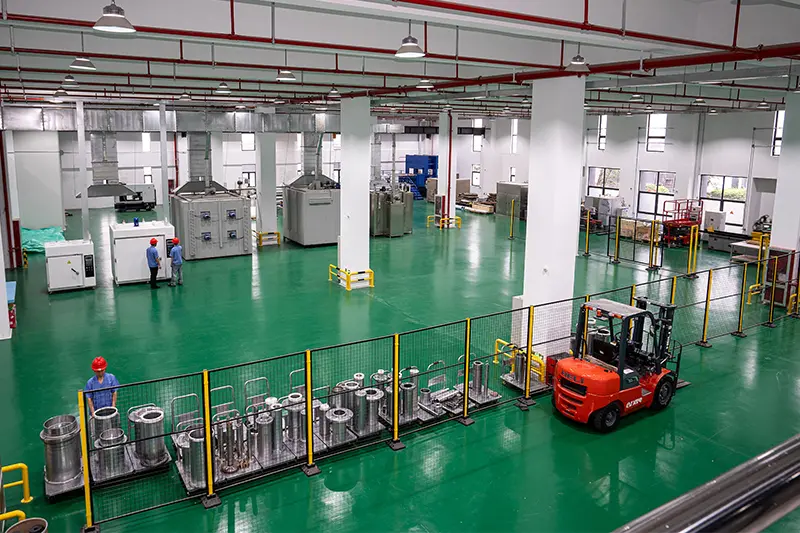
FactoryFactoryFactoryFactory

Chemical Compatibility

✅ PPL filled PTFE offers excellent chemical compatibility, a critical advantage over bronze+MoS₂ filled PTFE.

Media Type

Compatibility

Notes

Strong Acids (Sulfuric, Nitric, Hydrochloric, Hydrofluoric)

✅ Excellent

Both PPL and PTFE resist strong acids

Strong Alkalis (Sodium Hydroxide, Potassium Hydroxide)

✅ Excellent

Full pH 0-14 range

Organic Solvents (Acetone, Benzene, Oils, Greases)

✅ Excellent

No solvent known to dissolve PPL

High-Temperature Steam

✅ Excellent

Stable in 280°C steam environments

Oxidizing Media

⚠️ Evaluate case-by-case

Depends on concentration and temperature

Suitable Media: Virtually all chemicals, acids, alkalis, organic solvents, oils, greases, water, steam, hydrocarbons, and more.

Quality Assurance

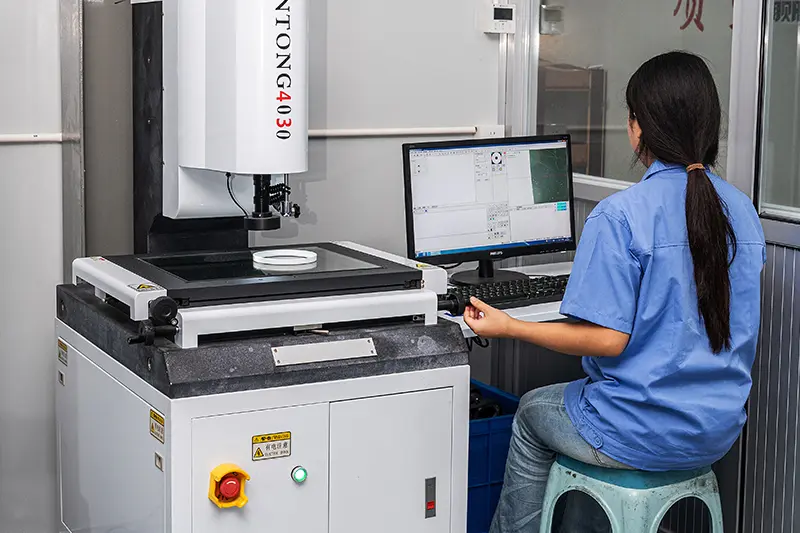
100% Virgin PTFE Resin: no regrind, no recycled material

High-Purity PPL Powder: premium-grade para-polyphenylene reinforcer

Uniform Dispersion: consistent PPL distribution throughout the PTFE matrix

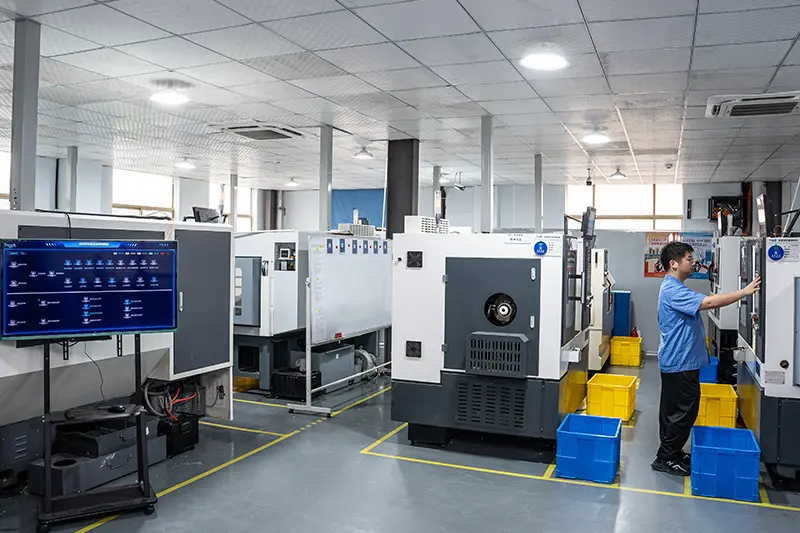
Precision Molding: both extrusion and compression molding processes

Custom Formulations: PPL ratio can be tailored to your specific application

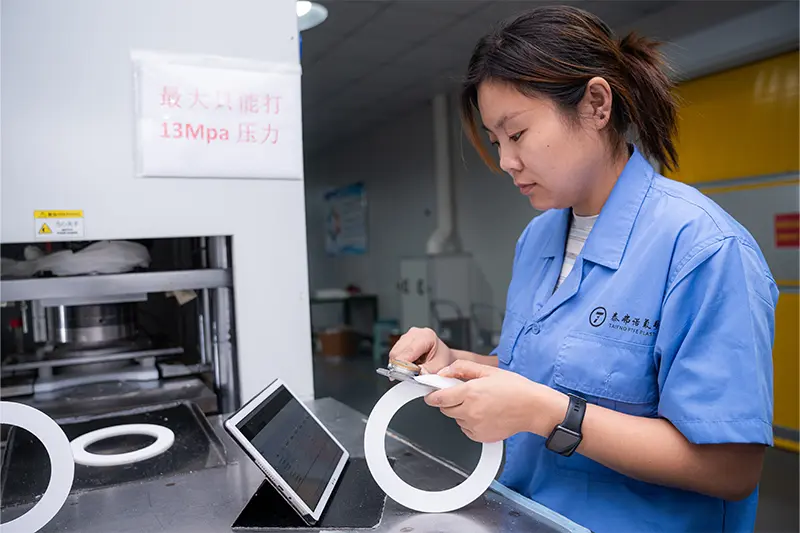
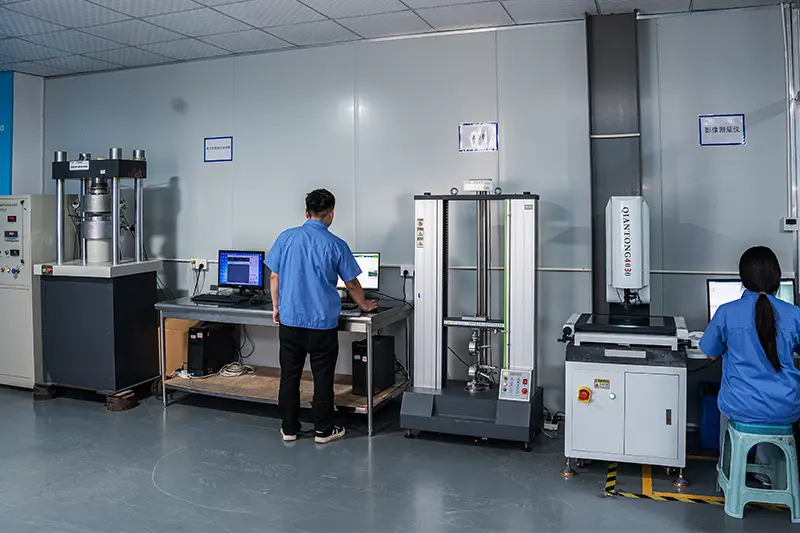
Full Traceability: material certificates available upon request

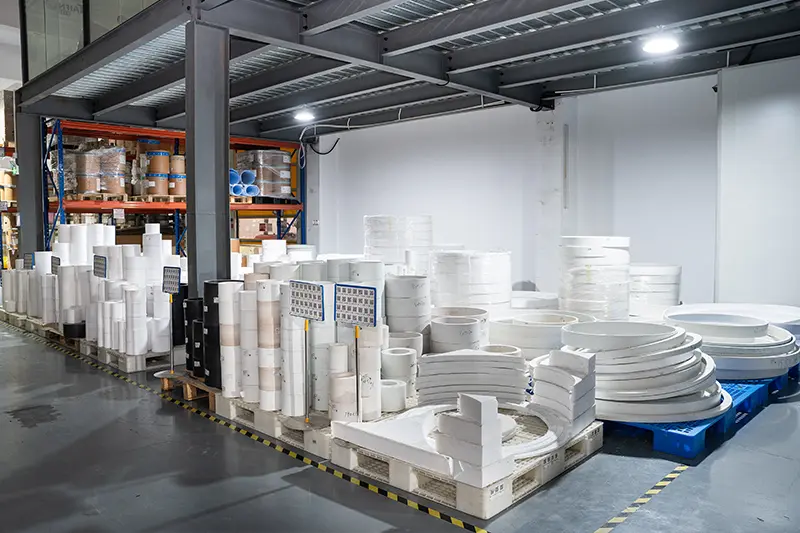
Lead Time: standard sizes in stock (24-48 hours); custom sizes and formulations 5-15 days

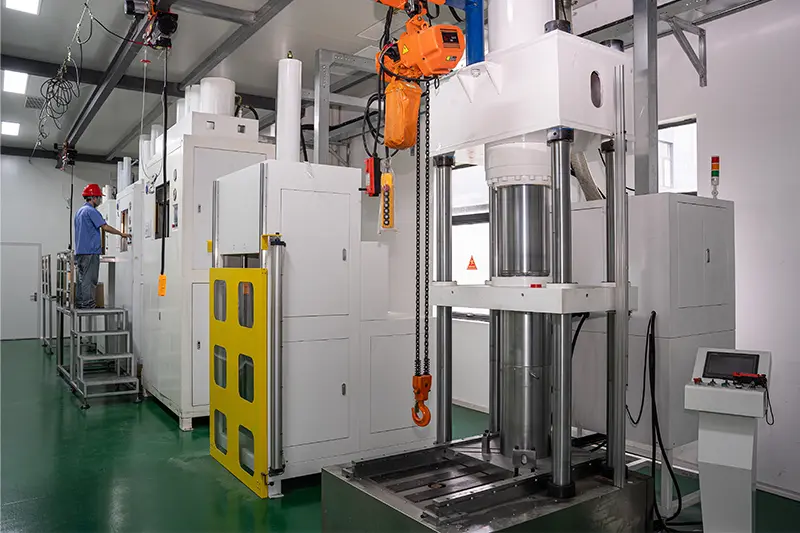
TestTestTestTest

FAQ

Q: What's the difference between PPL-filled PTFE and bronze+MoS₂-filled PTFE? Which one should I choose?

A: The key differences are chemical resistance and service temperature.

Comparison

Bronze+MoS₂

PPL-Filled

Chemical Resistance

❌ Does NOT resist acids/alkalis (bronze corrodes)

✅ Resists strong acids and alkalis (pH 0-14)

Continuous Service Temp

260°C

280°C

Wear Resistance

★★★★★ (highest)

★★★★☆ (excellent)

Thermal Conductivity

★★★★★

★★★☆☆

Load Capacity

★★★★★

★★★★☆

Quick Selection Rule:

Acids, alkalis, organic solvents + high temperature → PPL Filled

No corrosion + extreme wear + heavy load + heat dissipation → Bronze+MoS₂

High temperature (>260°C) + corrosive → PPL Filled only

Bronze tube fears acids and alkalis; PPL tube does not.

Chemical, pharmaceutical, textile, and other corrosive media applications → choose PPL.

Pure mechanical heavy-load, non-corrosive applications → choose Bronze+MoS₂.

Q: How high a temperature can PPL-filled PTFE withstand? How much improvement over virgin PTFE?


A: PPL‑filled PTFE has a continuous service temperature range of -200℃ to +280℃, with a short‑term peak tolerance up to 300℃.

For comparison:

Virgin PTFE continuous service temperature: 260℃

PPL‑filled PTFE continuous service temperature: 280℃ (approximately 20℃ improvement)

This temperature improvement is critical for high‑temperature valves, compressors, and reactors. Above 260℃, virgin PTFE begins to soften and creep, leading to seal failure and leakage, while PPL‑filled PTFE remains dimensionally stable.


Q: How do PPL-filled PTFE's friction and self-lubrication perform? Does it require external lubrication?

A: PPL-filled PTFE has a coefficient of friction of 0.1-0.18, its self-lubricating performance is superior to MoS₂ and graphite.

No external lubrication is required, this is a major reason PPL-filled PTFE is widely used in valve packings and compressor piston rings:

Eliminates lubricant contamination of process media (critical in chemical, pharmaceutical, and food industries)

Reduces maintenance costs and production downtime

At high temperatures where lubricants may fail or carbonize, PPL's self-lubrication remains stable at 300°C

Q: Is PPL-filled PTFE's chemical resistance really that strong? Are there any media it cannot handle?

A: PPL-filled PTFE's chemical resistance is indeed exceptional. Both PPL and PTFE offer excellent corrosion resistance, the composite material covers the full pH range of 0-14.

Strong acids: Sulfuric, nitric, hydrochloric, hydrofluoric, all resistant

Strong alkalis: Sodium hydroxide, potassium hydroxide, resistant

Organic solvents: To date, no solvent has been found that can dissolve PPL

Key exceptions to note:

Molten alkali metals (e.g., sodium, potassium) and elemental fluorine can attack PTFE at high temperatures

Specific corrosion resistance depends on concentration and temperature, consult our technical team for your specific application conditions

Q: Is pure PPL the same as PPL filled PTFE? Why not just use pure PPL?


A: No, they are different — this is a common misconception.

Pure PPL (para-polyphenylene):

Decomposition temperature of 530°C, excellent thermal stability

But hard and brittle; extremely difficult to process and shape alone

No practical value as a standalone sealing material

PPL-Filled PTFE:

Uses PTFE as the matrix, reinforced with PPL powder

Retains PTFE's processability and flexibility

Gains PPL's high-temperature strength, wear resistance, and creep resistance

This is the industrially practical form of the material

Think of it this way: Pure PPL is like "hard, brittle ceramic" — it cannot be directly made into seals. PPL-filled PTFE is like "reinforced concrete": it combines PTFE's corrosion resistance and processability with PPL's high-temperature strength and wear resistance.


Q: What are the main limitations of PPL filled PTFE tube?

A:

Temperature: Continuous -200°C to 280°C, peak 300°C, beyond this range, evaluate other materials (metals, ceramics)

Load Capacity: Superior to virgin PTFE, but inferior to bronze-filled PTFE, for pure mechanical heavy-load (non-corrosive) applications, bronze+MoS₂ may be the better choice

Thermal Conductivity: Lower than bronze-filled, for extremely high-speed applications requiring maximum heat dissipation, bronze+MoS₂ is more suitable

Cost: Higher than glass-filled PTFE and virgin PTFE. However, in high-temperature corrosive applications, longer service life and reduced maintenance deliver significantly lower total cost of ownership (TCO)

Quick Decision Rule:

Need high temperature + corrosion resistance + self-lubrication → PPL is your best choice.

Need extreme wear resistance + heavy load + heat dissipation with no corrosion → Bronze+MoS₂ is superior.

Hot Tags: PPL-Filled PTFE Tube Manufacturer, PPL Filled PTFE Tube Supplier, PPL PTFE Tube Wholesale
Send Inquiry
Contact Info
X
We use cookies to offer you a better browsing experience, analyze site traffic and personalize content. By using this site, you agree to our use of cookies. Privacy Policy
RejectAccept