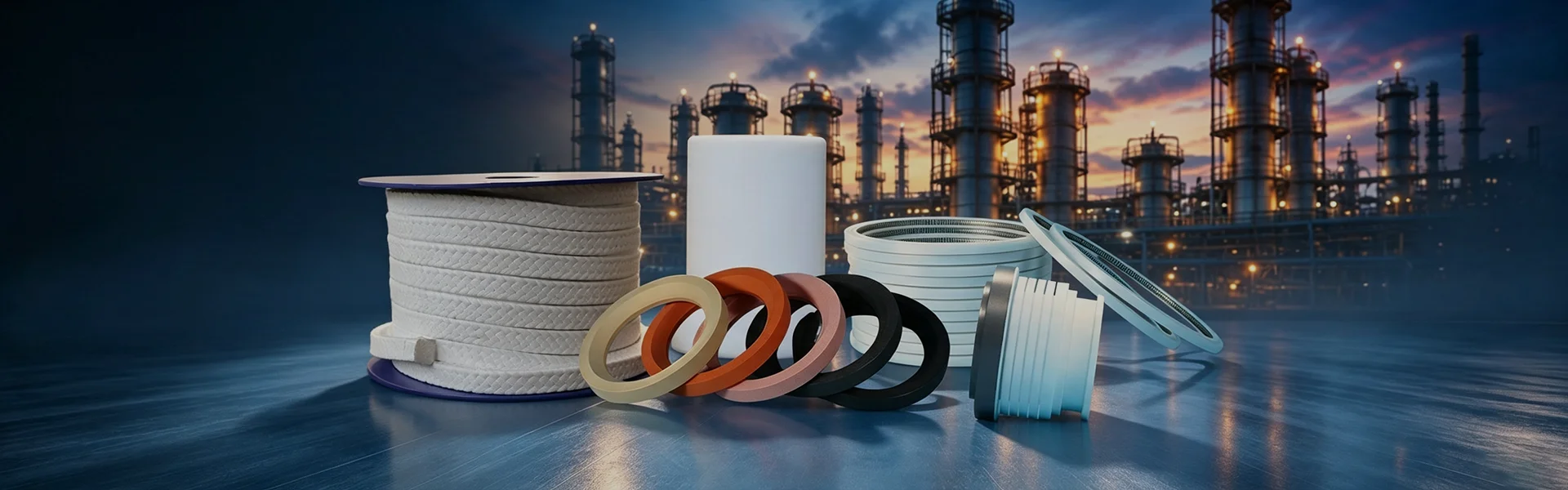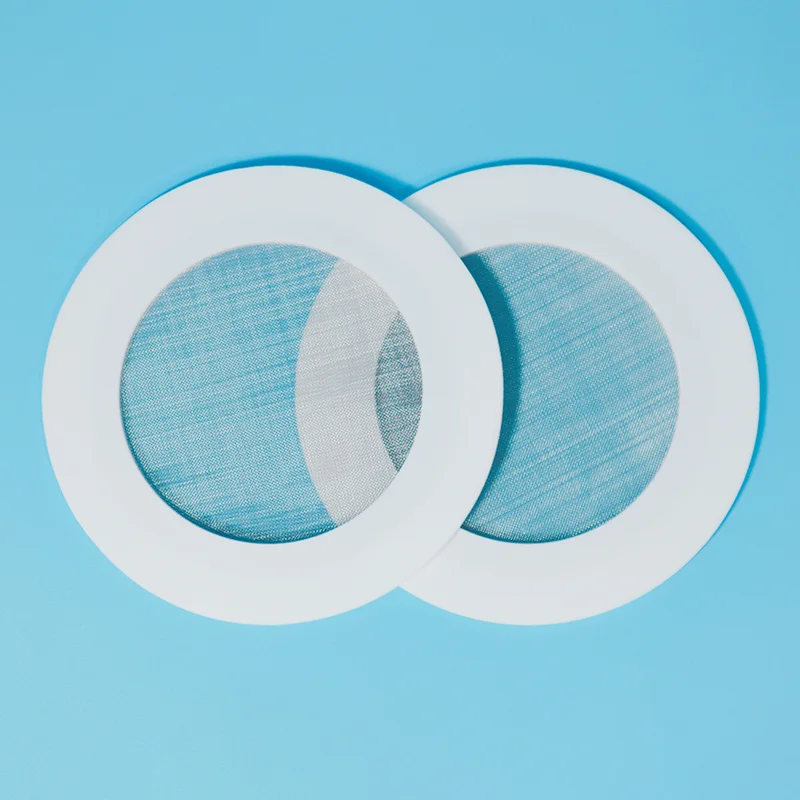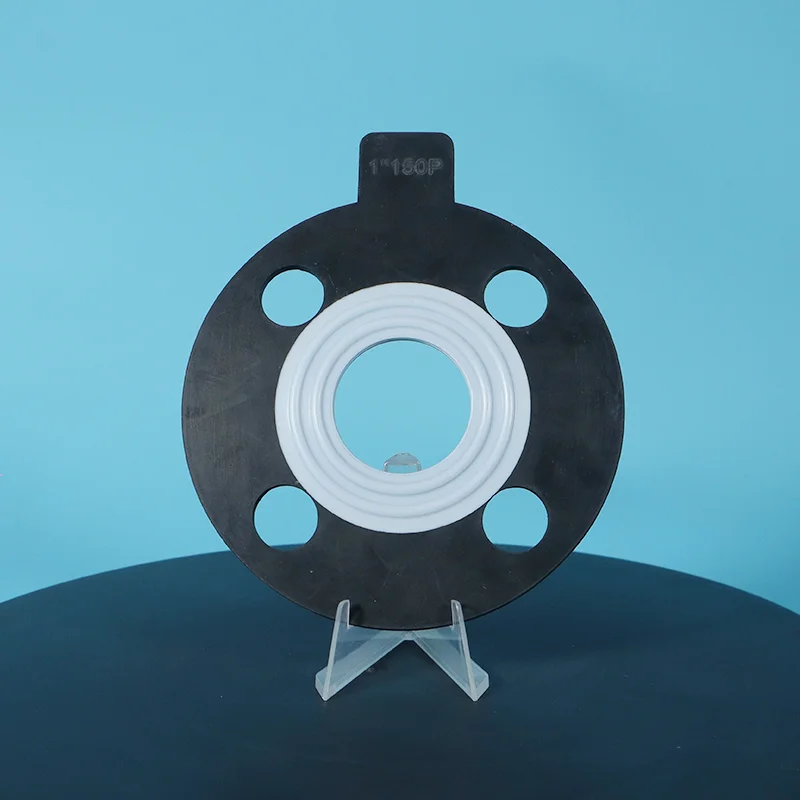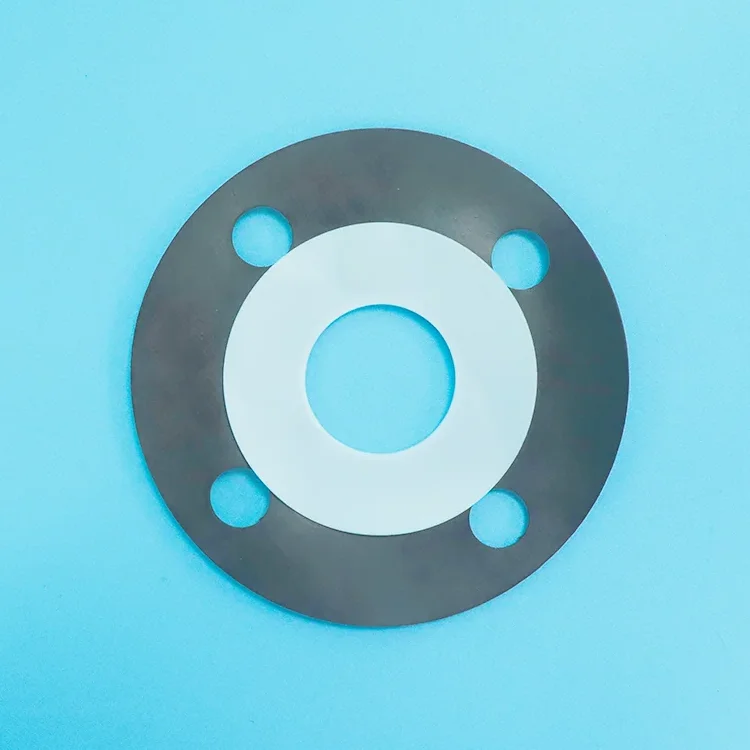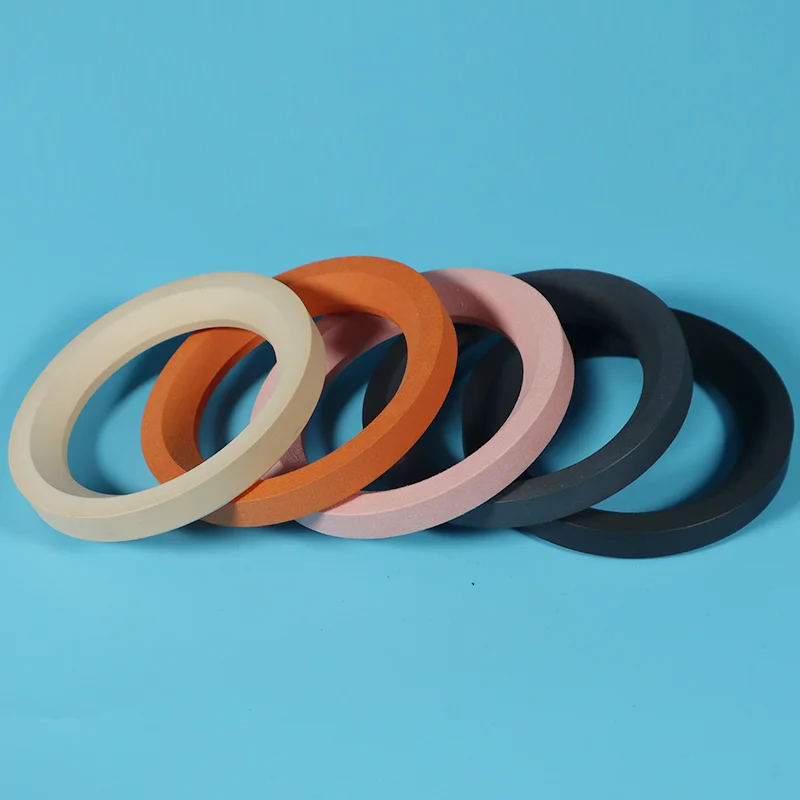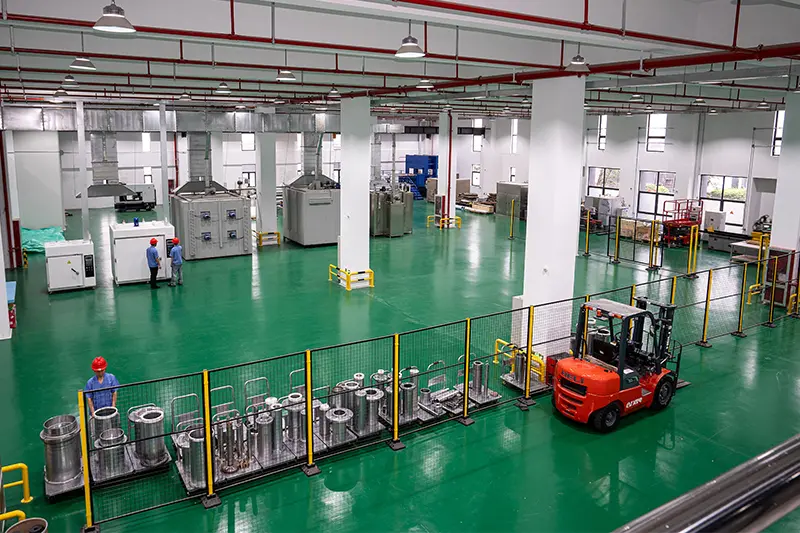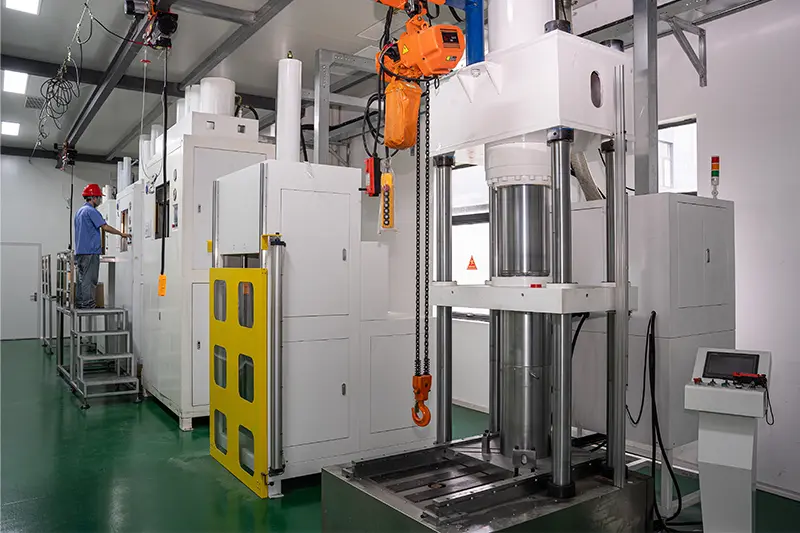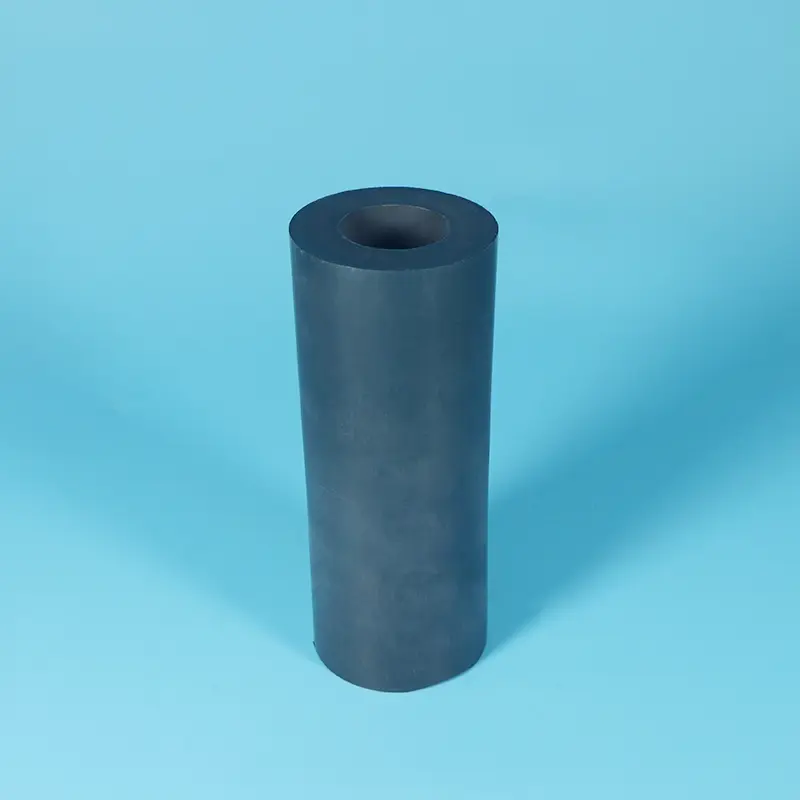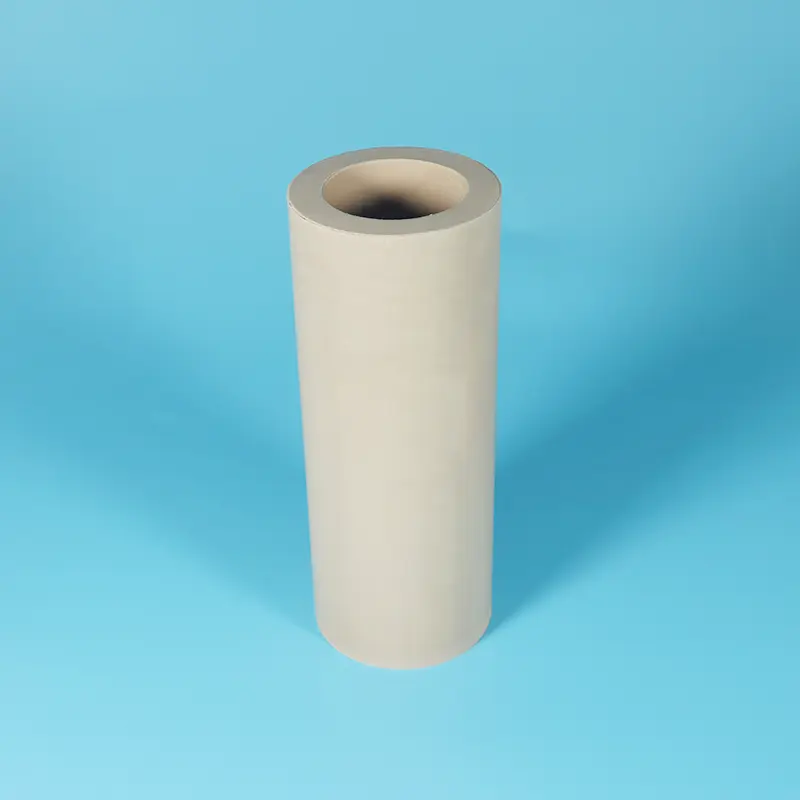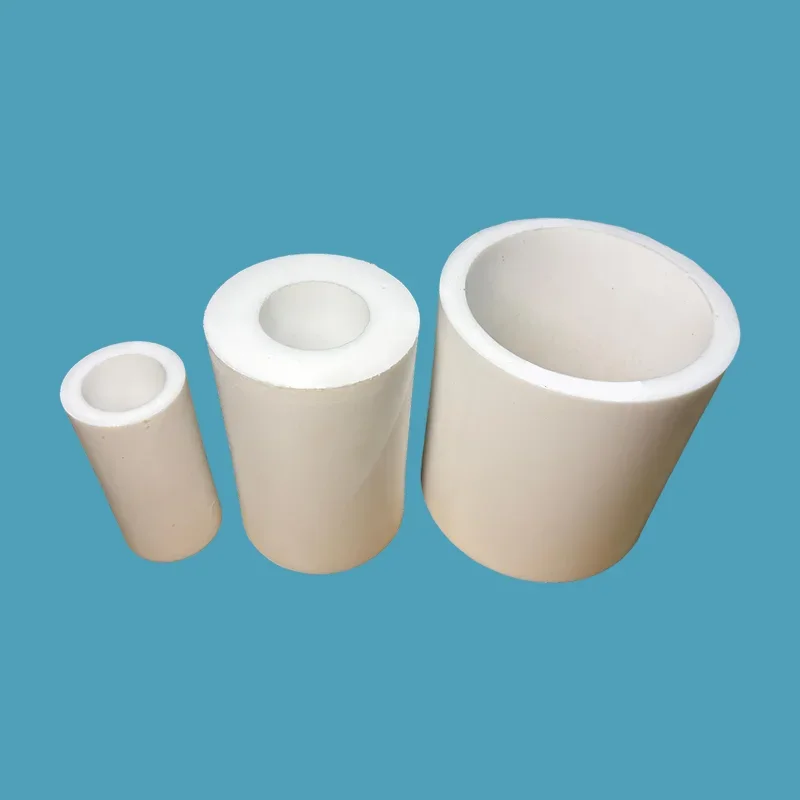
PEEK-lined PTFE composite tube is a PTFE tube as the outer matrix with a PEEK (Polyether Ether Ketone) liner bonded to the inner wall. As a professional factory in China, Taifno can offer this product.
PEEK is a semi-crystalline thermoplastic engineering plastic with a glass transition temperature of 143°C, melting point of 343°C, and continuous service temperature up to 250°C. It offers exceptional hydrolysis resistance (withstands 300°C high-pressure steam), chemical resistance (soluble only in concentrated sulfuric acid), excellent wear resistance, and an extremely low coefficient of friction.
The PEEK liner directly contacts the conveyed media, providing wear resistance and low-friction functionality; the PTFE outer layer shields against the external chemical environment, offering overall corrosion protection.
Specification: Overall density 2.0-2.2 g/cm³, PEEK liner hardness Shore D 85-90, continuous service temperature -100°C to +250°C, PEEK coefficient of friction 0.15-0.35 (self-lubricating), chemical resistance resists virtually all media (except concentrated sulfuric acid).
How to choose:
PPL Filled PTFE Tube → Homogeneous modified material, high temperature + corrosion resistance + self-lubrication
PEEK-lined PTFE composite tube → Composite structure, inner layer for wear resistance and low friction + outer layer for chemical resistance
Selection rule: High-wear or extremely low-friction media inside the tube + chemical corrosion exposure outside the tube → PEEK-lined PTFE composite tube

Wear-Resistant, Low-Friction, High-Capacity Fluid Contact Layer
PEEK (Polyether Ether Ketone) is a semi-crystalline thermoplastic engineering plastic renowned for its exceptional combination of properties:
Coefficient of friction as low as 0.15-0.35 (under self-lubricating conditions)
Superior to most engineering plastics, approaching PTFE's lubrication performance
Ideal for high-velocity, high-shear fluid transfer, reduces pressure drop and energy loss
Wear resistance far superior to PTFE and PPL
Maintains exceptional wear resistance even in high-velocity media containing solid particles
Significantly extends tube service life, reduces wear leakage caused by particle erosion
Tensile strength 90-100 MPa (far exceeding PTFE's 20-30 MPa)
Flexural strength 165 MPa, flexural modulus 4.1 GPa
Withstands high-pressure fluid impact without deformation, suitable for high-pressure hydraulic and fluid transfer systems
Glass transition temperature 143°C
Melting point 343°C
Continuous service temperature up to 250°C (comparable to PTFE's 260°C)
Exceptional hydrolysis resistance, withstands 300°C high-pressure steam without degradation
Soluble only in concentrated sulfuric acid
Resists strong acids (dilute sulfuric acid, hydrochloric acid, nitric acid), strong alkalis, organic solvents, oils, and hydrocarbons
Combined with PTFE outer layer's corrosion protection, dual-barrier defense
Chemical Barrier and Anti-Stick Layer
The PTFE outer layer provides:
Superior chemical corrosion resistance: pH 0-14, resists virtually all chemicals
Non-stick properties: prevents external contaminant adhesion, easy to clean
Electrical insulation: excellent dielectric properties
Protects the PEEK liner from external chemical attack
|
Layer |
Material |
Core Function |
|
Inner Layer |
PEEK |
Wear resistance, low friction, high pressure capability, erosion resistance |
|
Outer Layer |
PTFE |
Chemical resistance, non-stick, electrical insulation, anti-permeation |
This "strong inside, resistant outside" composite structure overcomes the performance limitations of single materials:
PTFE tube insufficient pressure capacity → PEEK liner provides structural strength
PEEK tube inferior chemical resistance to PTFE → PTFE outer layer provides corrosion isolation
Virgin PTFE inner wall vulnerable to particle erosion → PEEK liner resists wear and erosion
|
Parameter |
Value |
Test Method |
|
Structure |
Outer PTFE + Inner PEEK Liner |
— |
|
Overall Density |
2.0-2.2 g/cm³ |
ASTM D792 |
|
Continuous Service Temperature |
-100°C to +250°C |
— |
|
Overall Chemical Resistance |
Resists virtually all media (except concentrated H₂SO₄) |
— |
|
Color |
Outer: White/Off-white; Inner: Beige/Light brown |
— |
|
Parameter |
Value |
Test Method |
|
Glass Transition Temperature |
143°C |
DSC |
|
Melting Point |
343°C |
DSC |
|
Continuous Service Temperature |
250°C |
— |
|
Tensile Strength |
90-100 MPa |
ASTM D638 |
|
Flexural Strength |
165 MPa |
ASTM D790 |
|
Flexural Modulus |
4.1 GPa |
ASTM D790 |
|
Hardness |
Shore D 85-90 |
ASTM D2240 |
|
Coefficient of Friction |
0.15-0.35 (self-lubricating) |
ASTM D1894 |
|
Wear Resistance |
Excellent (superior to PTFE and PPL) |
— |
|
Parameter |
Value |
Test Method |
|
Continuous Service Temperature |
-200°C to +260°C |
— |
|
Chemical Resistance |
pH 0-14, resists virtually all chemicals |
— |
|
Coefficient of Friction |
0.04-0.10 |
ASTM D1894 |
|
Electrical Insulation |
Excellent |
— |
Note: Above values are typical laboratory data. Actual performance may vary depending on liner thickness ratio, composite process, and application conditions. Custom liner thickness ratios are available upon request.
|
Process |
Diameter Range |
Key Feature |
|
Composite Extruded Tube |
6-200mm OD |
Continuous lengths, uniform PEEK liner layer, ideal for standard piping applications |
|
Composite Molded Tube |
25-600mm+ OD |
Large diameters, thick walls, suitable for specialty chemical piping |
|
Composite Rod |
6-200mm OD |
Solid stock for custom machined components |
|
Custom Lengths |
Any length |
Cut to customer specifications |
PEEK liner's coefficient of friction is as low as 0.15-0.35 (self-lubricating), far lower than metal tube inner walls. When conveying high-viscosity or high-velocity media, pressure drop is significantly reduced, and pumping energy consumption decreases. Ideal for long-distance fluid transfer and fine chemical piping.
In conveying abrasive media containing solid particles, slurries, catalysts, and similar materials, virgin PTFE tube inner walls are easily worn by erosion, leading to leakage and frequent replacement. PEEK liner's wear resistance is far superior to PTFE, significantly extending tube service life and reducing maintenance and replacement frequency.
The PTFE outer layer resists strong acids, strong alkalis, and organic solvents, full pH 0-14 coverage. Even when the tube exterior is exposed to corrosive chemical environments (such as acid mist or chemical splashes), the PTFE outer layer provides effective protection, shielding the PEEK liner from external attack.
It also prevents external impurities from permeating and contaminating the internal media.
PEEK offers excellent anti-permeation properties, effectively blocking gas and liquid permeation. Combined with the PTFE outer layer's low permeability, the composite tube's overall anti-permeation performance exceeds that of virgin PTFE tubes. Ideal for high-purity media, volatile chemicals, and gas transfer.
The PEEK liner withstands 250°C continuous service temperature and high-pressure impacts, while the PTFE outer layer handles 260°C. The composite tube resists deformation, delamination, and peeling under high-temperature and high-pressure conditions, far outperforming the creep and pressure limitations of virgin PTFE tubes.
The PEEK liner's smooth surface resists media adhesion, improving CIP (Clean-in-Place) and SIP (Sterilize-in-Place) efficiency.
Suitable for pharmaceutical, food, high-purity chemical, and other industries with stringent cleanliness requirements.


|
Feature |
Virgin PTFE Tube |
Bronze+MoS₂ Filled Tube |
PPL-Filled Tube |
PEEK-Lined PTFE Composite Tube |
|
Structure Type |
Homogeneous |
Homogeneous filled |
Composite (Inner PEEK + Outer PTFE) |
|
Inner Wall Wear Resistance |
★★☆☆☆ |
★★★★★ |
★★★★☆ |
★★★★★ |
|
Inner Wall Friction Coefficient |
0.04-0.10 |
0.12-0.20 |
0.10-0.18 |
0.15-0.35 |
|
Inner Wall Load Capacity |
★★☆☆☆ |
★★★★★ |
★★★★☆ |
★★★★★ (PEEK layer) |
|
Outer Layer Chemical Resistance |
★★★★★ |
★★☆☆☆ |
★★★★★ |
★★★★★ (PTFE outer layer) |
|
Anti-Permeation |
★★★☆☆ |
★★★☆☆ |
★★★★☆ |
★★★★★ (PEEK barrier) |
|
Continuous Service Temperature |
260°C |
260°C |
260°C |
250°C |
|
Particle Erosion Resistance |
★★☆☆☆ |
★★★★★ |
★★★★☆ |
★★★★★ |
|
Internal Cleanliness |
★★★★★ |
★★☆☆☆ |
★★★★☆ |
★★★★★ (smooth non-stick PEEK) |
|
Best For |
General chemical transfer |
Heavy-duty mechanical seals, no corrosion |
High temp + corrosion + self-lube seals |
High temp + corrosion + high-wear fluid transfer |
Quick Selection Rules:
Particle-laden or high-velocity media inside + chemical corrosion outside + low-friction inner wall required → PEEK Lined PTFE Composite Tube
Particle-free media inside + corrosion resistance only → Virgin PTFE tube (lower cost)
Seals/bearings (not tubes) + high temperature + corrosion → PPL Filled Tube
Mechanical seals (not tubes) + heavy load + no corrosion → Bronze+MoS₂ Filled Tube
|
Industry |
Application |
Why PEEK-Lined Composite Tube |
|
Chemical / Petrochemical |
Corrosive fluid transfer lines, high-temp acid/alkali piping |
PTFE outer layer protects against external corrosion + PEEK liner resists wear and erosion |
|
Pharmaceutical |
High-purity drug transfer, CIP/SIP lines |
Smooth non-stick inner surface + high-temp sterilization resistance + low extractables |
|
Food & Beverage |
High-temp fluid transfer, food-grade piping |
Food-contact-grade materials + easy cleaning + high-temp steam resistance |
|
Semiconductor / Electronics |
High-purity chemical transfer, ultrapure water lines |
Ultra-low extractables + smooth inner surface + anti-permeation |
|
Hydraulic Systems |
High-pressure hydraulic lines, servo valve tubing |
PEEK liner withstands high pressure + PTFE outer layer resists oil and chemicals |
|
Oil & Gas / Energy |
Sand-laden oil & gas transfer, high-temp high-pressure lines |
PEEK liner resists particle erosion + PTFE outer layer resists external corrosion |
|
Fine Chemicals |
Slurry transfer, catalyst lines |
Wear resistance + chemical resistance + low friction |
|
Media Type |
Compatibility |
Notes |
|
Concentrated Sulfuric Acid |
❌ Not compatible |
PEEK is soluble only in concentrated sulfuric acid |
|
Dilute Sulfuric Acid, Hydrochloric Acid, Nitric Acid |
✅ Excellent |
Good resistance |
|
Strong Alkalis (NaOH, KOH) |
✅ Excellent |
Good resistance |
|
Organic Solvents (Acetone, Aromatics) |
✅ Excellent |
Good resistance |
|
Oils, Hydrocarbons |
✅ Excellent |
Good resistance |
|
High-Temperature Steam (≤300°C) |
✅ Excellent |
Exceptional hydrolysis resistance |
|
Media Type |
Compatibility |
Notes |
|
Strong Acids, Strong Alkalis, Organic Solvents |
✅ Excellent |
Full pH 0-14 coverage |
|
Molten Alkali Metals, Elemental Fluorine (high temp) |
❌ Not compatible |
Special exceptions — avoid |
The chemical compatibility of PEEK-lined PTFE composite tubes covers the vast majority of industrial media. The only significant exception is concentrated sulfuric acid (PEEK is not resistant), if concentrated sulfuric acid transfer is required, consider virgin PTFE tubes or PPL filled tubes.
For external environments, the PTFE outer layer resists virtually all chemical corrosion, allowing the composite tube to be directly buried underground or exposed to chemical splash environments.
100% Virgin PTFE and PEEK Resins: no recycled material, no regrind
High-Quality PEEK Liner: imported or domestic high-grade PEEK raw materials available
Advanced Composite Process: strong bond between liner and outer layer — no delamination, no peeling
Customizable Liner Thickness: tailored to pressure, wear, and cost requirements
Full Traceability: material certificates available upon request
Precision Dimensional Control: tight ID/OD tolerances ensure installation compatibility
Lead Time: standard sizes in stock (48-72 hours); custom sizes 7-15 days


A: The key differences are product form and application scenario.
|
Comparison |
PPL-Filled PTFE Tube |
PEEK-Lined PTFE Composite Tube |
|
Product Form |
Homogeneous tube (bulk modified material) |
Composite tube (inner PEEK + outer PTFE) |
|
Inner Wall Wear Resistance |
★★★★☆ |
★★★★★ |
|
Inner Wall Friction Coefficient |
0.10-0.18 |
0.15-0.35 |
|
Outer Layer Chemical Resistance |
★★★★★ |
★★★★★ (PTFE layer) |
|
Particle Erosion Resistance |
★★★★☆ |
★★★★★ |
|
Continuous Service Temperature |
260°C |
250°C |
|
Best For |
High-temp valve seals, piston rings |
High-wear/high-velocity fluid transfer piping |
Quick Selection Rules:
Conveying particle-laden media, slurries, high-velocity fluids through piping → PEEK Lined Composite Tube
Valve seals, piston rings, guide rings (not piping) → PPL Filled Tube (higher temperature capability)
Extremely high wear inside the tube + chemical corrosion outside → PEEK Lined Composite Tube
Bottom line: PEEK lined composite tube is designed for "piping", specifically addressing inner wall wear and friction issues in fluid transfer.
PPL filled tube is designed for "seals", specifically addressing high-temperature + corrosive sealing and self-lubrication applications.
A: The pressure capacity of PEEK lined PTFE composite tubes depends on liner thickness and composite process quality.
Standard specifications: Withstand medium to high-pressure fluid transfer (exact pressure depends on diameter, wall thickness, and liner thickness, contact us with your operating parameters for evaluation)
Anti-delamination design: We use specialized composite processes that create chemical bonding and mechanical interlocking at the PEEK/PTFE interface, bond strength far exceeds ordinary physical lamination
Thermal expansion matching: PEEK and PTFE have comparable thermal expansion coefficients (PEEK ~4.7×10⁻⁵/°C, PTFE ~10-12×10⁻⁵/°C), minimizing delamination risk from differential thermal expansion across the temperature range
Recommended operating range: No delamination or peeling under normal conditions within -100°C to +250°C continuous service
Recommendation: For extreme high-pressure or severe thermal cycling conditions, please provide detailed parameters, our team can perform custom evaluations and process optimization.
A: PEEK liner thickness typically ranges from 0.5-3.0mm. The optimal thickness depends on the following factors:
Design philosophy: The composite tube is not "the thicker, the better." Excessive liner thickness increases wall rigidity, reduces flexibility, and raises costs (PEEK is far more expensive than PTFE).
The composite structure aims for "optimal combination of inner and outer material properties", the liner only needs to satisfy wear resistance and low-friction requirements, while the outer layer provides structural support and chemical protection.
Determining factors for thickness:
Media abrasiveness (particle concentration, flow velocity)
System operating pressure
Tube diameter
Temperature requirements
Recommendation: Provide your specific operating conditions (media type, particle content, flow velocity, pressure, temperature), our team will recommend the optimal liner thickness solution to meet performance requirements while helping control costs.
A: The PEEK liner has a coefficient of friction of 0.15-0.35 (under self-lubricating conditions).
Pressure drop comparison (engineering estimate):
At the same diameter and flow velocity, the friction resistance coefficient of PEEK liner is significantly lower than stainless steel and carbon steel tubes (steel friction coefficient is approximately 0.5-0.8)
Compared to virgin PTFE tubes (friction coefficient 0.04-0.10), PEEK liner has a slightly higher friction coefficient, but PEEK's advantage lies in wear resistance and pressure capacity, in high-wear media transfer, PTFE tube walls quickly develop grooves from erosion, surface roughness increases dramatically, and actual pressure drop rises rapidly. PEEK liner maintains a smooth surface long-term, providing more stable and lower pressure drop over the entire lifecycle
Recommendation: For long-distance transfer or high-velocity applications, PEEK liner's long-term pressure drop advantage is particularly significant — substantially reducing pumping energy costs.
A: ❌ No.
PEEK is soluble only in concentrated sulfuric acid, it will rapidly dissolve and fail in concentrated sulfuric acid environments. While the PTFE outer layer resists concentrated sulfuric acid, the PEEK liner directly contacts the media and cannot withstand concentrated sulfuric acid corrosion.
Alternatives:
Concentrated sulfuric acid transfer → Choose Virgin PTFE Tube (virgin PTFE resists concentrated sulfuric acid)
Or choose PPL Filled PTFE Tube (both PPL and PTFE resist concentrated sulfuric acid)
Other media: Aside from concentrated sulfuric acid, PEEK liner resists dilute sulfuric acid, hydrochloric acid, nitric acid, strong alkalis, organic solvents, oils, hydrocarbons, high-temperature steam, and more.
A:
Temperature limit: Continuous service 250°C, lower than PPL filled tube's 260°C. For higher temperature requirements, consider PPL filled tube
Concentrated sulfuric acid incompatibility: PEEK dissolves in concentrated sulfuric acid, for concentrated sulfuric acid transfer, choose virgin PTFE tube or PPL filled tube
Cost: PEEK raw material is expensive, making composite tubes more costly than virgin PTFE tubes and PPL filled tubes.
However, in high-wear + high-corrosion demanding applications, the significantly longer service life compared to virgin PTFE tubes delivers substantially lower total cost of ownership (TCO)
Slightly higher friction coefficient than PTFE: For ultra-low friction applications (such as precision instrument tubing) with no wear, virgin PTFE tubes may be more suitable
Quick Decision Rule:
Need wear resistance + low friction + corrosion resistance for fluid transfer piping → PEEK lined composite tube is the optimal solution.
Static seals or non-wear piping → virgin PTFE tubes are more cost-effective.
Ultra-high temperature (>250°C) + corrosion applications → PPL filled tube is more suitable.
Address
No.1028, Qiersan Street, Andong Town, Cixi City, Zhejiang Province, China
Tel