News

How Does Expanded PTFE Cord Form a Gasket On Site Today?

2026-10-10 0 Leave me a message

In a chemical plant, a maintenance technician is faced with a leaking flange on a large, irregularly shaped vessel. The flange is not a standard size, and there is no pre-cut gasket in stock. In the past, this would have meant a costly and time-consuming delay: ordering a custom gasket, waiting for delivery, and shutting down the process until it arrived. Today, the technician reaches for a roll of expanded PTFE cord. Within minutes, the cord is cut to length, wrapped around the flange, and the bolts are tightened. The leak is sealed. This is the power of expanded PTFE cord: it allows a gasket to be formed on site, exactly where and when it is needed. It eliminates the need for a large inventory of pre-cut gaskets and provides a universal solution for flanges of any size or shape.


The question of how expanded PTFE cord forms a gasket on site is a question of material science and practical technique. Expanded PTFE is a unique material that is soft, compressible, and highly conformable. When it is compressed between two flange faces, it flows into the surface irregularities and creates a tight, reliable seal. The cord form makes it easy to handle and install, even in tight spaces. It can be cut with a knife, wrapped around the flange, and joined at the ends with a simple overlap. This article will explain the process of forming a gasket on site using expanded PTFE cord. We will cover the properties of the material, the step-by-step installation procedure, the critical factors that determine sealing performance, and the specifications for our Expanded PTFE Products from our factory at Ningbo Taifno PTFE Plastic Products Co., Ltd.

Expanded PTFE Sealing Cord


Table of Contents


1. What Is Expanded PTFE Cord and Why Is It Suited for On-Site Gasket Making?

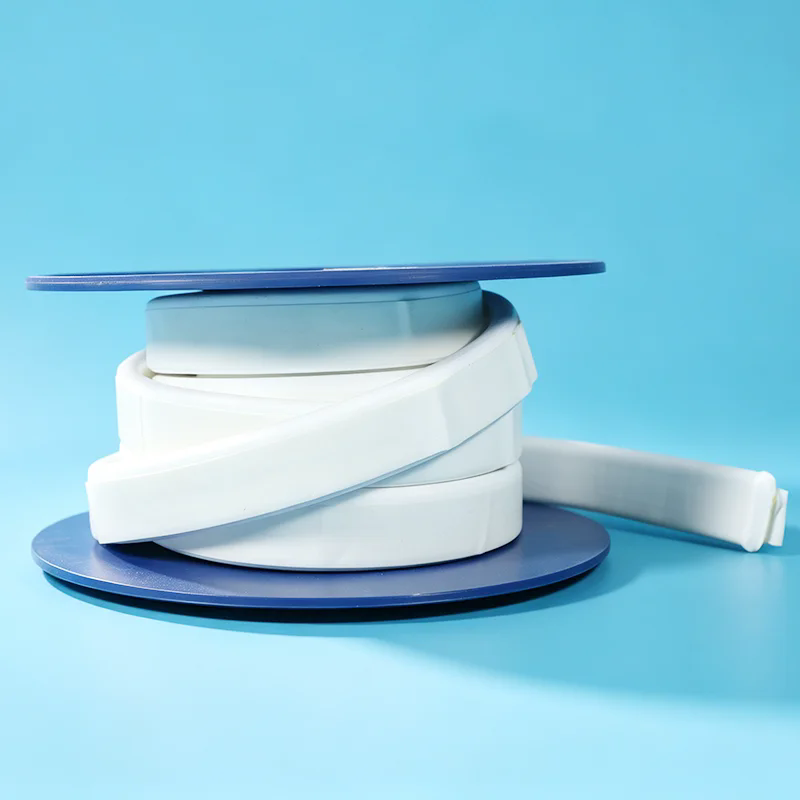
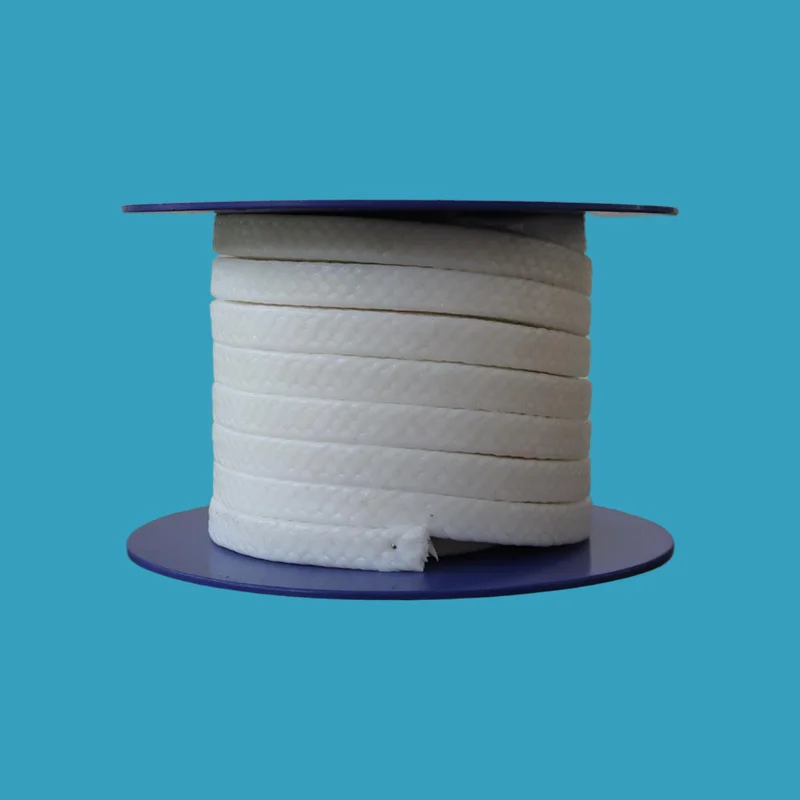
Expanded PTFE cord is a sealing material made from 100% pure PTFE that has been expanded through a proprietary process. The expansion creates a microporous structure composed of fine, interconnected fibers. This structure gives the material unique properties: it is soft, flexible, and highly compressible. Unlike solid PTFE, which is rigid and difficult to conform to irregular surfaces, expanded PTFE is supple and can be easily shaped and compressed. The cord form is typically a round or square profile that is available in a range of diameters. It is supplied on a spool or in a box, making it easy to dispense and cut to the required length. The table below summarizes the key properties of expanded PTFE cord that make it ideal for on-site gasket making.

Property Description Benefit for On-Site Gasket Making
Chemical Inertness Resists virtually all chemicals Can be used with aggressive media
Temperature Range -200°C to +260°C Suited for extreme temperatures
Compressibility Highly compressible and conformable Conforms to irregular flange surfaces
Flexibility Soft and easy to handle Can be wrapped around any flange shape
Creep Resistance Low creep under load Maintains sealing force over time
Non-Contaminating Pure PTFE, no additives Suitable for food, pharmaceutical, and high-purity applications

At Ningbo Taifno PTFE Plastic Products Co., Ltd., our factory specializes in the manufacture of Expanded PTFE Products, including cord, tape, sheet, and joint sealant. We use a proprietary expansion process that produces a uniform, high-quality material with excellent sealing properties. Our expanded PTFE cord is available in a range of sizes and profiles to suit different flange configurations. We also provide technical support and guidance on installation to ensure that our customers achieve the best possible sealing performance.


2. What Are the Step-by-Step Procedures for Forming a Gasket On Site?

Forming a gasket on site using expanded PTFE cord is a straightforward process, but it requires care and attention to detail to ensure a reliable seal. The procedure can be broken down into five main steps: preparation, measurement, cutting, installation, and tightening. The first step is preparation. The flange surfaces must be clean, dry, and free from oil, grease, and old gasket material. Any rust or scale should be removed with a wire brush or a scraper. The bolts should be inspected and lubricated if necessary. The second step is measurement. The length of cord required is determined by the circumference of the flange face. It is advisable to add a small amount of extra length to allow for the overlap joint. The third step is cutting. The cord is cut with a sharp knife or a pair of shears. The cut should be clean and square. The fourth step is installation. The cord is wrapped around the flange face, starting at the bolt hole and working around. The ends of the cord are overlapped by at least the diameter of the cord. The fifth step is tightening. The bolts are tightened in a star pattern to ensure even compression of the gasket. The table below summarizes the steps.

Step Action Key Considerations
Preparation Clean and inspect flange surfaces Remove all old gasket material, oil, and debris
Measurement Measure the circumference of the flange face Add 10-20 mm for the overlap joint
Cutting Cut the cord to length Use a sharp knife; make a clean, square cut
Installation Wrap the cord around the flange face Overlap the ends by at least one cord diameter
Tightening Tighten bolts in a star pattern Tighten gradually and evenly to avoid over-compression

At our factory, we provide detailed installation instructions with our Expanded PTFE Products. We also offer training and on-site support for our customers to ensure that their maintenance teams can form gaskets correctly and reliably. Our goal is to make the on-site gasket making process as simple and foolproof as possible.


3. What Factors Determine the Sealing Performance of an On-Site Gasket?

The sealing performance of an on-site gasket made from expanded PTFE cord depends on several factors. The first is the compression of the cord. The cord must be compressed enough to fill the surface irregularities of the flange faces and to create a continuous seal. However, over-compression can damage the cord and reduce its resilience. The correct compression is achieved by selecting the right cord diameter for the flange gap and by tightening the bolts to the recommended torque. The second factor is the overlap joint. The ends of the cord must be overlapped correctly to ensure a continuous seal. The overlap should be at least the diameter of the cord, and it should be positioned away from the bolt holes. The third factor is the flange condition. The flange faces must be clean, flat, and free from damage. If the flange is warped or corroded, the gasket may not seal properly. The fourth factor is the bolt load. The bolts must be tightened evenly and to the correct torque to ensure uniform compression of the gasket. The table below summarizes these factors.

Factor Impact on Sealing Performance Recommendation
Cord Compression Insufficient: leaks; excessive: damage Select correct diameter; tighten to recommended torque
Overlap Joint Poor overlap: leak path Overlap by at least one cord diameter
Flange Condition Rough or damaged surfaces: leak path Clean and inspect flanges before installation
Bolt Load Uneven load: uneven compression Tighten in a star pattern to the correct torque
Temperature Thermal expansion/contraction affects compression Select cord grade for temperature range

At Ningbo Taifno PTFE Plastic Products Co., Ltd., our factory provides expanded PTFE cord in a range of densities and diameters to suit different flange conditions and compression requirements. We also provide technical guidance on the correct installation procedure and the recommended bolt torque. Our goal is to help our customers achieve a reliable seal every time.


4. How Does Expanded PTFE Compare to Other Gasket Materials?

Expanded PTFE is one of several materials used for on-site gasket making. Other common materials include compressed fiber sheet, graphite tape, and rubber cord. Each material has its own strengths and weaknesses. Expanded PTFE is unique in its combination of chemical inertness, temperature resistance, and compressibility. It is more chemically resistant than rubber and compressed fiber, and it is more compressible and conformable than graphite tape. The table below compares expanded PTFE with other common gasket materials.

Material Chemical Resistance Temperature Range Compressibility On-Site Formability Relative Cost
Expanded PTFE Excellent -200°C to +260°C Excellent Excellent High
Compressed Fiber Sheet Good -100°C to +200°C Good Moderate Medium
Graphite Tape Excellent -200°C to +450°C Moderate Good Medium-High
Rubber Cord Poor -40°C to +100°C Excellent Excellent Low

At our factory, we manufacture Expanded PTFE Products that are designed to outperform competing materials in the most demanding applications. Our expanded PTFE cord is made from 100% pure PTFE and is free from fillers or additives that could compromise its chemical resistance or purity. We also offer a range of densities and profiles to suit different sealing requirements. Our engineering team can help you select the right material for your specific application.


5. What Are the Key Specifications for Expanded PTFE Cord?

The key specifications for expanded PTFE cord include the diameter, the density, the tensile strength, the temperature range, and the chemical resistance. The table below provides a summary of the typical specifications for our expanded PTFE cord.

Specification Options Notes
Diameter 3 mm, 5 mm, 6 mm, 8 mm, 10 mm, 12 mm, 15 mm Other sizes available on request
Profile Round, Square Square offers more surface contact
Density 0.6 - 1.0 g/cm³ Lower density for more compressibility
Tensile Strength > 10 MPa Sufficient for handling and installation
Temperature Range -200°C to +260°C Continuous service
Chemical Resistance pH 0 - 14 Resists virtually all chemicals
Standard Length 5 m, 10 m, 15 m per spool Custom lengths available

At Taifno PTFE Plastic, our factory manufactures expanded PTFE cord to meet these specifications and more. We can customize the diameter, density, and length to suit your specific requirements. Our quality control system includes dimensional inspection, density measurement, and tensile testing to ensure that every spool of cord meets our high standards.


6. Frequently Asked Questions (FAQ)

Question 1: What is the maximum temperature that expanded PTFE cord can withstand?

Answer: Expanded PTFE cord can withstand continuous operating temperatures from -200°C to +260°C. For short-term excursions, it can withstand temperatures up to 300°C. At temperatures above 260°C, the material may begin to degrade, and its sealing performance may be compromised. For applications above this temperature, a different material, such as graphite, may be required.

Question 2: How do I join the ends of the expanded PTFE cord?

Answer: The ends of the expanded PTFE cord should be overlapped by at least the diameter of the cord. For example, if you are using a 6 mm cord, the overlap should be at least 6 mm. The overlap should be positioned away from the bolt holes to avoid creating a leak path. Some installers prefer to taper the ends of the cord to create a smoother joint, but this is not strictly necessary for most applications.

Question 3: Can expanded PTFE cord be reused?

Answer: Expanded PTFE cord is generally not recommended for reuse. Once the cord has been compressed, it loses some of its resilience and may not seal properly if reused. For critical applications, it is always best to use new cord. The cost of the cord is low compared to the cost of a leak and the associated downtime.

Question 4: What is the difference between expanded PTFE cord and expanded PTFE tape?

Answer: Expanded PTFE cord is a round or square profile material that is used to form gaskets for flanges. Expanded PTFE tape is a flat, ribbon-like material that is used for thread sealing and for wrapping around irregular shapes. Both are made from the same expanded PTFE material, but they are used for different applications. Cord is for gasket making; tape is for thread sealing and other sealing tasks.

Question 5: Is expanded PTFE cord suitable for food and pharmaceutical applications?

Answer: Yes, expanded PTFE cord made from 100% pure PTFE is suitable for food and pharmaceutical applications. It is non-toxic, non-contaminating, and resistant to the cleaning chemicals and sterilization processes used in these industries. Our factory can provide food-grade and pharmaceutical-grade expanded PTFE cord that meets the relevant regulatory requirements.


7. Conclusion

Expanded PTFE cord is a versatile and reliable material for forming gaskets on site. Its unique combination of chemical inertness, temperature resistance, and compressibility makes it suitable for the most demanding applications. The on-site gasket making process is straightforward: prepare the flange, measure and cut the cord, wrap it around the flange, overlap the ends, and tighten the bolts. With the right technique and the right material, a leak-free seal can be achieved in minutes. At Ningbo Taifno PTFE Plastic Products Co., Ltd., our factory specializes in the manufacture of Expanded PTFE Products, including cord, tape, and sheet. We are committed to providing our customers with high-quality materials and technical support to ensure their sealing success.

Whether you are a maintenance technician, a plant manager, or a distributor, we invite you to contact us to discuss your requirements. We can provide samples, technical data, and installation guidance. Our commitment to quality and customer satisfaction has made us a trusted partner for industrial sealing applications around the world.

Contact Ningbo Taifno PTFE Plastic Products Co., Ltd. today to discuss your Expanded PTFE Products requirements and discover how our cord can simplify your on-site gasket making.

Related News
Leave me a message
X
We use cookies to offer you a better browsing experience, analyze site traffic and personalize content. By using this site, you agree to our use of cookies. Privacy Policy
RejectAccept