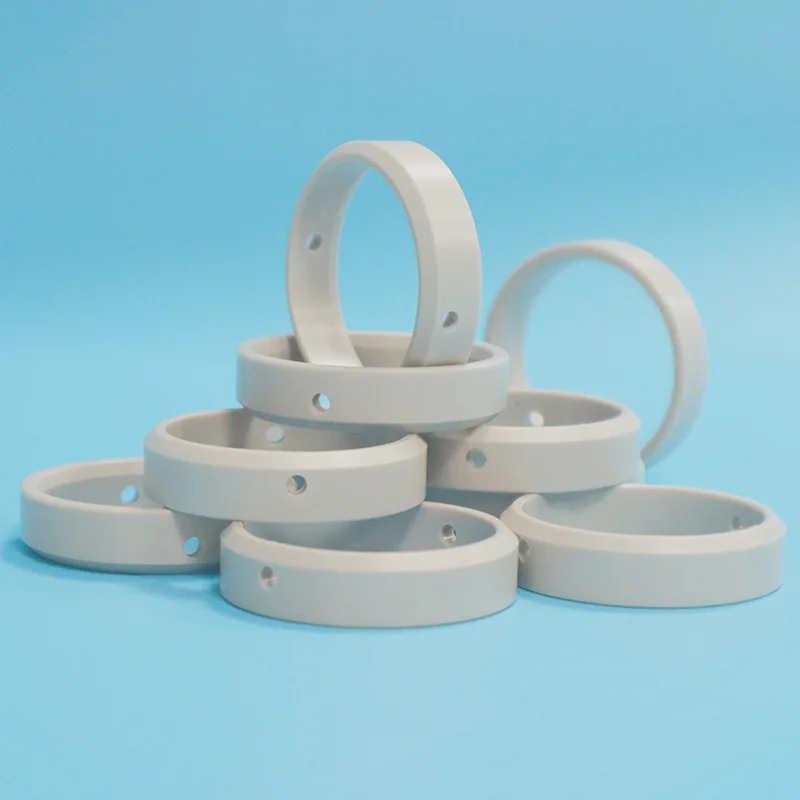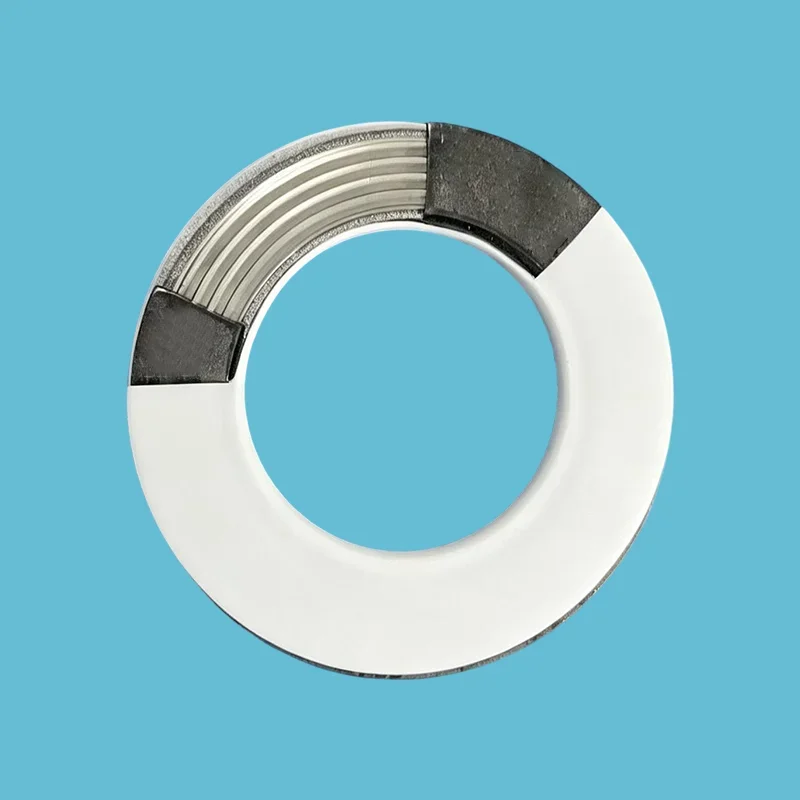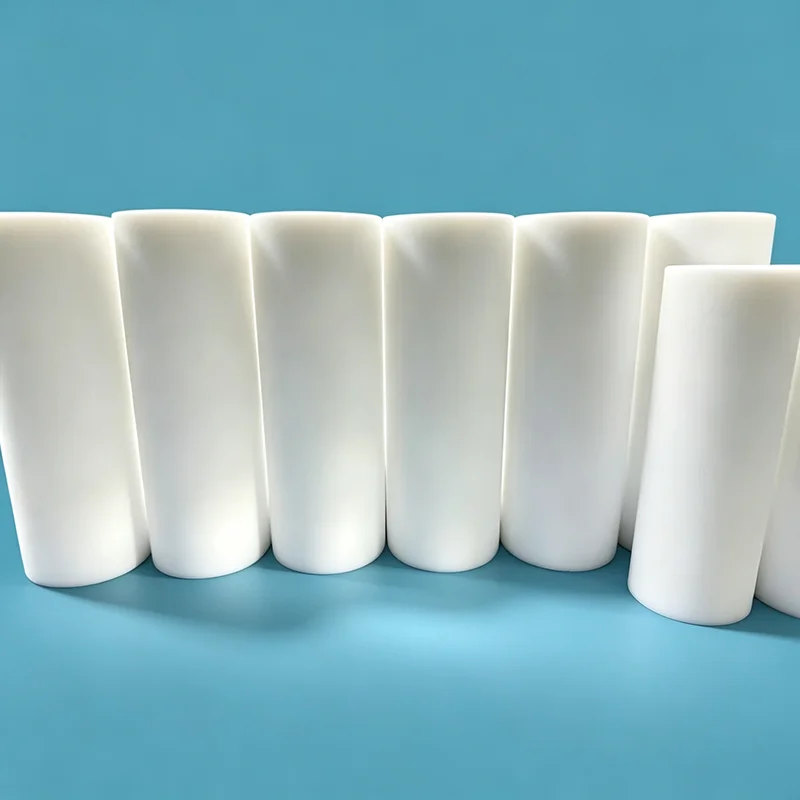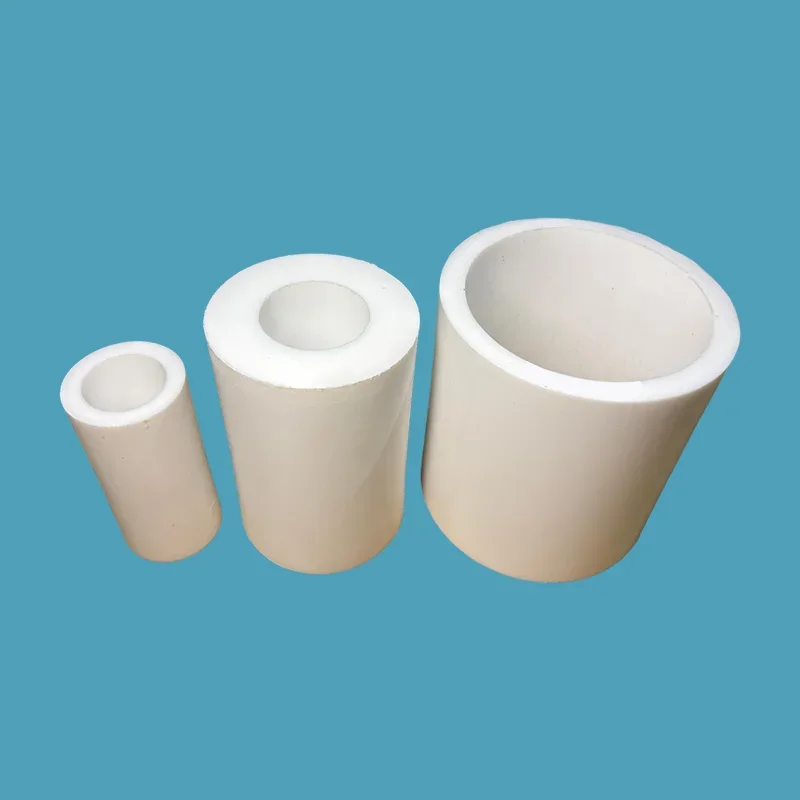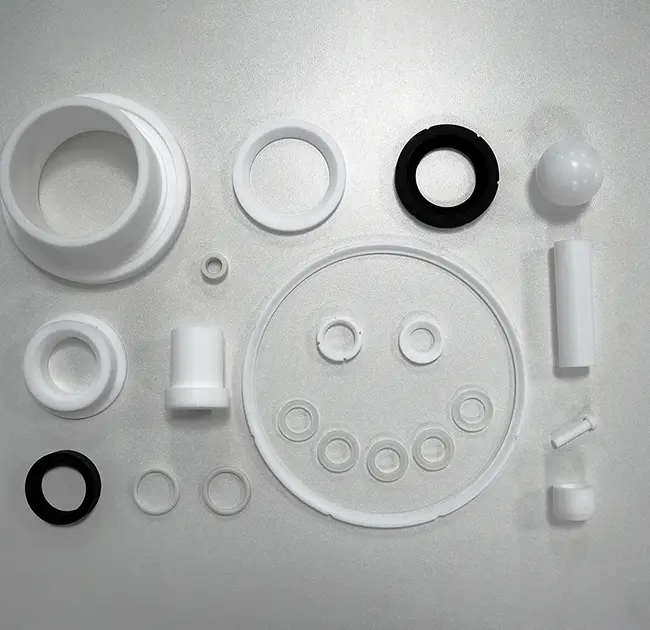
Custom Machined PTFE Parts are designed for applications where standard components cannot provide the required combination of chemical resistance, low friction, electrical insulation, dimensional requirements, and service reliability. From seals and valve components to bushings, insulators, wear parts, and fluid-handling components, machined PTFE allows engineers to create application-specific geometries without relying solely on standard sizes. This guide explains how to select PTFE, design custom components, control machining risks, improve part performance, and work effectively with a professional PTFE manufacturer such as Ningbo Taifno PTFE Plastic Products Co., Ltd.
Custom Machined PTFE Parts are precision components manufactured from polytetrafluoroethylene according to a specific drawing, CAD model, sample, or application requirement. Instead of purchasing a standard washer, seal, bushing, tube, or insulator and adapting the surrounding equipment, engineers can specify the component around the actual operating conditions.
This approach is particularly useful when a component must fit a non-standard assembly, tolerate aggressive chemicals, minimize friction, provide electrical insulation, or maintain reliable performance in demanding environments. Custom machining can also support prototypes, replacement parts, low-volume production, and repeat manufacturing programs.
A successful PTFE component is not simply a plastic part cut to a drawing. The material's flexibility, thermal movement, creep behavior, surface characteristics, and application conditions all influence the final design. For this reason, the best manufacturing process begins with understanding how the component will actually work.
PTFE is valued because it combines several properties that are difficult to obtain in a single conventional material. It offers very low friction, strong resistance to many aggressive chemical environments, excellent electrical insulation, and useful performance across a broad temperature range.
These characteristics make PTFE especially attractive for components that contact chemicals, move against another surface, isolate electrical elements, or function as part of a sealing system.
| PTFE Characteristic | Engineering Benefit | Typical Requirement |
|---|---|---|
| Low friction | Reduces resistance in sliding contact | Bushings, bearings, guides |
| Chemical resistance | Supports use around aggressive media | Chemical processing and fluid handling |
| Electrical insulation | Helps isolate electrical components | Insulators, spacers, protective components |
| Non-stick behavior | Reduces adhesion and material buildup | Processing and handling equipment |
| Low moisture absorption | Helps maintain performance in humid environments | Fluid systems and electrical applications |
Standard components are convenient, but they may not match the dimensions or performance requirements of specialized equipment. Custom machining provides a more flexible route when component geometry is application-specific.
The combination of chemical resistance, low friction, insulation, and machinability makes custom PTFE components useful across multiple industries.
Seals, valve seats, liners, gaskets, bushings, and fluid-contact components.
Components that require low friction and resistance to chemical media.
Insulating washers, spacers, sleeves, bushings, and protective components.
Wear components, guides, sliding parts, rollers, bushings, and custom mechanical elements.
Custom fluid-handling components and chemically resistant fixtures.
Insulating, fluid-management, and chemically resistant components where cleanliness and material selection matter.
One of the most important decisions is whether standard virgin PTFE is sufficient or whether a filled PTFE grade should be considered. Material selection should begin with the operating environment rather than simply the part's appearance or purchase price.
| Material Direction | Potential Strength | Considerations |
|---|---|---|
| Virgin PTFE | High chemical resistance and excellent electrical properties | Creep and dimensional movement should be considered |
| Glass-filled PTFE | Improved dimensional stability and wear behavior | May behave differently during machining and against mating surfaces |
| Carbon-filled PTFE | Useful for selected wear and mechanical applications | Application-specific material compatibility should be reviewed |
| Graphite-filled PTFE | Can improve friction and wear characteristics | Best selected according to actual load and movement conditions |
The correct choice depends on temperature, pressure, chemical exposure, sliding speed, load, sealing conditions, dimensional requirements, and expected service life. A material recommendation should therefore be based on the complete application rather than one isolated property.
PTFE behaves differently from metals and rigid engineering plastics. Its softness and tendency to deform under sustained force mean that designers should consider the actual service condition when specifying tolerances and geometry.
Avoid specifying the tightest possible tolerance simply because the drawing allows it. A practical tolerance strategy focuses precision on critical-to-function features while keeping non-critical dimensions reasonable. This can improve manufacturability, consistency, and total project cost.
A reliable Custom Machined PTFE Parts project usually follows a structured workflow. Each step contributes to dimensional accuracy and application performance.
Dimensional control is particularly important for PTFE components used in sealing, sliding, or precision assemblies. Because PTFE can respond to temperature, pressure, clamping, and time, inspection should be planned around the actual function of the component.
A professional supplier should be able to discuss the critical dimensions before production rather than simply machining every feature to an arbitrary tolerance. For demanding projects, the customer and manufacturer should agree on inspection methods, measurement conditions, sampling requirements, and documentation before mass production begins.
| Customer Problem | Possible Cause | Practical Solution |
|---|---|---|
| Part does not fit after installation | Tolerance or temperature conditions were not fully considered | Define critical fits and actual operating conditions before machining |
| Part deforms during assembly | Excessive compression or unsuitable geometry | Review wall thickness, support, fit, and material grade |
| Wear is higher than expected | Load, speed, mating material, or grade may be unsuitable | Review operating conditions and consider a suitable filled PTFE grade |
| Quote is higher than expected | Overly tight tolerances or unnecessary complex features | Use CTQ-based tolerancing and simplify non-functional features |
| Production consistency is difficult | Material variation, process variation, or insufficient inspection planning | Establish approved material, process, inspection, and packaging requirements |
A detailed RFQ helps a manufacturer understand the project quickly and reduces the risk of repeated clarification. Buyers should prepare as much of the following information as possible:
Even when some information is unavailable, providing the application background can help the manufacturer identify potential risks before production starts.
Choosing a supplier for Custom Machined PTFE Parts should involve more than comparing unit prices. PTFE machining requires an understanding of how material behavior interacts with geometry, tooling, workholding, inspection, and final application.
Ningbo Taifno PTFE Plastic Products Co., Ltd. focuses on PTFE plastic products and customized PTFE solutions for industrial applications. For buyers with non-standard component requirements, the value of an experienced manufacturer lies in the ability to discuss the complete project rather than simply process a drawing.
A useful supplier should be able to help customers clarify material selection, machining requirements, critical dimensions, production quantities, and application considerations. This type of communication is especially valuable when the customer is developing a new product, replacing an imported component, or optimizing an existing design.
Instead of asking only “How much does this PTFE part cost?”, industrial buyers should ask whether the material, geometry, tolerance, manufacturing process, and inspection plan are appropriate for the actual application. A well-defined project can reduce redesigns, improve production consistency, and support more predictable long-term performance.
Yes. Custom PTFE components can be manufactured from engineering drawings, CAD files, samples, or defined dimensional requirements. The manufacturer should review the design and application conditions before production.
PTFE is widely used for seals, gaskets, valve seats, backup rings, and other sealing-related components. However, the correct geometry, material grade, pressure, temperature, mating surface, and installation conditions must be considered together.
Virgin PTFE provides the basic properties associated with PTFE, while filled grades incorporate materials designed to modify characteristics such as wear resistance, creep behavior, dimensional stability, or mechanical performance. The best choice depends on the application.
Yes. Its low-friction characteristics make PTFE useful for bushings, bearings, guides, sliding elements, and other moving components. Load, speed, temperature, mating material, and expected service life should be evaluated before selecting the grade.
A drawing or CAD file, material requirements, quantity, critical tolerances, operating temperature, pressure, chemical exposure, application description, surface requirements, and delivery expectations are highly useful for preparing an accurate quotation.
Custom machining is particularly useful for prototypes, samples, replacement components, engineering validation, and relatively small production runs because the manufacturing process can be adapted to the required geometry without depending entirely on dedicated molding tooling.
Customers can often reduce cost by identifying only genuinely critical tolerances, simplifying unnecessary geometry, selecting an appropriate material grade, optimizing batch quantities, and providing complete drawings and application information before quotation.
Custom Machined PTFE Parts provide a practical solution when standard components cannot meet the dimensional, chemical, friction, insulation, or application-specific requirements of industrial equipment. The greatest advantage is not simply customization itself, but the ability to create a component around the actual operating environment.
Successful PTFE projects depend on the right combination of material selection, application analysis, practical geometry, machining strategy, tolerance control, inspection, and communication. By defining critical requirements before production and working with an experienced manufacturer, buyers can reduce unnecessary costs while improving component reliability.
Ningbo Taifno PTFE Plastic Products Co., Ltd. can support customers looking for customized PTFE plastic components based on specific drawings, dimensions, material requirements, and application conditions. Whether you need prototypes, replacement parts, sealing components, insulating parts, bushings, or other custom-machined PTFE solutions, share your requirements with the engineering team to discuss a suitable manufacturing approach.
Have a drawing or customized PTFE requirement? Contact us today to discuss your project and find a practical PTFE solution for your application.
-
Venue: Sao Paulo Expo
Address: Rodovia dos Imigrantes km 1.5, CEP 04329-900 - Sao Paulo - SP - Brazil
Date: September 16–18, 2026