Products
PTFE Reagent Bottle
  • PTFE Reagent BottlePTFE Reagent Bottle

PTFE Reagent Bottle

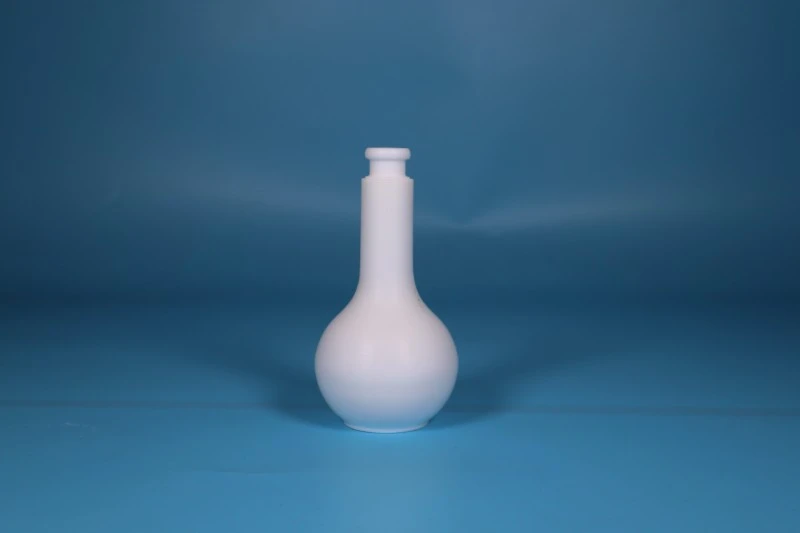
Virgin PTFE Reagent Bottles from Taifno, a professional PTFE bottle manufacturer and supplier in China. Featuring excellent resistance to strong acids, alkalis, aqua regia, and organic solvents, these high-purity chemical storage bottles operate from -200°C to +260°C. Ideal for trace analysis, semiconductor chemicals, and laboratory reagent storage. Custom sizes and OEM solutions available for wholesale orders.

    Taifno manufactures 100% Virgin PTFE Reagent Bottles for demanding laboratory, chemical storage, and semiconductor applications. Made from pure virgin polytetrafluoroethylene (PTFE), these chemical-resistant containers are designed for storing strong acids, strong alkalis, aqua regia, hydrofluoric acid (HF), and various organic solvents.

    With a continuous operating temperature range of -200°C to +260°C under suitable conditions, PTFE reagent bottles offer extremely low metal blank characteristics, a non-stick surface, and reliable sealing performance. They are suitable for trace analysis, high-purity reagent storage, and semiconductor chemical handling.

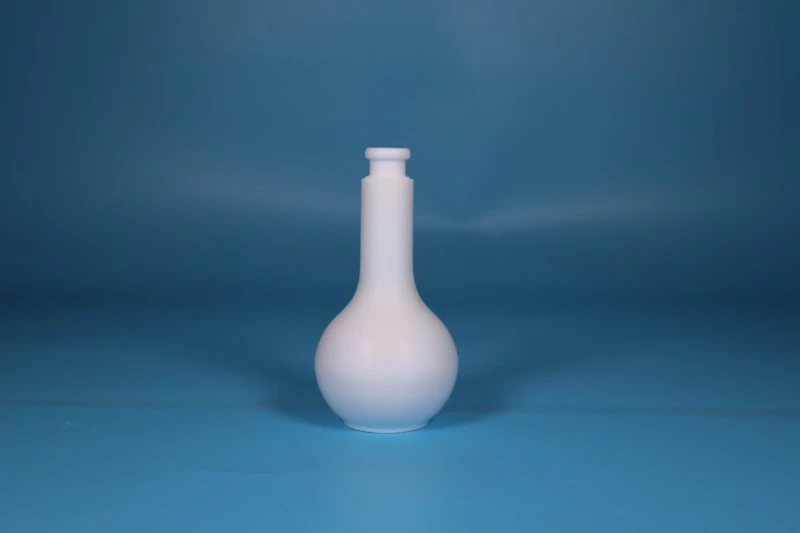
    100% virgin PTFE reagent bottle for laboratory chemical storage
    Key Product Highlights
    • Manufactured from 100% virgin PTFE material.
    • Excellent resistance to strong acids, alkalis, aqua regia, and HF.
    • Continuous operating temperature: -200°C to +260°C under suitable conditions.
    • Extremely low metal blank characteristics for contamination-sensitive applications.
    • Non-stick surface for easier cleaning and reduced reagent residue.
    • Closely fitted cap design for reliable sealing without an additional inner plug.
    • Standard capacities from 10 mL to 5,000 mL.
    • Custom bottle dimensions, capacities, and configurations available.
    100% Virgin PTFE material
    -200°C to 260°C Continuous temperature range under suitable conditions
    10–5000 mL Standard capacity range

    PTFE Reagent Bottles for High-Purity Chemical Storage and Laboratory Applications

    Selecting a suitable reagent container is essential when storing corrosive chemicals, high-purity reagents, and trace analysis samples. Conventional glass and ordinary plastic containers may have limitations in chemical compatibility, contamination control, or temperature resistance.

    Virgin PTFE reagent bottles provide an alternative for laboratories and industrial users requiring a chemically inert storage material. Their low metal contamination characteristics and resistance to a wide range of chemicals make them particularly useful in semiconductor manufacturing, environmental testing, pharmaceutical research, and chemical laboratories.

    Common Problems with Conventional Laboratory Reagent Storage

    Different container materials respond differently to chemical exposure, temperature changes, and long-term storage conditions. The following table explains common problems encountered with conventional laboratory bottles and how virgin PTFE can help address them.

    Common Problem Potential Consequence How PTFE Reagent Bottles Help
    Glass bottles can be attacked by hydrofluoric acid (HF) and certain aggressive chemicals. Container damage, reagent contamination, and potential safety risks. PTFE offers excellent resistance to most chemicals, including HF, strong acids, and aqua regia. Exceptions include molten alkali metals and fluorine.
    Glass containers may contribute trace elements to sensitive samples. Inaccurate analytical results and unreliable trace analysis data. Virgin PTFE has low metal blank characteristics and low leaching potential when properly manufactured and cleaned.
    Some ordinary plastics may swell, deform, or deteriorate when exposed to aggressive organic solvents. Container deformation, leakage, and sample contamination. PTFE is insoluble in common organic solvents and offers broad chemical compatibility.
    Inadequate cap design can allow moisture ingress, evaporation, or external contamination. Reagent loss, concentration changes, and reduced sample reliability. A properly fitted PTFE cap helps provide reliable sealing and reduce leakage and evaporation under suitable conditions.

    What Is a Virgin PTFE Reagent Bottle?

    A PTFE reagent bottle is a laboratory and chemical storage container manufactured from polytetrafluoroethylene (PTFE). Virgin PTFE refers to unfilled PTFE resin without intentionally added reinforcing fillers such as glass fiber, carbon, graphite, or other modifiers.

    Depending on the bottle design and production requirements, PTFE containers can be manufactured through molding, sintering, and precision machining processes. The production method is selected according to the required capacity, dimensions, wall thickness, and structural design.

    Compared with conventional glass and many ordinary plastic bottles, virgin PTFE containers offer excellent chemical resistance, low metal contamination characteristics, and a wide temperature operating range. These properties make them suitable for high-purity reagent storage, trace analysis standard preservation, and semiconductor chemical handling where container cleanliness is important.

    For buyers comparing different PTFE material grades, our PTFE semi-finished products range provides additional material options for industrial processing and customized components.

    Key Technical Features of Virgin PTFE Reagent Bottles

    01

    Excellent Chemical Resistance

    PTFE resists almost all common industrial and laboratory chemicals, including strong acids, strong alkalis, aqua regia, HF, and many organic solvents. Its principal chemical compatibility limitations include molten alkali metals and fluorine gas. Actual compatibility should be confirmed according to chemical concentration, temperature, exposure time, and operating conditions.

    02

    Extremely Low Metal Blank Characteristics

    Virgin PTFE has excellent chemical inertness and can provide very low metal contamination when suitable raw materials, manufacturing processes, and cleaning procedures are used. Its low leaching and extraction characteristics make it suitable for trace and ultra-trace element analysis, high-purity reagent storage, and semiconductor chemical applications.

    03

    Wide Operating Temperature Range

    PTFE material can operate over a broad temperature range, typically from -200°C to +260°C. Short-term exposure to higher temperatures may be possible under specific conditions, but actual bottle performance depends on wall thickness, mechanical loading, cap design, and temperature duration. The complete container should be evaluated before use at elevated temperatures.

    04

    Non-Stick and Easy-to-Clean Surface

    The smooth PTFE surface has a very low coefficient of friction. Many reagents are less likely to adhere to the container walls, making cleaning easier and helping reduce residue accumulation and cross-contamination between laboratory procedures.

    05

    Low Water Absorption

    PTFE has extremely low water absorption, commonly reported at less than 0.01% depending on the test method and material specification. This characteristic helps minimize moisture-related material changes in applications where water absorption and sample contamination need to be controlled.

    06

    Reliable Cap Sealing Performance

    A closely fitted bottle cap helps provide reliable sealing without requiring an additional inner plug. The sealing performance depends on thread dimensions, contact surfaces, tightening torque, and the chemical and temperature conditions in use. For volatile reagents or long-term storage, buyers should confirm the required leakage and evaporation performance.

    07

    Suitable for 121°C Steam Autoclaving Under Approved Conditions

    PTFE material can withstand 121°C steam exposure. However, the complete bottle assembly, including its wall thickness and cap design, should be evaluated for repeated autoclaving. Follow the manufacturer's instructions, avoid excessive tightening during sterilization, and allow the container to cool gradually after the process.

    PTFE Reagent Bottle vs. Glass Bottle vs. Ordinary Plastic Bottle

    Choosing the right laboratory storage container involves more than comparing purchase prices. Chemical compatibility, sample purity, temperature requirements, mechanical durability, and sealing performance should all be considered before selecting a container material.

    Comparison Glass Bottle Ordinary Plastic Bottle Virgin PTFE Reagent Bottle
    Chemical Resistance Not compatible with HF; some strong alkalis and other chemicals may attack glass. Varies significantly according to polymer type and chemical exposure. Excellent resistance to most chemicals except specific reactive substances such as molten alkali metals and fluorine.
    Metal Blank Values May contribute trace elements depending on glass composition and surface condition. Depends on resin composition, additives, and manufacturing conditions. Very low metal contamination potential when made from suitable virgin material and properly processed.
    Organic Solvent Resistance Generally good for many solvents, subject to chemical compatibility. Varies by polymer; certain solvents may cause swelling or deformation. Excellent resistance to a wide range of organic solvents.
    Temperature Resistance Good thermal resistance, but vulnerable to thermal shock and breakage. Depends on polymer grade; many common plastics have lower temperature limits. Typically -200°C to +260°C for PTFE material under suitable conditions.
    Sealing Performance Depends on cap, stopper, and sealing design. Depends on bottle and closure design. Closely fitted PTFE cap design can provide reliable sealing under specified conditions.
    Drop Resistance Fragile and vulnerable to breakage. Generally resistant to impact, depending on polymer. Less brittle than glass, but can deform under excessive mechanical force.
    Autoclavability Suitable glass types can be autoclaved. Depends on the polymer's temperature resistance. PTFE material can withstand 121°C steam exposure; complete bottle suitability should be confirmed.
    Typical Applications Routine reagent storage and general laboratory use. General-purpose chemical and sample storage. Trace analysis, high-purity reagents, semiconductor chemicals, and corrosive chemical storage.

    PTFE Reagent Bottle Technical Specifications

    Material and Performance Parameters

    Parameter Specification Technical Details
    Material 100% Virgin PTFE Unfilled PTFE material; manufacturing process selected according to bottle design.
    Color Opaque White Standard appearance of virgin PTFE.
    Standard Capacity 10 mL–5,000 mL Different capacities available according to product specifications.
    Continuous Operating Temperature -200°C to +260°C Material-level reference range; complete bottle performance depends on design and service conditions.
    Chemical Compatibility Most acids, alkalis, and organic solvents Not suitable for molten alkali metals and fluorine; specific chemical compatibility should be verified.
    Sealing Design Closely fitted PTFE cap Designed to provide reliable sealing without an additional inner plug.
    Sterilization 121°C steam exposure Confirm complete bottle and cap suitability before repeated autoclaving.
    Compliance Application-dependent FDA, REACH, and USP requirements should be confirmed against the actual material grade, finished product, and applicable test documentation.
    Technical Specification Note: The temperature range above refers to PTFE material performance and should not automatically be interpreted as a guaranteed pressure, vacuum, or leak-tight operating rating for every bottle size. Please provide your chemical media, operating temperature, storage duration, and capacity requirements for technical evaluation.

    Why Choose Virgin PTFE Chemical Storage Bottles?

    Key Advantage Technical Description Customer Benefits
    Broad Chemical Resistance Resists most common laboratory and industrial chemicals, including strong acids, alkalis, aqua regia, HF, and organic solvents. Suitable for a wide range of demanding chemical storage applications.
    Low Metal Contamination Virgin PTFE offers excellent chemical inertness and low metal leaching potential when properly manufactured and cleaned. Helps maintain sample purity and improve trace analysis reliability.
    Wide Temperature Range PTFE material supports a broad operating temperature range, typically -200°C to +260°C. Offers flexibility for demanding temperature environments, subject to container design limitations.
    Reliable Sealing Closely fitted cap design helps reduce leakage and evaporation. Helps maintain reagent integrity during suitable storage conditions.
    Easy Cleaning Non-stick surface with low friction characteristics. Reduces residue accumulation and simplifies laboratory cleaning procedures.
    Durable Material Virgin PTFE offers good chemical stability and resistance to many corrosive environments. Provides a reusable container option when proper cleaning and handling procedures are followed.
    Autoclave Compatibility PTFE material can withstand 121°C steam exposure. Supports laboratory sterilization requirements when the complete bottle assembly is suitable.

    Applications of PTFE Reagent Bottles Across Different Industries

    PTFE reagent bottles are used in laboratories and industrial environments where chemical compatibility and contamination control are important. Their suitability depends on the chemical medium, purity requirements, bottle specifications, and operating conditions.

    Semiconductor Manufacturing

    Used for storing high-purity chemicals, wafer etchants, and wafer cleaning solutions. Low metal contamination characteristics are important when handling chemicals used in semiconductor manufacturing processes.

    Environmental Testing

    Suitable for storing water quality heavy metal analysis standards and preserving soil digestion solutions. Low leaching characteristics help reduce the risk of introducing unwanted trace elements into sensitive samples.

    Pharmaceutical Laboratories

    Used for selected active pharmaceutical ingredient (API) storage and laboratory research involving chemical compatibility and contamination control. USP compliance must be evaluated according to the actual material and finished product.

    Food Testing Laboratories

    Used for sample preservation in heavy metal and trace element analysis. FDA-related suitability should be confirmed against the applicable material grade and food-contact requirements.

    Chemical and Petrochemical Industry

    Suitable for selected strong acid, strong alkali, aqua regia, and hydrofluoric acid sample storage applications, subject to compatibility and handling requirements.

    Research Institutes and Universities

    Used for reference standard storage, reagent preservation, and new material research where chemical stability and low contamination are important.

    Lithium Battery and New Materials Research

    Used in selected laboratory applications involving electrolyte-related research and silicon-based material development. Chemical compatibility should be checked before storing specific electrolyte formulations.

    Industry Typical Applications Key Requirements
    Semiconductor Ultra-pure chemical storage, wafer etchant packaging, and wafer cleaning solution preservation. Low metal blank values and contamination control.
    Environmental Testing Water quality heavy metal standards and soil digestion solutions. Low metal leaching and sample preservation.
    Pharmaceutical Selected API storage and laboratory research. Material compatibility and applicable compliance requirements.
    Food Testing Heavy metal and trace element sample preservation. Contamination control and relevant food-contact requirements.
    Chemical & Petrochemical Strong acids, strong alkalis, aqua regia, and HF samples. Corrosion resistance and safe chemical handling.
    Research Institutes Reference standard storage and new material research. High purity and chemical stability.
    Lithium Battery Selected electrolyte-related and silicon-based material research. Chemical compatibility and contamination prevention.

    Custom PTFE Reagent Bottles for Laboratory and Industrial Buyers

    Different laboratories and chemical manufacturers may require different container capacities, neck designs, dimensions, and sealing configurations. Taifno provides standard and customized virgin PTFE products to support different chemical storage requirements.

    Available Customization Options

    • Capacity: Standard sizes from 10 mL to 5,000 mL, subject to product availability.
    • Bottle Dimensions: Customized height, diameter, and wall thickness according to design requirements.
    • Neck Design: Narrow-mouth and wide-mouth configurations according to filling and handling needs.
    • Cap Configuration: Cap dimensions and thread design matched to the bottle structure.
    • Material: Virgin PTFE for applications requiring unfilled PTFE material.
    • Custom Development: Special bottle shapes and dimensions can be evaluated based on drawings or samples.

    To evaluate a custom PTFE bottle order, buyers are encouraged to provide the intended chemical medium, required capacity, operating temperature, storage conditions, quantity, and technical drawings where available.

    For other precision-engineered PTFE components, explore our PTFE seals and machined components and custom machined PTFE parts.

    Important Usage and Storage Recommendations

    Although PTFE offers excellent chemical resistance, correct handling, cleaning, and storage are essential for maintaining container performance and protecting laboratory personnel.

    Precaution Instructions
    Avoid Molten Alkali Metals Molten sodium, potassium, and other molten alkali metals can attack PTFE. Do not use PTFE containers for these substances.
    Avoid Fluorine Gas Fluorine gas and certain highly reactive fluorinating agents can react with PTFE. Avoid direct exposure.
    Check Strong Oxidizer Compatibility Verify compatibility with the specific oxidizing chemical, concentration, temperature, and exposure time before use.
    Avoid Rapid Temperature Changes Avoid sudden heating or cooling under extreme conditions, as thermal stress may affect container dimensions and sealing performance.
    Follow Autoclaving Instructions Confirm the complete bottle assembly is suitable for 121°C steam sterilization. Allow gradual cooling after autoclaving.
    Check Storage Conditions Confirm chemical compatibility, cap tightness, temperature, pressure, and storage duration before filling the container.
    Request Custom Specifications Custom capacities, bottle dimensions, neck designs, and configurations can be evaluated for different laboratory applications.

    Frequently Asked Questions About PTFE Reagent Bottles

    1. What Is the Difference Between PTFE Reagent Bottles and Glass Bottles? When Should I Use PTFE Reagent Bottles?

    PTFE reagent bottles offer excellent chemical resistance, low metal blank characteristics, non-stick surfaces, and good resistance to demanding chemical environments. Unlike conventional glass bottles, PTFE containers are suitable for storing hydrofluoric acid (HF), which attacks glass.

    PTFE reagent bottles are particularly suitable for:

    • Trace and ultra-trace analysis standard storage.
    • HF and aqua regia sample storage.
    • Semiconductor chemical handling.
    • High-purity reagent storage.

    Glass bottles remain suitable for many routine laboratory applications, non-corrosive samples, and situations where glass transparency is important.

    2. What Is the Operating Temperature Range of PTFE Reagent Bottles? Can They Be Autoclaved?

    PTFE material typically supports continuous operating temperatures from -200°C to +260°C under suitable conditions. The actual operating limits of a complete reagent bottle depend on its wall thickness, structural design, cap configuration, and mechanical loading.

    PTFE can withstand 121°C steam exposure. However, confirm that the complete bottle and cap assembly is suitable for autoclaving. Allow the container to cool gradually after sterilization to minimize thermal stress and deformation.

    3. Can PTFE Reagent Bottles Be Used to Store Organic Solvents?

    Yes. PTFE is insoluble in common organic solvents and offers excellent resistance to a wide range of organic chemicals.

    Typical applications may include storage of acetone, methanol, ethanol, tetrahydrofuran (THF), dichloromethane, and benzene. Always verify compatibility with the specific chemical formulation, temperature, storage duration, and bottle configuration before use.

    4. How Is the Sealing Performance of PTFE Reagent Bottles? Will Reagents Evaporate?

    PTFE reagent bottles feature a closely fitted cap designed to provide reliable sealing without an additional inner plug. Properly matched bottle and cap dimensions help reduce leakage and evaporation.

    Actual sealing performance depends on the cap design, thread condition, tightening torque, chemical properties, and storage temperature. For volatile reagents or long-term storage, confirm the required sealing performance before placing an order.

    How to Select the Right PTFE Reagent Bottle for Your Application

    Before purchasing wholesale PTFE laboratory bottles or requesting a customized chemical storage container, buyers should identify the main operating requirements. This helps ensure that the selected bottle meets both chemical compatibility and practical storage needs.

    • Chemical Medium: Identify the acid, alkali, solvent, reagent, or chemical formulation to be stored.
    • Purity Requirements: Specify trace metal limits and contamination-control requirements where applicable.
    • Capacity: Select the required volume from standard capacities or request a customized design.
    • Operating Temperature: Provide minimum and maximum storage temperatures.
    • Storage Duration: Specify whether the bottle is intended for short-term handling or long-term storage.
    • Sealing Requirements: Indicate whether the application involves volatile chemicals or special leakage-control requirements.
    • Order Quantity: Provide estimated purchasing quantities to support production and quotation evaluation.

    You can also review our quality assurance procedures and company certifications when evaluating supplier qualifications and applicable documentation.

    Looking for a Reliable PTFE Reagent Bottle Manufacturer in China?

    Whether you need PTFE chemical storage bottles for trace analysis, semiconductor chemicals, laboratory reagents, or corrosive chemical storage, selecting the right material, capacity, and bottle design is essential.

    Taifno provides standard and customized virgin PTFE reagent bottles in different capacities and configurations for laboratory and industrial storage requirements.

    Send us your required capacity, narrow-mouth or wide-mouth design, chemical medium, technical drawings, and estimated order quantity. Our team can evaluate your requirements and provide product specifications and a quotation.

    Request a PTFE Reagent Bottle Quotation

    Send Inquiry
    Contact Info
    X
    We use cookies to offer you a better browsing experience, analyze site traffic and personalize content. By using this site, you agree to our use of cookies. Privacy Policy
    RejectAccept