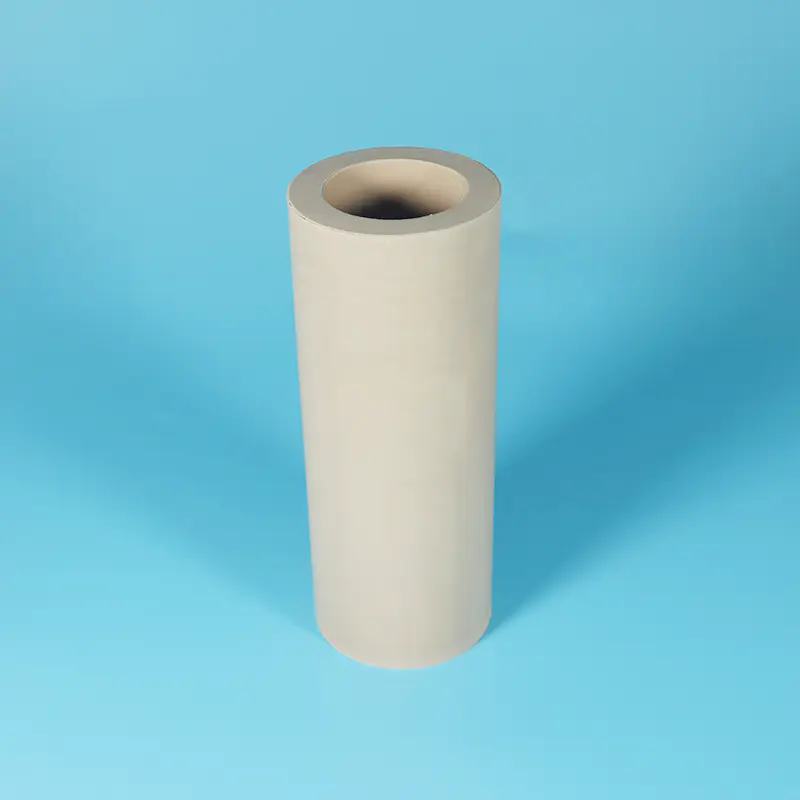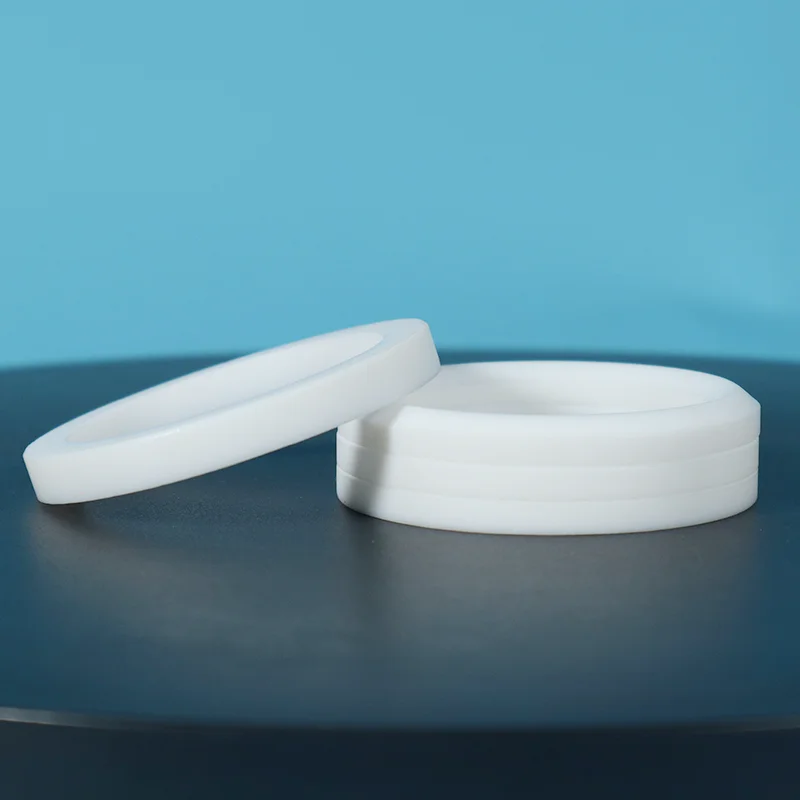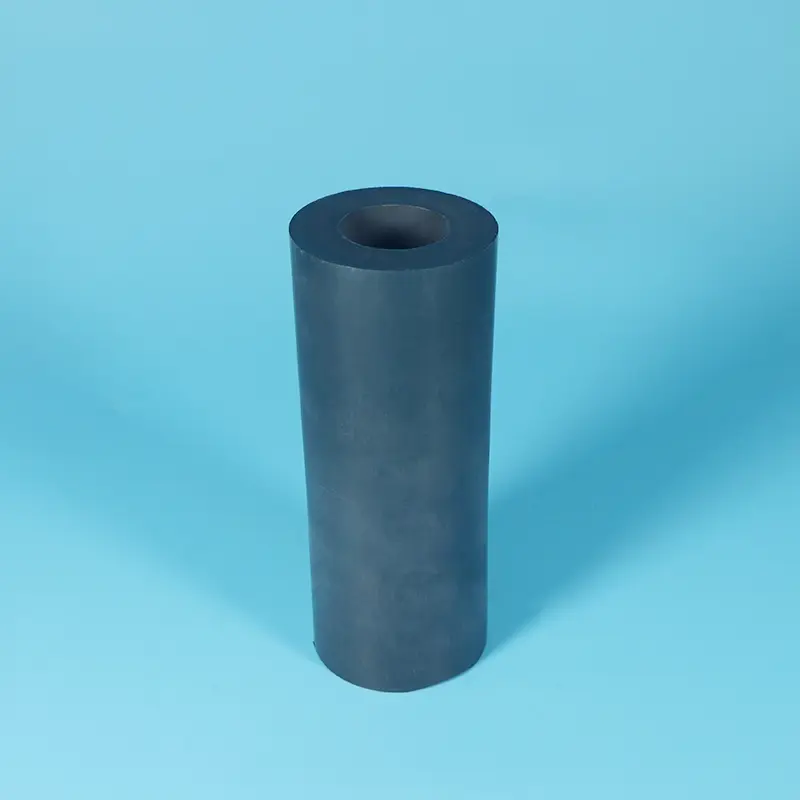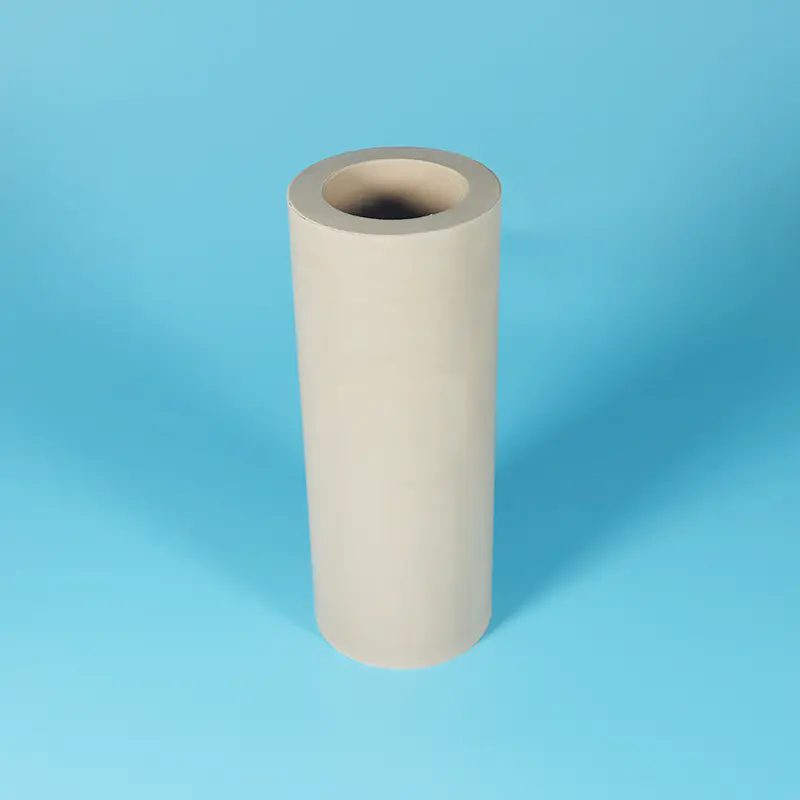
Virgin PTFE is an extraordinary material for chemical resistance, low friction, and temperature range, but it is not a high-load material. Under sustained compressive stress, virgin PTFE creeps, and its wear rate under sliding contact can be too high for bearings, seals, and structural components. This is why modified PTFE Tube and Rod grades exist. The base polymer is compounded with fillers such as glass fiber, carbon fiber, graphite, bronze, or molybdenum disulfide to increase compressive strength, reduce creep, improve wear resistance, and control friction. The choice among these grades is not a matter of picking the most expensive one. It is a matter of matching the filler system to the load type, the sliding condition, the counterface, and the environmental exposure.
This guide is written for procurement teams who source modified PTFE Tube and Rod for high-load applications. It explains how each filler system changes the mechanical and tribological behavior, which grades are suited to which load conditions, which parameters should be specified, and how to verify a supplier’s data before an order is placed. The content is organized around the decision points a buyer faces, and it includes the product parameters and test documentation that a reliable supplier should provide. Our factory at Ningbo Taifno PTFE Plastic Products Co., Ltd. produces modified PTFE Tube and Rod grades for high-load service, and the guidance below reflects the engineering and procurement questions we address with our customers.
A PTFE grade is suitable for high-load service when it maintains its dimensions and its surface under sustained compressive stress, and when it resists wear under sliding contact. Virgin PTFE fails on both counts. Its compressive strength is modest, and it creeps under load, which means a seal or a bearing made from virgin PTFE will lose its interference and its geometry over time. The fillers in a modified grade address these weaknesses in different ways. Glass fiber increases compressive strength and reduces creep, but it can be abrasive to the counterface. Carbon fiber increases strength and thermal conductivity, and it improves wear resistance. Graphite reduces friction and improves dimensional stability. Bronze increases thermal conductivity and load capacity, but it can corrode in some chemical environments. MoS2 reduces friction and improves wear under dry running conditions.
The table below summarizes the effect of each filler system on the properties that matter for high-load service.
| Filler System | Compressive Strength | Creep Resistance | Wear Resistance | Counterface Effect |
| Glass fiber | High | High | Good | Abrasive to soft counterfaces |
| Carbon fiber | High | High | Very good | Less abrasive than glass |
| Graphite | Moderate | Moderate to high | Good | Low friction, compatible with steel |
| Bronze | Very high | Very high | Good | Requires corrosion assessment |
| MoS2 | Moderate | Moderate | Good under dry running | Low friction, good for start-stop |
The suitability of a modified PTFE Tube and Rod grade therefore depends on the load type. A static compressive load, such as a seal under bolt preload, requires high creep resistance. A dynamic sliding load, such as a bearing or a wear pad, requires high wear resistance and a compatible counterface. A load that combines both, such as a hydraulic cylinder guide, requires a grade that balances creep resistance and wear resistance. The filler system must be selected for the dominant load type, not for a generic “high-load” label.
At our factory, we classify our modified PTFE Tube and Rod grades by load type so that buyers can match the grade to the application. We provide the compressive strength, the creep data, and the wear data for each grade, and we advise on the counterface material. The goal is to provide a grade that performs under the actual load, not just a grade that carries a high-load description.
Glass-filled and carbon-filled grades are the two most common families for high-load PTFE components, and they behave differently under load. Glass fiber is a hard, inert filler that increases the compressive modulus and reduces creep. It is widely used in seals, gaskets, and bushings where the load is primarily compressive and the sliding speed is moderate. Carbon fiber is a conductive, low-friction filler that improves wear resistance and thermal conductivity. It is used in bearings, wear rings, and piston guides where the load is dynamic and the heat generation is a concern. The table below compares the two families across the properties that matter for high-load service.
| Property | Glass-Filled PTFE | Carbon-Filled PTFE |
| Compressive strength | High | High |
| Creep resistance | Very high | High |
| Wear resistance | Good | Very good |
| Thermal conductivity | Moderate | High |
| Counterface abrasion | Higher | Lower |
| Typical high-load use | Seals, gaskets, bushings | Bearings, wear rings, guides |
The practical difference is visible in a seal application. A glass-filled grade provides the creep resistance needed to maintain the sealing force under bolt preload, and it resists extrusion into the clearance gap. A carbon-filled grade provides better wear resistance under sliding, but it may not provide the same creep resistance as the glass-filled grade. In a bearing application, the carbon-filled grade is usually the better choice because it conducts heat away from the sliding surface and reduces the wear rate. The glass-filled grade may abrade a soft steel shaft, so the counterface must be hardened or coated.
Our factory at Taifno PTFE Plastic produces both glass-filled and carbon-filled Modified PTFE Tube and Rod grades. We specify the filler content, the filler size, and the dispersion quality, because these variables affect the mechanical and tribological performance. We also provide the counterface recommendation for each grade. The goal is to help the buyer select the family that matches the load type and the counterface material.
For a buyer, the glass versus carbon decision should be based on the dominant failure mode. If the failure mode is creep or extrusion, the glass-filled grade is usually the better choice. If the failure mode is wear or heat generation, the carbon-filled grade is usually the better choice. If both modes are present, a hybrid grade with a combination of fillers may be the correct specification. The procurement team should state the failure mode and the counterface in the inquiry so that the supplier can recommend the appropriate grade.
Graphite, bronze, and MoS2 grades make more sense when the load condition has a specific feature that the glass and carbon grades do not address. Graphite is a solid lubricant that reduces friction and improves dimensional stability. It is suited to applications where the sliding speed is low and the friction must be minimized, such as valve seats and static seals with slight movement. Bronze is a high-modulus filler that increases thermal conductivity and load capacity. It is suited to high-load, high-temperature applications where the heat must be conducted away, such as compressor rings and high-pressure seals. MoS2 is a solid lubricant that is particularly effective under dry running and start-stop conditions. It is suited to applications where the lubrication is marginal, such as conveyor wear strips and dry-running bearings.
The selection logic below describes the conditions under which each of these grades is the better choice.
Our factory at Ningbo Taifno PTFE Plastic Products Co., Ltd. produces graphite, bronze, and MoS2 Modified PTFE Tube and Rod grades, as well as hybrid grades that combine fillers. We provide the friction coefficient, the wear rate, and the load capacity for each grade, and we advise on the environmental limitations. The goal is to help the buyer select the grade that matches the load condition and the environment.
For a buyer, the environmental limitation is as important as the load capacity. A bronze grade that performs well under high load may corrode in a chemical environment. A MoS2 grade that performs well under dry running may not perform well in a humid environment. The procurement team should state the chemical exposure and the humidity in the inquiry so that the supplier can recommend a grade that is compatible with the environment.
The parameters that buyers should specify for Modified PTFE Tube and Rod fall into four groups: the mechanical parameters, the tribological parameters, the thermal parameters, and the dimensional parameters. The mechanical parameters determine whether the component can carry the load without deformation. The tribological parameters determine whether the component will wear at an acceptable rate. The thermal parameters determine whether the component will maintain its properties at the operating temperature. The dimensional parameters determine whether the component will fit the assembly. The table below presents the key parameters and their typical values for high-load grades.
| Parameter | Typical Value for High-Load Grades | Procurement Check |
| Compressive strength | 15 to 30 MPa | Confirm the value at the operating temperature |
| Compressive modulus | 500 to 1500 MPa | Confirm the creep resistance at the load |
| Creep at 10 MPa, 1000 h | < 2% to 5% | Confirm the deformation limit |
| Wear rate (pin-on-disc) | 10^-6 to 10^-5 mm³/Nm | Confirm the wear rate at the sliding speed |
| Friction coefficient | 0.05 to 0.20 | Confirm the friction at the load and speed |
| Thermal conductivity | 0.3 to 2.0 W/mK | Confirm the heat dissipation |
| Maximum operating temperature | 200°C to 260°C | Confirm the temperature rating |
| Dimensional tolerance | +/- 0.05 to +/- 0.20 mm | Confirm the fit with the assembly |
Our factory at Ningbo Taifno PTFE Plastic Products Co., Ltd. provides these parameters for each Modified PTFE Tube and Rod grade. We also provide the test method and the test conditions, because the values can vary with the test method. The goal is to give buyers the data they need to compare grades and to verify the performance against the application.
For a buyer, the specification should state the operating load, the sliding speed, the temperature, the environment, and the counterface material. The supplier can then recommend the grade and the dimensions. A specification that states only the grade name without the operating conditions is a specification that leaves the selection to chance. The procurement team should include the operating conditions in the inquiry and confirm the recommended grade in the order.
Buyers should verify a supplier’s high-load grade data by requesting the material certificate, the test report, the grade formulation, and the dimensional inspection record. The verification should confirm that the grade is the one specified, that the properties meet the specification, and that the dimensions are within tolerance. The checklist below provides the verification steps.
| Verification Step | What to Request | Acceptance Criterion |
| Material certificate | Grade name, filler type, filler content | Matches the purchase order |
| Mechanical test report | Compressive strength, creep data | Meets the specification |
| Tribological test report | Wear rate, friction coefficient | Meets the specification |
| Dimensional inspection | OD, ID, length, tolerance | Within the specified tolerance |
| Traceability | Batch number, production date | Traceable to the certificate |
Our factory at Ningbo Taifno PTFE Plastic Products Co., Ltd. provides these documents with the Modified PTFE Tube and Rod shipments. We also welcome customer audits and can provide samples for evaluation. The goal is to make the verification process transparent and to give buyers the evidence they need to qualify our grades.
For a buyer, the verification should include a sample test when the application is critical. A sample test on the actual counterface and the actual load condition is the most reliable way to confirm the grade performance. The supplier should support the sample test and provide the data. A supplier that provides only a catalogue value without the test conditions is a supplier that is leaving the verification to the buyer.
Question 1: Is glass-filled PTFE always better than carbon-filled PTFE for high-load applications?
Answer: No. Glass-filled PTFE is better for creep resistance and compressive load, while carbon-filled PTFE is better for wear resistance and heat dissipation. The correct choice depends on the dominant failure mode. If the component must maintain its dimensions under sustained compression, glass-filled is often better. If the component must resist sliding wear and heat generation, carbon-filled is often better.
Question 2: Can modified PTFE tube and rod be used in direct contact with stainless steel?
Answer: Yes, but the grade and the counterface finish must be matched. Glass-filled PTFE can be abrasive to soft stainless steel, so a hardened or polished counterface is recommended. Carbon-filled and graphite-filled grades are generally less abrasive and are compatible with stainless steel when the surface finish is appropriate. The supplier should confirm the counterface recommendation for the selected grade.
Question 3: What is the maximum compressive load a modified PTFE grade can carry?
Answer: The maximum compressive load depends on the grade, the temperature, the load duration, and the acceptable deformation. High-load grades typically have compressive strengths of 15 to 30 MPa at room temperature, but the allowable load for a long-duration application is lower because of creep. The supplier should provide the creep data at the operating temperature and the allowable stress for the required life.
Question 4: When should I choose a bronze-filled grade over a glass-filled grade?
Answer: Choose a bronze-filled grade when the load is very high, the temperature is elevated, and the heat must be conducted away from the contact surface. Bronze-filled grades have high thermal conductivity and high load capacity. However, they are not suitable for corrosive environments where the bronze can oxidize. The chemical exposure should be assessed before the grade is selected.
Question 5: What documentation should accompany a modified PTFE tube and rod order?
Answer: The documentation should include the material certificate with the grade name and filler content, the mechanical test report with compressive strength and creep data, the tribological test report with wear rate and friction coefficient, the dimensional inspection record, and the batch traceability data. These documents allow the buyer to verify that the grade and the dimensions meet the specification.
Modified PTFE Tube and Rod grades for high-load applications are not interchangeable. Glass-filled grades suit creep-dominated loads. Carbon-filled grades suit wear-dominated loads. Graphite, bronze, and MoS2 grades suit specific conditions such as low friction, high thermal conductivity, or dry running. The selection should be based on the load type, the sliding condition, the counterface, and the environment, and the verification should be based on the material certificate, the test report, and the dimensional data. Our factory at Ningbo Taifno PTFE Plastic Products Co., Ltd. produces modified PTFE Tube and Rod grades for high-load service and supports buyers with the grade data and the test documentation they need to make a confident selection. If you are sourcing modified PTFE Tube and Rod for a high-load application, contact our team to discuss the load conditions and to request the grade data for your evaluation.
Contact Ningbo Taifno PTFE Plastic Products Co., Ltd. today to discuss your Modified PTFE Tube and Rod requirements and to request the grade data and test documentation for your high-load application.
-