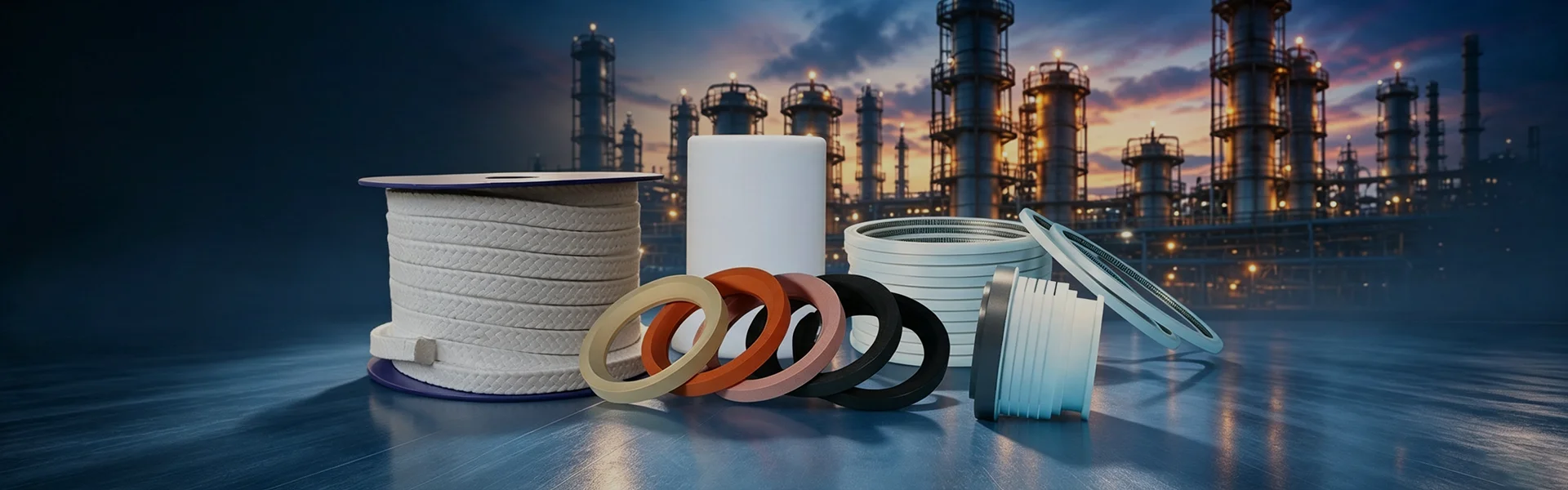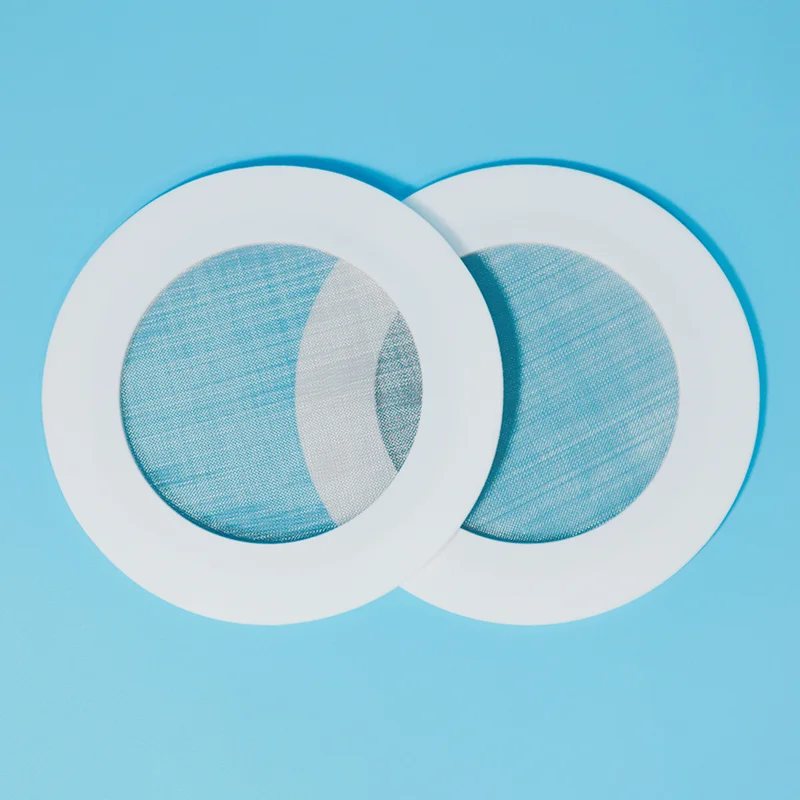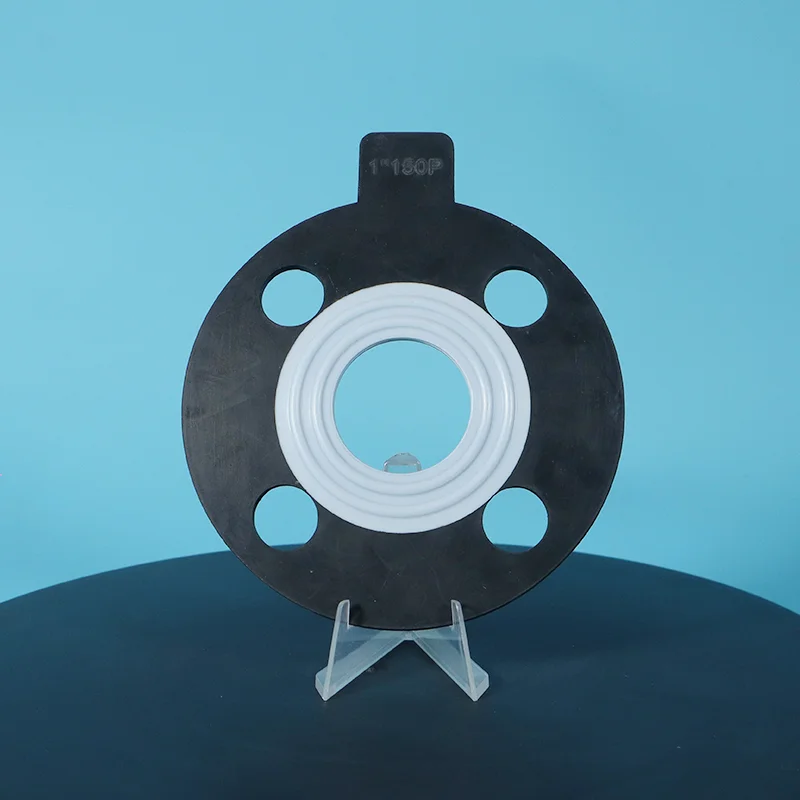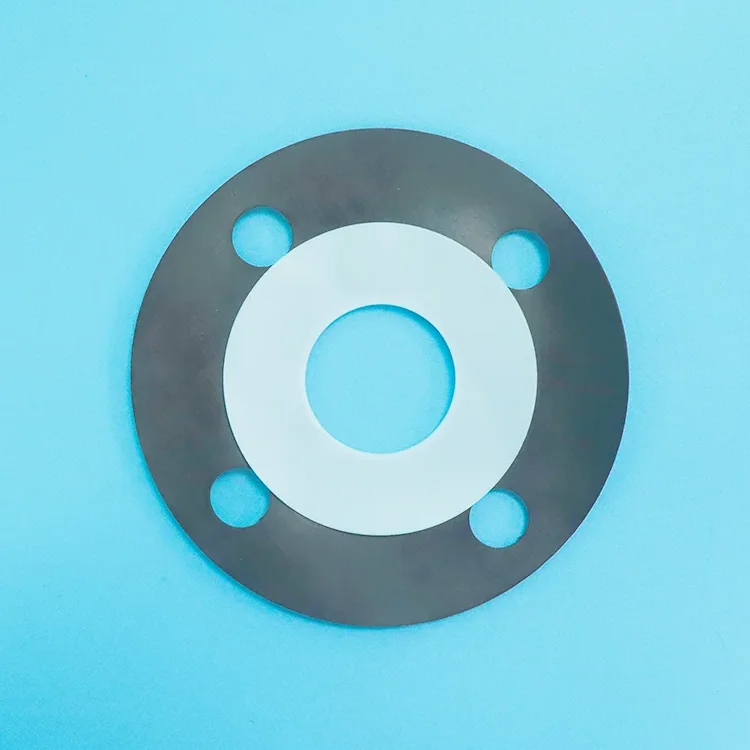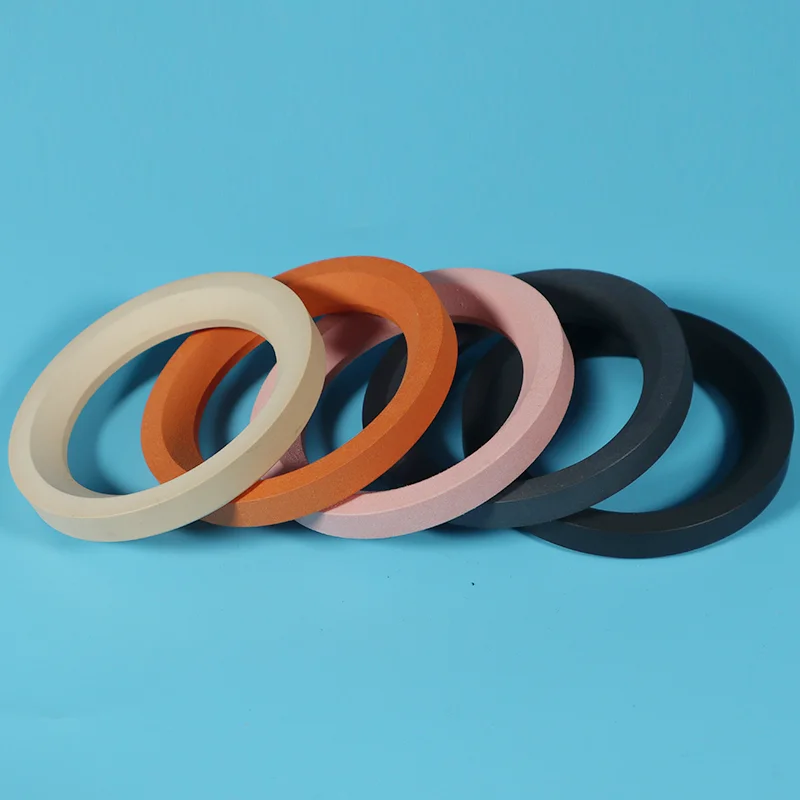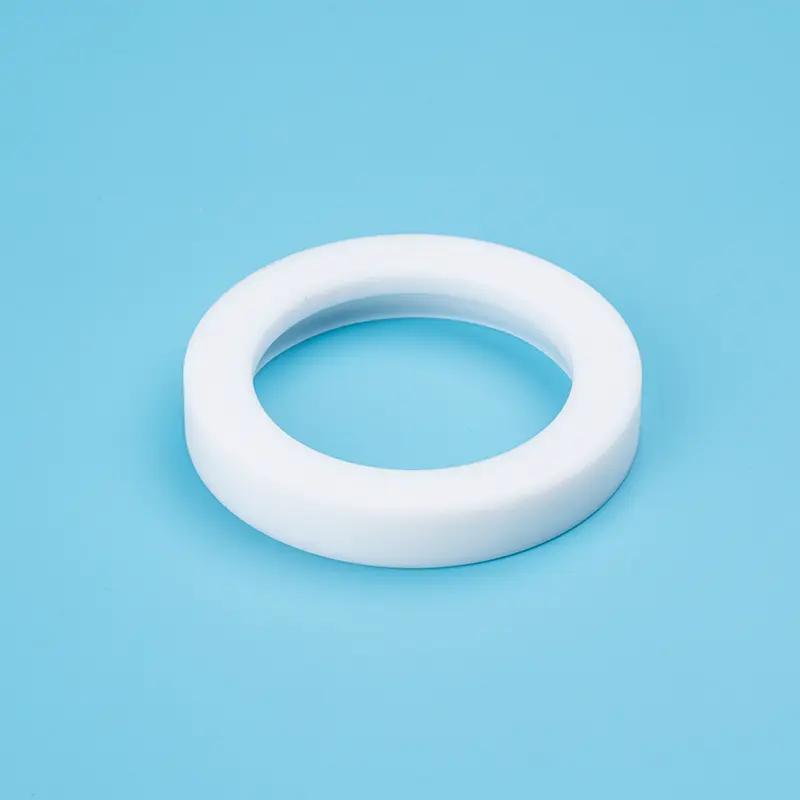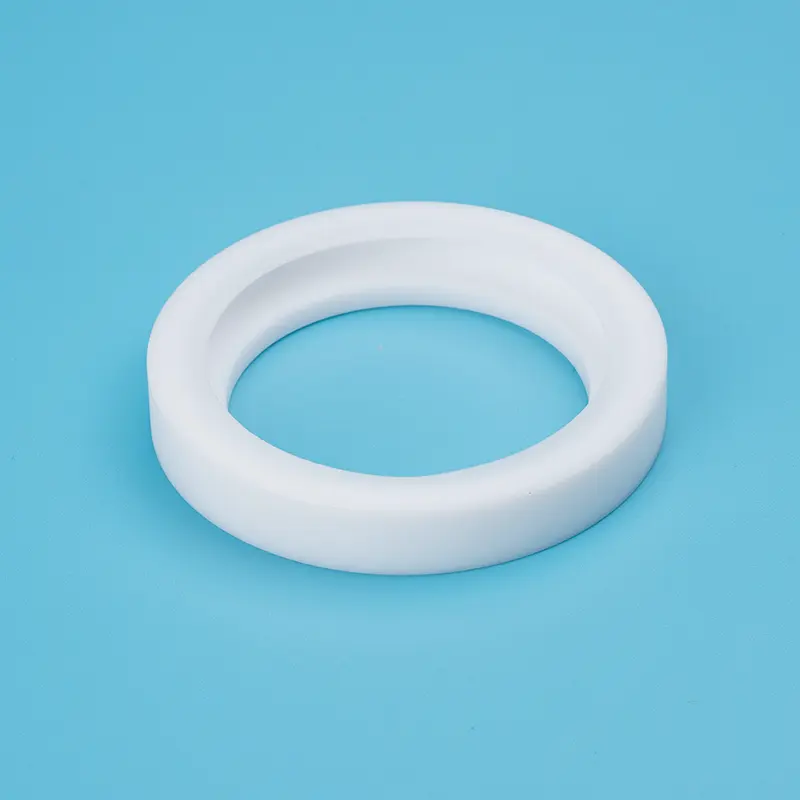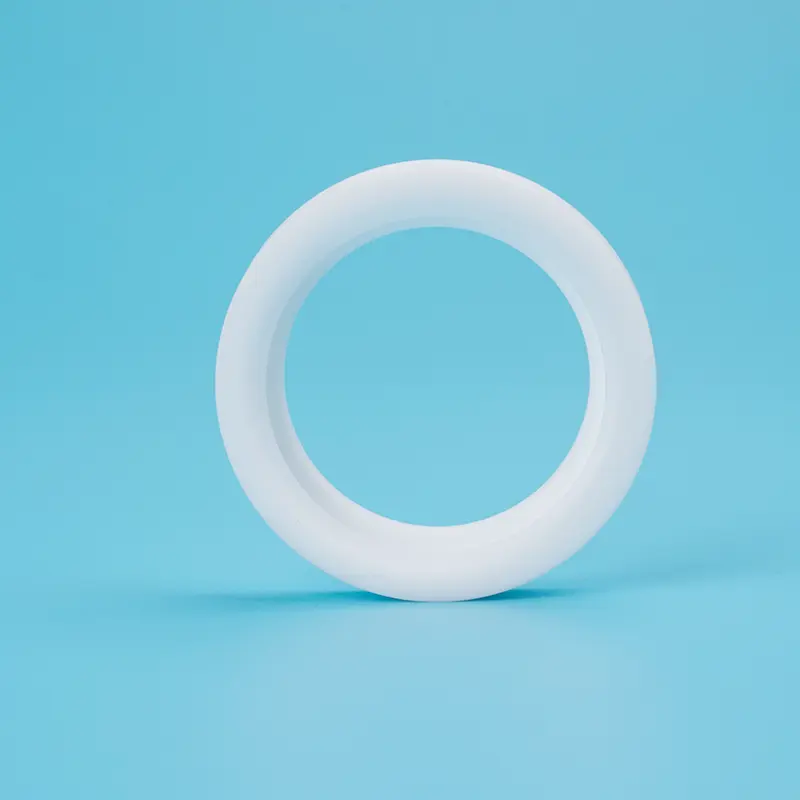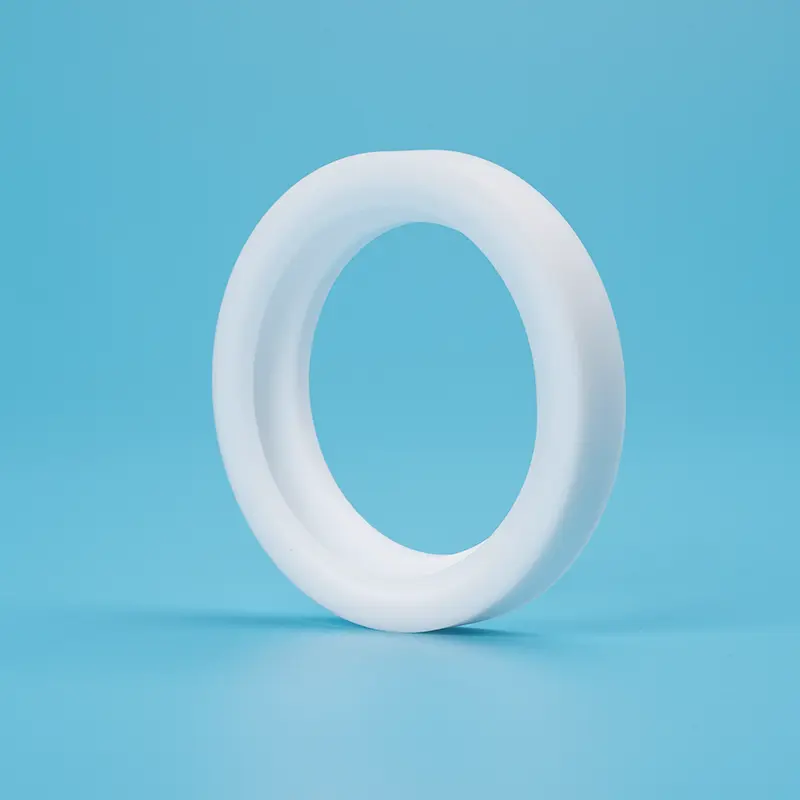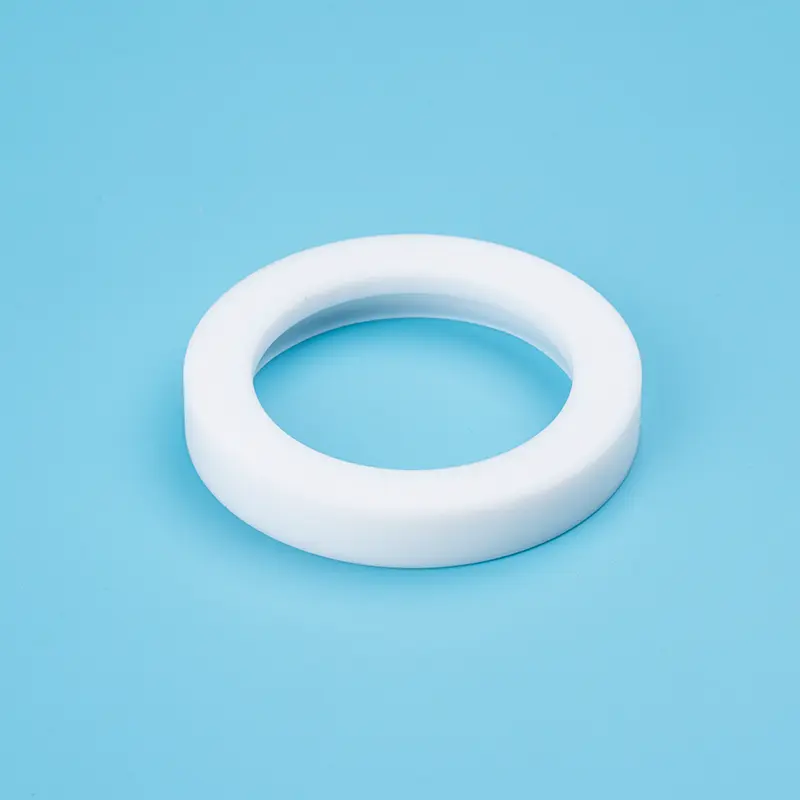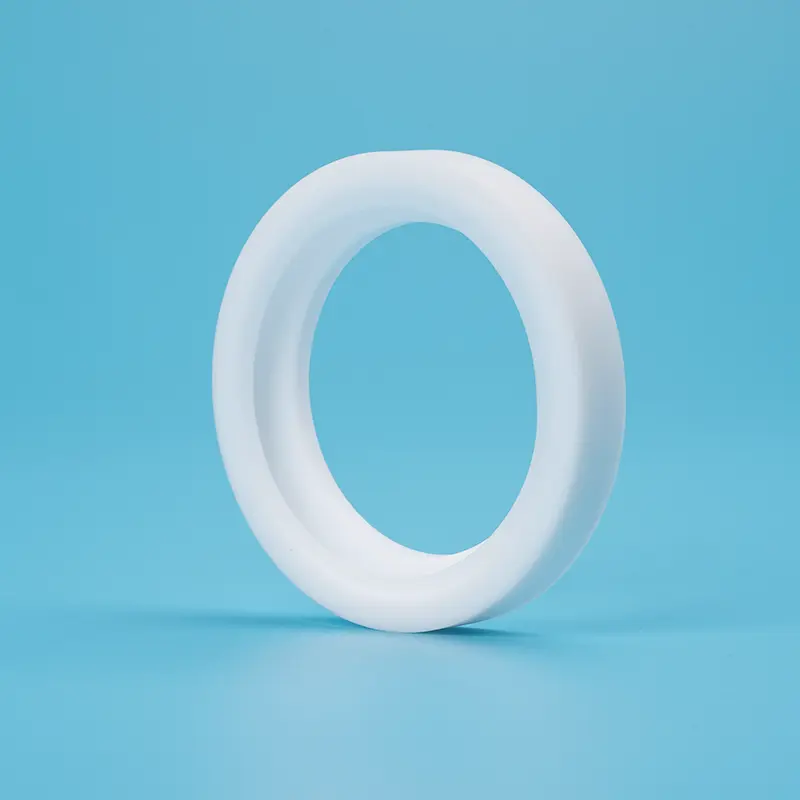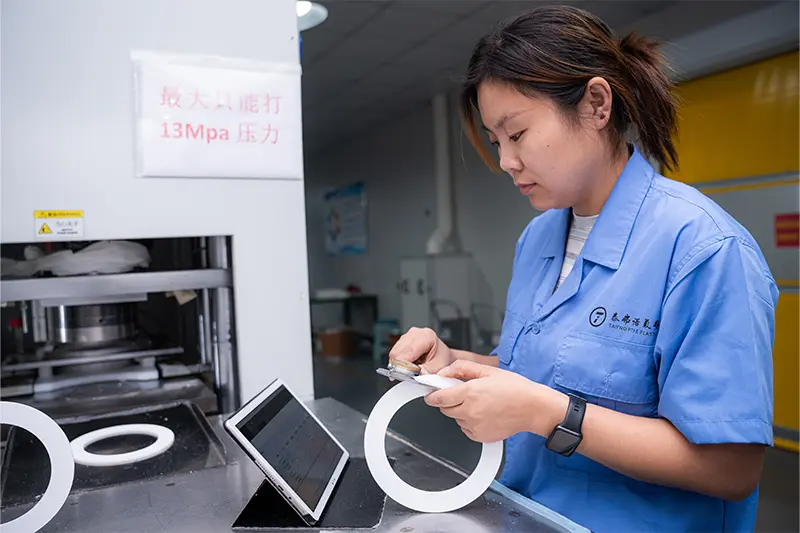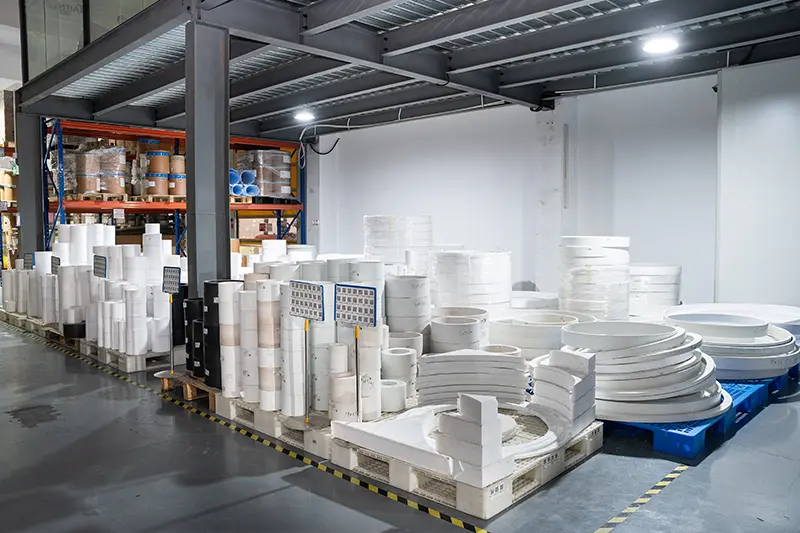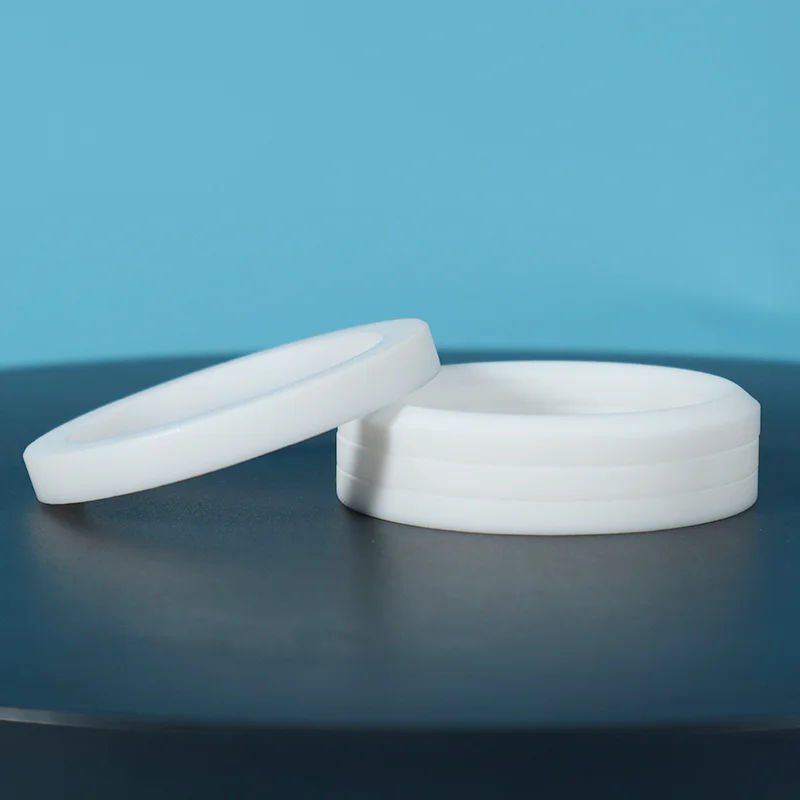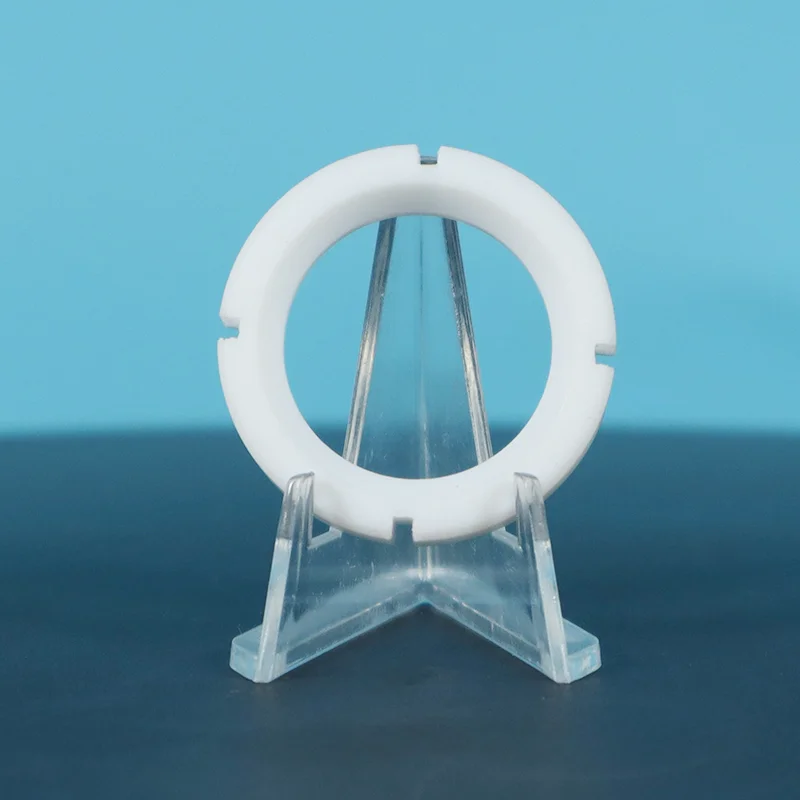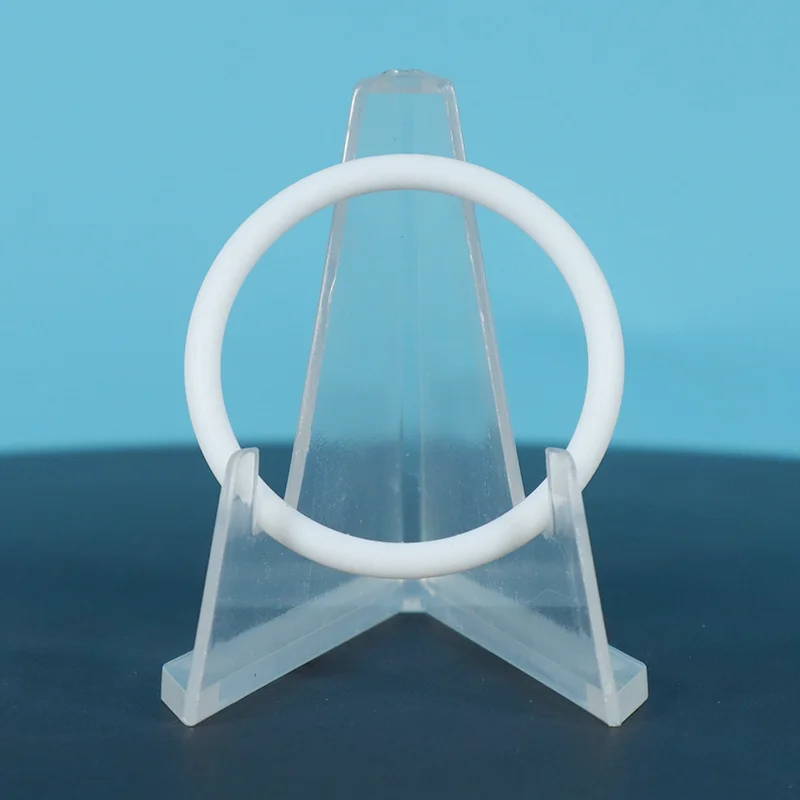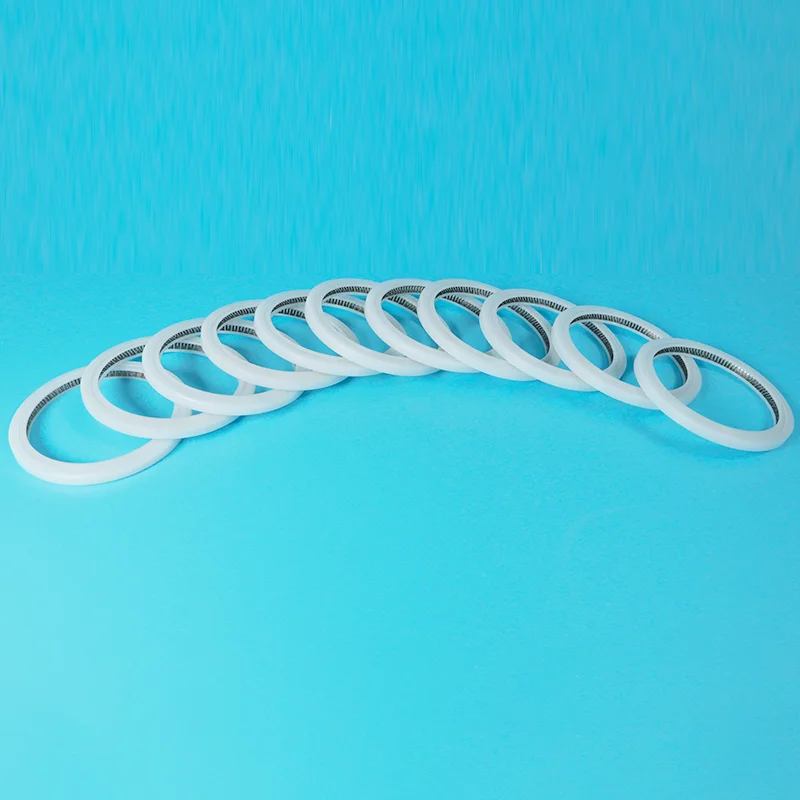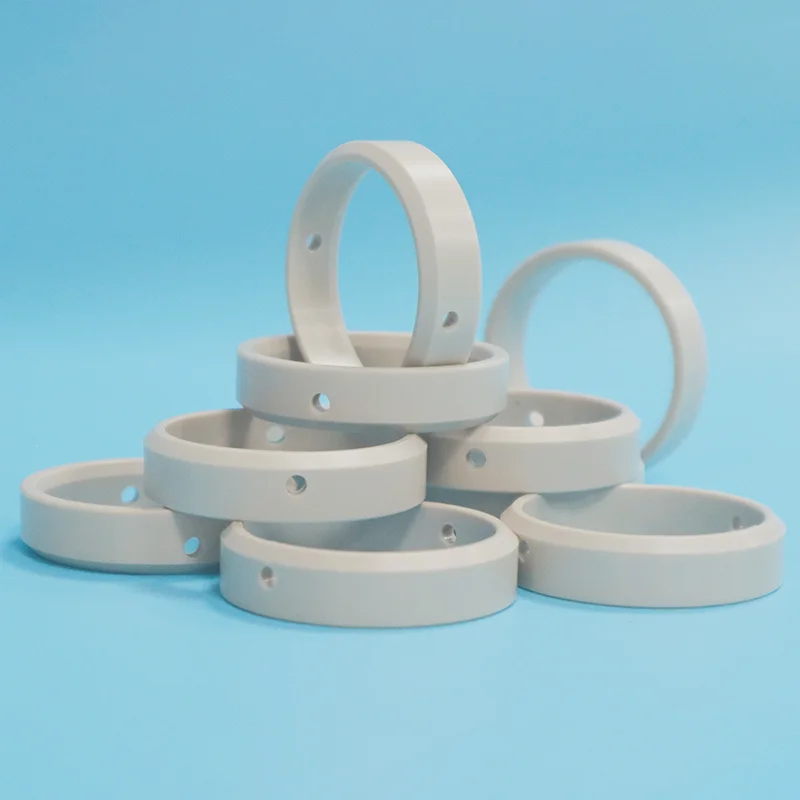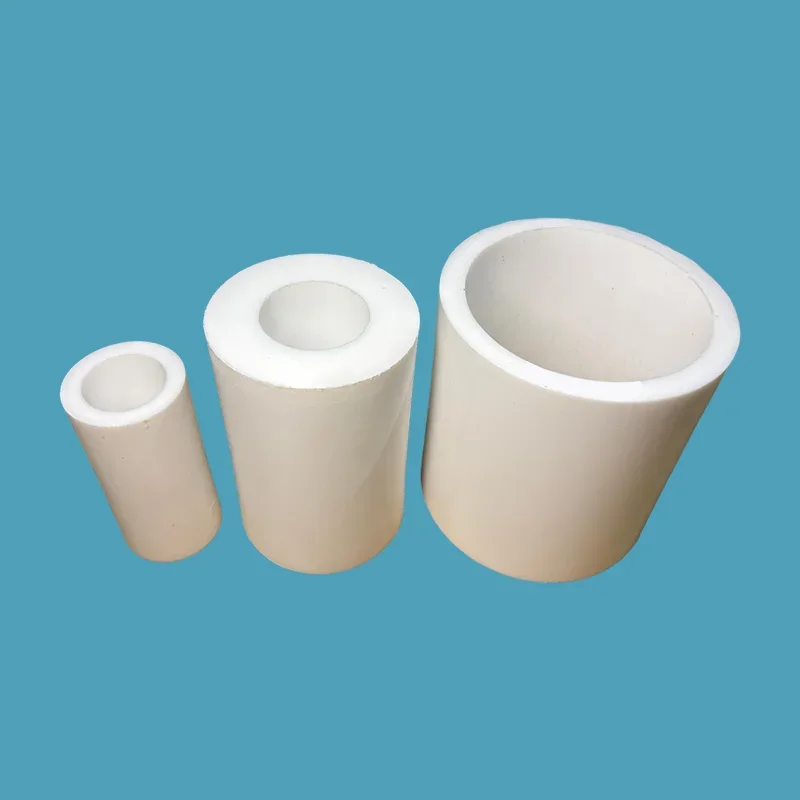
A PTFE bushing is a plain bearing sleeve made from PTFE resin through compression molding/sintering or machining. It serves as a sliding fit between shaft and support, providing friction reduction, support, and guidance.
Options include virgin PTFE (for corrosive media) or filled PTFE (for heavy-duty/high-wear applications). The key features are maintenance-free, corrosion-resistant, and low-friction, making them an ideal alternative to metal bearings.

|
Problem |
Consequence |
How PTFE Bushing Solves It |
|
Metal bearings require regular lubrication, high maintenance costs |
High labor costs, long downtime, lubricant contamination |
PTFE is self-lubricating, no external lubrication, long-term oil-free operation |
|
Metal bearings rusting and seizing in wet or corrosive environments |
Equipment damage, frequent replacement |
PTFE is corrosion-resistant and non-absorbent (water absorption <0.01%) |
|
Metal bearings expanding/contracting under temperature extremes |
Unstable clearance, noise, rapid wear |
PTFE temperature range -200°C to +260°C, dimensionally stable |
|
Equipment running under oil-free or low-oil conditions, bearings wearing out rapidly |
Frequent bearing replacement, affecting production |
Filled PTFE bushings offer significantly improved wear resistance, suitable for dry running |
|
Product Form |
Description |
|
Straight Bushing |
Standard cylindrical bushing |
|
Flanged Bushing |
With flange for axial positioning |
|
Custom-Shaped Bushing |
Custom shapes and dimensions |
|
Stepped Bushing |
For special mounting requirements |
Self-lubricating: Oil-free operation, no external lubrication required
Corrosion-resistant: pH 0–14; resistant to strong acids and alkalis
Wide temperature range: -200°C to +260°C
Low friction: Coefficient of friction 0.04–0.20
Non-absorbent: Water absorption <0.01%
Maintenance-free: No periodic maintenance required after installation
|
Comparison |
Metal Bearing |
PTFE Bushing |
Customer Value |
|
Lubrication |
Requires regular oil/grease |
Self-lubricating, no external lube |
Saves on lubricant costs and maintenance time |
|
Corrosion Resistance |
★★☆☆☆ Rusts and corrodes |
★★★★★ pH 0-14 corrosion-resistant |
Suitable for humid and corrosive environments |
|
Temperature Range |
-100°C to +200°C (Limited by grease) |
-200°C to +260°C |
Wider operating temperature range |
|
Coefficient of Friction |
0.10-0.50 (Needs lubrication) |
0.04-0.20 (Self-lubricating) |
Lower operating resistance |
|
Water Absorption |
Not absorbent but rusts |
<0.01% water absorption; rust-proof |
Suitable for long-term use in humid environments |
|
Maintenance Frequency |
Regular lubrication, monthly or quarterly. |
Maintenance-free; requires no upkeep after installation |
Significantly reduces maintenance costs |
|
Best For |
Heavy load, high speed, with lubrication |
Oil-free, corrosive, clean service |
— |
|
Type |
Best For |
Key Features |
Recommended Conditions |
|
Virgin PTFE Bushing |
Strong corrosive media, food/pharma clean service |
Highest chemical resistance, FDA compliant, lowest friction |
Low load, low speed, strong corrosive |
|
PTFE / Glass-Filled PTFE |
Medium-high load, abrasive media |
Higher hardness, 3-5x wear resistance |
Moderate load, wear applications |
|
Carbon-Filled PTFE |
High speed, heat dissipation, conductive |
Good thermal conductivity, low friction, anti-static |
High-speed rotation, dry running |
|
Graphite-Filled PTFE |
High speed, low friction, thermal conductivity |
Low friction, good thermal conductivity |
High speed, dry running |
|
Bronze-Filled PTFE |
Heavy load, high pressure |
Highest compressive strength, high load capacity |
Heavy machinery, high pressure |
Chemical Limitations of Filled PTFE:
Glass fiber filled: Not resistant to HF or strong alkalis
Carbon fiber/graphite filled: Not resistant to strong oxidizers
Bronze filled: Not resistant to acids or salt water
|
Parameter |
Virgin PTFE |
Filled PTFE |
|
Material |
100% Virgin PTFE |
PTFE + Glass fiber / Carbon fiber / Graphite / Bronze, etc. |
|
Density |
2.15–2.20 g/cm³ |
2.2–3.5 g/cm³ (depending on filler) |
|
Minimum Temperature |
-200°C |
-200°C |
|
Maximum Temperature (Continuous) |
260°C |
260°C |
|
Coefficient of Friction |
0.04–0.10 |
0.10–0.20 |
|
Water Absorption |
<0.01% |
<0.01% |
|
Hardness |
Shore D 50–60 |
Shore D 60–70 |
|
Maximum Pressure |
Low to medium |
Medium to high |
|
Best For |
Corrosive environments, clean service conditions |
Heavy load, high speed, high wear |
Custom Size Range:
Inner Diameter: 1mm - 500mm
Outer Diameter: 2mm - 600mm
Length: 2mm - 500mm
Wall Thickness: 0.5mm - 50mm
Product Features: PTFE possesses an inherently low coefficient of friction and excellent self-lubricating properties, eliminating the need for external lubricants.
Customer Benefits: Saves on lubricant procurement and manual maintenance costs while preventing product contamination from grease or oil.
Product Features: Suitable for pH 0–14 environments; resistant to corrosion from almost all common chemicals.
Customer Benefits: Maintains stable performance in harsh chemical environments, extends product service life, and reduces replacement frequency.
Product Features: Operating temperature range of approximately -200°C to +260°C.
Customer Benefits: Suitable for diverse, demanding conditions—including cryogenic, low-temperature, and high-temperature environments—to meet various industrial application needs.
Product Features: Requires no frequent periodic lubrication or maintenance after installation.
Customer Benefits: Reduces equipment maintenance frequency, lowers labor costs, and minimizes equipment downtime.
Product Features: PTFE’s self-lubricating properties reduce friction during operation, resulting in quieter performance.
Customer Benefits: Lowers equipment operating noise and improves the work environment; ideal for applications requiring noise control.
Product Features: PTFE has a water absorption rate of less than 0.01%, meaning it does not easily swell or undergo significant dimensional changes when exposed to water.
Customer Benefits: Maintains stable fit clearances over the long term, minimizes performance fluctuations caused by moisture-induced deformation, and enhances operational reliability.


|
Industry |
Typical Applications |
Recommended Bushing Type |
|
Chemical & Petrochemical |
Pump shafts, valves, agitator bushings |
Virgin PTFE or Glass-filled |
|
Food & Beverage |
Food processing equipment, filling machine bushings |
Virgin PTFE (FDA compliant) |
|
Pharmaceutical |
Sterile equipment, reactor agitator bushings |
Virgin PTFE (USP Class VI) |
|
Automotive |
Steering systems, suspension bushings |
Filled PTFE (Carbon fiber/Graphite) |
|
Semiconductor |
Cleanroom equipment bushings |
Virgin PTFE (High purity) |
|
Packaging Machinery |
Oil-free drive components |
Filled PTFE (Glass fiber/Carbon fiber) |
|
Power Tools |
Oil-free motor bearings |
Filled PTFE (Bronze) |
|
Marine |
Rudder shaft bushings, deck machinery |
Filled PTFE (Bronze/Glass fiber) |
Challenge: The original stainless steel bushings suffered from rusting and seizing every three months when exposed to corrosive media, necessitating frequent shutdowns for replacement and driving up maintenance costs.
Solution: Replaced the stainless steel bushings with pure PTFE bushings, leveraging PTFE's excellent corrosion resistance and self-lubricating properties to withstand the chemical environment.
Result: Two years of trouble-free, stable operation; maintenance costs reduced by 80%.
Challenge: The original metal bearings required weekly application of food-grade grease, resulting in frequent maintenance and high costs for both lubricants and labor.
Solution: Replaced the metal bearings with glass-fiber-filled PTFE bushings using FDA-compliant materials to achieve low-friction operation.
Result: Six months of lubrication-free operation; eliminated the need for periodic greasing, reduced lubrication costs to zero, and decreased daily maintenance requirements.


A: Metal bearings require regular grease lubrication, rust in corrosive environments, and wear out rapidly under oil-free or low-oil conditions. PTFE bushings are self-lubricating, corrosion-resistant, and maintenance-free.
Choose PTFE bushings for: Oil-free/low-oil service, corrosive environments, clean service (food/pharma), high/low temperature cycling.
Choose metal bearings for: Extremely heavy loads, extremely high speeds, applications with full lubrication systems.
A: Virgin PTFE bushings offer the highest chemical resistance and lowest friction, but limited load capacity, suitable for strong corrosive environments and clean service.
Filled PTFE bushings (glass, carbon, graphite, bronze) offer significantly improved load capacity and 3-5x wear resistance, suitable for heavy load, high speed, high wear.
Quick decision: Strong corrosive, low load, clean → Virgin PTFE;
Heavy load, high speed, high wear → Filled PTFE.
⚠️ Note chemical limits of fillers (e.g., glass is not for HF/strong alkali).
A: Temperature: Continuous -200°C to +260°C.
Pressure: Depends on bushing design and filler material, virgin PTFE for low to medium pressure, filled PTFE for medium to high pressure (bronze-filled compressive strength ≥20MPa).
PV value (Pressure × Velocity) is the key selection parameter, carbon or graphite filled PTFE is recommended for high PV applications. For specific selection data, please provide shaft diameter, speed, load, and media information.
A: No. PTFE itself has an extremely low coefficient of friction (0.04-0.20), one of the lowest among solid materials, providing excellent self-lubricating properties. It can run long-term under oil-free or low-oil conditions.
For very high PV applications, a small amount of grease may be applied during initial installation as a start-up lubricant. In most applications, PTFE bushings require no external lubrication at all, truly maintenance-free operation.
Address
No.1028, Qiersan Street, Andong Town, Cixi City, Zhejiang Province, China
Tel