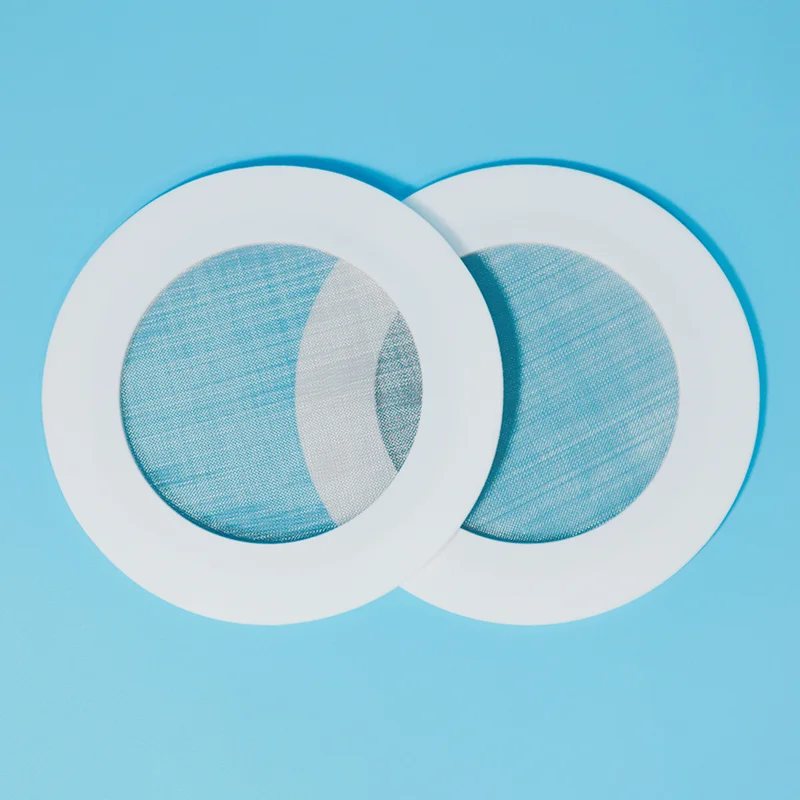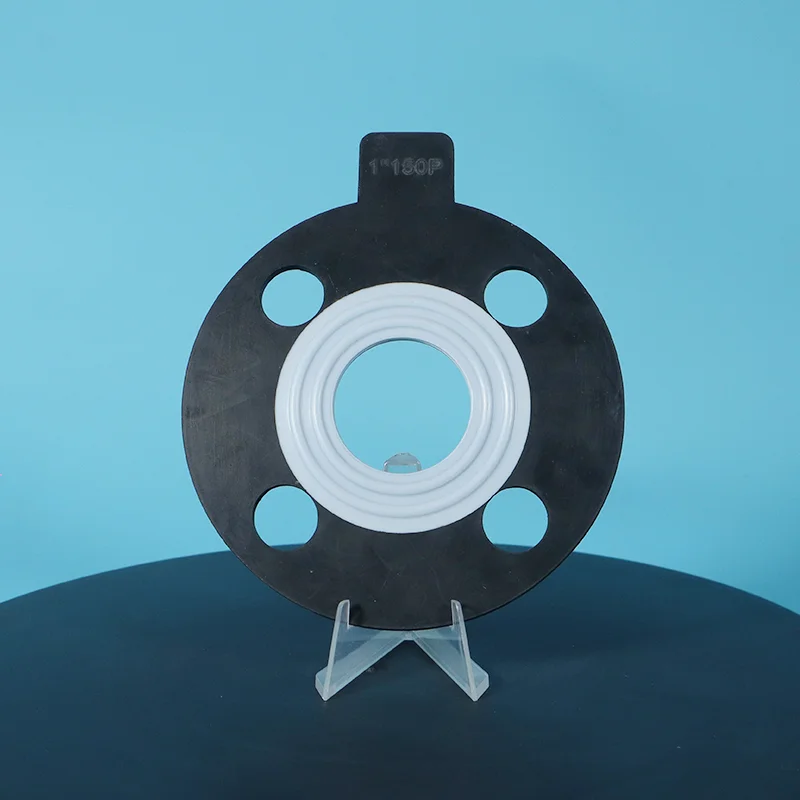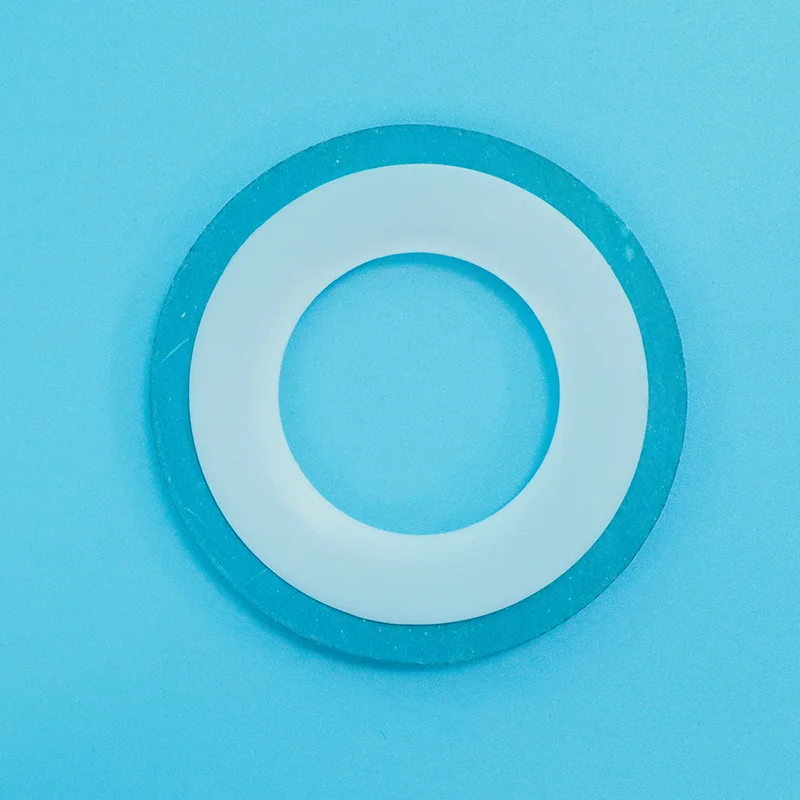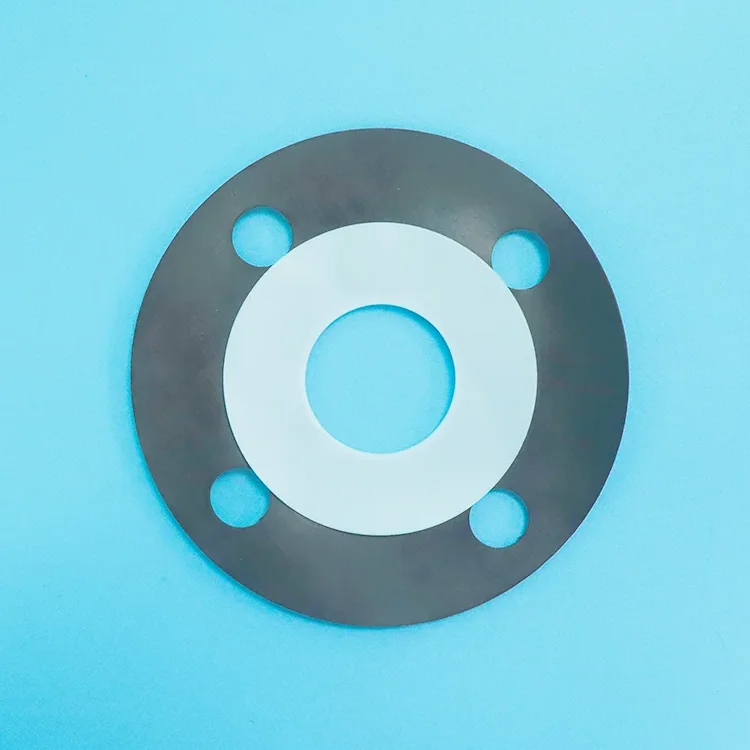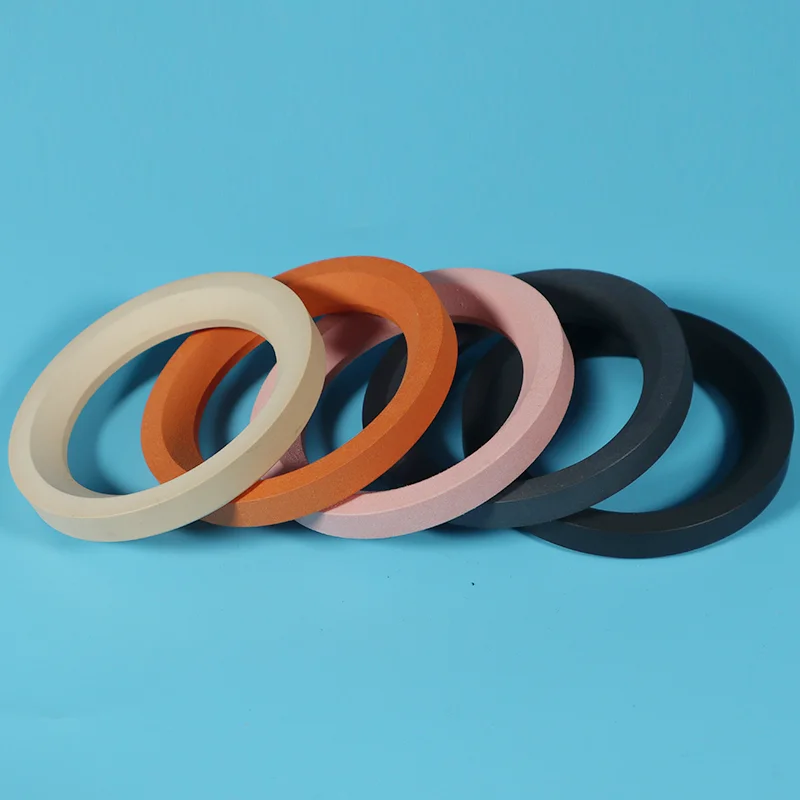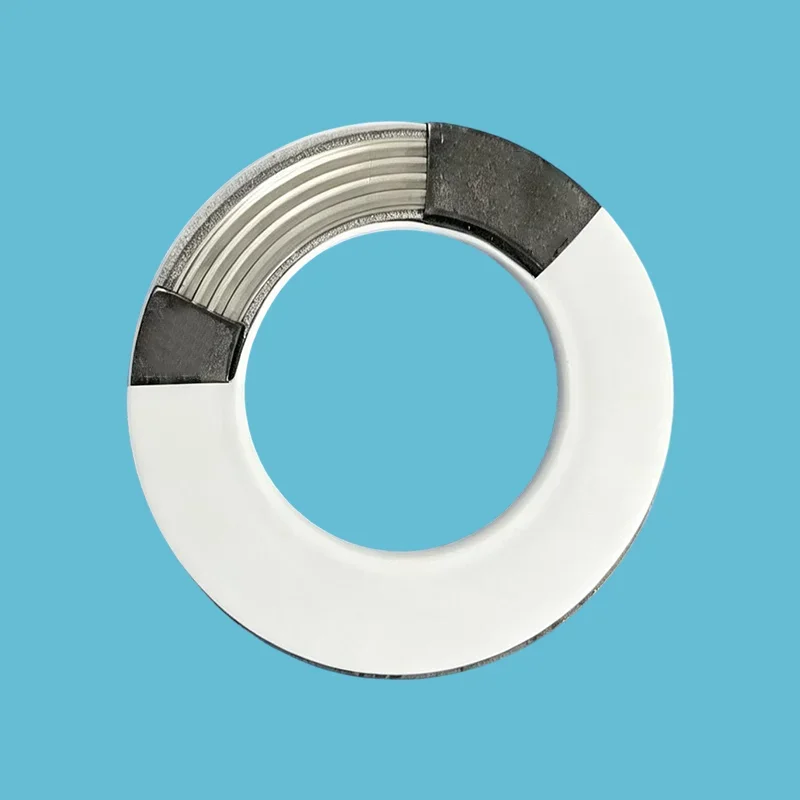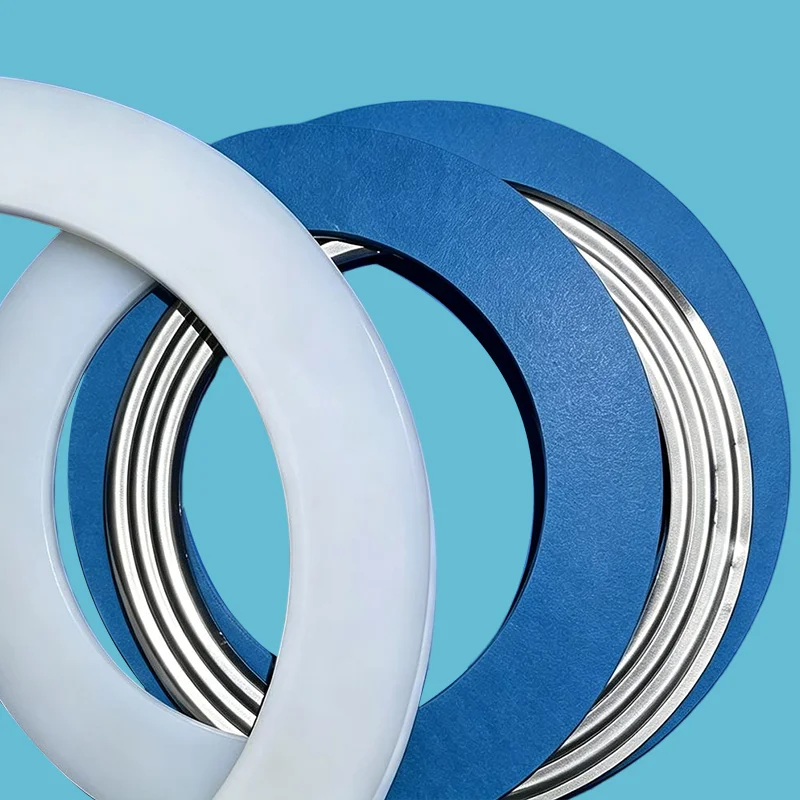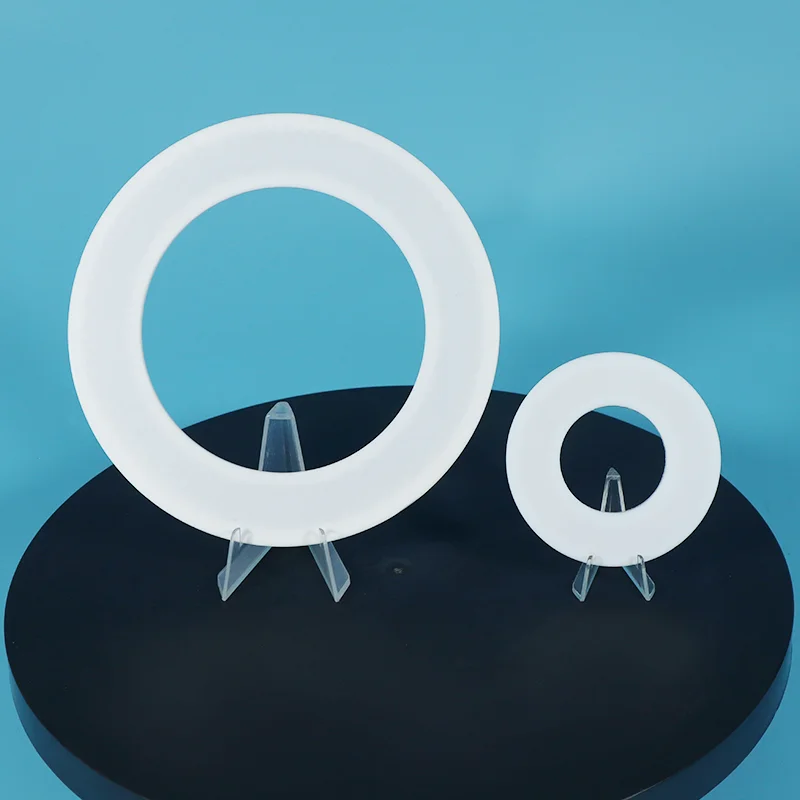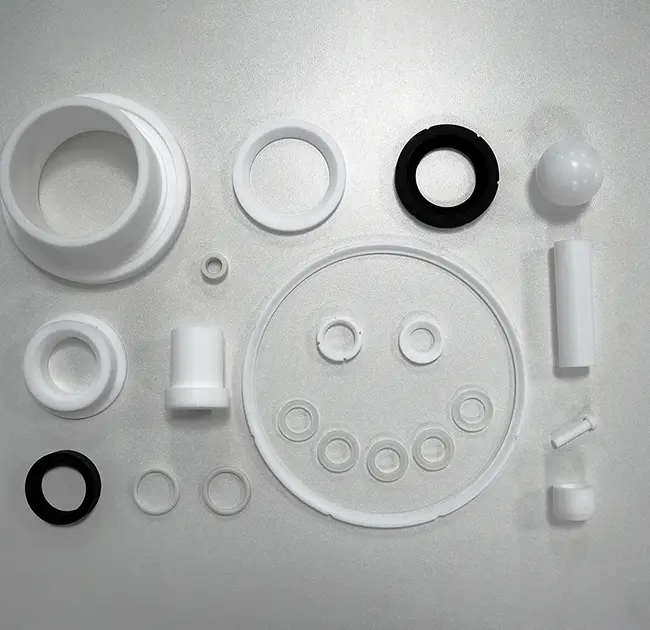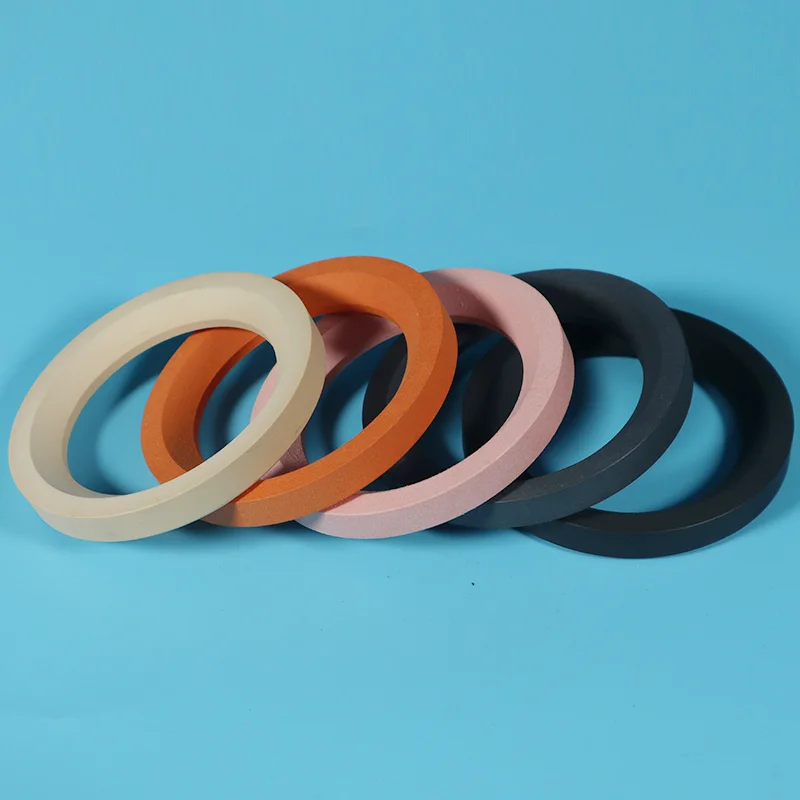
Unlike standard PTFE gaskets that require high seating loads, the PTFE Envelope Gasket for Glass-Lined Flanges is designed to achieve an effective seal with lower bolt stress. This product is suitable for glass-lined reactors, vessels, and piping systems from manufacturers such as De Dietrich Process Systems and Pfaudler, as well as for other standard glass-lined flange designs.

Glass-lined (glass-coated) steel flanges are widely used in chemical processing equipment because they provide excellent corrosion resistance against aggressive media. However, the glass coating process creates unique sealing difficulties. The flange surface is often uneven and wavy, while the glass layer itself is brittle and sensitive to excessive tightening force.
The sealing challenge:
1. Irregular flange surface: The uneven glass-coated surface makes it difficult for conventional gaskets to achieve complete contact and reliable sealing.
2. Brittle glass lining: Excessive bolt torque can damage or crack the glass layer, leading to costly repairs and equipment downtime.
3. Limited bolt loading capacity: Glass-lined flanges cannot withstand the same tightening forces as metal flanges, requiring a gasket with better adaptability under low compression force.
4. Chemical resistance requirements: The sealing material must withstand acids, alkalis, solvents, and other corrosive process media without degradation.
|
Feature |
Benefit for Glass-Lined Flanges |
|
Low-torque sealing |
Prevents glass cracking — protects expensive equipment |
|
Conformability |
Compensates for wavy, uneven flange surfaces |
|
PTFE jacket |
Universal chemical resistance (pH 0-14) — handles aggressive media |
|
Compressible core |
Absorbs flange irregularities — maintains seal without over-tightening |
|
Feature |
PTFE Envelope Gasket |
ePTFE Tape/Gasket |
Standard PTFE Gasket |
|
Conformability |
★★★★☆ compressible core |
★★★★★ excellent |
★★☆☆☆ rigid |
|
Low Torque Sealing |
★★★★☆ good |
★★★★★ best |
★★☆☆☆ poor, cracks glass |
|
Chemical Resistance |
★★★★★ PTFE jacket |
★★★★★ 100% ePTFE |
★★★★★ |
|
Creep Resistance |
★★★☆☆ depends on core |
★★★★★ excellent |
★★☆☆☆ poor |
|
Glass Flange Protection |
★★★★☆ soft jacket |
★★★★★ best |
★★★☆☆ |
|
Brand Compatibility |
De Dietrich, Pfaudler, all standards |
De Dietrich approved |
Limited |
|
Cost |
$$ |
$$$ |
$ |
|
If Your Application Is... |
Choose... |
Why |
|
Standard glass-lined flanges, general chemical service |
PTFE Envelope Gasket |
Industry standard — proven solution |
|
De Dietrich or Pfaudler equipment |
PTFE Envelope Gasket |
Standard sizes available for all major brands |
|
Large diameter flanges (DN600+) or severe irregularities |
ePTFE Tape |
Conforms better, De Dietrich approved |
|
Budget-conscious, low pressure (<0.25 MPa) |
Standard Envelope |
Cost-effective |
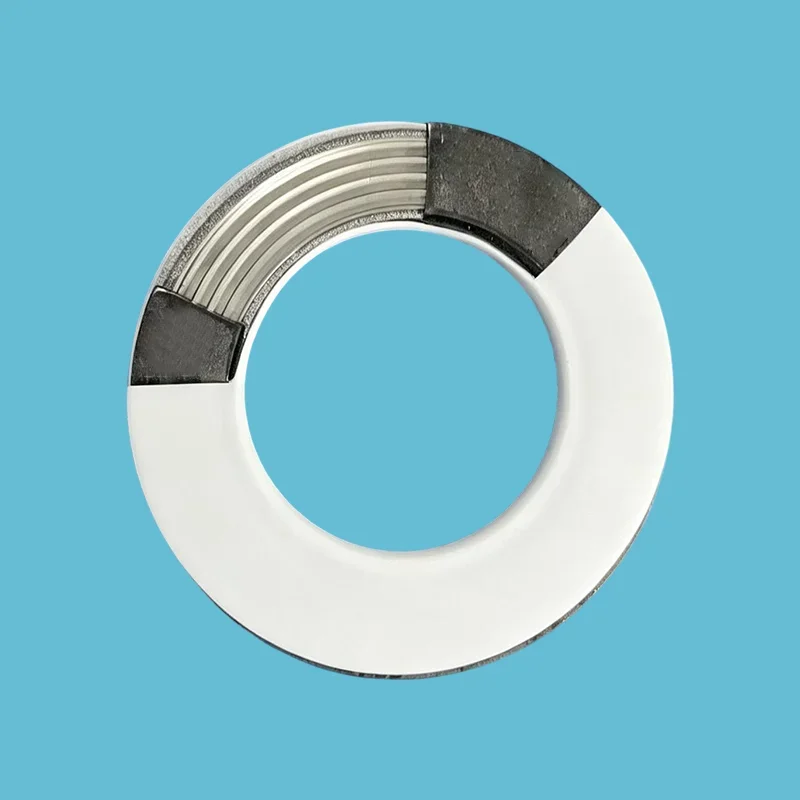
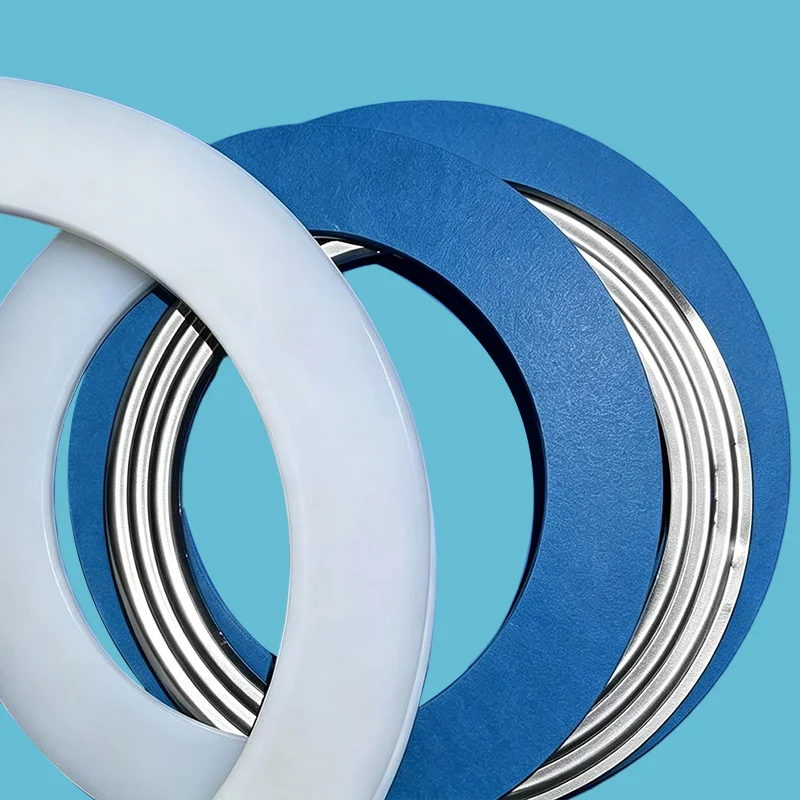
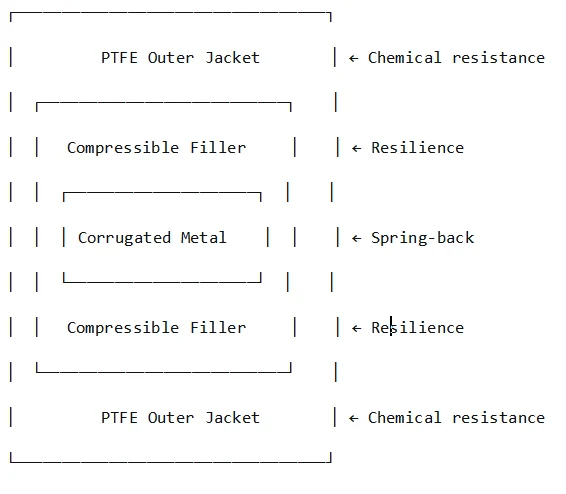
Modern PTFE Envelope Gasket for Glass-Lined Flange often incorporate a corrugated metal insert with compressible filler layers on both sides, fully encapsulated in PTFE:
|
Parameter |
Value |
|
Temperature Range |
-180°C to +200°C (standard grades) |
|
Pressure Rating |
Up to 1.0 MPa (10 bar) |
|
Chemical Resistance |
pH 0-14 — universal |
|
PTFE Jacket Thickness |
0.5-1.0 mm typical |
|
Core Construction |
Compressible filler + optional corrugated metal insert |
|
Compliance |
HG/T 2050-2019, TA-Luft, FDA available |
|
Brand Compatibility |
De Dietrich, Pfaudler, and all standard glass-lined flange sizes |
|
Filler Type |
Best For |
Temperature Limit |
|
Non-asbestos + rubber |
General chemical service, low pressure |
Up to +120°C |
|
Graphite composite |
High temperature, thermal cycling |
Up to +230°C |
|
Corrugated metal + graphite |
High pressure, large diameter |
Up to +260°C |
|
FDA-compliant filler |
Food and pharmaceutical applications |
Up to +150°C |


At an API intermediate manufacturing plant in Anhui, a glass-lined distillation vessel was operated under acidic process conditions. During long-term service, scratches developed on the glass-lined flange surface, preventing conventional gaskets from achieving proper sealing contact. Acidic media gradually penetrated through the damaged area and reached the metal substrate, causing corrosion beneath the glass lining. The deterioration increased leakage risks and threatened premature equipment failure, with potential replacement costs exceeding RMB 200,000.
To solve this issue, a glass-lined flange-specific encapsulated gasket was installed. Designed for fragile and uneven glass-lined flange surfaces, the gasket combines a chemically resistant PTFE jacket with a flexible core structure.
The PTFE layer provides excellent protection against acid penetration and corrosion, while the compressible core offers superior recovery performance to compensate for minor flange scratches and surface irregularities without requiring excessive bolt torque, helping protect the glass lining from further damage.
After replacement, the glass-lined distillation vessel achieved stable sealing performance and extended service life, avoiding approximately RMB 200,000 in equipment replacement costs. This application demonstrates the effectiveness of glass-lined flange-specific encapsulated gaskets in preventing leakage, reducing maintenance costs, and improving equipment reliability in pharmaceutical and fine chemical processing environments.
100% Virgin PTFE Resin — consistent quality, batch after batch
Glass-Friendly Design — low torque sealing protects fragile surfaces
Brand Compatibility — De Dietrich, Pfaudler, and all standard glass-lined flange sizes
Full Traceability — material certificates available on request
TA-Luft Compliant — fugitive emissions control (select grades
FDA-Compliant Grades Available — food and pharmaceutical applications
Lead Time — standard sizes 5-10 days; custom sizes 10-15 days


A: Glass-lined flanges are not flat: they have wavy, uneven surfaces due to the glass coating process.
Standard PTFE gaskets require high bolt torque to conform: which cracks the brittle glass layer. Special envelope gaskets with compressible cores seal at low torque, protecting fragile glass surfaces while providing PTFE's chemical resistance.
The cost of using the wrong gasket: A cracked glass-lined flange costs $5,000+ to repair, plus production downtime.
A: PTFE envelope gaskets are the standard sealing solution for De Dietrich, Pfaudler, and all major glass-lined equipment brands. Available in all standard sizes matching each manufacturer's flange dimensions. For severely wavy surfaces or large diameters (DN600+), ePTFE tape is also approved by De Dietrich.
The key is low torque installation, glass-lined flanges typically require only 50-70% of standard bolt torque.
Quick rule:
Standard flanges → Envelope gasket.
Severe irregularities → ePTFE tape.
We supply gaskets for all major glass-lined equipment brands, send your equipment brand and flange size for a quote.
A: Temperature: -180°C to +200°C (standard grades).
Pressure: Up to 1.0 MPa (10 bar).
Chemical: pH 0-14 — PTFE jacket provides universal resistance.
Three common mistakes:
(1) Over-tightening: the most common cause of glass flange damage. Use a calibrated torque wrench and follow the flange manufacturer's specifications.
(2) Wrong gasket thickness: gasket thickness should be 4-5 times the measured flange gap.
(3) Using standard PTFE gaskets: they require higher torque and WILL crack the glass. We include installation specifications with every order. Follow them. No leaks. No glass damage. No guesswork.
Address
No.1028, Qiersan Street, Andong Town, Cixi City, Zhejiang Province, China
Tel