

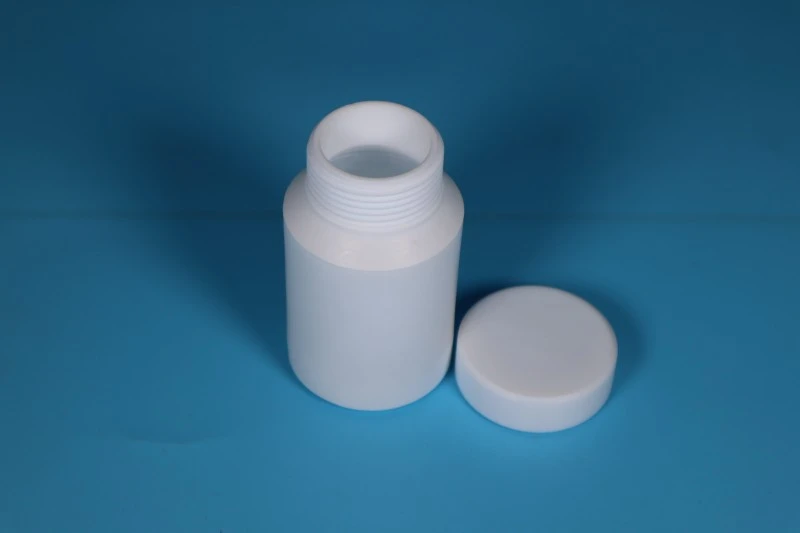
PTFE Wide Mouth Bottle Manufacturer for Laboratory Sample Storage
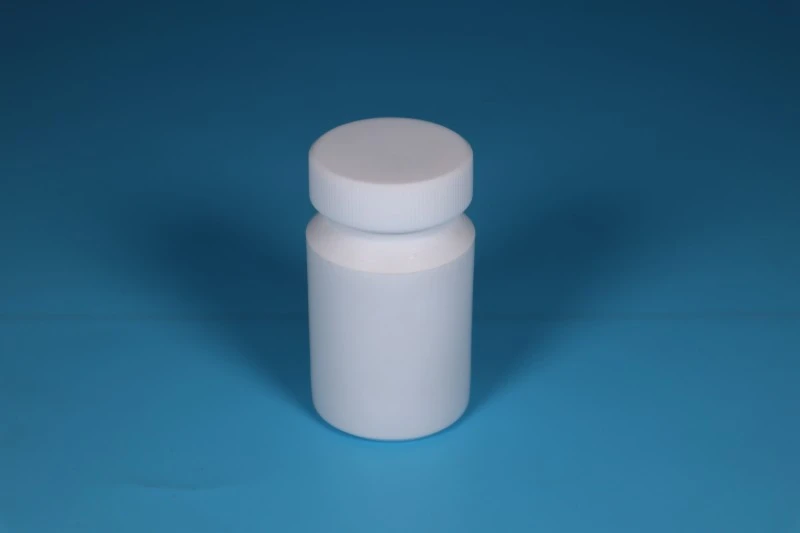
Taifno manufactures virgin PTFE wide mouth bottles for laboratories, testing organizations, research facilities, chemical processors and distributors. The large straight-wall opening supports easier loading and removal of powders, viscous liquids and larger samples than a conventional narrow-neck bottle.
Bottle bodies can be manufactured using isostatic molding and subsequent machining. Standard references cover 50 mL to 2000 mL, while custom capacity, neck diameter, wall thickness and bottle geometry can be reviewed from a buyer drawing or application requirement.
For a technically meaningful factory quotation, provide the required capacity, sample or reagent, concentration, operating temperature, closure requirements, quantity, dimensional tolerances and required material or compliance documents.
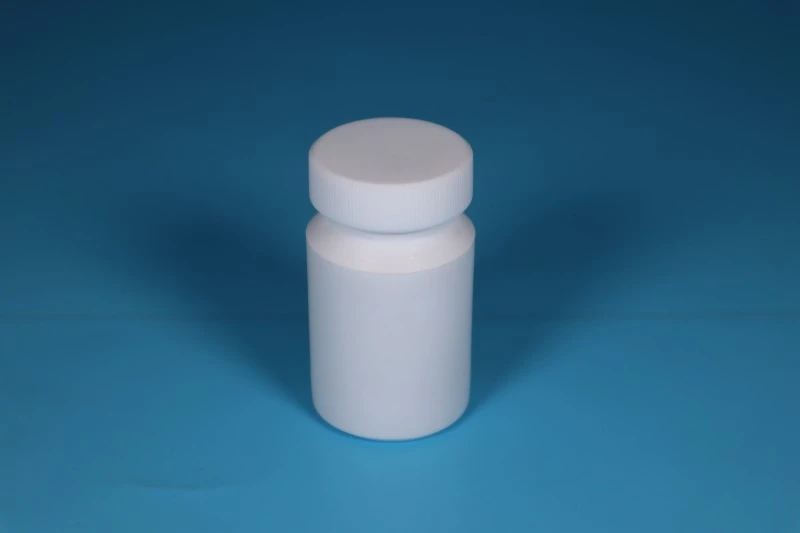
Product FeaturesWhy Buyers Specify a Virgin PTFE Wide Mouth Bottle
Selection ComparisonPTFE Wide Mouth vs Narrow Mouth and Glass Bottles
| Selection Factor | Glass Bottle | Narrow Mouth PTFE Bottle | Wide Mouth PTFE Bottle |
|---|---|---|---|
| Powder and solid access | Depends on opening and bottle design. | Restricted by the smaller neck. | Large opening supports easier loading and removal. |
| Internal cleaning access | Moderate to good, depending on neck size. | More difficult because of the narrow opening. | Easier physical access through the wide opening. |
| Chemical compatibility | Glass is unsuitable for hydrofluoric acid and can be affected by strong alkalis. | Broad PTFE compatibility, subject to exact medium and temperature. | Broad PTFE compatibility, subject to exact medium and temperature. |
| Trace-analysis suitability | Method-dependent; glass composition may matter for some analytes. | Can be evaluated for low-background workflows after validated cleaning. | Can be evaluated for low-background workflows after validated cleaning. |
| Temperature use | Depends on glass grade, thermal shock and closure system. | Determined by complete bottle, closure, load and service conditions. | Determined by complete bottle, closure, load and service conditions. |
| Closure integrity | Depends on cap, liner, thread and bottle finish. | Must be verified for the application. | Must be verified for the application. |
| Typical selection | Routine storage where transparency is useful. | Liquid samples where controlled pouring is required. | Powders, solids, viscous materials and frequent-access workflows. |
Engineering DataPTFE Wide Mouth Bottle Technical Specifications
| Parameter | Reference | Qualification Requirement |
|---|---|---|
| Material | Virgin PTFE. | Confirm resin grade, traceability and any required declaration before ordering. |
| Manufacturing process | Isostatic molding with machining or finishing operations. | Final process depends on capacity, wall section, thread and tolerances. |
| Color | Natural opaque white. | Visual appearance can vary with resin and manufacturing process. |
| Temperature | PTFE material is commonly used across a broad low-to-high temperature range. | No universal closed-bottle rating applies. Confirm medium, load, closure, pressure, time and thermal cycle. |
| Direct hot-plate or flame exposure | Not recommended. | Local overheating can deform or decompose PTFE and create hazardous fumes. |
| Chemical compatibility | Broad resistance to many corrosive laboratory chemicals. | Exclude molten alkali metals and review elemental fluorine and reactive fluorinating agents. |
| Closure | Threaded PTFE cap without a separate inner plug in the referenced design. | Leak performance requires application-specific testing and correct tightening. |
| Autoclaving | Selected designs may be reviewed for a 121°C steam cycle. | Fully loosen the cap and validate dimensional stability, cleaning and sterilization effectiveness. |
| Food-contact documentation | Grade-specific documentation may be available. | FDA or other compliance must be confirmed for the quoted resin and finished manufacturing process. |
Dimensional ReferencesStandard PTFE Wide Mouth Bottle Sizes
| Nominal Capacity | Reference Neck I.D. | Reference Body Diameter | Reference Height |
|---|---|---|---|
| 50 mL | 35 mm | 50 mm | 92 mm |
| 100 mL | 35 mm | 51 mm | 105 mm |
| 150 mL | 35 mm | 55 mm | 108 mm |
| 250 mL | 41 mm | 68 mm | 118 mm |
| 500 mL | 41 mm | 80 mm | 150 mm |
| 1000 mL | 48 mm | 100 mm | 190 mm |
| 2000 mL | 64 mm | 140 mm | 230 mm |
Wide Mouth vs Narrow Mouth Neck References
| Nominal Capacity | Narrow-Neck Reference | Wide-Neck Reference |
|---|---|---|
| 100 mL | 17 mm | 35 mm |
| 250 mL | 23 mm | 41 mm |
| 1000 mL | 35 mm | 48 mm |
Buyers comparing other fluoropolymer formats can review Taifno's PTFE semi-finished products and custom machined PTFE components.
Specialized WorkflowsPotential Applications Requiring Project Qualification
Requirement: Research teams may need chemically resistant containers for environmental samples handled in cold field conditions or onboard vessels.
Selection guidance: PTFE retains useful properties at low material temperatures, but the filled bottle, closure, sample expansion, transport method and actual minimum temperature must be validated. A sealed bottle must not be assumed suitable for freezing or cryogenic storage without testing.
Requirement: Phosphoric acid, alkaline solutions and other electrolyte materials require a container selected for chemical compatibility and contamination control.
Selection guidance: PTFE can be evaluated for many acids and alkalis. The exact electrolyte, concentration, temperature, required purity and closure integrity must be reviewed before use.
Requirement: Battery powders and electrolyte materials may be sensitive to moisture, particles and extractable contaminants.
Selection guidance: A wide opening supports powder transfer, while PTFE has low water absorption and broad chemical resistance. Moisture control, extractables, packaging atmosphere and material compatibility remain the buyer's validated process requirements.
Requirement: Radiological samples require approved containment, contamination control and waste-handling procedures.
Selection guidance: PTFE can degrade under ionizing radiation and must not be described as universally radiation-resistant. Use in radiological work requires dose-specific material qualification, verified closure performance and approval under the facility's safety procedures.
Requirement: Sampling containers must be selected to control background particles, adsorption and procedural contamination.
Selection guidance: PTFE bottles may be evaluated where chemical resistance and low surface energy are useful. Blank levels, particle shedding, analyte recovery and cleaning procedures must be validated for the specific analytical method.
Procurement ValueCore Benefits for Laboratory and Industrial Buyers
Industry SelectionApplications for Custom PTFE Laboratory Bottles
| Industry | Potential Application | Required Verification |
|---|---|---|
| Environmental testing | TCLP-related sample handling, solid-waste samples and microplastics workflows. | Confirm the applicable method, vessel role, blanks, cleaning and sample compatibility. |
| Trace analysis | ICP-MS standards and high-purity reagent storage. | Validate acid cleaning, blank values, analyte recovery and contamination limits. |
| Semiconductor | Selected high-purity chemical samples and process-development materials. | Require grade-specific metals, ions, particles, extractables, cleaning and packaging data. |
| Pharmaceutical | API development samples and laboratory material storage. | Confirm resin identity, extractables, cleaning, traceability and applicable regulatory documentation. |
| Chemical and petrochemical | Samples containing strong acids, alkalis, aqua regia or hydrofluoric acid. | Check the exact chemical, concentration, temperature, fill level and closure requirements. |
| Radiological laboratories | Selected sample handling under an approved facility procedure. | Radiation dose, material degradation, secondary containment and closure qualification are mandatory. |
| New-energy research | Battery powders and fuel-cell electrolyte samples. | Verify moisture, contamination, chemical compatibility and packaging-atmosphere requirements. |
| Polar and oceanographic research | Environmental sample collection and transport. | Validate low-temperature behavior, freezing expansion, closure integrity and transport conditions. |
Operating GuidanceImportant PTFE Bottle Usage Notes
| Condition | Guidance |
|---|---|
| Open flame and direct heating | Do not expose the bottle to an open flame or uncontrolled hot-plate heating. Excessive local temperature can deform or decompose PTFE and release hazardous fumes. |
| Molten alkali metals | Do not use with molten sodium, potassium or similar alkali metals that attack PTFE. |
| Fluorinating agents | Elemental fluorine, chlorine trifluoride and similar reactive media require specialist compatibility review and should not be treated as routine PTFE service. |
| Autoclaving | Fully loosen or remove the cap before steam sterilization. Validate the cycle and allow gradual cooling before retightening. |
| Freezing and cryogenic conditions | Account for sample expansion and pressure. Do not freeze a filled, tightly sealed bottle unless the complete assembly and fill procedure have been validated. |
| Transport | Use compatible secondary containment and comply with all dangerous-goods, sample-transport and packaging rules. A threaded cap alone does not establish transport certification. |
| Cleaning | Establish a cleaning and blank-validation procedure appropriate to the analytes and contamination limits. |
| Customization | Wide-mouth, narrow-mouth, straight-wall and drawing-specific designs can be reviewed for manufacturing feasibility. |
Manufacturing PartnerWhy Source PTFE Wide Mouth Bottles from Taifno?
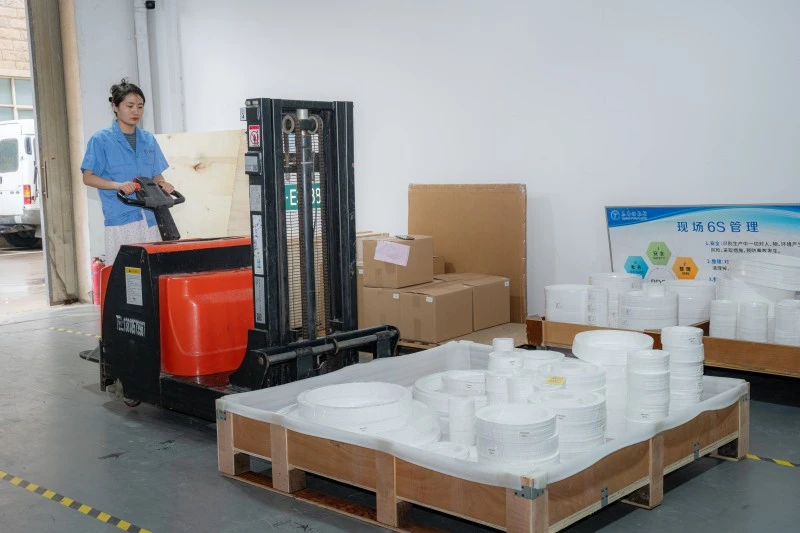
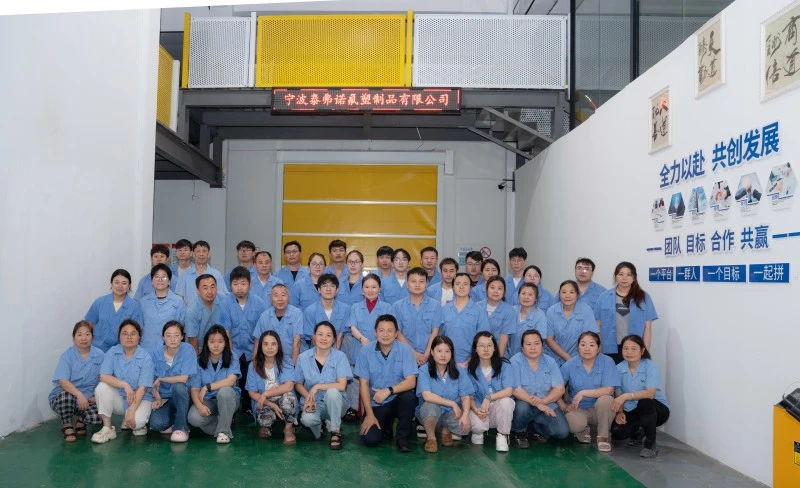
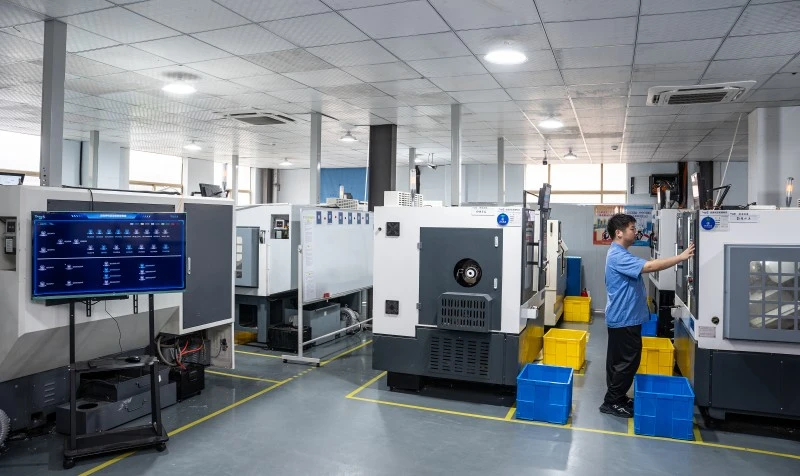
Taifno was established in 2012 and manufactures PTFE products for laboratories, research organizations, distributors and industrial buyers. Company history, certificates and manufacturing claims should be verified through the current company profile and quality certification records.
For information about inspection and traceability, review Taifno's quality assurance process.
Buyer QuestionsPTFE Wide Mouth Bottle Purchasing FAQ
What is the difference between wide mouth and narrow mouth PTFE bottles?
A wide mouth bottle has a larger opening that simplifies loading and removing powders, viscous liquids and larger samples. It also provides better physical access for cleaning. A narrow mouth can provide more controlled pouring and may reduce the exposed opening during routine liquid handling.
Choose a wide mouth design for powders, solids, viscous samples and frequent-access workflows. Choose a narrow mouth design when controlled liquid dispensing is the primary requirement. Closure integrity and evaporation depend on the complete cap and bottle design, not only the neck diameter.
Can a PTFE wide mouth bottle be used for polar or cryogenic sample preservation?
PTFE retains useful material properties at low temperatures, but this does not automatically qualify a filled, sealed bottle for cryogenic storage. The sample's expansion, minimum temperature, fill volume, cap condition, thermal cycle and transport method must be validated. Never assume a tightly sealed bottle can be frozen safely without testing the complete assembly.
Can PTFE wide mouth bottles be used in a TCLP workflow?
They may be evaluated for compatible sample handling or storage associated with a TCLP workflow because the wide opening supports solid-sample transfer and PTFE provides broad chemical resistance. Suitability for US EPA Method 1311 depends on the bottle's exact role and the laboratory's validated procedure. Confirm extraction-vessel, closure, blank, agitation and material requirements before use.
Can PTFE wide mouth bottles be autoclaved?
Selected PTFE bottle designs may be suitable for a 121°C steam-autoclave cycle. The cap must be fully loosened or removed to prevent pressure buildup. The laboratory should validate dimensional stability, cleaning effectiveness and the complete sterilization cycle before routine use.
Are PTFE wide mouth bottles completely leak-proof?
No closure should be represented as universally leak-proof without a defined test. Performance depends on thread geometry, cap condition, tightening torque, liquid, temperature, internal pressure, orientation and transport conditions. State the required leak test and acceptance criteria when requesting a quotation.
Are these bottles suitable for ICP-MS and trace-metal analysis?
Virgin PTFE bottles can be evaluated for trace-analysis workflows, but suitability must be demonstrated through resin traceability, cleaning validation, procedural blanks, analyte recovery and laboratory-specific acceptance limits. Request the available material information and perform method validation before use.
What information is required for a custom PTFE bottle quotation?
Provide the nominal and usable capacity, neck I.D., body O.D., overall height, wall thickness, thread and cap requirements, sample or chemical, concentration, operating temperature, cleaning method, required quantity, tolerances, leak-test requirement, packaging and material documentation. A drawing or physical sample should be supplied for non-standard designs.
- Nominal capacity and required usable volume.
- Wide-mouth neck I.D., body diameter, height and wall thickness.
- Thread, cap, seal and leak-test requirements.
- Sample or reagent name, concentration and physical form.
- Minimum, continuous and maximum operating temperatures.
- Cleaning, autoclaving or sterilization procedure.
- Trace-analysis, food-contact or other documentation requirements.
- Prototype quantity, production quantity, annual demand and destination.
Request a Custom PTFE Wide Mouth Bottle Quote
Send your required capacity, dimensions, sample medium, temperature, quantity and documentation requirements for manufacturing review and export pricing.